

Keep your single‑origin beans at their peak by letting them degas for the right time—about a day for light roasts, longer for darker ones—then store them in an airtight, opaque container with a one‑way valve or vacuum seal. Keep the temperature between 50‑70 °F and humidity under 60 %, and avoid light and air exposure. If you need long‑term storage, portion‑freeze sealed bags at 0 °F, then thaw to room temperature before opening. Continue for deeper guidance on each step.
How Long Do Single‑Origin Beans Stay Peak‑Fresh?
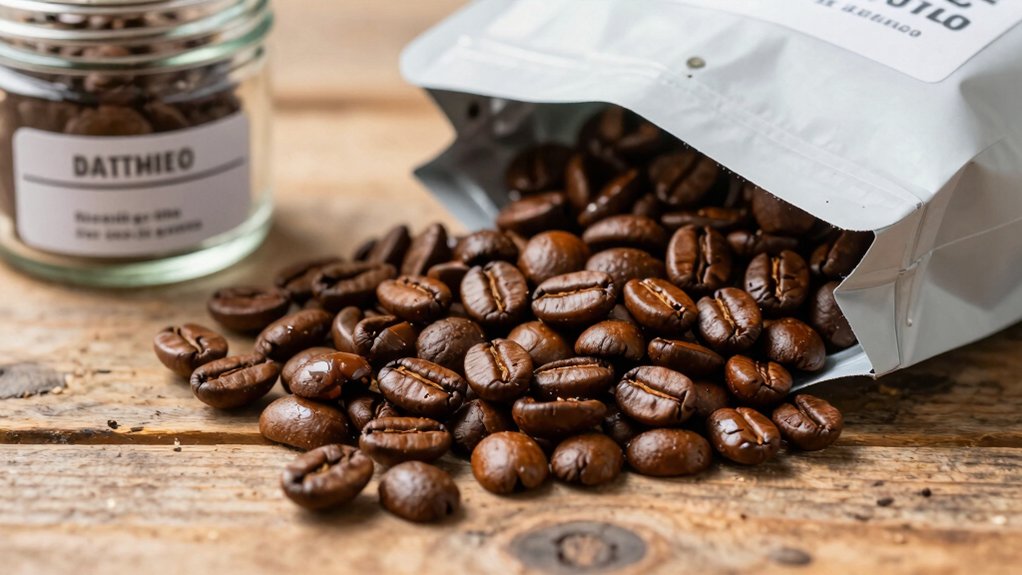
How long do single‑origin beans stay peak‑fresh? You’ll notice the freshness window shifts with roast level: lighter roasts hold peak flavor for 4–6 weeks, medium roasts for 3–4 weeks, and darker roasts for 2–3 weeks after degassing. Once the beans finish their 24–72‑hour degassing, aroma peaks around day four. Keep oxygen exposure and light exposure at bay by storing beans in an airtight container or a vacuum‑sealed, opaque bag. If you buy unopened, vacuum‑sealed bags, they can stay relatively fresh for 6–12 months, but after opening, aim to use them within 2–4 weeks. Managing storage duration and protecting against oxygen and light maximizes peak freshness for your single‑origin coffee, and using a precise measurement approach can help you gauge when to brew for best flavor. degassing stage
Why Must Single‑Origin Coffee CO₂ Degas Before Grinding?
Why does your single‑origin coffee need to degas before you grind it? After roasting, beans hold CO₂ that must escape. If you grind too early, the CO₂ release will trap aroma, mask delicate notes, and cause uneven extraction, leading to off flavors and dull ground coffee quality.
Proper grinding timing depends on roast level: lighter roasts finish degassing within a day, while darker roasts may need several days. Allowing the beans to rest lets aroma release and flavor clarity emerge, preserving freshness.
A fluid‑bed roast can be ready in ~24 hours, but drum‑roasted beans often require a longer pause. Respecting degassing ensures you capture the true character of your single‑origin beans and maximizes brew excellence. Power and Battery Life
Which Container Preserves Single‑Origin Coffee Freshness Best?
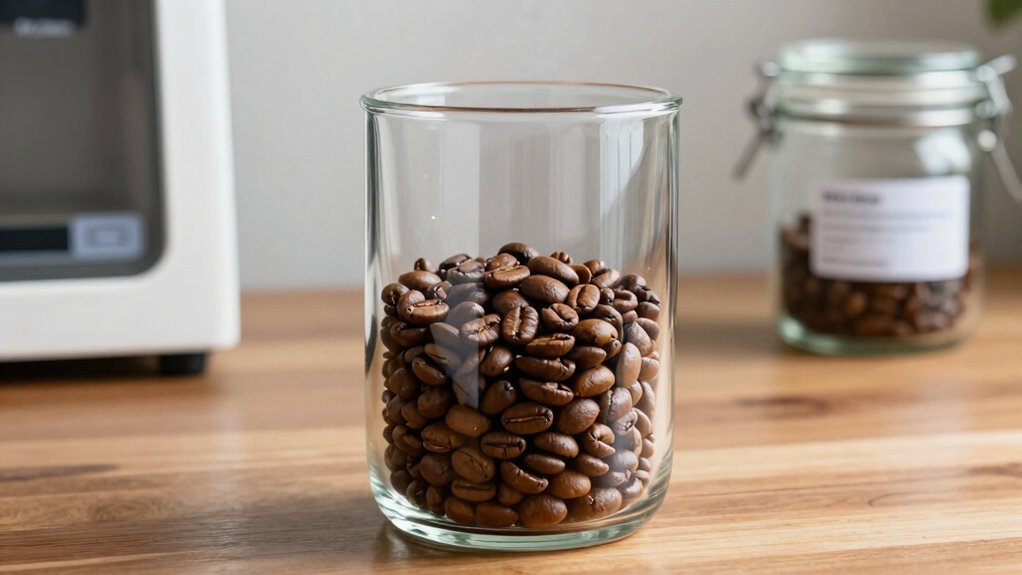
Which container truly locks in the bright, nuanced flavors of your single‑origin beans? You’ll find that airtight containers with opaque walls, such as glass or metal jars, cut light exposure and keep aroma compounds stable. A one‑way valve bag lets CO₂ vent while blocking oxygen, extending freshness. Vacuum‑sealed canisters or portioned vacuum‑sealed bags also reduce oxygen, but they require proper CO₂ venting to avoid pressure buildup. Pair any container with cool dark storage and humidity control for the best results. Oxygen removal is crucial to maintaining flavor integrity, and combining this with proper light protection ensures your single-origin beans stay fresher longer.
What Temperature and Humidity Keep Beans Bright?
Ever wonder what temperature and humidity keep your single‑origin beans bright? Store them in a cool environment, ideally 50–70°F (10–21°C), and keep relative humidity below 60%. This range slows aroma loss, curbs moisture‑driven staling, and prevents mold. Use airtight storage containers with minimal headspace or one-way valves for CO₂ venting, limiting oxygen exposure while letting excess CO₂ escape. Choose glass, ceramic, or stainless‑steel vessels that block light, because light protection preserves flavor and freshness. The choice of a UV‑protected canister like AirScape or Veken helps maintain bean integrity over time UV Protection. Avoid heat sources, direct sunlight, and fluctuating temperatures. By controlling temperature, humidity, and light, you maintain the bright, nuanced profile of your single‑origin coffee and enjoy optimal freshness cup after cup.
Freezer vs. Fridge for Single‑Origin Coffee: Pros & Cons
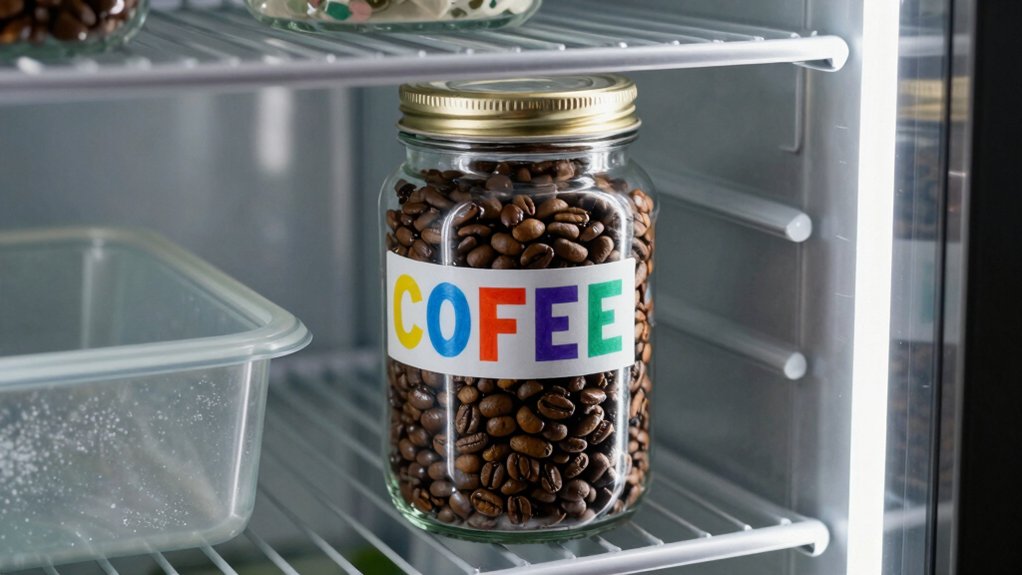
Freezing slows staling, preserves aroma for months when beans are vacuum-sealed and stored using a one-way CO2 valve-like system that minimizes oxygen exposure. Date tracker helps you monitor freshness even after long-term storage. Moisture transfer remains a concern with fridge storage due to higher humidity and potential odor absorption, which can degrade flavor and increase oxidation risk in coffee and other dry goods. Convenience favors the fridge for easy access, yet frequent transfers risk condensation and flavor loss. Best practice remains to keep beans whole, grind on demand, and avoid moving them between freezer and fridge to prevent moisture transfer.
How to Portion‑Freeze Single‑Origin Beans Correctly
Want to lock in the bright flavors of your single‑origin beans for months? Start by dividing the beans into two‑week portions. Place each portion in a vacuum‑seal bag or an airtight, opaque container, removing every bit of air to curb oxidation. Label the package with the roast date and origin so you can track freshness. Store the sealed portions in freezer storage at 0°F (‑18°C) or lower. When you’re ready to brew, move a portion to the counter and let it reach room temperature before opening; never refreeze after thawing. This method preserves aroma, protects against moisture and light, and keeps each single origin batch tasting as vibrant as the day it was roasted. Additionally, using a proper grinder size and dosing can help ensure consistent extraction and flavor preservation across each portion.
What Quick Freshness Checklist Should I Run Before Brewing?
How can you be sure your beans are still at their peak before you brew? Check the roast date and confirm the appropriate degassing period has passed—days for traditional drums, about 24 hours for fluid‑bed roasts. Verify the beans sit in an airtight bag or a canister with a one‑way valve, minimizing oxygen exposure. Store them in cool dark storage, roughly 60–70 °F, away from light and heat. If they’ve been in the fridge, move them to room temperature storage before grinding to avoid condensation.
Check roast date, allow proper degassing, store airtight in cool darkness, and bring to room temperature before grinding.
- Look at roast date and degassing period.
- Ensure airtight bag or airtight canister with one‑way valve.
- Confirm cool dark storage and low oxygen exposure.
- Measure grind amount using a burr grinder, then brew.
Frequently Asked Questions
What Impact Does Altitude of Origin Have on Storage Requirements?
Altitude influences bean moisture and oxidation rates, so you’ll need cooler, drier storage for high‑altitude beans and slightly warmer, less humid conditions for low‑altitude varieties to keep flavor intact.
Do Different Roast Levels Affect Optimal Container Choice?
Yes, darker roasts need airtight ceramic or stainless steel containers to lock in oils, while lighter roasts stay fresher in valve‑sealed bags that let gases escape. Choose the material that matches each roast’s moisture and aroma profile.
Can Light‑Exposure During Transport Degrade Single‑Origin Flavor?
Yes, light‑exposure during transport can degrade single‑origin flavor. UV rays break down aromatic compounds, causing stale notes. Keep beans in opaque, airtight containers, and limit sunlight exposure to preserve their nuanced profile.
How Does Bean Size Variation Influence Degassing Time?
You’ll notice larger beans take longer to degas because their interior releases CO₂ more slowly, while smaller beans finish sooner; adjust roast‑rest periods accordingly, giving bigger beans an extra hour or two.
Are There Specific Humidity‑Control Tools Recommended for Home Use?
You should use a digital hygrometer and a small dehumidifier or moisture‑absorbing packets; keep the storage area at 45‑55 % RH, and seal beans in airtight containers to maintain freshness.
In Summary
Keep your single‑origin beans at their best by storing them in an airtight container, away from light, heat, and moisture. Aim for a cool, dry spot—around 60‑70 °F with low humidity—and avoid frequent temperature swings. If you need long‑term storage, portion‑freeze in small bags and thaw only what you’ll use. Before brewing, give your beans a quick sniff, check for off‑notes, and make sure they’re still aromatic. Follow these steps, and every cup will taste fresh and vibrant.


