

Check the roast date on the bag; if it’s missing, seal the beans in a zip‑lock overnight and feel for a morning puff of CO₂— a puffy bag means they’re still fresh, a flat one signals they’ve passed their peak. Look for a glossy surface and uniform color; excessive oil or a dull, cracked appearance means aging. Smell the beans, bright, vivid notes mean they’re good, while a muted scent warns they’re stale. Grind a small amount; fresh grounds stick together, stale ones crumble like sand. When you pour‑over, watch for a quick, foamy bloom—if it’s thin or absent, the beans may be past their prime. Store beans airtight, cool, and dark, and trust your taste test to decide when to toss. Keep going for deeper tips.
Roast Date: Your First Coffee Freshness Clue
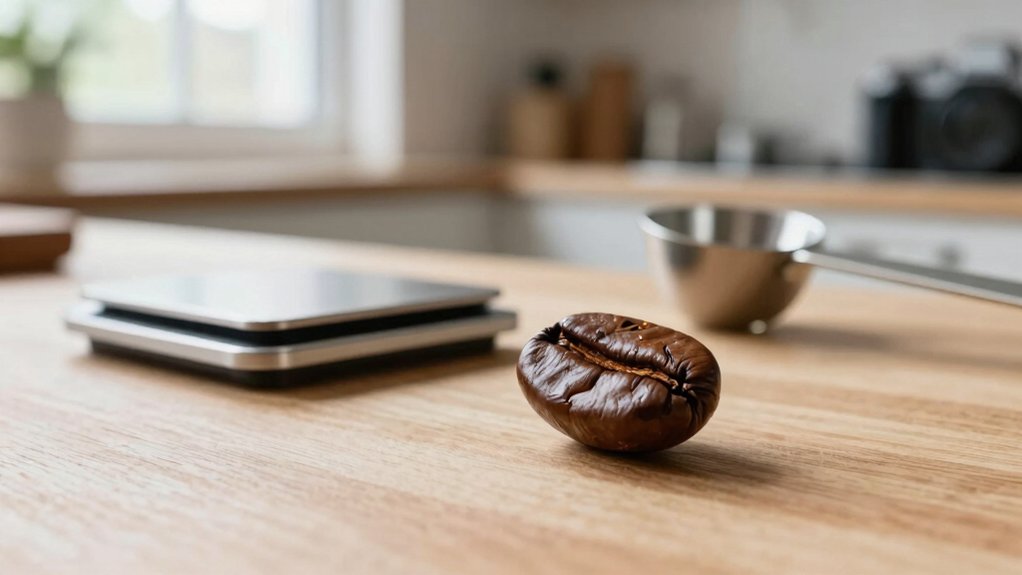
Ever wondered how a simple date can tell you if your coffee is still at its peak? Check the roast date on the label; many roasters also print a best by date next to it, giving you a clear freshness window. If the bag lacks a date, seal the beans in a zipper‑lock bag overnight and watch for CO2 release. A puffy bag by morning means the beans roasted 7–10 days ago, signaling strong freshness. A flat bag indicates the beans have passed their peak aroma and flavor. When buying, ask the roaster for the roast date and prefer local sources that can verify it. This quick check lets you gauge freshness before you even grind 1:1 replacement.
Coffee Freshness: Visual Gloss, Oil, and Color Indicators
How can you tell at a glance whether your beans are still fresh? Look for a healthy visual gloss; a slight sheen means good coffee freshness, while excessive oil on surface signals aging. Dark roasts naturally develop more oil, but a slick, greasy coat usually means the beans have gone stale. A dull, dry, cracked, or dusty appearance points to loss of quality. Uniform roast color across beans shows consistent processing and fresher batches. Use these visual cues as a quick diagnostic, not a definitive test.
Visual gloss indicates freshness, while oil on surface can signal aging; uniform roast color across beans suggests consistent processing and fresher batches. Strix temperature control and multi-stage settings help ensure consistent outcomes.
Coffee Freshness: Aroma Test – Sniff for Bright vs. Flat Scents
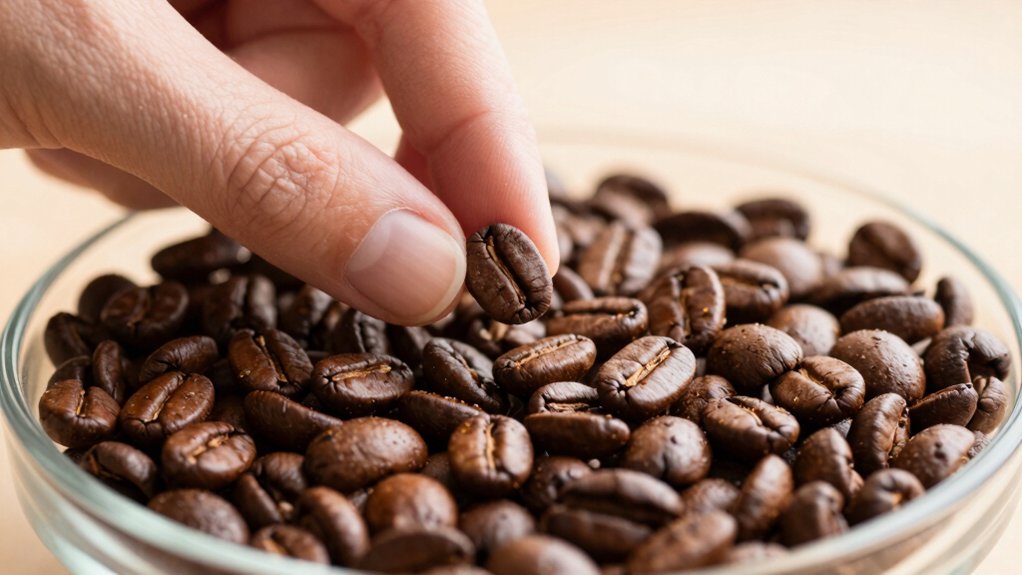
Do you notice a bright, lively scent when you open your coffee bag, or does the aroma feel flat and muted? That first sniff is your aroma test, a quick gauge of freshness. When beans are fresh, volatile compounds burst out, delivering vivid notes—floral, fruity, chocolatey, or nutty. A weak, dull scent means those oils have oxidized, signaling aging and flavor loss.
To perform the test, open the bag in a neutral‑smelling room, inhale deeply, and compare the intensity to what you expect from a recent roast. A vibrant aroma confirms that the beans retain their volatile compounds and are ready for brewing. Conversely, a muted smell warns you the beans have lost much of their flavor potential.
Coffee Freshness: Texture & Feel – Grinding and Ground‑Coffee Consistency
Notice how the grounds feel when you press them between your fingers—fresh beans produce a slightly oily, cohesive texture, while stale beans crumble into a dry, grainy mess. When you grind, pay attention to the texture that emerges. A uniform, slightly clumpy consistency signals good Freshness; you’ll notice minimal dust and a smooth mouthfeel. If the grind is overly fine, flaky, or leaves a cloud of dust, the beans have lost their aromatic oils and are past their peak. Rub a pinch between your fingertips: fresh grounds should stick together, whereas stale ones will scatter like sand. This tactile test lets you gauge grinding quality instantly, helping you decide whether to brew or discard the batch. For consistent results, consider tracking your grind size and extraction data with a refractometer-assisted approach to monitor how extraction quality shifts with freshness.
Coffee Freshness: Bloom Observation – Pour‑Over CO₂ Release
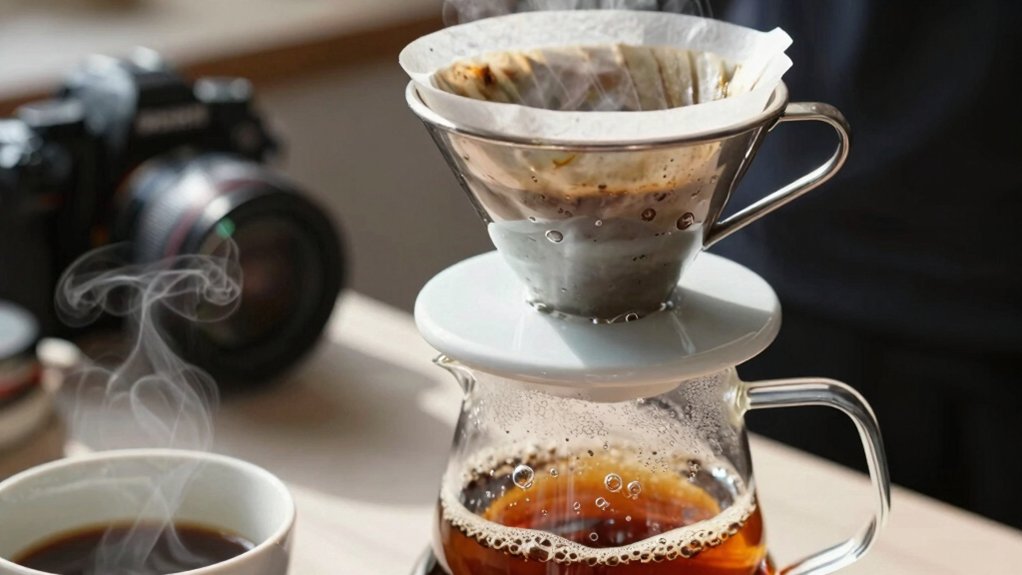
After feeling the texture of your grounds, watch how they react when hot water meets them. A vigorous bloom signals a fresh batch; the CO₂ release creates a foamy surface that disappears in seconds. If the bloom is thin or absent, the beans may be past their peak, even if the roast date looks recent. Use this visual cue alongside aroma and taste to gauge flavor potential. When brewing with a pour-over setup, ensure the grind size and pour rate support an even extraction mug rack versatility to keep your tasting session organized and efficient. – Pour a small amount of water (about twice the grounds’ weight) and pause.
- Observe the size and duration of the foam.
- Note any bubbling that continues after the initial pour.
- Compare the bloom to a reference video of fresh beans.
- Record the result as a freshness indicator for future brews.
Coffee Freshness: Zip‑Lock CO₂ Test – Simple Home Experiment
Grab a handful of beans, pop them into a zip‑lock bag, squeeze out the air and seal it, then leave it overnight. If the bag puffs up, the beans are still releasing CO₂ and are fresh; little or no inflation means they’ve gone stale. Use this quick visual cue together with aroma and grind size for a reliable freshness check. Also consider noting the roaster and roast date to track freshness alongside the CO₂ test CO₂ release.
Seal Test Procedure
If you want a quick, no‑gear way to gauge bean freshness, try the Zip‑Lock CO₂ seal test: place a handful of roasted beans in a zip‑lock bag, squeeze out as much air as possible, seal it, and let it sit overnight.
- Observe the bag in the morning; a gentle puff indicates CO₂ release and good freshness.
- No inflation suggests the beans have lost their peak freshness.
- Keep the bag away from heat or direct sunlight to avoid false readings.
- Pair the seal test with aroma and visual checks for a fuller picture.
- Use the same bag for future batches, noting how the puff changes over time.
This simple, self‑administered method lets you assess roasted beans without any special equipment. Safety certifications
Bag Inflation Indicator
Wondering whether your roasted beans still hold that fresh‑roast vigor? Grab a zip‑lock bag, toss in a handful of beans, squeeze out the air, and seal it tight. Leave the bag overnight and watch for CO2 degassing. By morning, fresh beans will have inflated the bag a little, a clear sign that they’re still actively releasing carbon dioxide. If the bag stays flat, the beans have likely passed their peak and the freshness test fails. Note the roast date on the package and compare it with the inflation result for a quick, practical check. Combine this observation with aroma and appearance to gauge overall bean quality. Cultural insights can also inform how regional roasting styles might affect freshness timelines.
Interpretation of Results
Seeing the bag inflate overnight tells you the beans are still actively off‑gassing CO₂, meaning they’re close to peak freshness. If it stays flat, the CO2 test signals a drop in freshness. Pair this cue with other freshness indicators—aroma, appearance, and bloom—to confirm your assessment. A puffed bag usually means the beans will deliver a bright, nuanced flavor, while a deflated one warns of dullness and stale notes. Use the test as a quick, visual check before you grind.
- Look for a firm, full‑bodied aroma.
- Check bean color; bright brown suggests recent roast.
- Observe the bloom: a subtle sheen indicates active oils.
- Smell for any sour or musty notes.
- Trust the CO2 test as your first freshness gate.
CO₂ outgassing dynamics can also guide you on optimal storage practices, such as choosing an airtight canister from the best options listed and keeping beans away from light and heat for longer freshness. CO₂ outgassing dynamics
Coffee Freshness: Storage Best Practices – Airtight, Cool, Dark
You’ll keep coffee freshest by sealing it in an airtight container and tucking it into a cool, dark spot. Avoid exposing beans to light, heat, or moisture, and grind only when you’re ready to brew. This simple routine preserves aroma and flavor for weeks.
Airtight Storage Solutions
A good airtight container is the single most effective weapon against coffee staleness, because it blocks oxygen, moisture, and light—three culprits that accelerate oxidation. When you choose an air‑tight container, pick one with a seal that stays snug after each use and consider a design that includes a one‑way degassing valve. Store whole beans inside an opaque storage vessel, keeping them away from any light source. This setup lets gases escape without letting air in, preserving flavor longer.
- Use a container with a reliable sealing lid.
- Choose opaque storage to block light.
- Keep whole beans, not pre‑ground coffee, inside.
- Opt for a degassing valve to release CO₂ safely.
- Tighten resealable zippers after every scoop.
Cool Dark Environment
Ever wonder why a cool, dark pantry outperforms a sunny countertop for coffee storage? You’ll notice that low, stable temperatures—around 60–70 °F (15–21 °C)—slow oxidation, keeping roasted beans fresher longer. Light and heat accelerate flavor fade, so keep your beans in a dim corner away from ovens or windows. Choose an airtight container that seals tightly; a one‑way valve bag works well for roasted beans, letting CO₂ escape while blocking air.
Avoid the fridge or freezer, because moisture and odors seep in and ruin aroma. By storing coffee in this cool, dark environment, you preserve freshness, maintain optimal flavor, and extend the window before you need to test the beans again.
Coffee Freshness: When to Toss – Taste Test for Staleness
When does a cup start sounding flat, bitter, or missing its usual depth? You’ll know it’s time to toss the beans the the flavor feels dull, the aroma weak, and the bitterness overwhelms any sweetness. Your taste test becomes the final gatekeeper—no brewing tweak can mask a stale batch. Keep beans inside the freshness window, ideally 7–14 days after roast, to preserve aroma and body.
- Smell the grounds before brewing; a faint, flat scent signals loss of aroma.
- Brew a single cup and sip slowly; notice any harsh, metallic bitterness.
- Compare the mouthfeel to a recent roast; a thin, watery texture means staleness.
- Check the aftertaste; lingering bitterness without complexity indicates the beans are past their prime.
- If any of these signs appear, discard the beans and start fresh.
Frequently Asked Questions
How Do I Know if My Beans Are Fresh?
You’ll know beans are fresh when they give off a strong, aromatic scent, look glossy, feel slightly oily when ground, and release a noticeable CO₂ bloom during pour‑over. If they’re dull, dry, or crumbly, they’re past their prime.
What Is the #1 Coffee in the World?
You’ll find the world’s #1 coffee is Panama’s Geisha, especially the Boquete lots; its unrivaled aroma, complex floral notes, and buttery sweetness consistently earn 90‑plus scores in specialty competitions.
What Coffee Is Best for GERD?
You’ll want low‑acid beans—think roasted Arabica from Brazil, Ethiopia, or Sumatra, preferably medium‑dark roast, and avoid dark French or Italian roasts; choose beans labeled “low‑acid” or “smooth” for GERD relief.
Can I Still Use 2 Year Old Coffee Beans?
You can brew them, but expect flat, stale flavor and a dull aroma; if the cup tastes weak, rancid, or bitter, discard them—two‑year‑old beans rarely deliver enjoyable coffee.
In Summary
Now you’ve got the tools to judge your beans like a pro. Look for a recent roast date, check the glossy surface and vibrant color, sniff for bright aromas, and feel the grind’s texture. Watch the bloom and try the zip‑lock CO₂ test for extra confidence. Store beans airtight, cool, and dark, and trust your taste buds—if they’re flat, it’s time to toss. Fresh beans mean better coffee, every cup.


