

You pay premium prices for specialty beans because their SCA grades on a 100‑point scale confirm near‑perfect flavor, uniform screen sizes cut defects and simplify sorting, and traceable origins guarantee fair farmer pay and reliable provenance. Small‑batch roasting adds meticulous labor and custom profiles that preserve nuanced notes, while direct‑trade contracts lock in quality and price stability. All these factors combine to turn green coffee into a high‑value, trustworthy product—more details await ahead.
How SCA Grading Turns Green Beans Into Premium Assets
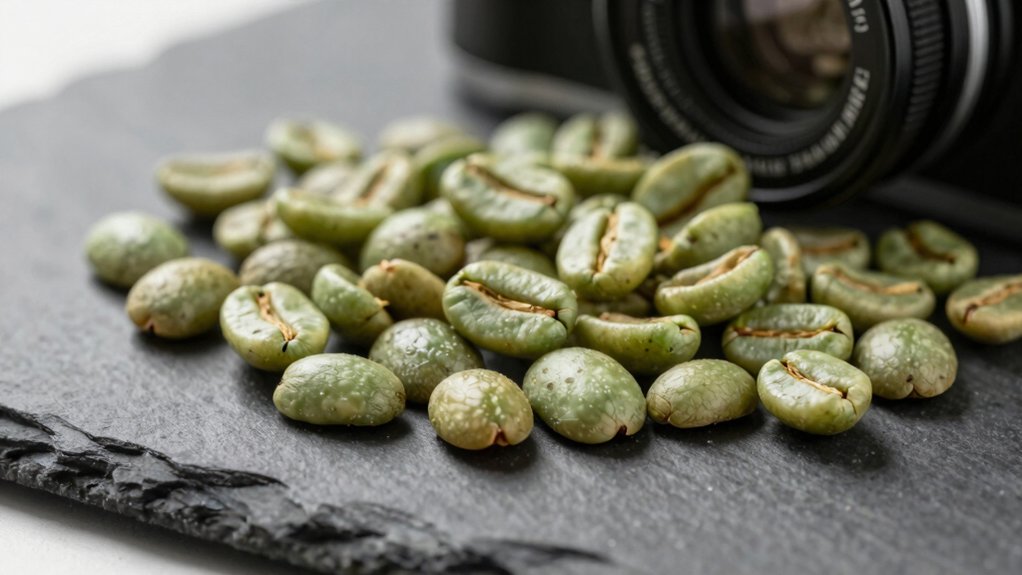
How does a simple score turn a batch of green beans into a high‑value asset? When a trained Q Grader hands you an SCA grading of 80+, you instantly know you’re holding specialty coffee. The 100‑point scale captures every defect—black beans, mold, off‑flavors—so the green beans pass a rigorous quality signaling test. That near‑perfect rating cuts risk before roasting, letting you blend or roast with confidence. Buyers can trace the lot to its farm, altitude, and processing method, and that transparency justifies premium pricing. In practice, the SCA framework turns raw, unremarkable beans into a marketable commodity that commands higher prices because it guarantees consistency, flavor potential, and a clear quality story. Traceability further supports value by enabling provenance details to accompany premium lots.
How Uniform Bean Size Reduces Defects and Raises Specialty Prices
You’ll notice that picking a consistent screen size streamlines sorting and cuts waste, so you can keep defect‑free lots. A predictable size also helps standardize storage in stackable bins and tight freezer layouts bin with lid. That efficiency lets you maintain high cup scores, which directly supports the premium price you command. In short, uniform beans give you traceability and quality that justify above‑market pricing.
Consistent Screen Selection
Consistent screen selection guarantees uniform bean size, which directly boosts specialty pricing. When beans fall into the 13‑16 screen range, cupping scores climb, and roast stability improves. Sorting rigorously before final lots lowers waste and handling costs, preserving the premium price you deserve. Uniform bean size also supports repeatable batch quality across multiple runs, aligning with SCA 80+ standards.
Defect-Free Sorting Efficiency
Ever wondered how a tighter screen size can slash defect rates and boost your premium? When you run defect‑free sorting through 13‑ or 16‑screen sessions, you eliminate undersized or damaged beans before they ever reach the roaster. This rigorous quality control creates uniform lots, so your roast can hit the same profile batch after batch. Consistent bean size reduces flavor variance, letting you showcase origin notes without the noise of defects. Buyers see lower risk and higher repeatability, which justifies premium pricing in the specialty coffee market. In direct‑trade chains, that reliability translates into higher realized prices, letting you command the premium your beans deserve. IP65/IP66 durability ratings across several models underscore the industry’s emphasis on robust, field‑reliable equipment that supports consistent quality assurance in diverse roasting environments.
Premium Pricing Justification
Uniform bean size not only reduces defects but also stabilizes processing costs across lots, making it easier to forecast supply and pricing in long-term specialty contracts. This reliability supports quality control and traceability initiatives that reassure buyers and justify premium pricing. You’ll see that uniformity slashes sorting costs and defect rates, letting you keep quality consistent across specialty contracts. When you screen beans at 13–16 screen levels, you prove that even size‑variations can taste alike if managed right, which backs premiums for uniform lots. Those lots boost cupping scores from 80+ to 90+, because fewer physical defects mean cleaner flavor. Ongoing quality control—sorting, defect removal, size standardization—lowers buyer risk and justifies above‑market pricing. Processing consistency reinforces traceability, so every batch links back to controlled inputs and methods. Together, these factors protect price integrity and let you command higher premiums in the specialty market.
Why Small‑Batch Specialty Coffee Roasting Costs More – And Why It’s Worth It
You’ll notice that each small‑batch roast demands meticulous labor, from hand‑sorting beans to tweaking temperature curves for every lot.
Because the beans come from limited, often single‑origin supplies, you can’t rely on economies of scale, so the cost per pound rises.
Yet that extra effort translates into fresher, more nuanced cups that justify the premium you pay.
Precision Roasting Labor
A handful of beans can demand hours of hands‑on attention, because each lot gets its own calibrated roast profile that teases out the origin’s unique flavors. You’ll notice that precision roasting isn’t a set‑and‑forget process; it’s a labor‑intensive dance of monitoring moisture, density, and bean size in real time. Small‑batch roasters invest in specialized equipment and skilled operators to keep every variable in check, turning each batch into a controlled experiment. That meticulous quality control drives the premium pricing you pay, but it also guarantees the nuanced flavor you crave.
- Real‑time moisture and density tracking
- Custom roast curves per origin
- Skilled roaster oversight for each batch
Limited Bean Supply
Ever wondered why your favorite single-origin cup costs more than a mass-market blend? The limited bean supply forces roasters to chase high-quality lots that score 80+ on SCA scores, and those rare beans drive premium pricing. You’ll notice that traceability becomes a selling point: each lot is documented from farm to cup, adding logistics costs that show up in the price tag. Small-batch processing means you pay for skilled labor that coax nuanced flavors from single-origin coffees, and the scarcity of those beans means you’re essentially buying a curated experience, not a commodity. A top-tier option in the supply chain is Terra Kaffe TK-02 with smart connectivity that highlights how premium machines can extract the best profiles from limited beans, reinforcing the notion that the right equipment complements limited lots.
How Traceability Guarantees Fair Pay and Justifies Specialty Coffee Premiums
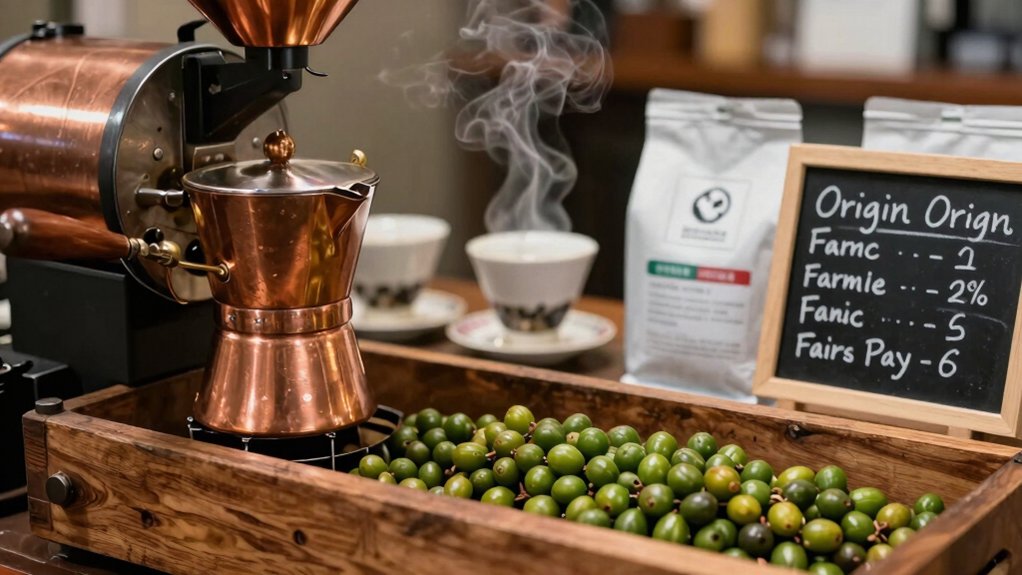
Why does traceability matter? You see, when each lot records farm, farmer, altitude, and processing method, you gain supply chain integrity that eliminates the ambiguity of generic “Brazil” labels. This transparency lets you verify chain‑of‑custody, so you can justify premium pricing and ensure fair pay for the people who grew the beans. Origin contracts lock in quality and price, aligning compensation with the traceability guarantees buyers demand. Detailed lot data proves consistent quality, supporting higher price points. Verified origin contracts reinforce supply chain integrity, building consumer trust and sustaining premium pricing.
How Direct‑Trade Boosts Specialty Coffee Fairness and Producer Income
How does direct‑trade actually lift farmer incomes? You’ll see roasters paying above‑C‑market premiums to secure high‑quality beans, which boosts producer income. By cutting out middlemen, direct‑trade creates transparency about farm origin, altitude, processing method, and lot‑specific pricing. This openness lets you trace each cup back to the farmer, reinforcing ethical sourcing and fair prices. Contracts focus on stability, so growers can invest in better picking, processing, and drying, knowing they’ll receive a reliable reward. Published price sheets show exactly what farmers earn, turning premium retail prices into tangible support. In short, direct‑trade aligns your love for specialty coffee with a fairer, more profitable future for the producers. Transparency of origin supports accountability and traceability across the supply chain.
How Yield Variability Affects Roaster Costs and Specialty Coffee Prices

What happens when a harvest fluctuates year to year? You feel the ripple immediately: yield variability forces you to buy extra bags to meet specialty contracts, inflating processing costs and squeezing margins. Defects and smaller beans demand more sorting and milling, so you either absorb the expense or push it into premium pricing. Buyers expect traceability, and the only way to guarantee consistent cup profiles is to pay for uniform, high‑quality lots.
- Higher defect rates raise sorting expenses, prompting higher premiums.
- Specialty contracts reward year‑round quality management, stabilizing yields.
- Smaller, premium‑focused lots justify higher prices through traceability and repeatable roasts.
Understanding these dynamics lets you balance cost and quality while maintaining premium pricing.
Frequently Asked Questions
What Is the 15-15-15 Rule for Coffee?
You measure coffee by aiming for roughly 15 points each in aroma, sweetness, and acidity, so a balanced 45‑point total signals the high, consistent quality that justifies premium specialty pricing.
What Is the Difference Between Premium Coffee and Specialty Coffee?
You’ll find premium coffee is any higher‑priced bean, while specialty coffee meets SCA standards, scores 80+ points, and is graded for defects and flavor. Premium can be ordinary; specialty guarantees quality.
What Is the Most Expensive Bean?
You’ll find the most expensive bean is Panama Geisha, often selling for $80‑$100 per pound; its rare, aromatic profile, limited harvests, and high cupping scores drive that premium price.
What Is the 80 20 Rule for Coffee?
You apply the 80/20 rule by focusing on the top 20% of coffee lots that score 80+ on the SCA scale; those elite beans drive most of the market’s quality and price.
In Summary
You’ve seen how rigorous SCA grading, uniform bean size, small‑batch roasting, traceability, direct‑trade, and yield variability all stack the deck for premium pricing. Each factor adds quality, fairness, and consistency—making specialty coffee a true asset worth its higher cost. When you sip that cup, you’re not just enjoying flavor; you’re supporting a transparent, sustainable chain that justifies every premium dollar.


