
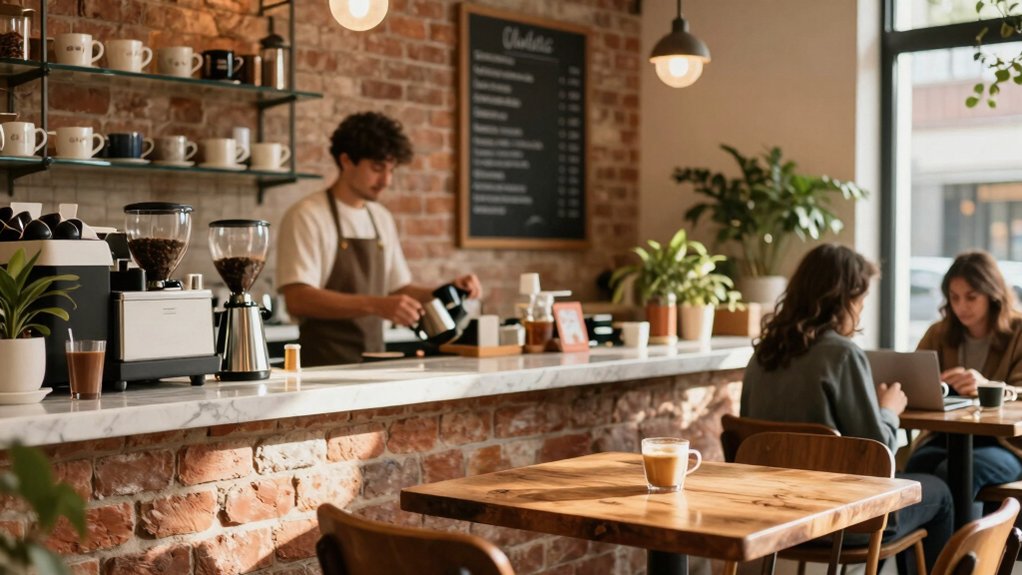
You decide by scoring what matters most: if you crave bold, bitter coffee, hand‑crafted drinks, a cozy, locally‑sourced vibe, and don’t mind a 20‑30 p premium, indie cafés win; if you prioritize low cost, consistent taste, quick service, and a familiar layout, chains suit you better. Add atmosphere, food quality, and sustainability into the mix, and the higher‑scoring option becomes clear. Keep going and you’ll see how each factor tips the balance.
Priority‑Based Decision Framework
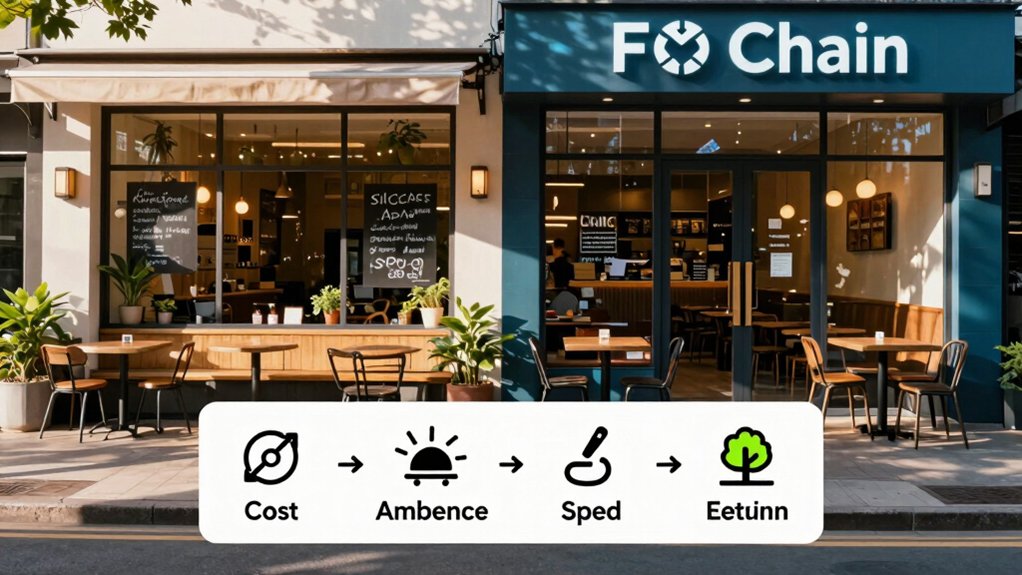
How do you decide which café fits your mood? You start with a priority framework that scores taste quality, consistency, and atmosphere. Assign higher weight to taste if you crave bold, bitter notes; boost consistency when you need predictable service; and elevate atmosphere for a homely vibe. Plug those weights into a simple matrix: indie cafés score high on unique ambience and ethical sourcing, while chain locations win on menu uniformity and speed. Balance price by noting indie spots cost only 20‑30p more for richer quality. When the total exceeds your threshold, choose the indie; if consistency and low cost dominate, the chain wins. This indie vs chain priority framework guides you to a decision that matches your values and cravings. Dishware Quality
Taste Profile: Indie vs. Chain Roast Levels & Brewing
Your priority matrix points you toward taste, so let’s look at how roast level and brewing shape that experience. Indie roasts usually lean darker, delivering a bold, bitter edge and a heavy mouthfeel that can feel aggressive at first sip. Chain coffee shops favor lighter to medium roasts, offering smoother, milder flavors with brighter acidity that many find more approachable. The darker profile of indie beans often pairs with grind‑on‑demand and precise brewing, extracting deeper notes and integrating milk more richly. In contrast, chain shops rely on standardized equipment and consistent grind sizes, yielding a predictable, less edgy cup. If you crave intensity and a robust body, indie roasts deliver; if you prefer gentler, easier‑to‑drink profiles, chain coffee shops win. Darker roasts often align with grind-on-demand and precise brewing, which can enhance extraction and body.
Atmosphere & Comfort: What Makes a Café Feel Like Home
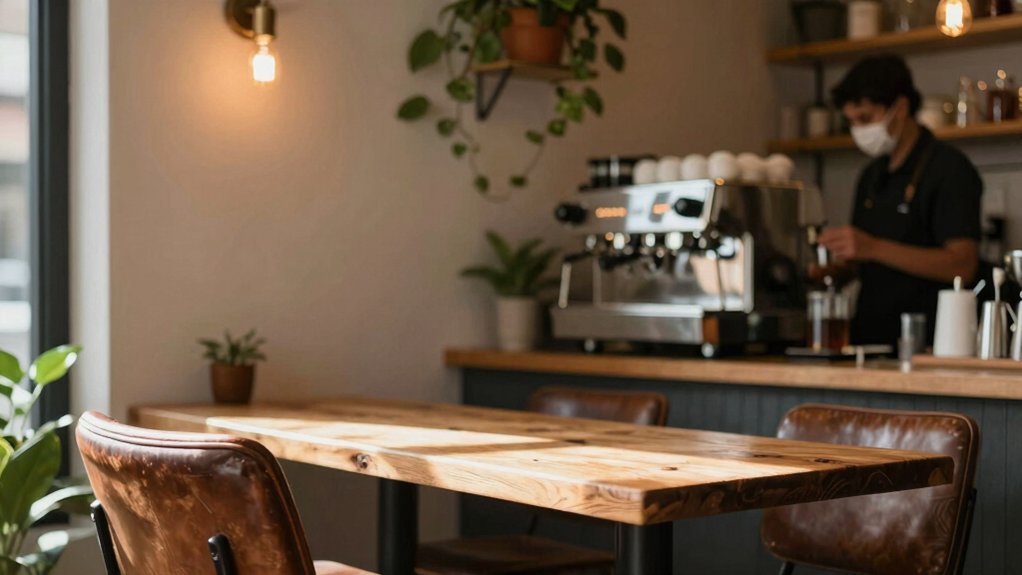
Ever walked into a café and instantly felt like you were home? You notice the soft glow of pendant lights, reclaimed‑wood tables, and a curated playlist that matches the neighborhood’s rhythm. Indie coffee shops lean into that vibe, using unique décor and relaxed seating to invite you to linger. The atmosphere feels personal—baristas greet you by name, sometimes delivering your drink to the table with a friendly smile.
Chains, while efficient, often rely on uniform layouts and bright fluorescents, which can feel predictable but less intimate. When you settle into a plush armchair or a communal bench, the ambient scent of freshly ground beans and the gentle hum of conversation tell you you’re in a space designed for comfort, not just caffeine. Anti-static technology helps keep the ground flow tidy and reduces mess during service, contributing to a calmer, more dependable micro‑environment for customers and staff alike.
Food & Drink Pairings: Hand‑Crafted Menus vs. Pre‑Packaged Options
You’ll notice indie cafés serve hand‑crafted dishes that echo local flavors, while chains lean on pre‑packaged snacks for speed. sustainability can influence your choice, since many phin designs offer no paper waste and reusable components.
Menu Hand‑Crafted Offerings
Often the difference shows up on the menu: indie cafés serve handmade pastries, locally sourced chocolates and bespoke coffee‑drink combos, while chains rely on pre‑packaged snacks and a standardized coffee list. You’ll notice indie shops prioritize artisanal preparation, offering chocolate‑infused lattes, fresh‑baked croissants, and seasonal fruit tarts that change with the harvest. These items arrive made‑to‑order, so you taste the nuance of locally sourced beans and crafted dough. The kits and devices discussed in the refractometer guide illustrate how precision tools can support consistency across menus and brew processes data tracking for both indie and chain cafés.
Packaged Convenience Selections
The handcrafted pastries and seasonal drinks that define indie cafés give way to a different decision point: whether the food you pair with your coffee comes fresh from the kitchen or from a pre‑packaged shelf. You’ll notice indie shops champion handmade foods, locally sourced chocolates, and chef‑driven pairings that turn a coffee break into a mini‑culinary adventure. In contrast, chains lean on packaged food for speed, offering the same predictable snack everywhere you go. That convenience can shave minutes off your wait, but it often sacrifices the cozy atmosphere and perceived freshness you love in a boutique spot. Some hybrid chains try to bridge the gap, serving reliable coffee alongside a few artisanal bites, yet the true charm still lives in the on‑site preparation of indie cafés. Indie design aesthetics influence not only the menu but the overall guest experience, from seating layout to plate presentation, reinforcing the sense that every cup is paired with a story and a moment meant to be savored.
Ethical Sourcing & Waste Management in Indie vs. Chain Cafés
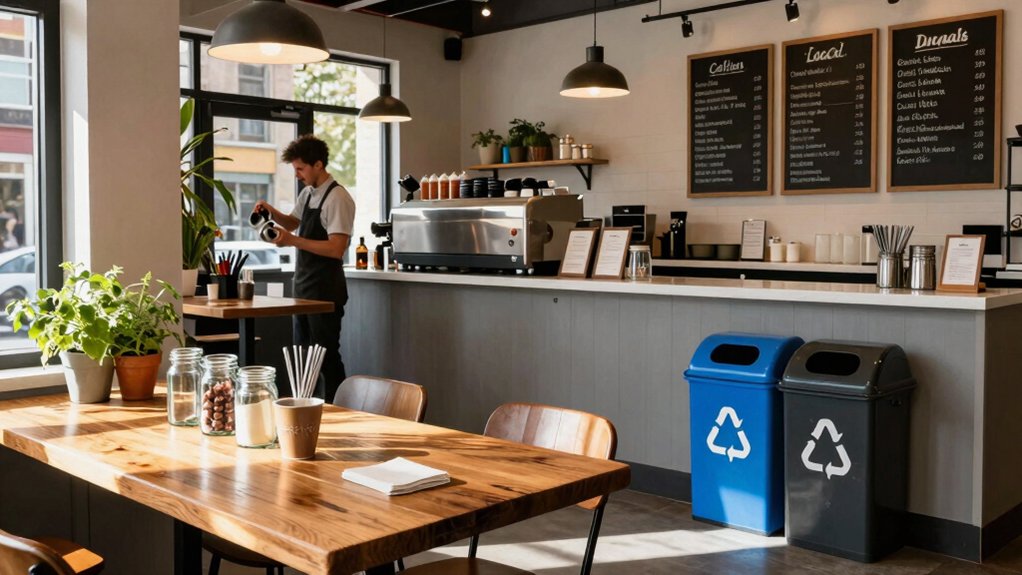
You’ll notice that indie cafés often share clear sourcing stories, showing exactly where their beans come from and how they support local growers. Their waste‑reduction tactics—like reusable cups, minimal packaging, and compostable leftovers—contrast with the higher disposable‑cup volume typical of chains. In addition, many independents highlight 18/8 stainless steel standards and durable, non-toxic interiors as part of their commitment to quality and safety.
Sourcing Transparency
Ever wondered how much you really know about where your coffee comes from? When you step into an indie café, you’ll often see sourcing transparency on the wall, a menu that lists each farm, and a story about local sourcing that ties the beans to nearby growers. Chains may claim ethical beans, but their supply chains stay hidden behind corporate branding. Here’s what to look for:
- Supplier bios – indie shops post profiles of regional farmers, letting you trace each cup’s origin.
- Batch labels – small‑batch roasts carry dates and lot numbers, reinforcing traceability.
- Online traceability – QR codes link directly to farm data, giving you instant proof of ethical sourcing.
You’ll feel more confident knowing exactly who grew your coffee and how it reached your cup. Foam stability
Waste Reduction Strategies
Knowing where your beans come from naturally leads to asking how those cafés handle the waste they generate. Indie cafés usually keep batches small, buying bulk ingredients and using reusable or compostable containers, which trims packaging and cuts spoilage. You’ll notice on‑site waste separation stations and transparent supplier relationships that let them fine‑tune inventory, further lowering waste.
Chains, on the other hand, rely on standardized disposable cups and mass‑produced packaging, creating a larger waste footprint despite some ethical sourcing claims. Their high‑volume model often means excess stock and more single‑use items. By choosing an indie café, you support waste reduction practices that align with local sourcing and a smaller environmental impact.
Community Impact Initiatives
What really sets a café apart is how its community initiatives intertwine ethical sourcing with waste management. You’ll notice indie spots like Café #1, Boston Tea Party, and Soho Coffee prioritize local farms, reducing transport emissions and boosting community impact. Chains may claim ethical beans, yet their disposable‑cup waste still dents sustainability scores, as reflected in lower Ethical Consumer ratings for Starbucks, Caffè Nero, and Costa. When you compare, consider three key factors:
- Local sourcing – indie cafés buy nearby, supporting farmers and cutting carbon footprints.
- Waste reduction programs – independents often run composting or reusable‑cup schemes, while chains rely on recycling bins that are less effective.
- Community engagement – indie owners host workshops and local events, deepening social ties and reinforcing sustainability.
Choosing a café that aligns with these practices amplifies your own contribution to a greener, more connected neighborhood.
Hybrid Cafés: Indie Charm, Chain Consistency
Where does the sweet spot lie between indie vibe and chain reliability? In hybrid cafés you get indie charm and chain consistency in one spot. You’ll walk into a space that feels locally curated—exposed brick, community art, baristas who remember your name—while the menu stays predictable across locations. You can order a familiar latte that tastes the same as your usual chain, then discover a seasonal brew unique to that neighborhood. The staff balances attentive, homely service with the speed and reliability you expect from a big brand. You’ll notice precise extraction, clean cups, and grind‑on‑demand, all backed by a stable quality signal. This blend lets you enjoy regional flair without sacrificing the convenience you rely on.
Price vs. Value: Small Premiums for Bigger Quality Gains
Ever wondered if that extra few pence at an indie café really pays off? You’ll find that a modest price premium—often just 20–30p—delivers noticeable quality gains. Indie shops pour better milk texture, showcase latte art, and serve handcrafted foods that outshine chain offerings. The added value isn’t just visual; it’s taste, freshness, and a curated experience.
- Taste – richer, more nuanced flavors that justify the small surcharge.
- Presentation – latte art and thoughtful plating elevate the drink.
- Service – attentive table service and locally sourced ingredients boost perceived value.
When you compare, the incremental cost translates into a bigger payoff, making the price premium feel like an investment in quality rather than an expense.
Frequently Asked Questions
What Does Gen Z Look for in a Coffee Shop?
You crave authentic, locally‑sourced vibes, Instagram‑ready drinks, comfy Wi‑Fi, and spaces that feel community‑focused. You love handmade food, ethical cues, and relaxed seating where you can linger and connect.
How to Make a Coffee Shop Stand Out?
Create a signature drink, showcase local art, train baristas for flawless latte art, craft a cozy, Instagram‑ready interior, host community events, and personalize service—making every visit feel unique and memorable.
What Makes a Coffee Shop Cozy?
You feel cozy when soft lighting, comfy seating, warm décor, and friendly staff who remember your name greet you, plus the aroma of fresh coffee and the gentle hum of relaxed conversation.
What Is the Best Cafe in the World?
You’ll find the world’s best café in Melbourne’s Degraves Street, where baristas craft flawless espresso, the atmosphere feels intimate, and the community vibe makes every visit unforgettable.
In Summary
By weighing your priorities—flavor depth, ambiance, ethical sourcing, and price—you can decide whether an indie spot’s handcrafted charm or a chain’s reliable consistency fits your mood. If you crave unique brews and a home‑like vibe, indie cafés win; if you value predictability and quick service, chains take the lead. Trust your taste profile and values, and let that guide you to the coffee experience that feels just right.


