
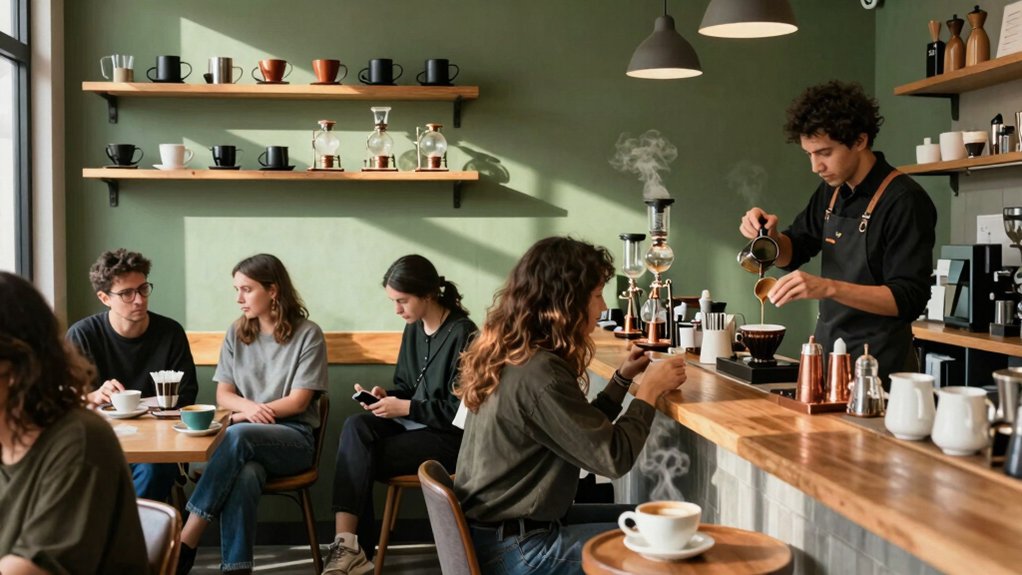
You’ll notice that local third‑wave cafés source beans directly from single farms, so each cup carries a clear, traceable story of altitude, varietal, and fair‑pay agreements. Baristas decode those origins, guiding you through precise manual brewing that highlights the coffee’s unique flavors. The space feels koselig—warm lighting, natural materials, and community boards invite you to linger and connect. Seasonal micro‑lot offerings and transparent pricing reinforce ethical values, and the digital tools hint at even deeper insights.
Upstream Quality: Direct Sourcing & Transparent Roasting
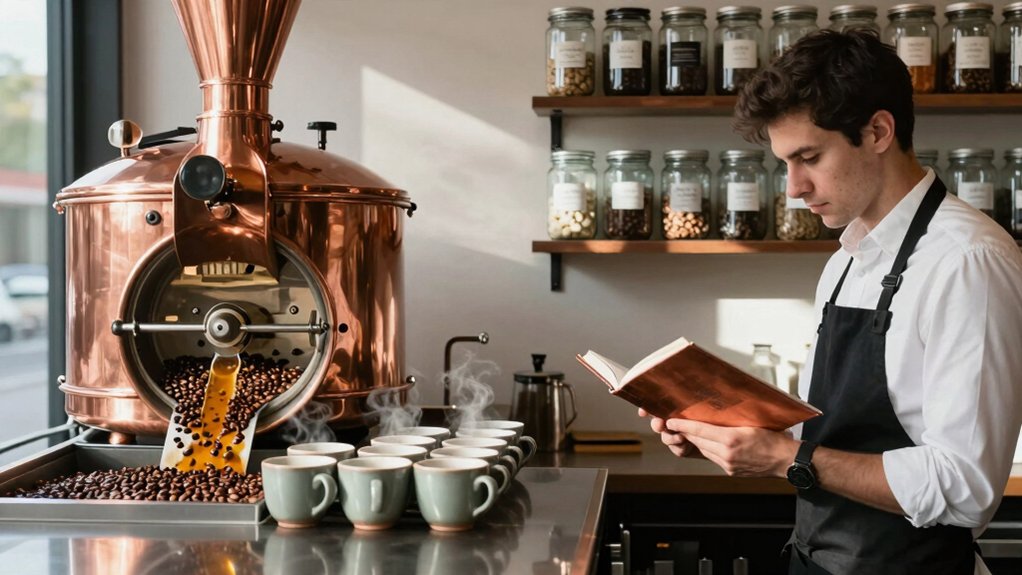
How does a cup become more than just caffeine? You notice the story behind each sip because direct sourcing ties the coffee you drink to a specific farm, ensuring farmers receive fair pay and you can trace beans to their origin. Transparent roasting then shows you the roast level, processing method, and how flavor evolves from bean to cup. Upstream quality matters: precise altitude, varietal, and harvest details explain why certain notes appear and justify pricing. When a café showcases micro‑lot or single‑origin beans, you see clear provenance and feel the collaboration between roaster and grower. This honesty builds trust, letting you appreciate each cup as a crafted experience rather than a generic stimulant, and grind precision informs how roast notes translate into aroma and flavor during brewing.
What Makes a Café a Third‑Wave Coffee Shop?
The story you just heard about upstream quality sets the stage for what truly defines a third‑wave café: a place where every cup is a transparent, craft‑focused experience. You’ll notice single‑origin beans displayed with clear origin notes, and baristas who walk you through each stage—from farm to cup. They use precise brewing‑methods that let subtle flavors shine, and they share the story behind every roast. The space feels like a classroom and a lounge, where you can taste, learn, and connect. Origin notes You see detailed farm maps and farmer bios on the menu. Baristas explain how each brewing‑method extracts unique notes. The décor showcases artisanal tools and sustainable branding. Community events turn coffee into a shared, educational ritual.
How Manual Brewing Methods Reveal Bean Flavors
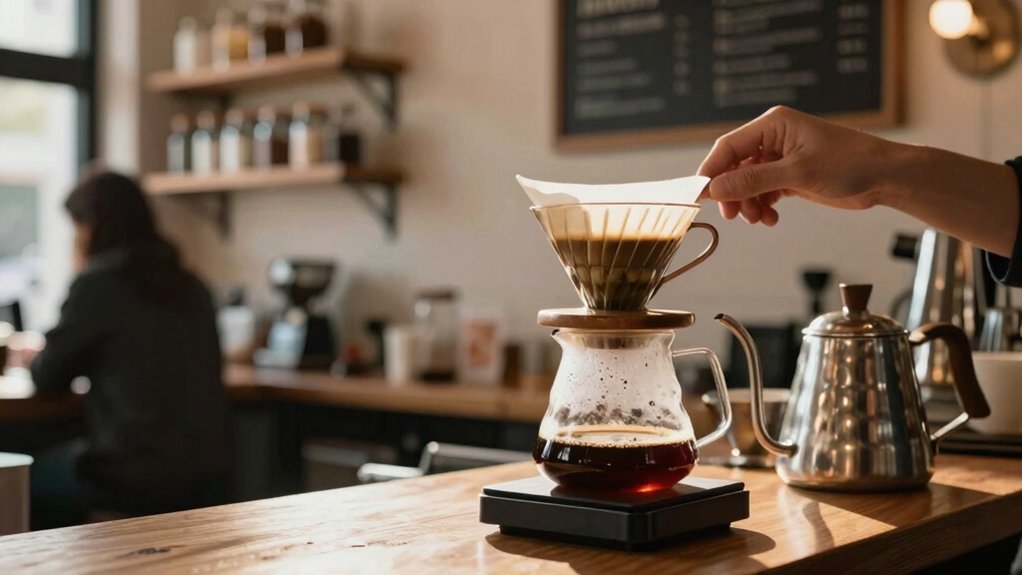
You’ll notice how precise brew techniques—adjusting grind, temperature, and bloom—extract the bean’s hidden notes. The slower, paper‑filtered flow lets fruit, floral, and citrus flavors shine without espresso’s heavy oils. By tweaking ratios and roast levels, you can compare single‑origin nuances side‑by‑side and really hear the terroir. The choice of water quality also plays a crucial role in drawing out the cup’s clean, balanced finish water quality as an integral part of the method.
Precision Brew Techniques
Ever wondered why a single‑origin bean can taste so different from cup to cup? You’ll discover that precision brew techniques let you coax distinct notes by mastering pour‑over, grind size, and temperature control. A steady, uniform pour from a gooseneck kettle, a grind calibrated to the bean’s density, and water held at 92–96 °C keep delicate compounds intact. When you adjust bloom time or flow rate, you reveal hidden fruit, floral, or spice layers that would otherwise stay muted. Regular inspection and choosing the right cleaning tools, like specialized espresso brushes, help maintain optimal machine performance for consistent results brushes maintenance.
Flavor Extraction Insights
How do manual brew methods coax hidden flavors from a single‑origin bean? You control grind size, pour rate, and temperature, letting each variable reveal a new note. A precise grind coherence preserves the bean’s surface, while mineral‑balanced water composition tempers acidity and lifts clarity. Stepped pours isolate compounds, so you taste fruitiness from Ethiopian beans or caramel sweetness from Central America without interference. Consistent burr calibration lets you reproduce those nuances shift after shift, turning each cup into a lesson on aroma, texture, and aftertaste. Filter choice can transform brew quality by aiding the removal of bitterness and oils during extraction.
The Role of the Barista in a Third‑Wave Café
What makes a third‑wave café truly distinct is the barista’s expertise: they decode origin notes, roast profiles, and precise brewing methods to let each bean’s character shine. You’ll feel the barista’s passion as they guide you through tasting flights, explaining terroir and farmer stories while adjusting grind size, temperature, and pour rate. Their manual techniques—from pour‑overs to calibrated espresso—turn each cup into a lesson in nuance. You leave not just refreshed but educated, trusting the café’s commitment to sustainability and quality.
Barista mastery transforms each bean into a nuanced lesson of origin, roast, and precise brewing.
- You sense the aroma of a single‑origin brew, revealing its unique origin notes.
- You watch the barista’s steady hands, mastering precise brewing with measured pour‑overs.
- You taste the balanced acidity and sweetness that only careful extraction can unlock.
- You connect with the farmer’s story, feeling the café’s transparent, ethical ethos.
Incorporating precise brewing tools
Designing a Koselig Atmosphere for Community Connection
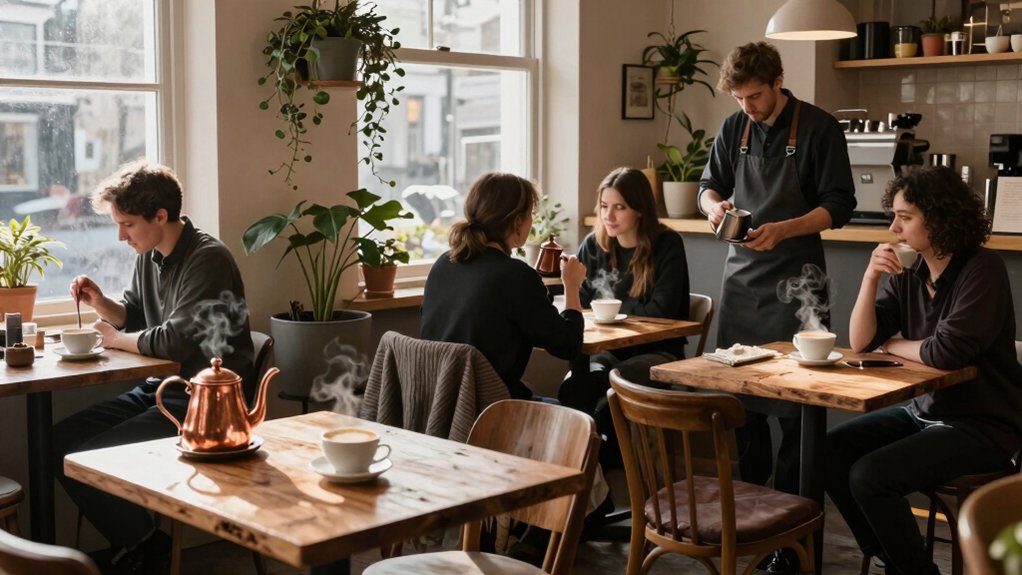
You’ll notice warm lighting and natural materials immediately set a welcoming tone, while soft, upholstered seats invite guests to linger.
Community boards tucked nearby corners spark conversation and let locals share news, events, or favorite brews.
A dedicated tasting bar and scale-and-refractometer-inspired stations encourage curious visitors to explore brew methods and taste profiles with guided notes ATC-enabled readings.
Warm Lighting & Natural Materials
Ever notice how a soft amber glow instantly makes a café feel like home? You walk in, and the warm lighting wraps you in a gentle hug, while natural materials ground the space in earthy comfort. The mix of exposed brick, reclaimed wood, and stone creates a tactile backdrop that invites you to linger. Subtle biophilic design elements—like a few thriving potted herbs—add a breath of fresh air, making the environment feel alive and nurturing.
- Amber‑toned LEDs set a relaxed, intimate mood.
- Exposed brick and wood beams give texture and warmth.
- Stone countertops reinforce a solid, comforting vibe.
- Green plant accents boost biophilic connection and visual calm. Stackable designs
Cozy Seating & Community Boards
The amber‑toned glow you’ve just soaked in naturally leads you to the café’s seating nooks, where plush cushions, low‑back chairs, and wooden benches invite you to settle in for hours.
You’ll notice cosy seating that feels like a living room, with soft textures and wood accents that soften the buzz of espresso machines.
Community boards sit nearby, peppered with flyers for local events, artist showcases, and neighborhood meet‑ups, turning idle moments into chances to connect.
These boards encourage you to linger, read, and add your own notes, fostering a sense of belonging.
In local cafés, the layout balances quiet corners for solo work with open tables for small groups, ensuring everyone feels welcome without crowding.
Verifying Fair‑Trade & Sustainable Practices in Third‑Wave Cafés
How can you be sure a third‑wave café truly supports fair‑trade and sustainability? You look for transparent origin details on the menu, see the farm name, altitude, and processing method, and notice how the shop talks about direct trade relationships that cut out middlemen. When a café highlights micro‑lot sustainability, it signals that specific farms receive premium prices and careful stewardship. These clues let you trust that every cup respects growers and the planet.
- The barista points out the exact estate and farmer behind each bean.
- You see a QR code linking to a video of the harvest and fair‑pay agreement.
- The menu lists micro‑lot batches with sustainability certifications.
- Staff answer questions about how direct trade reduces carbon footprints.
Tasting Sessions, Workshops & Coffee Literacy Programs
You’ll taste beans with vivid descriptions that reveal each origin’s unique character, then roll up your sleeves in workshops where you share and sharpen barista skills.
The literacy programs connect those flavors to farm stories, altitude, and processing methods, turning every cup into a lesson.
Together, these experiences build a community that values both knowledge and the people behind the coffee.
Tasting Descriptions
Ever wonder how a sip can tell a story? You’ll feel the terroir unfold as you taste a single‑origin brew, each note mapped to a farm’s altitude, processing method, and farmer’s name. The barista’s transparency turns a simple cup into a narrative, letting you trace chocolatey cacao back to a volcanic ridge or bright citrus to a high‑altitude estate. Your palate learns to differentiate buttery body from crisp acidity, and you leave with a deeper coffee for the bean’s journey.
- The aroma swirls, recalling rain‑kissed orchards.
- The first sip reveals a bright, citrus spark that lingers.
- Mid‑taste brings chocolatey depth, echoing volcanic soil.
- The finish whispers floral sweetness, a tribute to careful processing.
Workshop Skill‑Sharing
What draws you into a third‑wave café’s workshop is the chance to turn coffee from a drink into a skill. You’ll join tasting sessions that spotlight single‑origin beans, altitude, processing methods, and nuanced notes like fruitiness or floral perfume. In workshops, baristas guide you through pour‑over, immersion, and calibration, letting you tweak grinder settings, water temperature, and extraction time while watching flavor shift in real time.
Coffee literacy programs deepen the experience with provenance storytelling, revealing farmer names, roasting profiles, and regional differences that shape each cup. Live demonstrations—cuppings, mini‑sensory tastings, and direct‑trade talks—show how roast level and grind size affect aroma, giving you hands‑on mastery and a richer appreciation of quality.
Literacy Community Building
Ever wondered how a coffee shop can feel like a classroom? You walk in, and the aroma invites you to a coffee literacy adventure. Baristas guide you through tastings that reveal each bean’s origin story, processing method, and flavor note. Workshops demystify brewing—pour‑over, immersion, temperature control—while showing how roast levels shape aroma. Community building flourishes as you share insights with fellow enthusiasts, connect to farmer profiles, and see the impact of direct‑trade. The space becomes a hub where education meets enjoyment, and every cup sparks conversation.
- Sip a single‑origin brew and map its flavor journey.
- Join a hands‑on session on precise temperature control.
- Hear farmer stories that link your cup to the field.
- Collaborate with local roasters for open‑access coffee literacy.
Light Roasts & Flavor Transparency: Highlighting Bean‑Specific Notes
Curious how a light roast can unseal a bean’s personality? You’ll notice the café lists each single origin with altitude, variety, and processing method, then translates those details into vivid flavor notes—citrus, berries, florals—so you know exactly what to expect. Baristas explain how the light roast preserves the bean’s natural chemistry rather than masking it, and they tie every sip to the farm’s story. Transparency isn’t just marketing; pricing sheets show direct‑trade costs, and sourcing maps pinpoint the exact estate. When you order, you’re not just drinking coffee; you’re tasting a traceable, farm‑to‑cup narrative that respects the bean’s integrity and your curiosity.
Micro‑Lot Highlights: Limited‑Edition & Seasonal Offerings
Why do micro‑lot coffees feel like a secret handshake between farmer and cup? You sense the intimacy when a café showcases a single‑farm batch, complete with altitude, varietal, and processing notes. The limited‑edition nature of seasonal offerings makes each sip a fleeting celebration of terroir, and the price reflects the meticulous hand‑picking and careful processing that earned it. You appreciate the transparency that turns a drink into a story, and you know the farmer’s labor is directly rewarded.
Micro‑lot coffees forge a secret handshake, turning each cup into a farmer’s intimate, seasonal story.
- A bright Ethiopian micro‑lot with honey‑processed notes, harvested in spring.
- A smoky Guatemalan micro‑lot, wet‑processed, released just before the rainy season.
- A citrusy Colombian micro‑lot, sun‑dried, available only for the first two weeks of harvest.
- A chocolate‑forward Brazilian micro‑lot, natural‑processed, appearing once a year.
These micro‑lot highlights let you taste the farm’s personality, not just a generic blend.
Community Integration: Partnering With Local Roasters & Coffee‑Focused Artists
The intimacy of micro‑lot coffees naturally extends to the people who bring them to your cup. You’ll notice local roasters featured on menus, their names highlighted beside altitude and varietal notes, and their stories woven into every pour‑over flight. Through collaboration, the café hosts cupping sessions where you sip alongside the roaster, asking about processing methods and farm‑level transparency.
Community integration deepens when coffee‑focused artists design limited‑edition packaging, mural backdrops, and event flyers that reflect neighborhood culture. These partnerships turn a simple coffee run into an educational experience, reinforcing regional economies and sustainable practices. You leave feeling connected—not just to a flavor, but to the growers, creators, and neighbors who made it possible.
How Pricing Reflects Quality & Ethical Values
Ever wonder why a simple cup can cost more than a latte from a chain? You’re paying for single‑origin beans, ethical‑sourcing, and transparent‑pricing that reflect far more than flavor. When a café buys directly from a micro‑lot, it guarantees fair‑trade wages, sustainable farming, and a story you can hear in every sip. The higher price also funds skilled baristas, calibrated equipment, and seasonal, limited‑edition brews that showcase regional nuances.
- You taste the farm’s elevation and processing method.
- You support growers who earn a living wage.
- You enjoy a brew crafted with precise temperature and grind.
- You join a community that values education and provenance.
Emerging Fourth‑Wave Trends & Digital Engagement Tools
How are cafés turning data into community? You see them using digital engagement tools that turn transparent origin details into interactive stories. QR codes on cups link to farm videos, while apps let you schedule live‑streamed cuppings and book education experiences with baristas. Social feeds showcase precise roasting profiles, letting you trace each bean’s altitude and processing method before you sip. Augmented‑reality menus overlay flavor notes on your phone, turning a simple pour‑over into a lesson in terroir. By integrating appointment‑based tastings, you get personalized guidance without leaving home. These fourth‑wave tactics amplify the craft ethos, deepen trust, and turn every cup into a collaborative, data‑driven gathering.
Frequently Asked Questions
Why Is Third Wave Coffee so Famous?
You love third‑wave coffee because it celebrates single‑origin beans, precise brewing, and transparent sourcing, delivering nuanced flavors and stories that turn each cup into a crafted, sustainable experience.
What Is the Difference Between Specialty Coffee and Third Wave Coffee?
You’ll find specialty coffee focuses on bean quality and transparent grading, while third‑wave coffee adds craft, origin storytelling, lighter roasts, and precise brewing methods to showcase those beans in every cup.
Is Third Wave Coffee Better?
You’ll find third‑wave coffee isn’t inherently “better,” but its focus on single‑origin beans, precise brewing, and transparent sourcing often delivers clearer flavors and a more engaging, ethical experience than generic blends.
What Roast Level Is Best for Third Wave Coffee?
You’ll find the best roast level in third‑wave coffee is light‑to‑medium‑light; it preserves origin flavors, highlights citrus acidity, floral notes, and delicate sweetness, letting nuanced beans shine.
In Summary
You’ve seen how third‑wave cafés blend top‑tier beans, transparent sourcing, and skilled brewing to turn coffee into an art form. Their baristas act as guides, while cozy, community‑focused spaces invite conversation. Limited‑edition micro‑lots and ethical pricing reinforce the commitment to quality and sustainability. As digital tools rise, these cafés evolve, but the core—celebrating flavor, craftsmanship, and connection—remains the heart of the experience.


