
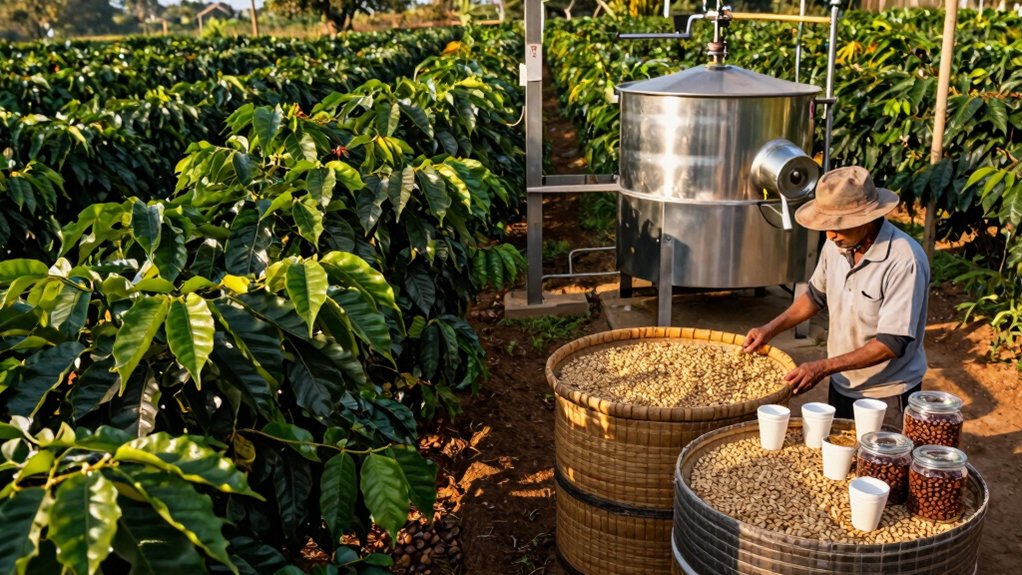
You can turn every coffee by‑from spent grounds to husks‑into reusable resources that fuel bio‑energy, create compost, and build durable up‑cycled products, closing the loop from farm to cup. Regenerative farming cuts water use, while husk pyrolysis yields bio‑char, compost, and biogas for on‑site power. Grounds become breathable textiles, lightweight furniture, and carbon‑neutral fuel. Circular packaging and reusable cups keep materials circulating, and platforms like HuskeeSwap make take‑back easy. Keep going to discover how Kenya’s pilot scales these solutions worldwide.
How the Coffee Waste‑to‑Value Loop Works
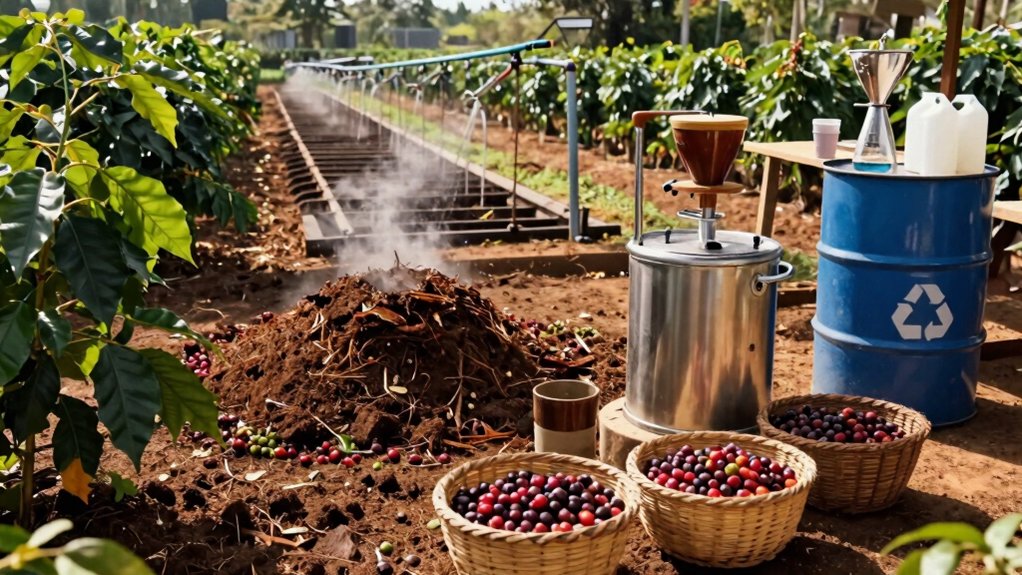
Ever wondered how coffee waste becomes a resource? You start by collecting spent coffee grounds and coffee husk from each brew. Those grounds feed bio‑fuels, fertilisers, and bio‑composites, while husk fibers become the backbone of upcycled products like reusable cups. Designers apply circular design principles, shaping cups that last, resist breakage, and fit end‑of‑life programs. When a cup reaches its end, take‑back schemes such as HuskeeSwap or HuskeeLoop reclaim it, shredding husk material for new iterations. This loop closes the coffee value chain: waste turns into raw material, raw material becomes durable product, and the product re‑enters the system instead of landing in landfill. You witness a tangible, low‑carbon cycle that keeps resources in circulation. recyclability data
Circular‑Economy Regenerative Farming Cuts Coffee’s Water Footprint
Coffee waste already shows how circular loops can turn by‑products into value, and the next step is to keep water in the loop. You’ll see that regenerative farming, rooted in a Circular Economy mindset, slashes coffee’s water footprint by boosting soil moisture and cutting irrigation. Intercropping and shade‑grown canopies create cooler microclimates, reducing evapotranspiration while fostering biodiversity. When you practice water stewardship, you treat runoff and processed wastewater as waste‑to‑resource streams, feeding them back into the farm instead of polluting rivers. Coffee waste valorization ties into this loop: organic residues become compost that enhances water‑holding capacity, and bio‑filters clean effluent for reuse. The result is a resilient, low‑water coffee system that conserves resources and delivers higher‑quality beans. water stewardship
From Coffee Husks to Compost, Bio‑Char, and Biogas
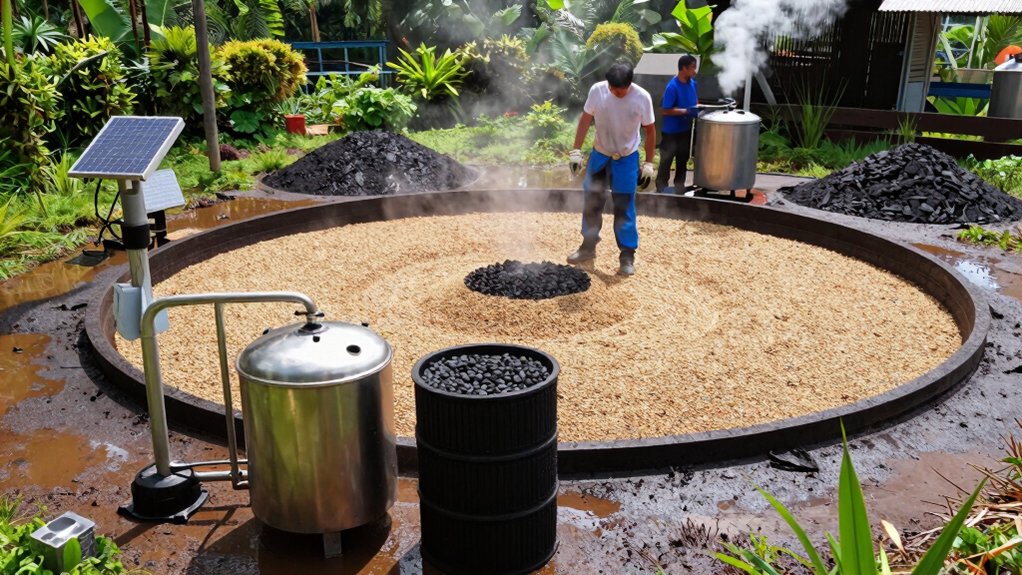
When you divert coffee husks from landfill, you unseal three high‑value pathways: compost that enriches soil, bio‑char that sequesters carbon and improves water retention, and biogas that fuels heat or electricity.
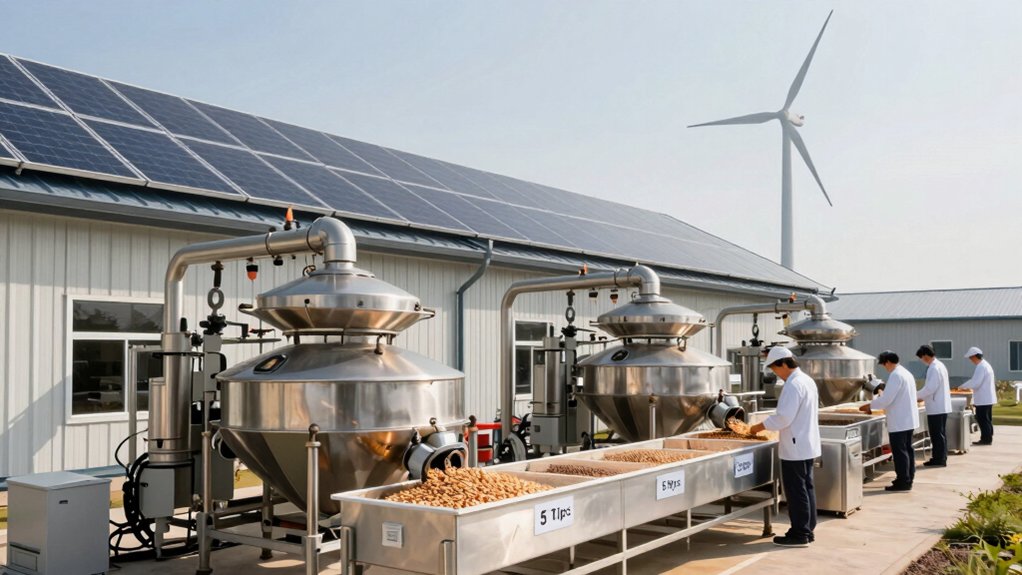
By collecting husks at the roastery, you feed them into a low‑temperature pyrolysis unit that yields biochar, then you blend the remaining fiber into a nutrient‑rich compost mix for local farms.
Collect husks, pyrolyze into biochar, then blend remaining fiber into nutrient‑rich compost for local farms.
The same process captures volatile gases, which you clean and compress into biogas for on‑site boilers or generators.
This waste valorization closes the loop, turning what would be waste into soil amendments, carbon sinks, and renewable energy.
Embracing these steps deepens the circular economy, cuts disposal costs, and strengthens community resilience. double‑lined
Up‑Cycling Spent Grounds Into Textiles, Furniture, and Fuel
Although most people think of spent coffee grounds as waste, you can turn them into high‑value textiles, furniture, and fuel. By upcycling spent grounds, you tap into a circular economy that transforms coffee by‑products into durable composites. Blend the grounds with bio‑resins to create fabric fibers for textiles that are breathable, antimicrobial, and biodegradable. Press the same mixture into panels for furniture, yielding lightweight, sturdy pieces that reduce reliance on virgin wood. When pyrolyzed, the grounds generate bio‑fuels with a carbon‑neutral profile, powering ovens or generators. Each application closes the loop, turning a low‑value stream into premium materials and fuels while cutting landfill waste and emissions. This approach showcases how coffee waste can fuel fashion, interiors, and energy alike. The inclusion of self‑heating portable espresso components demonstrates how integrated, compact systems can minimize energy waste in mobile operations, aligning with sustainable consumption practices upcycling fibers.
Designing Circular Coffee Packaging: Pods, Cups, and Beyond
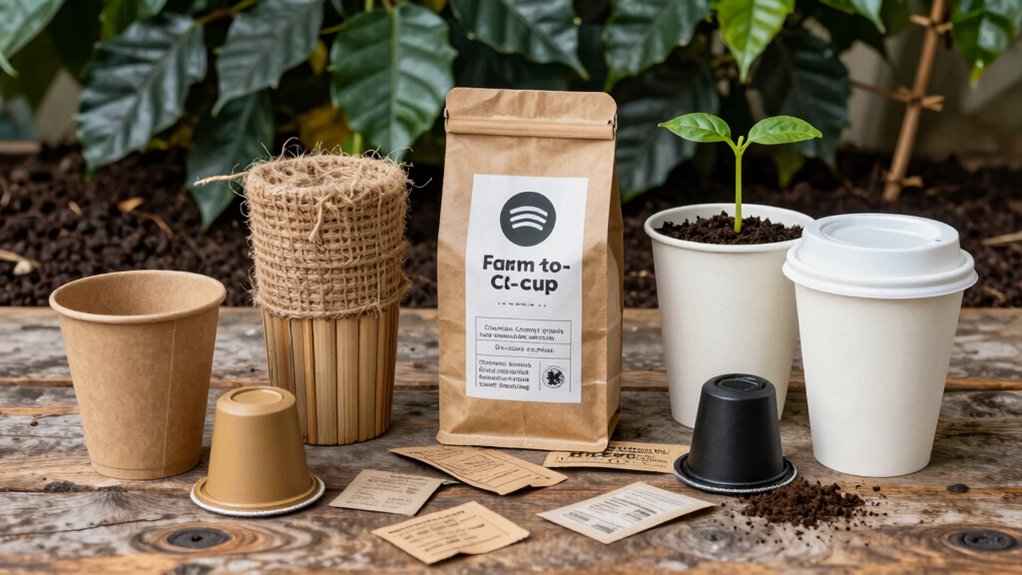
From turning spent grounds into textiles and fuel, the next step is to redesign the containers that hold coffee itself. You’ll choose circular packaging that swaps foil‑lined bags for compostable films, letting beans travel a loop without generating waste. When you select reusable cups, you extend service life, cut the 30‑year landfill timeline, and offset the manufacturing footprint after dozens of uses. Programs like HuskeeSwap turn used cups into fresh items through cleaning and recycling, keeping materials in circulation. Pods can become bio‑composites or biofuels, using coffee grounds as raw material. Embrace composting of grounds and return schemes, and you’ll close the loop from bean to cup, turning waste into value. Circular packaging transforms how materials cycle back into products, aligning with food‑grade silicone and durable, long‑lasting designs emphasized in sustainable cafe gear.
Creating a Shared Platform for Coffee‑Sector Sustainability
Why not unite every player in the coffee chain on a single, open‑access hub? You can tap C4CEC’s knowledge network to share best practices, pilot projects, and research across the coffee value chain. The sustainability platform turns waste‑to‑by‑products into revenue, links regenerative agriculture tips with market data, and offers funding leads. By joining, you help accelerate circular economy impact while keeping insights transparent and pre‑competitive. You can also leverage data standards to ensure consistent reporting across participants, enabling easier benchmarking and collaboration.
Kenya’s Pilot to Global Scaling: Lessons for Circular‑Economy Coffee Chains
How can Kenya’s pilot guide the world toward a truly circular coffee economy? You see the Kenya pilot turning coffee waste into textiles, furniture, and briquettes, proving that local market development fuels climate‑resilient growth. By empowering producers and creating a Nairobi hub, the project shows how waste‑to‑value can expand beyond a single region. You can translate those lessons into global scaling by replicating the capacity‑building model, aligning policy incentives, and fostering cross‑border partnerships that keep the Circular Economy loop intact. Convert coffee biomass into high‑demand products locally. Build producer networks that own the waste‑to‑value chain. Leverage Nairobi’s hub to export replicable practices for global scaling. Circular Economy insights can guide policy alignment and cross‑border collaboration to sustain impact at scale.
Frequently Asked Questions
How Are Waste‑Derived Bio‑Products Regulated for Food Safety?
You must ensure waste‑derived bio‑products meet FDA or EFSA food‑safety standards, undergo hazard analyses, obtain approvals for specific uses, and comply with labeling, traceability, and regular inspection requirements.
What Incentives Exist for Smallholders to Adopt Circular Waste Practices?
You’ll get tax credits, low‑interest loans, and grant programs that cut costs, plus market premiums for certified sustainable products, training subsidies, and community‑based incentives that boost profitability and resilience.
Can Coffee‑Waste Biochar Improve Soil Carbon Sequestration Rates?
Yes, coffee‑waste biochar boosts soil carbon sequestration; you’ll see higher organic matter retention, improved microbial activity, and slower carbon mineralization, leading to more stable, long‑term carbon storage.
How Does the Circular Model Affect Coffee Price Volatility?
You’ll see reduced coffee price volatility because the circular model stabilizes supply chains, recycles waste into valuable inputs, and smooths demand fluctuations, which together dampen price swings.
What Are the Logistical Challenges of Transporting Waste Between Farms and Roasters?
You’ll face uneven collection schedules, limited storage capacity, fragmented transport routes, and regulatory paperwork, plus the need for temperature‑controlled trucks, real‑time tracking, and coordination between many small farms and distant roasters.
In Summary
You’ve seen how every coffee by‑product can become a resource, slashing waste and cutting water use. By turning husks into compost, bio‑char, and biogas, and up‑cycling spent grounds into textiles, furniture, and fuel, you close the loop. Smart packaging and a shared sustainability platform make scaling easy. Kenya’s pilot proves it works—now you can replicate this circular model worldwide, turning coffee into a truly regenerative industry.

Leave a Reply