
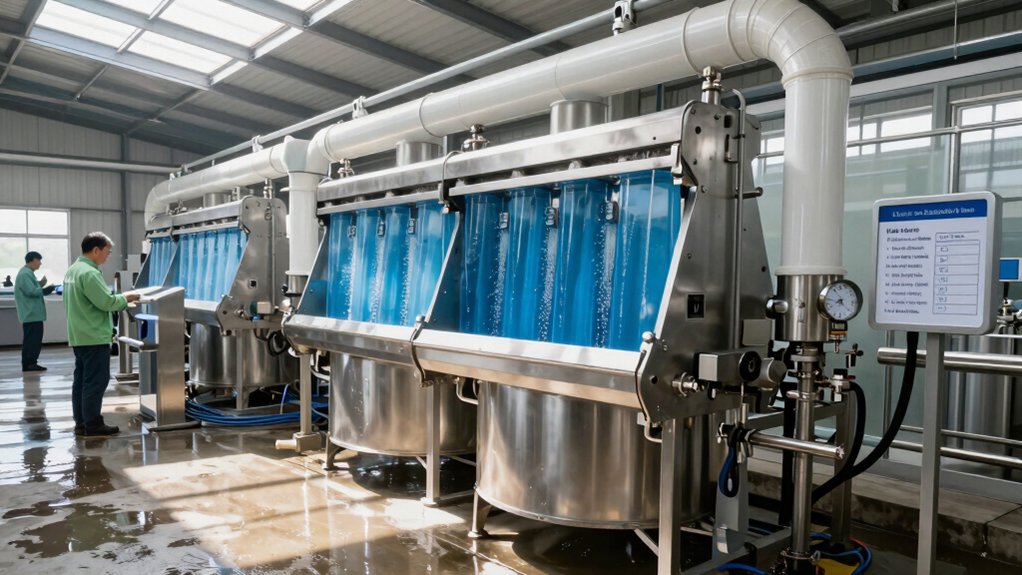
You can slash fresh‑water use in bean processing by installing a closed‑loop washing system that captures, filters, and recirculates water, and pair it with eco‑pulpers that strip fruit with little or no water. Add low‑water pulsing and mechanical demucilaging to cut irrigation further, then treat the excess on‑site and feed it back into the loop. Track usage with simple meters to meet Rainforest Alliance, UTZ, or Fair Trade standards, and you’ll discover even more tactics.
Closed‑Loop Washing for Water‑Smart Bean Processing
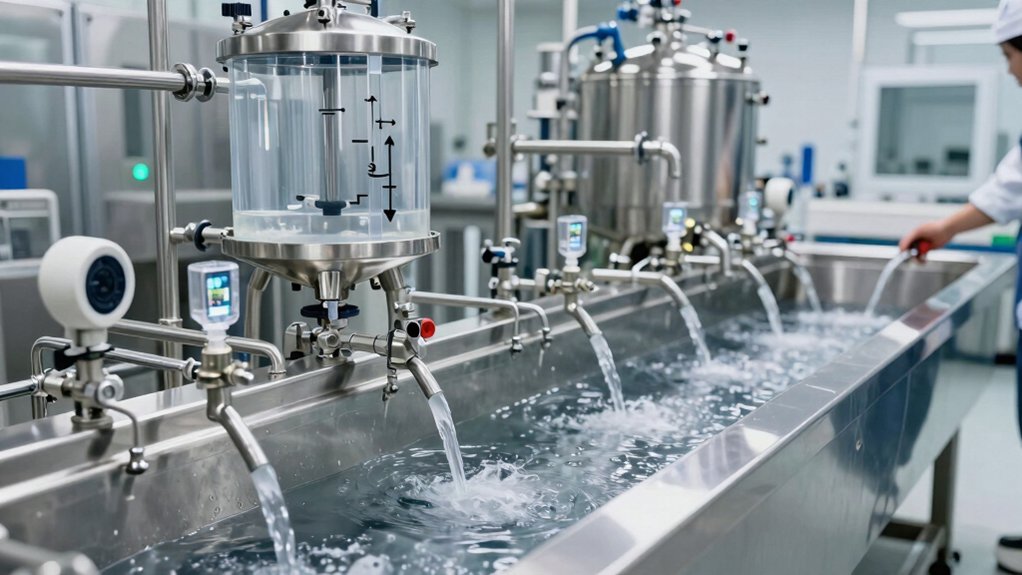
How can you slash water consumption while still delivering pristine beans? You install a closed‑loop washing system that captures, filters, and recirculates processing water across every wash stage. By reusing that water, you cut fresh‑water intake dramatically, boosting water efficiency and supporting sustainable water use in regions with limited water resources. water reuse further enhances efficiency by enabling more consistent wash cycles and reducing waste discharge.
Pair the loop with eco‑pulpers, which strip the outer fruit with little or no water, slashing overall demand by up to 90 %.
Integrate on‑site wastewater treatment to clean and reclaim any excess, then feed it back into the loop. This holistic approach turns waste into resource, maximizes water reuse, and safeguards water conservation throughout bean processing.
Implement Low‑Water Pulsing and Mechanical Demucilaging
Ever wondered how you can slash water use while still stripping beans clean? You can adopt low‑water pulsing and mechanical demucilaging to boost water efficiency during depulping. By delivering short, intense irrigation bursts, low‑water pulsing cuts fresh‑water demand, while mechanical demucilaging scrapes mucilage off beans without soaking them. Pairing these techniques with eco‑pulpers and closed‑loop processing creates a recycling loop that further reduces irrigation and supports sustainable processing. Use eco‑pulpers equipped with low‑water pulsing for up to 90 % water savings. 0
Track Water Use and Earn Sustainability Certifications
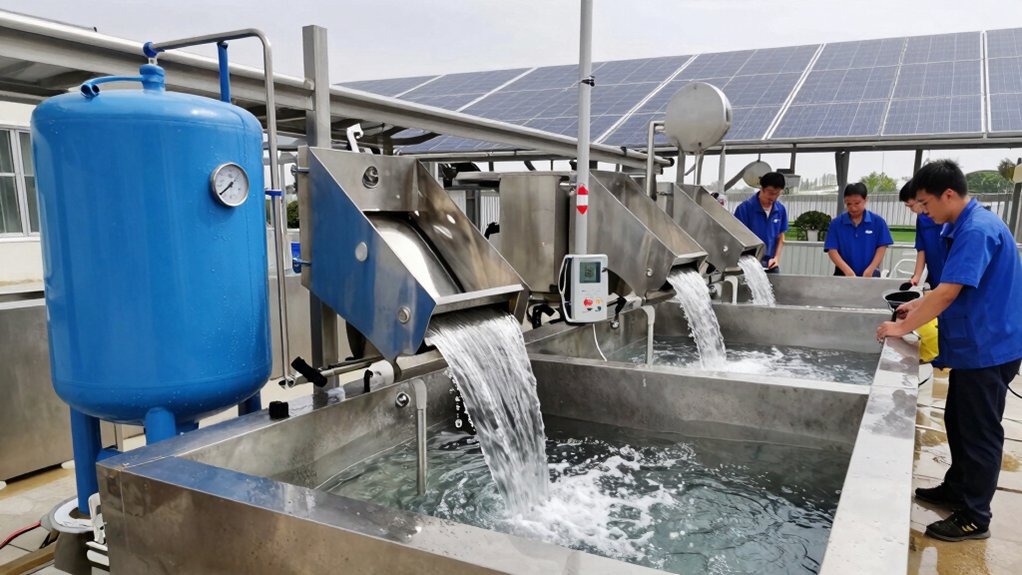
If you monitor your water use with simple meters and log the data regularly, you can quickly identify savings and meet the water‑use criteria required by certifications such as Rainforest Alliance, UTZ, and Fair Trade. Effective water-use tracking lets you compare actual consumption against certification criteria, revealing gaps in processing efficiency. Daily monitoring supports continuous improvement and helps demonstrate compliance with farm-level water stewardship standards on-site measurements. By integrating eco-pulpers and closed-loop water systems, you boost bean processing performance while cutting waste. Document each improvement and submit reports that demonstrate on‑farm water stewardship and broader water conservation. The resulting sustainability certifications open market premiums, signal compliance to buyers, and reinforce your commitment to responsible water management across the entire supply chain.
Frequently Asked Questions
What Are 5 Methods of Water Conservation?
You can conserve water by using drip irrigation, recycling processing water in closed‑loop systems, adopting semi‑washed (honey) processing, harvesting rainwater, and rotating nitrogen‑fixing beans to boost soil moisture retention.
What Are 10 Simple Ways to Save Water?
You can fix leaks, install low‑flow fixtures, collect rainwater, use a broom instead of a hose, run dishwashers only when full, water plants early, mulch soil, turn off tap while brushing, reuse greywater, choose efficient appliances, and monitor usage with a smart meter.
Which Method Is Most Effective in Conserving Water in Agriculture?
You’ll find that closed‑loop water systems are the most effective; they recycle water across processing steps, slashing fresh intake dramatically and keeping the whole operation sustainable.
What Are the 5 R’s of Water Management?
You’ve got the five R’s: Reduce water use, Reuse process streams, Recycle waste into usable water, Recover energy or nutrients, and Rethink designs to create circular, water‑wise bean processing systems.
In Summary
You’ve seen how closed‑loop washing, low‑water pulsing, and mechanical demucilaging slash consumption while keeping beans pristine. By tracking every liter and chasing sustainability certifications, you turn efficiency into a market edge. Implement these steps, and you’ll not only meet environmental targets but also boost profitability—proving that greener bean processing is both doable and rewarding.


