
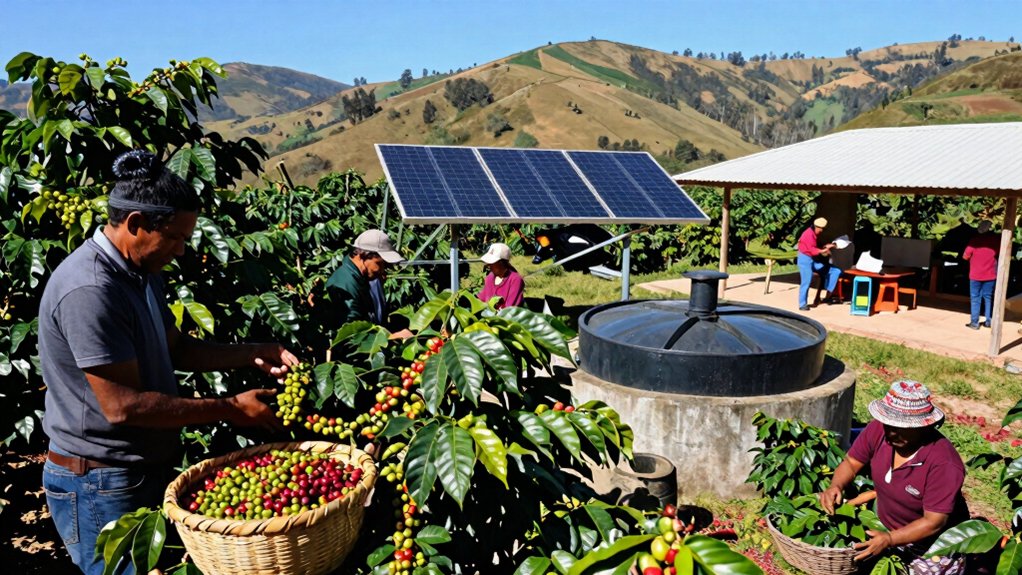
You’ll find that coffee cooperatives let you pool beans and resources to bargain for higher, more stable prices, often securing premiums like the 65 % boost seen in Duromina, Ethiopia. By sharing wet‑mill and cupping labs, they guarantee consistent quality and traceability, which roasters reward with premium payments. Women gain leadership roles, and shade‑grown practices protect biodiversity while cutting costs. With pooled funds you can build infrastructure, train farmers, and adopt climate‑resilient methods—so keep going to discover how digital marketplaces and direct‑trade further amplify these benefits.
What Coffee Cooperatives Are: and Why They Matter
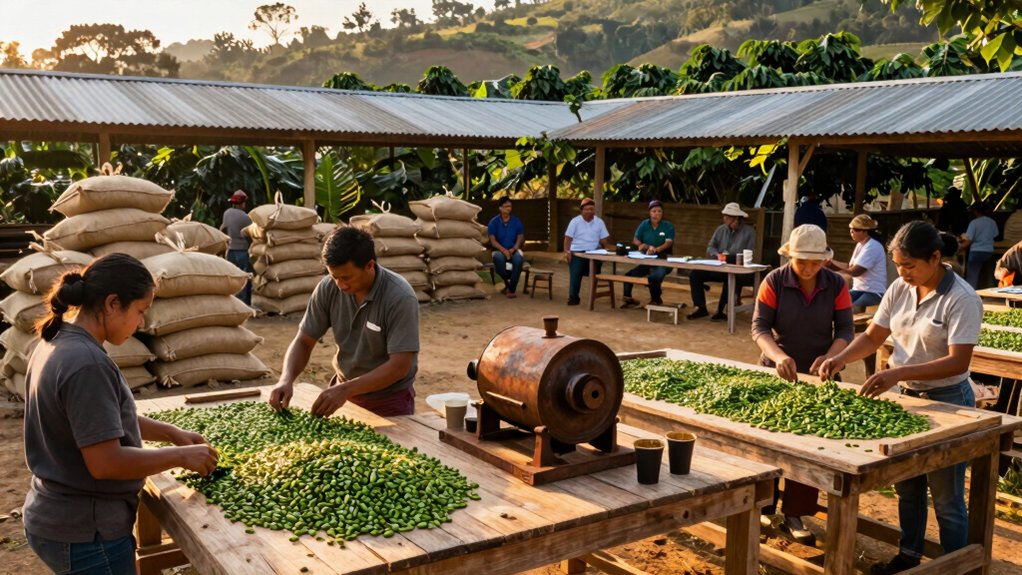
What’re coffee cooperatives, and why do they matter? You join a cooperative when you’re a small‑scale farmer seeking market power. By pooling beans, you create economies of scale that cut processing costs and open doors to premium buyers who value fair trade and sustainability. Your cooperative funds shared wet mills, drying patios, cupping labs, and training, so you can consistently deliver high‑quality coffee. Those investments boost traceability, letting you command better prices and meet strict sustainability standards. As a member, you also gain a collective voice that strengthens rural communities, fostering long‑term growth beyond a single harvest. In short, cooperatives empower you economically, protect the environment, and knit together the social fabric of your region. ATC-enabled devices can help standardize quality measurements across members, supporting consistent production practices.
How Coffee Cooperatives Use Collective Bargaining to Secure Fair Prices
Combine your harvests and you instantly boost your bargaining power. When you join a cooperative, you pool beans, resources, and data, turning many smallholders into a single market force. This collective bargaining lets you negotiate directly with buyers, cutting out middlemen who’d otherwise drive prices down. In Duromina, Ethiopia, members secured a 65% premium, averaging $3.68 per pound, because the cooperative leveraged its volume and quality standards. Fairtrade premiums and transparent contracts lock in price floors, ensuring you earn a living wage. Profits flow back into community projects, reinforcing stability and allowing you to invest in better farming practices. By centralizing processing and quality control, cooperatives give you stronger leverage and consistent fair prices. Cold process
How Coffee Cooperatives Build Direct‑Trade Relationships to Boost Rural Incomes
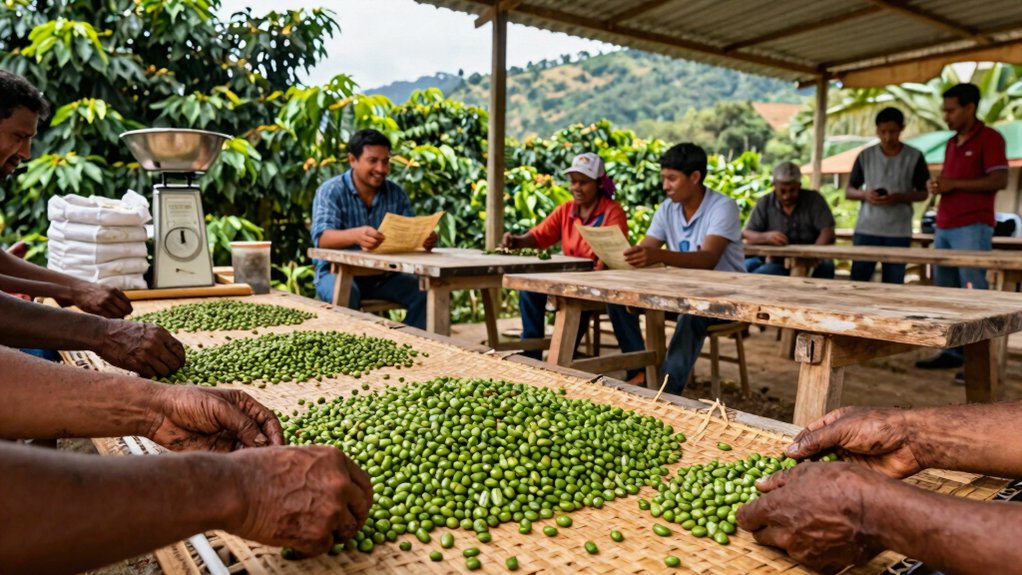
By pooling your beans and data, the cooperative can meet the volume and quality standards that roasters demand, opening the door to direct‑trade contracts. You’ll see roasters value the traceability you provide, and they’ll pay premiums that far exceed commodity rates. In Ethiopia, Duromina’s shift to wet‑mill processing secured a direct‑trade deal that sold 71 metric tons at $3.68 per pound—about a 65 % premium. Those extra earnings flow back into the cooperative, funding better processing equipment, storage facilities, and community projects that raise living standards. As premiums accumulate, you and fellow farmers experience steadier cash flow, reducing reliance on volatile markets. The result is higher rural incomes, stronger bargaining power, and a sustainable path toward specialty‑grade coffee production.
Sustainable Farming Practices Enabled by Coffee Cooperatives
Cultivating shade‑grown coffee, cooperatives protect biodiversity while slashing chemical use, creating a balanced ecosystem on your farm. You’ll find that shade‑grown can give you a natural canopy, reducing pest pressure and cutting fertilizer costs. By pooling resources, cooperatives can implement rain‑water harvesting systems that lower irrigation demand and safeguard local streams. Fair trade premiums reward your sustainable choices, giving you the capital to invest in agroforestry and training. This collaborative model lets you maintain high‑quality beans, meet market standards, and nurture a resilient, low‑impact farm that thrives for generations. rain‑water harvesting also helps conserve water resources while supporting long‑term soil health.
How Shade‑Grown Coffee Protects Biodiversity and Soil Health
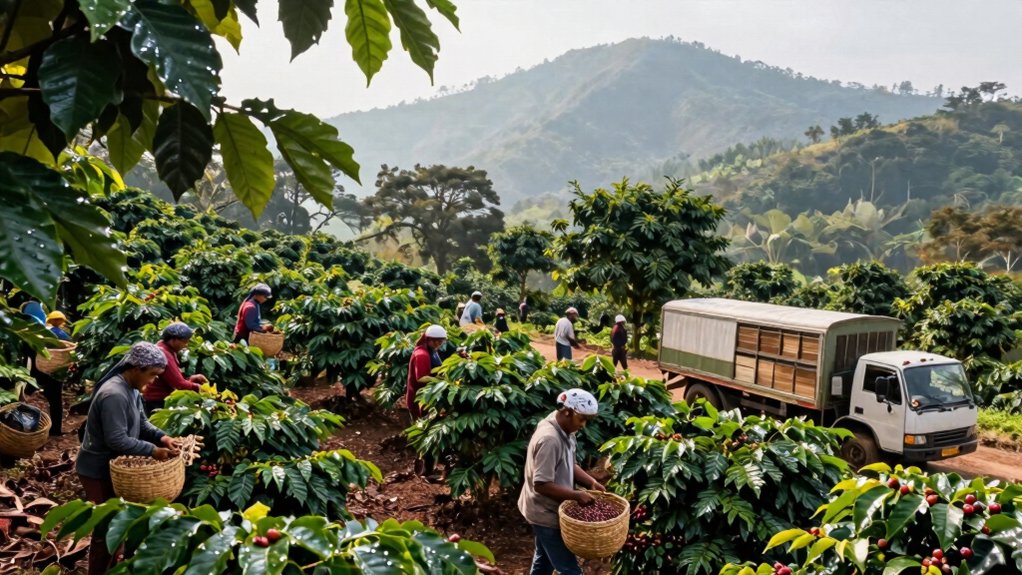
You’ll see how shade‑grown coffee creates a living canopy that shelters birds, insects, and native plants, preserving biodiversity right on the farm. A robust monitoring approach can help quantify how extraction measurements and water quality considerations relate to sustainable farming practices, including extraction yield tracking to optimize processing stages.
Biodiversity Habitat Preservation
Shade‑grown coffee creates a living canopy that shelters birds, insects, and other wildlife, turning farms into vibrant ecosystems while cutting the need for harmful chemicals. You’ll see how shade‑grown practices weave biodiversity into everyday production, letting native trees and understory plants form a resilient agroforestry network. By embracing sustainable farming, you reduce pesticide and fertilizer runoff, letting pollinators and predators thrive without interference. The canopy’s varied layers host countless species, from hummingbirds that control pests to beetles that decompose organic matter. As you protect these habitats, you also guard the ecological services they provide—natural pest control, pollination, and climate buffering—making your coffee operation both profitable and environmentally sound. cross-back design
Soil Structure Enhancement
Why does a coffee farm’s canopy matter for the soil beneath it? You’ll find that the shade‑grown canopy shields the ground from harsh sun, curbing erosion on steep slopes and slowing runoff. This protection lets organic matter from leaf litter settle, boosting soil organic carbon and soil fertility. The multi‑layered agroforestry system also creates habitats for birds and insects, cutting pest pressure without chemicals. As you walk the terrace, you’ll notice grass barriers and diverse shade trees reducing compaction and holding moisture, which together improve soil structure and resilience to climate swings. Mulching benefits
Organic and Agroforestry Techniques Within Coffee Cooperative Programs
Because coffee cooperatives aim to boost both yields and ecosystem health, they’re training members in organic farming and agroforestry, teaching them how to replace aging trees with high‑yielding varieties, plant native species that stabilize soil and retain water, and adopt efficient irrigation and water‑recycling practices that cut chemical use and protect biodiversity.
You’ll learn to apply organic farming principles—compost, cover crops, and pest‑friendly habitats—that lower pesticide reliance while enriching soil microbes.
Agroforestry techniques let you integrate shade‑grown coffee under a canopy of native trees, preserving wildlife corridors and enhancing water retention.
Cooperative nurseries supply seedlings for replanting, and water‑conservation workshops show you drip‑irrigation and rain‑water harvesting.
Together, these practices raise yields, safeguard ecosystems, and strengthen your community’s resilience.
How Quality Control and Traceability Work in Coffee Cooperatives
You’ll see how centralized bean grading sets a consistent standard across every lot, while digital traceability platforms record each step from farm to cup. Certified origin documentation then links those records to specific farms, proving ethical practices and living wages. This tight loop of grading, data, and certification lets buyers verify quality and sustainability instantly. The approach also aligns with transparent supply chain practices that help ensure origin traceability throughout the harvest and processing stages.
Centralized Bean Grading
How does a cooperative keep every bag of coffee consistent from farm to cup? You’ll find that centralized bean grading is the engine behind uniform quality control and traceability. By funneling all lots into a shared wet‑mill or sorting facility, the cooperative applies the same cupping standards, defect screens, and flavor profiles to every harvest. The recorded grading data links each batch to its farm origin, processing method, and even the farmer’s wage transparency, giving buyers confidence and unlocking premium markets. Traceability supports accountability across the supply chain.
Digital Traceability Platforms
Centralized bean grading gives you a solid foundation, and digital traceability platforms build on that by turning every grading record into a live, shareable data stream. You’ll see each batch tagged with farm ID, harvest date, and processing milestones, so you can trace coffee from tree to cup in real time.
The platform links farm practices, living‑wage data, and cupping results, giving buyers instant transparency and cutting recall risk. You can export audit‑ready reports that showcase sustainability metrics, from water use to carbon footprint, reinforcing fair‑trade commitments. By aggregating insights across cooperatives, you spot quality trends, adjust inputs, and maintain consistent standards.
Ultimately, digital traceability turns raw data into a competitive advantage, strengthening market access and community resilience.
Certified Origin Documentation
Ever wondered how coffee cooperatives turn raw beans into certified, market‑ready products? You’ll see that each step—harvest, processing, cupping—gets logged in a shared database, creating a paper trail that buyers trust. The cooperative’s quality‑control team matches lab results with farm records, then attaches certification stamps that prove organic, Fair Trade, or Rainforest Alliance standards. This process fuels transparency, letting you trace a cup back to the exact plot and farmer.
- Origin documentation records GPS coordinates, varietal, and farmer wages.
- Traceability links lab scores, drying logs, and shipment dates in real time.
- Certification tags each batch, guaranteeing social and environmental compliance.
The result is a verifiable, market‑ready product that commands premium prices and supports rural livelihoods.
Women’s Empowerment Through Coffee Cooperative Leadership
Why does a coffee cooperative’s leadership matter for women? You see, when women hold leadership roles in cooperatives, they steer decisions that affect daily work, income, and community health. Their presence reshapes governance, ensuring voting rights and direct coffee payments reach households that depend on the crop. Education and leadership training boost confidence, while targeted credit programs translate that confidence into tangible projects. Flexible membership lets you balance family duties with board meetings, fostering safe, inclusive spaces. As you gain leadership experience, you influence hiring practices, promote gender‑sensitive policies, and mentor younger women. This ripple effect strengthens household decision‑making, diversifies income streams, and builds resilient, sustainable rural communities.
Funding Infrastructure and Training to Close Coffee Cooperative Capital Gaps
When capital is scarce, coffee cooperatives can’t build the wet mills, raised drying beds, or quality‑control labs that turn beans into specialty‑grade products. You need reliable funding to close those gaps, and you can leverage Fairtrade premiums, donor loans, and impact‑investment funds. By directing capital into infrastructure, you cut post‑harvest loss, lower transport costs, and boost quality. Simultaneously, you fund training in agronomy, governance, and cupping, which lifts farmer expertise and opens premium markets.
- Secure blended financing that ties loans to measurable infrastructure milestones.
- Prioritize shared processing centers that serve multiple small farms.
- Invest in continuous training programs to keep skills current and scalable.
Climate‑Resilient Strategies for Coffee Cooperatives
You’ll see how shade‑tree agroforestry creates a living canopy that protects soil, boosts biodiversity, and buffers temperature swings for your coffee plants.
Pairing that with water‑saving irrigation systems—like drip lines and rainwater harvesting—cuts waste and keeps yields steady during dry spells.
Together, these practices let your cooperative thrive while safeguarding the ecosystem.
Shade‑Tree Agroforestry
- Plant native shade trees to moderate temperature and preserve moisture.
- Use ground‑cover species to prevent erosion and boost soil fertility.
- Harvest secondary products like fruit or timber for extra revenue.
Water‑Saving Irrigation Systems
How can coffee cooperatives secure their crops while conserving precious water? You’ll find that water‑saving irrigation systems cut usage and protect local sources by recycling runoff and applying drip or micro‑sprinkler tech. Training boosts water management skills, teaches soil‑moisture monitoring, and supports climate resilience through shade‑grown practices that lower evaporation. Dry‑season management and cooperative farming plans keep yields steady, while efficient irrigation improves cost‑effectiveness and ecosystem health.
| Benefit | Example |
|---|---|
| Irrigation efficiency | Drip lines delivering water directly to roots |
| Climate resilience | Shade trees reducing heat and conserving moisture |
| Cooperative farming | Shared training on drought planning and water reuse |
Future Opportunities for Coffee Cooperatives: Digital Marketplaces & Direct‑Trade
We’re on the brink of a digital revolution for coffee cooperatives, where online marketplaces and direct‑trade platforms can cut out middlemen and lift farmgate prices through transparent pricing and traceability. You’ll see how digital marketplaces connect cooperatives straight to global buyers, while direct‑trade models lock in premium payments and stable contracts. Real‑time inventory, cupping scores, and farm data boost quality control, and e‑commerce subscriptions create predictable revenue streams. Online training sharpens governance and financial literacy, securing income security for members.
- Direct‑trade guarantees premium, contract‑based sales.
- Digital marketplaces expand reach and cut intermediaries.
- Cooperatives gain income security through transparent pricing and traceability.
Frequently Asked Questions
How Do Cooperatives Handle Price Fluctuations During Market Crises?
You buffer price spikes by pooling resources, negotiating bulk contracts, and using reserve funds; you diversify crops, set price‑stabilization clauses, and sometimes tap community savings or micro‑insurance to cushion crises.
What Certifications Are Required for a Cooperative to Export Organic Coffee?
You need USDA Organic, Fair‑Trade, and possibly Rainforest Alliance or UTZ certifications; each requires compliance audits, traceability records, and annual inspections before you can export organic coffee legally.
How Are Profits Distributed Among Cooperative Members?
You receive a share of net earnings based on your contribution, usually measured in pounds of coffee delivered or labor hours logged, after covering costs, reserves, and any reinvestment allocations the cooperative decides.
Can Small Farms Join a Cooperative Without Existing Infrastructure?
Yes, you can join a cooperative even if your farm lacks infrastructure; the group will provide shared facilities, training, and resources, letting you contribute your harvest while they handle processing and distribution.
What Role Does Technology Play in Cooperative Decision‑Making?
You rely on digital platforms that aggregate data, streamline voting, and visualize forecasts, so you can quickly compare proposals, track progress, and make informed, consensus‑driven decisions across the cooperative.
In Summary
You’ve seen how coffee cooperatives empower rural communities—securing fair prices, fostering direct‑trade links, and championing sustainable, shade‑grown farms. By closing gender gaps, financing infrastructure, and adopting climate‑resilient practices, they lift incomes and protect ecosystems. Now, with digital marketplaces and expanded direct‑trade networks, these cooperatives can scale their impact even further, turning coffee into a catalyst for lasting economic and environmental resilience.


