
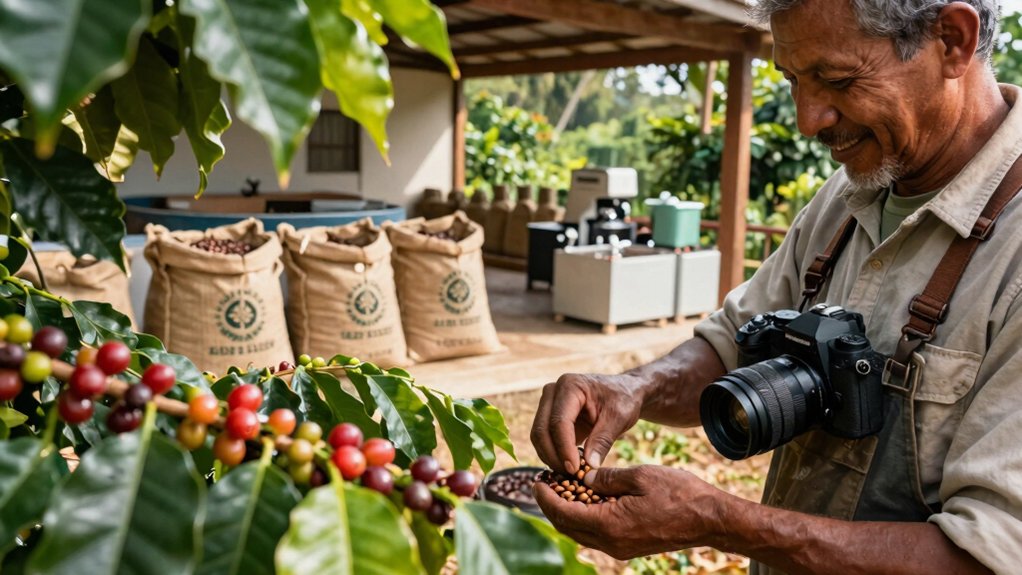
You’ll know a coffee supply chain is truly ethical when each bean’s path is transparently traced, farmers receive living‑wage premiums through fair‑trade or direct‑trade contracts, and independent audits confirm that environmental, social, and community standards are met. Transparent pricing shows how much of your cup’s price reaches the farm, and certifications like Fair Trade, Rainforest Alliance, and Enveritas verify those claims. Look for clear labels, farmer profiles, and impact data to be sure you’re supporting genuine sustainability and social benefit.
What Makes a Coffee Supply Chain Truly Fair?
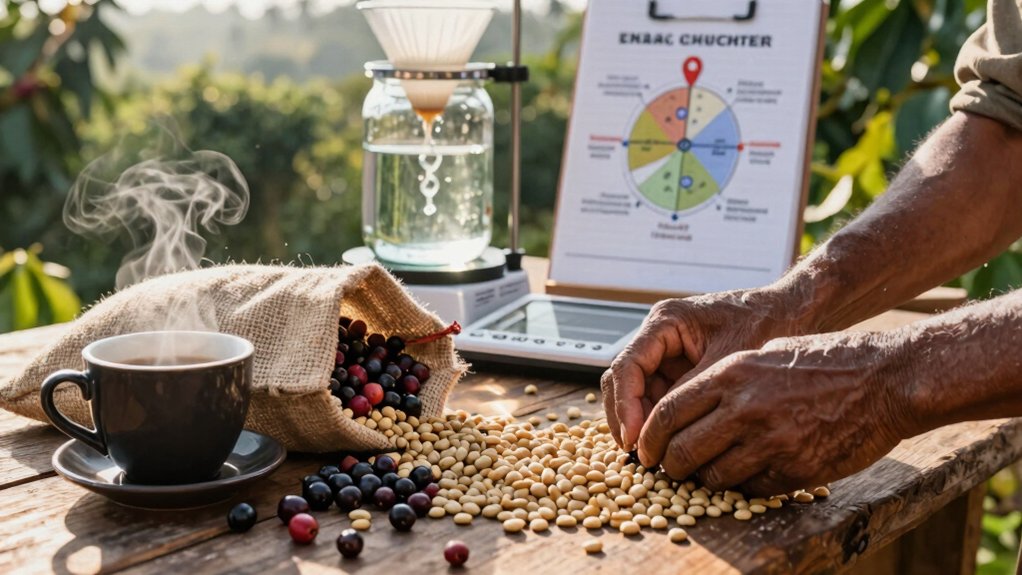
Fairness begins with paying farmers more than it costs to grow their beans, often through premiums, Fair Trade certifications, or direct‑trade contracts that guarantee a living wage.
Fair wages stem from transparent traceability, ensuring farmers receive living‑wage premiums through Fair Trade or direct‑trade contracts.
You’ll see that fair wages come from transparent traceability, letting you trace each bean back to the farmer and the exact price paid.
Safe working conditions and no child labor are non‑negotiable, ensuring every worker enjoys health benefits and education opportunities.
Premiums fund environmental sustainability, supporting shade‑grown coffee, water conservation, and reduced chemical use.
Direct trade deepens long‑term farmer relationships, providing ongoing technical assistance and financial support. Shelf-stable, non-refrigerated options in some supply chains can also help maintain consistent quality and prices across regions.
Fair Compensation for Ethical Coffee Farmers
You should expect that a fair‑price coffee contract guarantees a living wage for the farmer, covering costs and leaving room for a decent standard of living.
Transparent pricing structures let you see exactly how much of the cup price reaches the farm, from premium payments to fee breakdowns.
When you trace the money back to the producer, you can verify that the compensation truly reflects ethical sourcing.
In addition, price transparency across supply chains helps ensure that the final payment reflects the true cost of sustainable farming practices.
Living Wages for Farmers
Ensuring that coffee farmers earn a living wage means paying them more than just the cost of production or a minimum wage; it requires prices that cover all expenses and still leave enough for a decent standard of living. When you prioritize living wages, you push for fair compensation that exceeds basic costs and supports a dignified life.
Direct trade cuts out middlemen, letting you negotiate higher prices and secure premiums that flow straight to coffee farmers. Certifications and transparent supply chains verify that those premiums reach the growers. Supply chain traceability lets you track every dollar, ensuring it funds producer investment, technical assistance, and long‑term wage improvements. By demanding these standards, you help build a resilient system where living wages become the norm, not the exception.
Transparent Pricing Structures
Many coffee lovers don’t realize that transparent pricing is the backbone of fair compensation for ethical farmers. When you trace a bean from farm to cup, you see how transparent pricing creates fair wages and a living income. Direct trade cuts out middlemen, allowing premium payments that exceed market rates and fund better practices. Third-party verification and regular producer visits keep those numbers honest, while price disclosure lets you compare offers across regions. Non-GMO Project Verified transparency helps verify ethical standards across the supply chain.
Traceability in Ethical Coffee Supply Chains
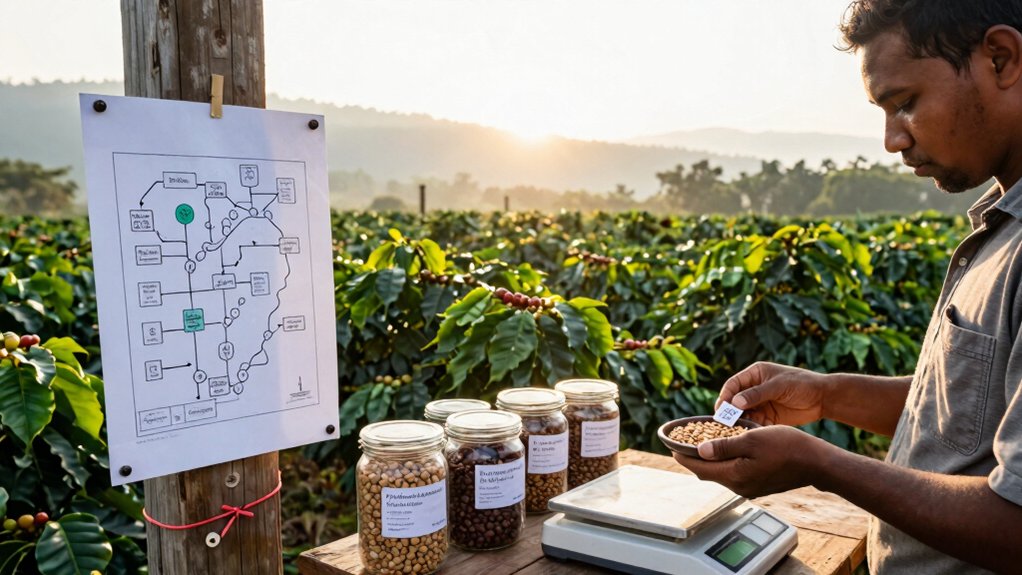
You’ll see that transparent farm‑to‑cup tracking lets you pinpoint the exact origin, farmer, and price paid for each bean.
Third‑party audits verify those details, giving you confidence that the claims are genuine.
This combination turns abstract ethics into concrete, traceable data you can trust.
In addition, the data can feed into app‑based profiles that align beverage choices with verified sourcing.
Transparent Farm-to‑Cup Tracking
How can you know the exact journey of your coffee from farm to cup? Transparent traceability lets you see every step, from farm-to-cup tracking details and supply chain transparency. You’ll spot price transparency, farmer payments, and on‑the‑ground practices, all verified by third‑party verification. Certifications and origin storytelling link each cup to its farm, community, and impact, reinforcing ethical sourcing. A 1‑4 word phrase
Verified Third‑Party Audits
Can you trust the numbers behind your coffee’s price tag? Verified third‑party audits give you that confidence. When auditors like SCS Global Services examine farms, they demand economic transparency: payments, farm‑level details, farmer names, locations, and prices paid all become public. Those audit outcomes reveal supplier practices, turning vague promises into an accountable supply chain. Third‑party verification adds independent credibility, reinforcing ethical sourcing claims and complementing Fair Trade or Rainforest Alliance labels. By exposing every step, you can trace a cup back to its origin, see how stakeholders are held to standards, and know that the chain is monitored continuously. This transparency not only builds stakeholder credibility but also drives real improvement across the entire coffee ecosystem. Verified audits help ensure that the price paid to farmers reflects value across the supply chain.
Direct‑Trade Relationships in Ethical Coffee vs. Conventional Middlemen
What makes a coffee supply chain truly ethical? You’ll find that direct‑trade relationships beat conventional middlemen on ethical sourcing, transparency, and price signals. By cutting out middlemen, you forge stronger farmer relationships and farm partnerships, allowing quality premiums to flow straight to growers. Transparency lets you share farm names, locations, and farmer profiles, boosting origin verification and traceability. While direct-trade can fund technical assistance and infrastructure, critics warn that without third‑party verification, claims may wobble. Still, the model’s focus on fair price signals and long‑term collaboration often yields higher payments tied to quality, making the supply chain more accountable and resilient. AeroPress and similar brewing methods demonstrate how careful, thoughtful processes—from grain to cup—mirror the precision needed in building ethical supply chains.
How Environmental Standards Are Verified
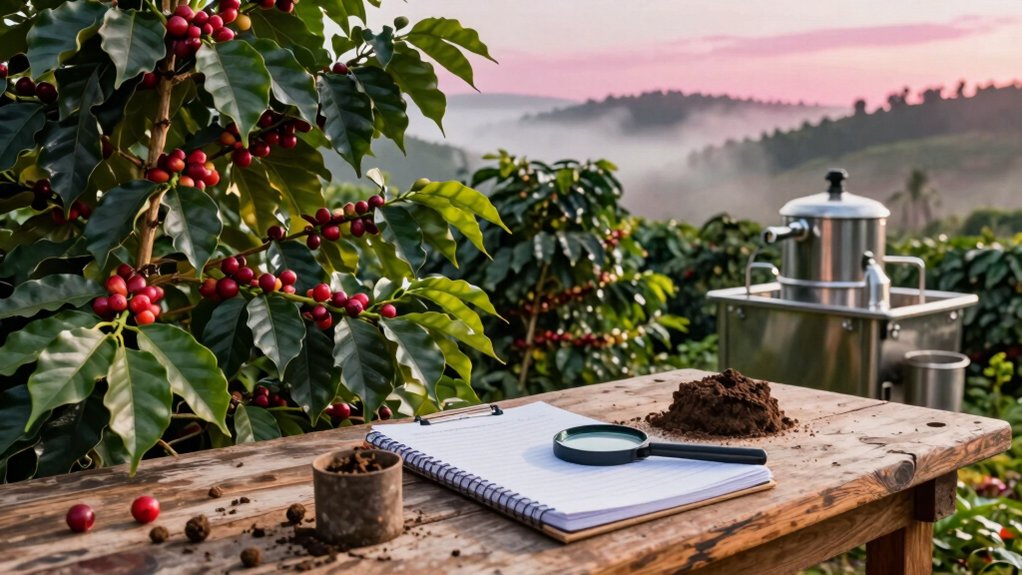
Direct‑trade’s transparency makes it easier to confirm that farms meet environmental standards, because you can trace each lot back to a specific plot and inspect its practices. You’ll find environmental verification hinges on third‑party audits that assess soil health, water quality, biodiversity protection, and shade‑grown cultivation. Auditors collect sustainability metrics, then issue environmental certifications that prove compliance. After the initial audit, reverification cycles keep farms accountable, while traceability tools let you follow each bean’s journey from farm to cup. Continuous monitoring encourages growers to adopt climate‑smart techniques, reduce agrochemical use, and protect forest buffers. By demanding these data points, you ensure that every cup supports genuine ecological stewardship, and you can rely on lead-free glaze standards when selecting biscotti serving pieces that accompany ethically sourced coffee moments.
Understanding Fair‑Trade, Rainforest Alliance, and Enveritas Certifications
Fair‑Trade, Rainforest Alliance, and Enveritas each offer a distinct but complementary way to verify that coffee beans meet ethical standards.
You’ll see Fair Trade guarantee a minimum price and premium payments that uplift farmer livelihoods, while Rainforest Alliance focuses on sustainable farming, biodiversity, and watershed protection through rigorous audits.
Enveritas adds an extra layer of third‑party verification, checking social, environmental, and economic sustainability via independent farm assessments and farmer interviews.
Together, these certifications create traceability that reassures you of ethical sourcing.
However, their impact hinges on transparent pricing, long‑term relationships, and ongoing verification.
Watch for greenwashing risks and barriers that smallholders face, and demand price premiums that truly cover production costs.
Community Impact: Health, Education, and Infrastructure Investments
Having explored how certifications verify ethical standards, it’s clear that the real measure of impact lies in what they bring to the communities that grow our coffee. Ethical sourcing channels fair wages and direct trade into tangible community health upgrades, education access, and infrastructure investment. Brands publish farmer profiles and social impact data, offering certification transparency that lets you see how healthcare programs and new schools improve daily life.
| Area | Example Impact |
|---|---|
| Health | New clinic, mobile health vans |
| Education | Scholarship funds, refurbished classrooms |
| Infrastructure | Paved roads, reliable electricity |
| Economic | Cooperative savings, micro‑loans |
These outcomes show that your coffee choice can fund lasting social progress.
Practical Tips for Choosing Ethical Coffee
Ever wonder how to spot truly ethical coffee on the shelf? Look for Fair Trade or Direct Trade labels that guarantee Transparency about pricing and farm names. Check the packaging for Third‑Party Certification logos and details on Origin Tracing, which reveal the specific farms and the premiums paid. Scan for statements about Pricing Transparency and Farmer Support Programs, such as training, healthcare, or education initiatives. Avoid vague “ethically sourced” claims; instead, seek brands that publish Supply Chain Audits and describe Sustainable Practices. When a company lists farm‑level information, visits, or long‑term relationships, you know the coffee supports real farmer profitability. Use these cues to choose beans that align with ethical standards and measurable impact.
Frequently Asked Questions
How Are Coffee Bean Origins Verified Without Third‑Party Certifications?
You verify origins by scanning GPS‑tagged harvest data, cross‑checking farmer IDs on blockchain ledgers, using satellite imagery to confirm field locations, and employing mobile traceability apps that record each step.
What Role Do Local Cooperatives Play in Ethical Coffee Pricing?
You rely on local cooperatives to negotiate fair prices, aggregate beans, and guarantee profits stay within the community, so you get ethically sourced coffee while supporting growers’ livelihoods and sustainable practices.
Can Consumers Track the Carbon Footprint of Each Coffee Shipment?
You can track each shipment’s carbon footprint using QR codes or blockchain apps that display real‑time emissions data, letting you see the exact impact and choose greener beans instantly.
How Do Ethical Coffee Brands Handle Labor Rights Violations on Farms?
You hold brands accountable, demand transparent audits, and require them to terminate contracts with violators, offer remediation, and support fair‑wage certifications, ensuring workers receive safe conditions and living wages.
What Mechanisms Ensure Long‑Term Farmer Support Beyond One‑Time Premiums?
You ensure long‑term farmer support through multi‑year contracts, profit‑sharing agreements, capacity‑building programs, and transparent price‑setting mechanisms that tie payments to market trends rather than one‑off premiums.
In Summary
You’ve seen that a truly ethical coffee supply chain hinges on fair pay, transparent traceability, direct‑trade links, verified environmental standards, and genuine community investment. By choosing beans with reputable certifications and supporting brands that prioritize farmer relationships and sustainability, you drive demand for responsible practices. Your informed choices help ensure that every cup you enjoy reflects a fair, sustainable, and thriving coffee ecosystem.


