
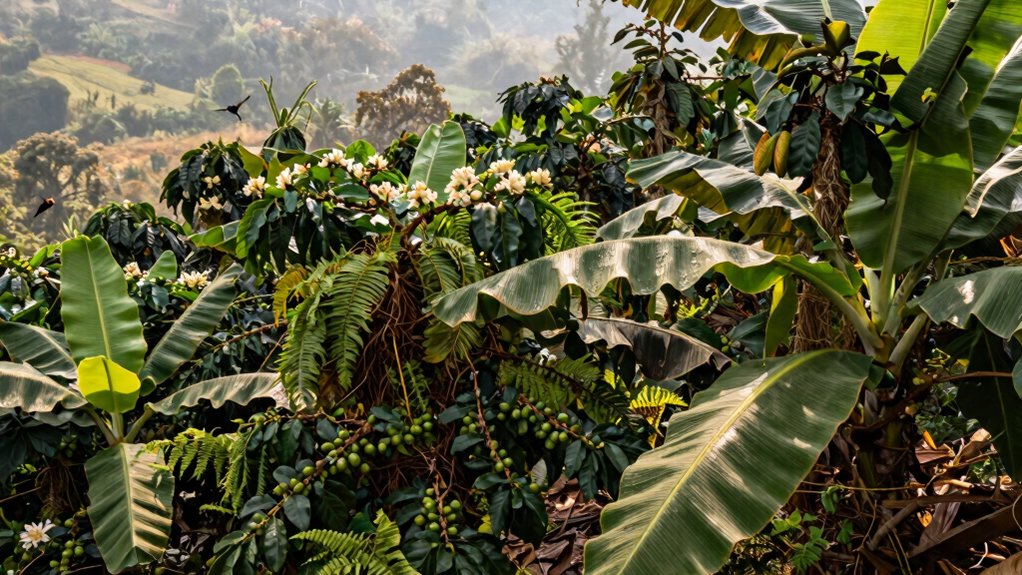
Shade‑grown coffee protects biodiversity by keeping at least 30 % canopy cover, which creates varied microhabitats for insects, birds, mammals, and epiphytes. The dense shade stabilizes soil microclimates, boosts carbon sequestration, and supports healthier soils, while native trees provide extra income streams and reduce fertilizer needs. In Latin America, higher canopy density consistently raises species richness, whereas African farms often see more animal abundance under lighter shade. Stick around, and you’ll discover how these practices translate into resilient livelihoods and climate‑smart gains.
Why Shade‑Coffee Boosts Farm Biodiversity
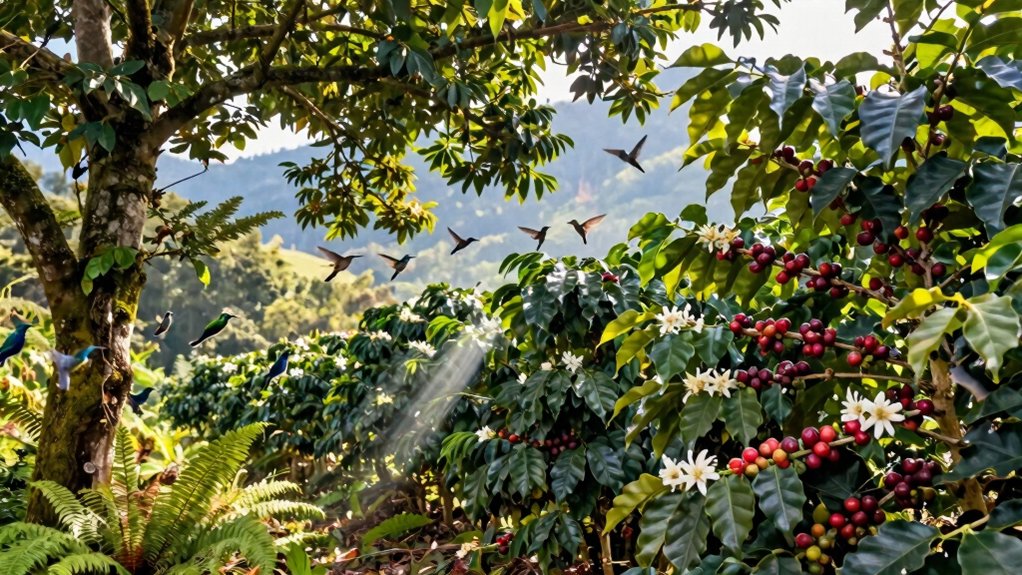
Why does shade‑coffee boost farm biodiversity?
Shade‑grown coffee farms with ≥30 % canopy support richer insect, bird, mammal, and epiphyte communities than sun‑exposed plots.
You’ll find that shade-grown coffee farms with at least 30 % canopy host richer insect, bird, mammal, and epiphyte communities than sun‑exposed or low‑shade plots.
Meta‑analyses reveal overall biodiversity climbs under high shade (HS) and still beats sun‑only systems when shade drops to low (LS).
Birds consistently flourish in both HS and LS, while mammals and epiphytes reach peak diversity only under HS.
In Latin America, these shaded farms out‑perform sun farms in species richness and abundance; Africa shows the opposite trend, with less shade sometimes supporting higher abundance.
Experimental evidence confirms that a higher canopy cover correlates with greater overall biodiversity on shade‑grown farms, reinforcing the importance of preserving canopy in sustainable coffee systems.
How Canopy Cover Boost Shade‑Coffee Species Diversity
How does canopy cover translate into richer ecosystems on coffee farms? When you maintain more than 30 % canopy cover, you create high shade conditions that nurture a broader array of plants, birds, mammals, and epiphytes. This dense shade environment offers varied microhabitats, shelter, and food sources, driving up biodiversity compared with sun‑grown or low shade fields. Additionally, shade management can influence soil health and microclimate stability, further supporting diverse species assemblages canopy cover benefits . In Latin America, you’ll see a clear surge in species richness as canopy density rises, while African sites may show different abundance patterns. By prioritizing canopy cover, you directly amplify shade‑coffee species diversity and reinforce ecosystem resilience.
Practical Shade‑Management Tips for Smallholders Without Cutting Yields
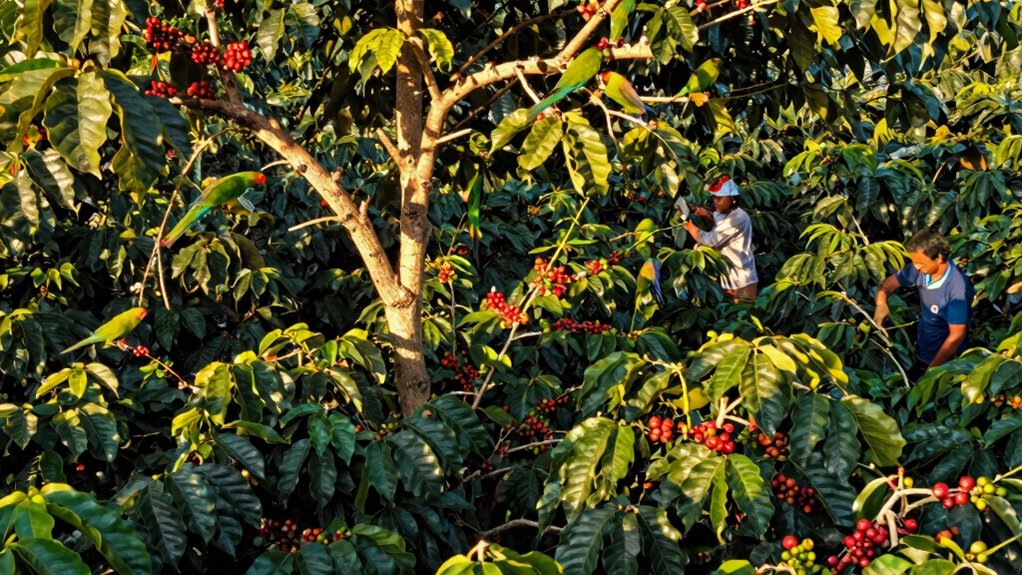
Canopy cover isn’t just a biodiversity boost—it can also keep your coffee yields stable when you manage it wisely. As a smallholder, you can reach ≥30% shade by planting native, multipurpose trees that fill gaps and link existing patches. Choose species that provide leaf litter and epiphytes, boosting biodiversity while enriching soil fertility. Trim lower branches only enough to let light reach coffee cherries, avoiding large openings that disrupt fauna movement. Rotate shade trees with nitrogen-fixers to maintain soil health and reduce fertilizer needs. Keep a mix of tree heights to attract birds that naturally control pests. Monitor canopy density regularly; a balanced shade-grown system sustains yields and protects the ecosystem without extra cost. Regular canopy management can also help stabilize yields during variable weather shade management benefits.
Regional Insights: Latin America vs. Africa
You’ll see that Latin America’s shaded coffee farms support markedly higher species diversity, while African farms often host greater animal abundance under lighter shade. Top 1% of coffees worldwide
Higher Diversity in Latin America
What makes Latin America stand out in the shade‑coffee debate?
You’ll see that shade coffee farms there host dramatically higher biodiversity than sun‑grown plots. Birds consistently thrive on both high‑shade (HS) and low‑shade (LS) farms, while mammals and epiphytes favor HS sites. This pattern means that more shade generally boosts species richness across the region.
Conservation plans must respect Latin America’s context, preserving landscape connectivity and balancing shade levels to keep yields stable while protecting fauna and flora. Meta‑analyses confirm that, unlike elsewhere, Latin America’s biodiversity responds positively to shade, reinforcing the need for region‑specific shade management. High shade
Abundance Boost in Africa
Why does Africa’s coffee landscape flip the script on shade? You’ll notice that farms with less shade often host higher faunal abundance, a stark contrast to Latin America where shade‑grown coffee boosts both diversity and numbers. In Africa, reduced canopy opens up microhabitats that favor certain insects and birds, driving an unexpected abundance surge. This pattern shows that shade’s benefits aren’t universal; they hinge on regional ecology. While you might think shade always supports biodiversity, the data reveal that Africa’s coffee ecosystems thrive under more open conditions. Balancing yield and biodiversity now means tailoring management to each continent’s unique response, preserving connectivity, and respecting local species dynamics regional ecology insights.
Tailored Conservation Strategies
In Latin America, you’ll prioritize high‑shade (HS) farms, because shade‑grown coffee there boosts bird, mammal, and epiphyte diversity. Focus on region‑specific conservation that protects canopy continuity, links forest fragments, and discourages encroachment into pristine habitats. In Africa, the opposite pattern means you should maintain moderate shade (LS) to support higher species abundance, especially for birds, while still preserving patches of dense shade for mammals and epiphytes. Tailor your strategy to each region’s variables: maintain landscape connectivity, prevent further land‑use pressure, and balance biodiversity goals with productive coffee yields. This dual approach safeguards ecosystems and sustains farmers’ livelihoods link-preserving practices.
Shade‑Coffee’s Carbon‑Sequestration Benefits
Can shade‑grown coffee actually pull more carbon out of the atmosphere than sun‑grown fields? You’ll find that the dense canopy of shade‑grown farms stores carbon in both woody biomass and soil, while also boosting biodiversity. The extra shade creates microclimates that slow decomposition, letting more carbon linger underground. As you compare systems, you’ll see that higher canopy cover (>30%) correlates with greater carbon sequestration, reinforcing the link between biodiversity and climate mitigation. Trees and shrubs also contribute to soil organic matter through reduced erosion and steady organic inputs, while diverse plant species develop deeper root networks that sequester carbon. Soil organic matter and enhanced root networks work together to amplify long‑term storage, supporting healthier soils and pest control that improve yield without sacrificing carbon benefits.
From Farm to Cup: Supporting Shade‑Coffee Biodiversity
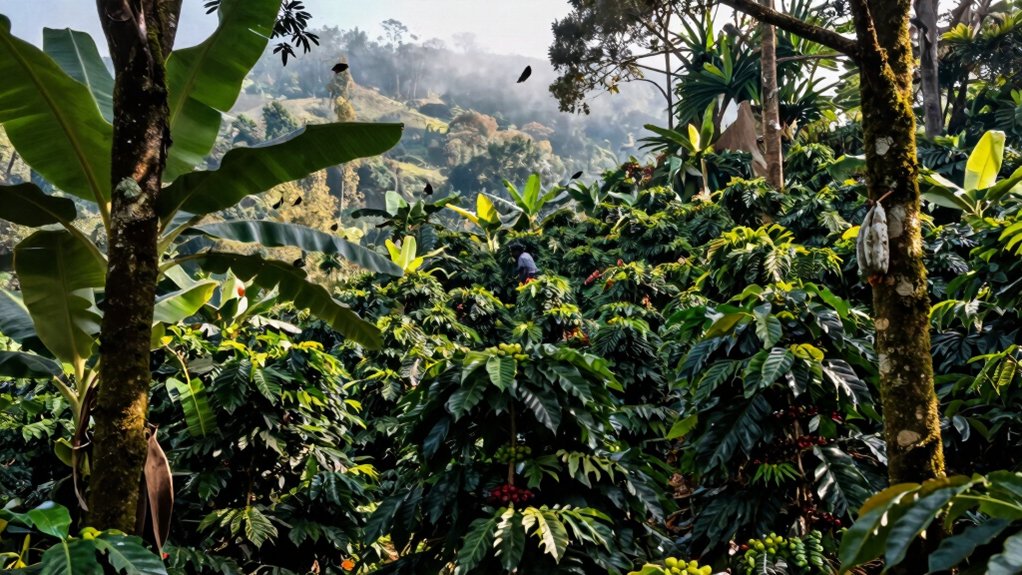
You’ll see how a rich canopy creates habitats for birds, insects, and mammals, boosting ecosystem health. Those thriving species help control pests and enrich soil, which translates into higher‑quality beans.
At the same time, shade‑grown coffee lets farmers earn diverse income streams and protect their livelihoods.
Habitat Richness
Ever wondered why a coffee cup can be a sanctuary for wildlife? When you choose shade‑grown beans, you’re backing farms where dense canopy lifts habitat richness, boosting biodiversity across insects, birds, mammals, and epiphytes. High shade (HS) plantations—those with over 30 % canopy—outperform sun and low‑shade fields, especially in Latin America where species counts soar. In Africa, the picture shifts, so regional planning and landscape connectivity become key to preserving those ecosystems while keeping yields viable.
- Preserve canopy layers to shelter diverse animal groups.
- Maintain mixed‑species plantings for epiphyte growth.
- Protect forest corridors that link shade farms.
- Tailor shade intensity to local climate and wildlife needs.
Farmer Livelihoods
Shade‑grown coffee isn’t just a climate‑friendly brew; it’s a lifeline for the families that tend the trees. You see how native canopy trees boost biodiversity while giving you multiple income streams. Training in shade‑tree management, soil health, and market access lets you diversify into honey or cocoa, stabilizing farmer livelihoods. GESI programs give women targeted mentorship, increasing their control over earnings and decision‑making. Community‑driven projects report healthier coffee plants, fewer chemicals, and richer soils, all of which translate into higher, fairer prices. In Veracruz, Royal Botanic Gardens, Kew and local partners scale these practices, ensuring that shade‑grown coffee continues to protect biodiversity and secure a resilient future for you and your community.
Frequently Asked Questions
How Does Shade Coffee Affect Local Water Quality?
You’ll find shade coffee improves local water quality by reducing runoff, filtering sediments, and limiting pesticide leaching, because the canopy preserves soil structure, promotes infiltration, and sustains healthier microbial communities.
Can Shade‑Coffee Farms Support Wildlife Corridors?
You can definitely use shade‑coffee farms to support wildlife corridors; the canopy creates continuous habitat, lets species move safely, and links fragmented ecosystems, boosting biodiversity and ecological resilience.
What Certifications Verify Genuine Shade‑Coffee Practices?
You’ll find certifications like Rainforest Alliance, Bird‑Friendly, UTZ, and Organic that verify genuine shade‑coffee practices, ensuring canopy cover, biodiversity protection, and sustainable farming standards are truly met.
Do Shade‑Coffee Farms Require More Labor Than Sun Farms?
Yes, you’ll find shade‑coffee farms need more labor than sun farms because you must manage canopy trees, prune understory, control pests manually, and harvest from multiple levels, all of which increase workforce demands.
How Does Shade Coffee Influence Coffee Flavor Profiles?
You’ll notice richer, nuanced flavors—fruitier notes, brighter acidity, and a smoother body—because shade coffee’s slower ripening lets sugars develop fully, while the cooler, diverse microclimate preserves delicate aromatic compounds.
In Summary
You’ve seen how shade‑coffee nurtures biodiversity, boosts carbon storage, and still delivers strong yields. By keeping a diverse canopy, managing shade wisely, and choosing regions that support it, you can protect ecosystems while enjoying premium beans. Supporting shade‑coffee means safeguarding habitats, fighting climate change, and preserving the rich flavors that come from a thriving, balanced farm. Your choices today shape a greener, more resilient coffee future.


