

You’ll start by sniffing the dry grounds to capture intensity, clarity, and distinct notes before any water touches them. Then break the crust of the brewed cup and inhale the wet aroma to spot freshness or off‑notes. Assess acidity for bright, clean tarts versus harshness, and feel the body for a smooth, non‑gritty mouthfeel. Gauge natural sweetness without over‑extraction, detect defects like quakers or medicinal faults, score the six criteria, record detailed notes, and finish by evaluating aftertaste balance, which leads you into deeper insights.
Assess Fragrance & Dry Aroma – First Impressions Before Brewing

How does a coffee’s fragrance strike you the moment you grind it? You inhale the ground coffee, letting the fragrance rise at room temperature, and note the dry aroma before any water touches it. In cupping, you conduct an aroma evaluation that captures intensity, clarity, and distinct notes—floral, fruity, nutty, chocolate, spice, or earthy. Keep the environment free of external odors so the volatile compounds aren’t masked. Record the intensity of each note, comparing them across samples to gauge consistency. This first‑impression step shapes expectations, guiding you toward the brew’s potential flavor profile. By focusing on the dry aroma, you lay a solid foundation for the rest of your tasting protocol. VOCAL NOTE
Evaluate Wet Aroma – Freshness and Off‑Notes in the Brewed Cup
Ever notice how the brewed cup releases a burst of aroma the moment you break the crust? That wet aroma tells you everything about freshness and hidden off‑notes. In cupping, inhale the brewed cup sharply; a clean, bright scent signals no defects, while musty, sour, or fermented whispers reveal taints. Compare the wet aroma to the dry grounds’ aroma to spot loss or evolution, confirming processing quality. Use aroma evaluation to map floral, fruity, nutty, chocolate, or earthy tones—each hints at origin and roast. If off‑notes dominate, the cup has likely suffered mishandling or poor storage. Trust this sensory data to judge overall cup health. A robust, stable aroma can be supported by durability-focused refractometer choices that ensure consistent measurements across varying conditions stable readings and help quantify extraction dynamics to align with aroma outcomes.
Measure Acidity – Bright, Clean Tarts vs. Harsh or Flat

When you sip the cup, note whether the acidity bursts forward as a bright, clean tart—like a crisp citrus or ripe berry—rather than lingering as a harsh, flat dull. A clean cup lets that tartness dance with the other flavors, creating balance without off‑notes. If the acidity feels sour or musty, you’re likely facing poor extraction or low roastQuality, which can mute the lively profile you want.
- Identify the bright notes – citrus, berry, or stone‑fruit signals ideal acidity.
- Spot harsh or flat signals – excessive bitterness, dullness, or sour off‑notes suggest over‑extraction or under‑roasted beans.
- Assess balance – ensure the tartness enhances freshness while staying in harmony with body and sweetness. micro-filtration
Check Body – Mouthfeel Without Grittiness or Astringency
After noting the acidity’s brightness, turn your attention to the coffee’s body—the texture you feel on the tongue. In cupping, assess the mouthfeel by noting whether the coffee coats your palate with a balanced weight or feels thin and watery. A clean body shows smoothness without grittiness; any sand‑like particles signal an uneven grind or over‑aggressive stirring. Likewise, avoid astringency—dry, chalky, or harsh sensations that suggest processing flaws. Swish water between sips, then re‑evaluate the texture as the brew cools, watching for any shift toward heaviness or astringency. Your mouthfeel evaluation should confirm a cohesive mouth that feels full yet fluid, delivering a pleasant, grit‑free finish. mouthfeel concept
Gauge Sweetness – Natural Sweet Tones Without Over‑Extraction
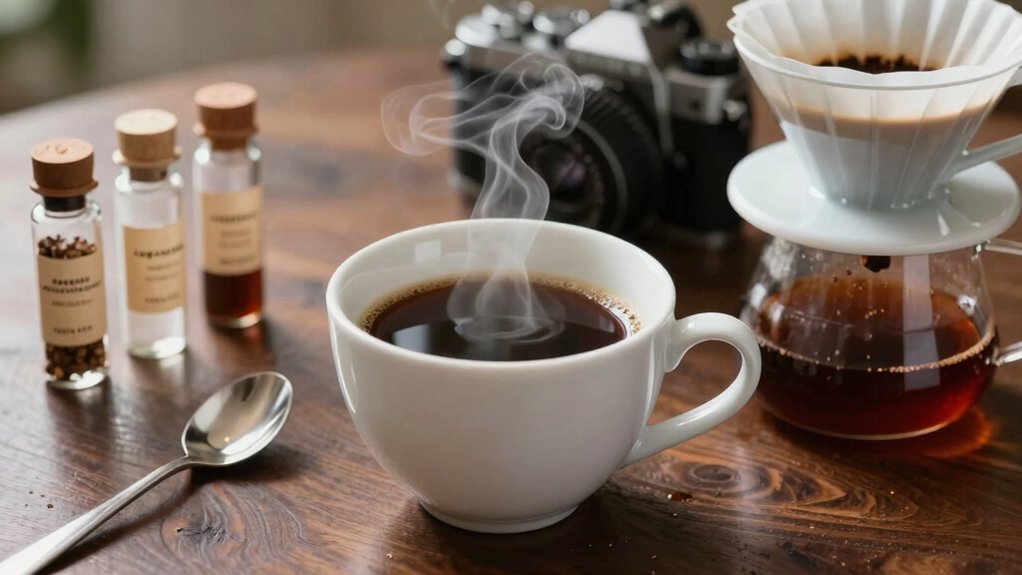
You’ll notice that a balanced extraction lets the bean’s natural sweetness shine, so aim for a brew time and grind that avoid over‑extraction. Pay attention to the origin—lighter, fruit‑forward coffees often carry honey‑like or brown‑sugar notes that richer roasts mask. Finally, assess the mouthfeel; a smooth, clean texture lets those sweet tones linger without being overrun by bitterness. 6-pack barista towels
Balanced Extraction Technique
Even a modest tweak in grind uniform and water temperature can turn a cup from bitter to naturally sweet, because balanced extraction hinges on pulling just enough sugars without over‑extracting harsh compounds. You’ll notice the difference when the crema stays pale and the aftertaste stays clean. Aim for a 93–95 °C water temperature, a consistent coffee‑to‑water ratio, and a grind size that avoids channeling. A controlled pour technique shortens contact time, preserving fruit‑forward notes and highlighting sweetness. Regularly reference the SCA flavor wheel to confirm you’re hitting the right flavor profile and not drifting into astringency. Calibrate grind size for uniform particles to ensure even extraction grind consistency. 1. Calibrate grind size for uniform particles. 2. Set water temperature between 93 °C and 95 °C. 3. Adjust coffee‑to‑water ratio and pour technique for even extraction.
Bean Origin Influence
What makes a coffee’s sweetness shine without turning bitter is the bean’s origin, which imprints honey‑like, maple, or fruit‑forward notes that balance acidity and stay clean as the cup cools. You’ll first notice the wet aroma and aroma and sip cues that hint at origin sweetness. Evaluate the sweetness‑to‑acidity balance; a higher ratio signals that elevation effects and processing methods have harmonized the profile. As you sip, watch for the clean cup feeling—no bitterness creeping in. If the bean’s elevation produced brighter, fruity tones, they should linger without over‑extraction dulling them. Use these cues to draw out origin flavors, ensuring the natural sweet tones stay vivid from the first sip to the final cool‑down. Elevation and process details can further enhance sweetness perception origin cues.
Mouthfeel Texture Assessment
How does the coffee’s texture reveal its natural sweetness without slipping into bitterness? You let the brew sit on your tongue, feeling the mouthfeel’s texture—creamy, light, or oily—and notice how sweetness emerges from brown‑sugar, honey, or agave notes. A balanced body supports that sweetness, while acidity brightens it and the aroma reinforces the perception. Avoid over‑extraction by checking that bitterness never masks the subtle sweet tones.
- Texture check – swirl, let the coffee coat the palate, and identify if it feels full or thin.
- Sweetness cue – sniff the aroma for honey‑like hints, then taste for natural sugar flavors.
- Balance test – compare acidity and body; ensure they enhance, not overwhelm, the sweet mouthfeel.
Identify Core Flavors – True Coffee Notes vs. Defect Signals
Ever wondered how to tell a pear‑like acidity from a medicinal off‑note? In cupping, you start with the aroma. A clean cup delivers bright, well‑defined wet‑aroma that showcases true notes—floral, fruity, brown‑sugar, honey, spice—without any chemical or musty hints. As you break the crust, sniff again; if you detect subtle taints, note them as –2 points each, and if faults appear, subtract –4 per occurrence. Use a sensory lexicon to label each sensation: “pear‑like acidity” signals a genuine fruit character, while “iodine‑like” or “roasted” cues point to defect signals. Consistent water temperature, grind size, and agitation keep the profile honest, letting you separate authentic flavor from off‑flavors with confidence.
Detect Defects – Quakers, Medicinal, Baked, and Other Faults
When you spot a defect, you’ll notice it right away—whether it’s a hollow, under‑roasted bite from quakers, an iodine‑like medicinal note, a flat, baked flavor, or any harsh, acrid, or sour off‑taste. These defects signal deeper problems and cost points on the clean‑cup score.
- Identify quakers – tiny, underdeveloped beans that taste like raw peanuts and create a hollow mouthfeel.
- Detect medicinal faults – iodine or clinical notes that arise from processing errors and often accompany other taints.
- Watch for baked flavors and over‑extraction – flat, muted cups, sour or acrid edges hint at slow roasting, storage issues, or excessive brew time.
Each false note or defect reduces your cup’s rating, so flag them early to pinpoint the root cause.
Score the Six‑Criteria Rubric – Consistent Clean‑Cup Evaluation
Spotting a defect tells you exactly where the cup’s score will slip, so the next step is to apply the six‑criteria rubric consistently. You rate Aroma, Acidity, Body, Flavor, Aftertaste, and Balance on a 0‑10 scale, then subtract 2 points for each defect and 4 for each fault. Keep the water at 93 °C, grind uniformly, and use the same vessel to guarantee a Clean Cup.
| Criterion | Max Points |
|---|---|
| Aroma | 10 |
| Acidity | 10 |
| Body | 10 |
| Flavor | 10 |
| Aftertaste | 10 |
| Balance | 10 |
Add the six scores, apply defect deductions, and you’ll have a repeatable, comparable cup score. This disciplined approach lets you spot trends, maintain consistency, and uphold clean‑cup standards.
Record Clean‑Cup Notes – Best Practices for Repeatable Logs
How do you guarantee your clean‑cup notes stay consistent and comparable? Start by using a standardized cupping sheet that mirrors SCA scoring, and record each criterion—Aroma (dry and wet), Acidity, Body, Flavor notes, Aftertaste, Balance—separately. Apply defect deductions (taints −2, faults −4) as you go, then calculate the final score. Use reference terminology from the SCA Wheel to describe Aroma and Flavor notes, building a repeatable vocabulary for every clean cup. Conduct blind tasting whenever possible: label cups with numbers, score blind, then reveal identities for discussion. Track longitudinal results across sessions and temperatures to monitor stability and ensure consistency.
- Standardize the cupping sheet and follow SCA scoring.
- Use blind tasting and numeric labels to avoid bias.
- Document reference terminology and defect deductions for each cup.
Finalize Aftertaste – Lingering Cleanliness and Overall Balance
If you let the aftertaste linger just long enough, you’ll see whether the cup’s flavors fade smoothly or leave harsh, astringent residues.
Let the aftertaste linger; watch flavors fade smoothly or leave harsh, astringent residues.
In cupping, assess that lingering cleanliness by noting any off‑flavors; a clean cup should dissolve without bitterness or astringency.
Track the flavor trajectory from the initial sip through the finish, ensuring each note recedes in harmony rather than dominating.
Aroma coherence ties the nose to the palate, so the aftertaste should echo the initial aroma profile.
Balance overall balance by checking that sweetness, acidity, and bitterness remain proportionate as the cup empties.
Finally, use palate calibration to confirm your perception matches the coffee’s true character, guaranteeing a consistent, clean cup experience.
Frequently Asked Questions
What Is the 15-15-15 Rule for Coffee?
You follow the 15‑15‑15 rule by using 15 g coffee, 150 ml water at 93‑205 °F, steeping 3‑5 min, breaking the crust, then evaluating for the remaining 8‑10 min within a total 15‑minute window.
What Is the 80 20 Rule for Coffee?
You apply the 80/20 rule by focusing on the 20 % of variables—grind uniformity, water temperature, and coffee‑to‑water ratio—that deliver 80 % of cupping reliability and flavor consistency.
What Are the 5 Elements in Tasting Coffee?
You’ll taste coffee through five elements: Aroma, Acidity, Body, Flavor, and Aftertaste. Each one shapes the overall balance, letting you gauge brightness, mouthfeel, taste intensity, and lingering finish.
What Are the Criteria for Coffee Tasting?
You evaluate Aroma, Acidity, Body, Flavor, Aftertaste, and Balance—rating each on dry grounds and wet brew, noting any defects or taints that subtract points, then calculate the total score.
In Summary
By mastering these six criteria, you’ll reliably spot a clean‑cup profile and separate truly great coffees from the rest. Consistent fragrance, bright acidity, balanced body, natural sweetness, and a defect‑free finish signal quality. Keep detailed notes, trust your palate, and let the aftertaste confirm the coffee’s cleanliness. This systematic approach guarantees every brew meets your high standards.


