

You’ll judge each brew on five essential categories: fragrance & aroma, flavor, aftertaste, acidity & body, and uniformity (including sweetness and clean cup). Fragrance & aroma set the tone, while flavor carries the core character that blends with aftertaste, acidity, and body for balance. Uniformity checks consistency across cups, and a clean cup means no off‑flavors. Defects subtract points, and you need 80 + to earn specialty status. Keep going and you’ll discover how each element adds up.
What Is Coffee Cup Scoring?
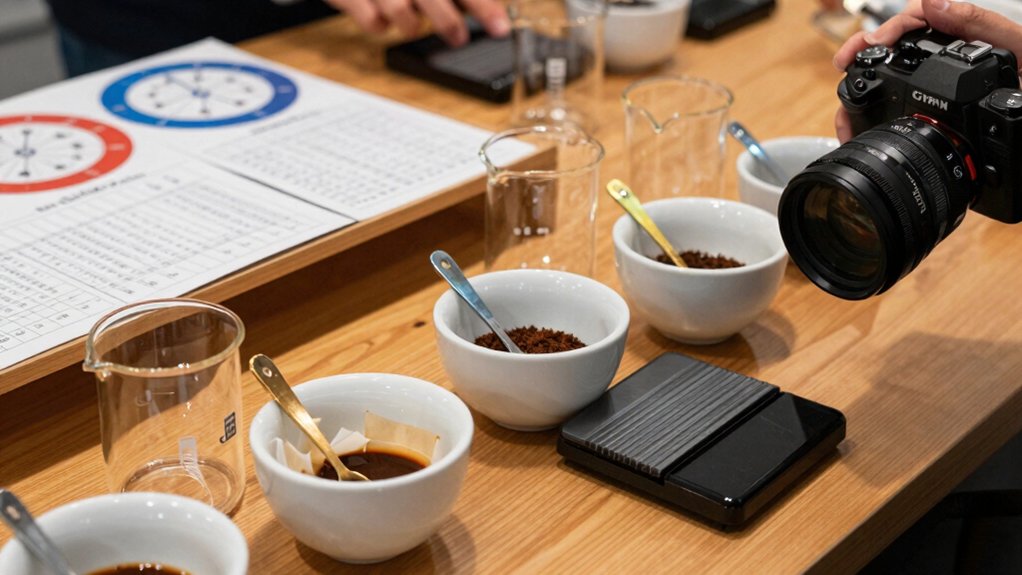
What exactly is coffee cup scoring? You evaluate each brew on a 100‑point scale, assigning 6‑10 points in 0.25 increments for Fragrance/Aroma, Flavor, Aftertaste, Acidity, Body, Balance, and Overall. Seven cups contribute to Uniformity, earning up to 10 points when each sample mirrors the others. A Clean Cup earns full credit, while any Defects—taints or faults—subtract 2 or 4 points per cup respectively. The sum of category scores minus defect deductions yields your final tally; 80 points or more classifies the coffee as specialty. Consistent calibration and CQI/SCA training keep your scores reliable and communicative, ensuring every sip translates into an accurate, comparable number. Timer Modes can help standardize how long each sample is evaluated.
How Fragrance & Aroma Influence Your Score
Coffee cup scoring hinges on those six‑point categories, but the first impressions you capture—fragrance from the dry grounds and aroma after the brew—set the tone for the entire evaluation. When you sniff the dry grounds, you judge fragrance for clarity, intensity, and tonal balance, assigning a score on the SCA 6.00–10.00 scale. After adding hot water, you assess the wet‑infusion aroma, noting specific aroma notes that reveal origin and roast character. Consistent preparation lets you make reliable cross‑sample comparisons, so your sensory evaluation stays objective. Strong, clean fragrance and vibrant aroma boost your overall cupping score, while off‑smells or muted notes drag it down. Record each impression carefully to support the final SCA score. To support consistent cupping data across sessions, synchronize your tasting notes with your brewing workflow using a connected device App‑driven data tracking.
How Flavor, Aftertaste, Acidity & Body Add Up
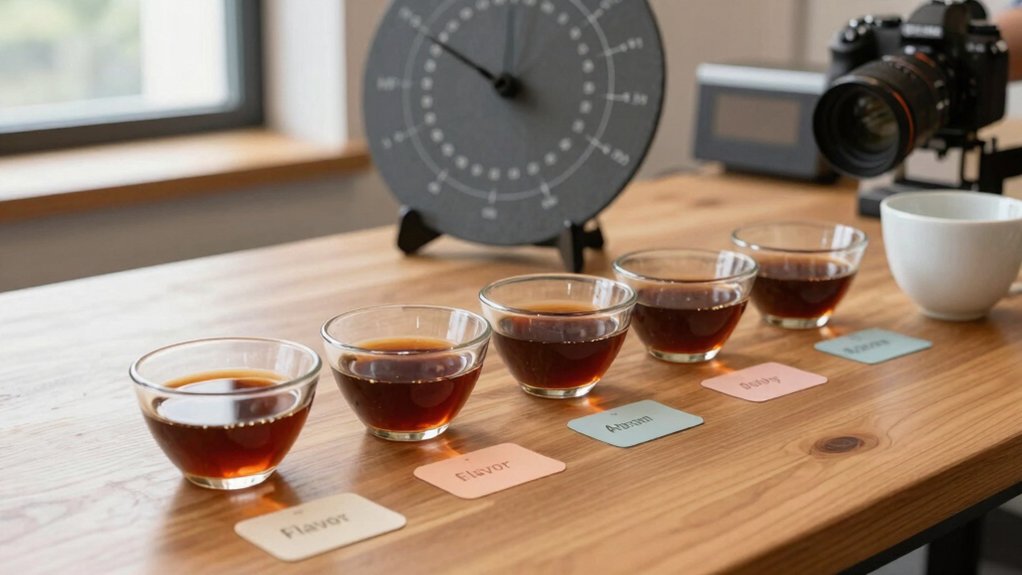
A solid cupping score hinges on how flavor, aftertaste, acidity, and body interact, because each element shapes the coffee’s overall character. You’ll notice that Flavor carries the principal character, merging taste and aroma notes—citrus, cherry, caramel, chocolate—while also revealing origin vs roast character. In cupping you score Flavor on a 6‑10 scale, then balance it with aftertaste, acidity, and body. Aftertaste lingers, showing how flavors evolve; acidity adds brightness, and body provides mouthfeel and weight. Together these sensory attributes create harmony; if one dominates, the balance suffers and the score drops. Pay attention to how each attribute supports the others, because a cohesive profile lifts your overall cupping score across the categories. Flavor profile can also reflect how a coffee’s origin and processing influence the final cup.
How Uniformity, Sweetness & Clean Cup Affect Points
Ever wondered how Uniformity, Sweetness, and Clean Cup translate into cupping points? In cup‑by‑cup scoring you judge each of the five tasting cups for Sample Consistency and flavor harmony. Uniformity rewards you when all cups share the same profile; a perfect 10‑point Uniformity score hinges on flawless Flavor Uniformity. Clean Cup demands no detectable Off‑flavor or off‑aroma, so any defect drags down the Cupping Score. Sweetness adds another layer—if every cup delivers a pleasant, detectable sweetness, you capture the maximum Sweetness points. Together, these categories shape Coffee Quality: uniform flavor, clean palate, and balanced sweetness drive the overall score, while any inconsistency or off‑note penalizes the final tally. Flavor Uniformity informs how closely each cup aligns with the intended profile across the tasting set.
How Defects and Final Score Determine Specialty Status
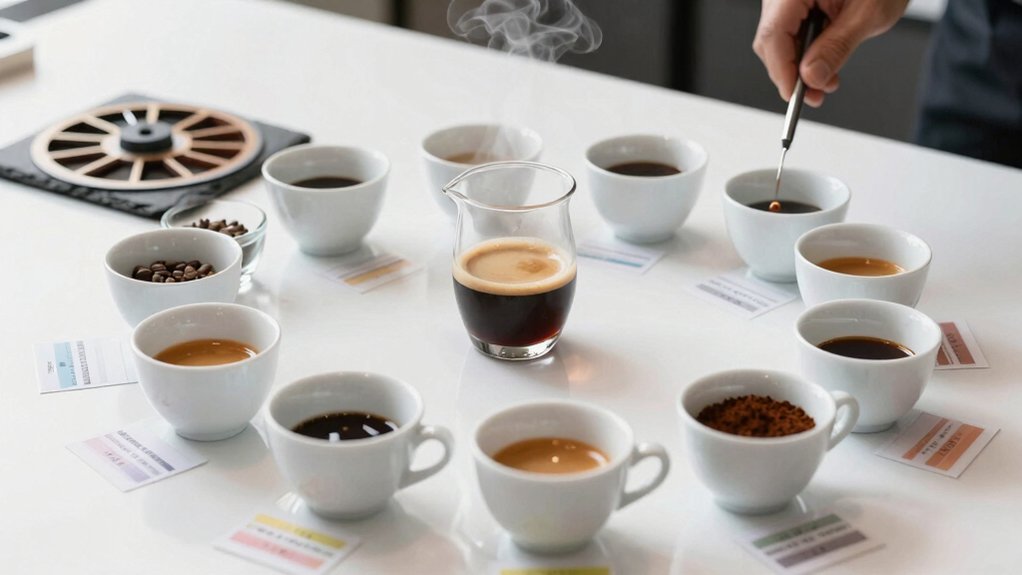
So do defects really dictate whether a coffee earns specialty status? If any primary defects appear, you instantly lose the chance to hit the 80+ threshold, because SCA categories demand zero primary defects. Even a few secondary defects—less than five—still let you reach the specialty status, but each taint (-2) or fault (-4) drags down the cupping score and can push your final score below 80. Uniformity and clean cup credits can rescue a marginal cup, yet they can’t outweigh a primary flaw.
| Category | Max Points |
|---|---|
| Primary Defects | 0 |
| Secondary Defects | ≤4 |
| Uniformity | 10 |
| Clean Cup | 2 |
Frequently Asked Questions
What Is a Good Cupping Score for Coffee?
You’ll consider a good cupping score any number 80 points or higher—80 marks specialty coffee, and 85‑89.99 indicates excellent quality, assuming minimal defects and balanced flavor attributes.
Is Coffee Intensity 7 Strong?
You can consider a 7‑point intensity fairly strong; it signals noticeable flavor concentration, but you still need balanced acidity, sweetness, body, and cleanliness to push the overall cup score higher.
What Is a Good Sca Score?
You’ll hit a good SCA score when you reach at least 80 points; 85‑89.99 is excellent, and 90‑100 is outstanding, showing specialty‑grade coffee.
What Are the 4 Classification of Coffee Beans?
You’ll find four classifications: Specialty, Premium, Commercial, and Utility/Commodity. Specialty beans meet zero primary defects and under five secondary defects, while the other grades allow progressively more flaws and lower scores.
In Summary
By mastering each of these five scoring categories, you’ll reliably gauge a coffee’s quality and spot the nuances that set specialty beans apart. Pay close attention to fragrance, aroma, flavor, aftertaste, acidity, body, uniformity, sweetness, and clean cup, while watching for defects. When you consistently hit high marks across the board, you’ll know you’ve got a truly exceptional brew.


