
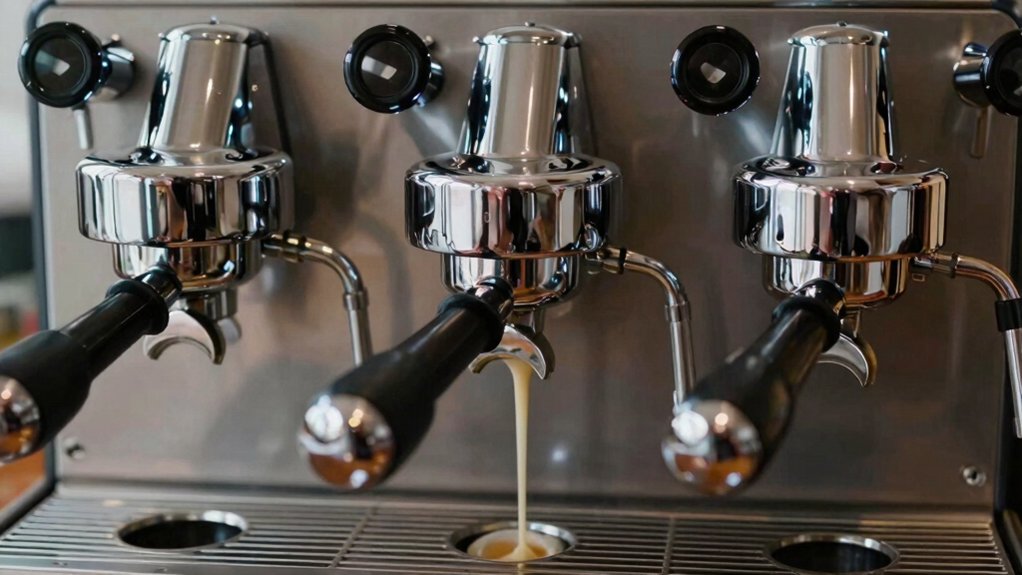
Do a short water backflush each day—run about ten seconds through the blind filter, watch the pressure drop or listen for a steady hiss, and stop if it steadies. Every one‑to‑two weeks, follow the daily routine with a detergent backflush, adjusting the interval to your shot count (about 50 pulls for light use, up to 150‑180 for heavy traffic). After each detergent cycle, rinse thoroughly, monitoring the brew‑pressure gauge and pausing when pressure stops rising; keep going for more details.
Set a Simple Daily Water Backflushing Schedule
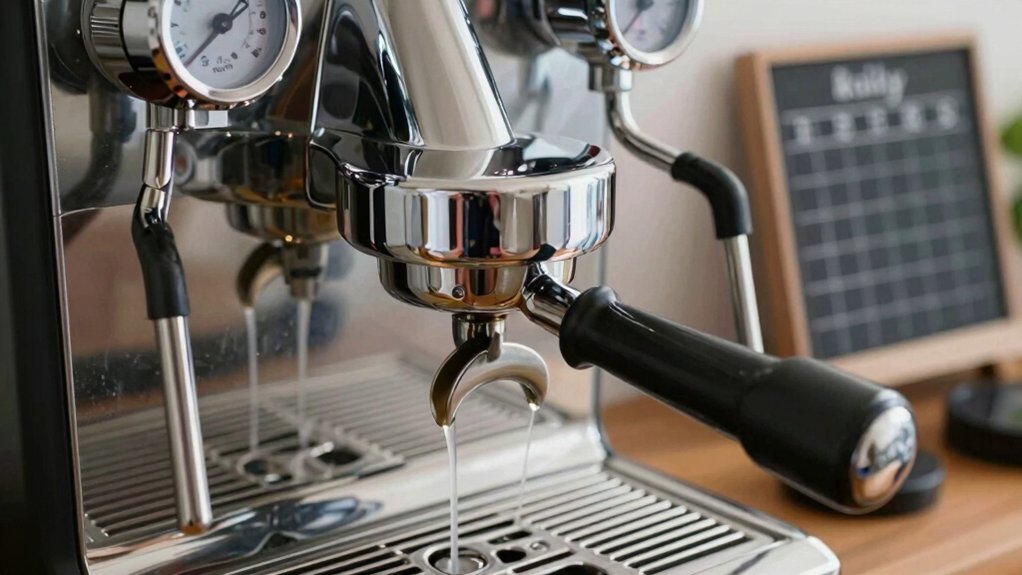
Consistency starts with a quick, daily water backflush that keeps your espresso machine’s flow steady and flavors bright. You run a short backflush cycle—about ten seconds—through the group head with a blind filter, watching brew pressure drop or listening for a steady hiss. This daily routine clears coffee grounds and prevents oil buildup without over‑extending the purge. If you lack a pressure gauge, rely on the consistent force of water exiting the portafilter; stop when the flow steadies. Regular maintenance can also help: consider the recommended weekly or biweekly detergent backflush to dissolve deeper residues and protect the group head’s performance foam quality levels and longevity. Schedule detergent backflush separately, typically every one to two weeks, to dissolve deeper residues. By sticking to this cleaning schedule, you maintain optimal pressure, protect the group head, and preserve every cup’s taste.
Adjust Detergent Backflushing Frequency Based on Use Volume
After you’ve set the daily water backflush, you’ll want to tweak the detergent schedule based on how many shots you pull. Espresso machine cleaning hinges on a sensible backflush cadence that matches your use volume. If you pull roughly 50 shots a day, start a detergent backflush after those 50 pulls; increase to 100‑150 pulls when traffic spikes. For ECM Classika and similar models, a higher cafiza cadence—up to 150‑180 pulls—helps combat coffee oil buildup. Track usage by weight (e.g., every 2 kg of coffee) if you prefer a metric‑based approach. Always follow the detergent backflush with a rinse cycle through the blind filter, then resume the regular cleaning cycle. This balance keeps the machine spotless without over‑using chemicals. Sourcing transparency
Monitor Pressure and Troubleshoot Common Backflushing Issues
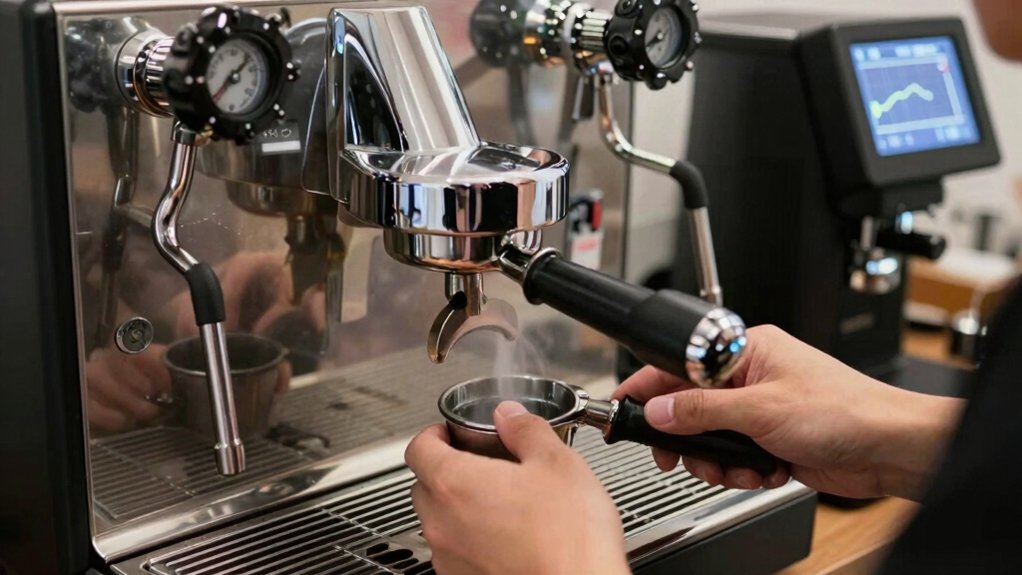
While you’re backflushing, keep an eye on the brew‑pressure gauge and stop the cycle as soon as the pressure stops rising; this dynamic approach is far more reliable than relying on a fixed 10‑second timer. When the pressure climbs beyond the normal range, extend the backflush until the rise ceases, then run a purge with plain water. Watch the E61 group head for irregular spikes that could signal a faulty valve or solenoid. During each backflushing cycle, insert the blind filter, add a small amount of detergent, and repeat the on/off pattern prescribed by the manufacturer. Compare the pressure profile to the expected curve; deviations point to blockages, worn seals, or pump issues. Use this troubleshooting routine to keep your espresso machine’s cleaning routine efficient and safe Strix temperature control.
Frequently Asked Questions
How Often Should I Backflush My Espresso Machine?
You should backflush daily when you use the machine, and run a detergent backflush every two weeks—adjust if you pull many shots or notice oil buildup, then rinse thoroughly each time.
What Is the 30 Second Rule for Espresso?
You apply the 30‑second rule by running a backflush for roughly thirty seconds, then pause to watch pressure drop, repeat until the pressure stabilizes, ensuring detergent clears without over‑extraction.
What Is the Rolls Royce of Coffee Machines?
You’ll find the Rolls‑Royce of coffee machines in the La Marzocco Linea PB, a high‑end, dual‑boiler espresso machine that delivers unparalleled temperature stability, pressure profiling, and build quality for professional baristas.
Should You Backflush After Descaling?
Yes, you should backflush after descaling. Run a detergent backflush or the machine’s automatic cycle, then rinse thoroughly to clear any cleaning residue before resuming normal brewing.
In Summary
By sticking to a simple daily water backflush, tweaking detergent cycles to match your brew volume, and keeping an eye on pressure, you’ll keep your espresso machine humming smoothly. Regular maintenance prevents clogs, preserves flavor, and extends equipment life. So, follow the schedule, watch for warning signs, and enjoy consistently great shots without costly breakdowns.


