
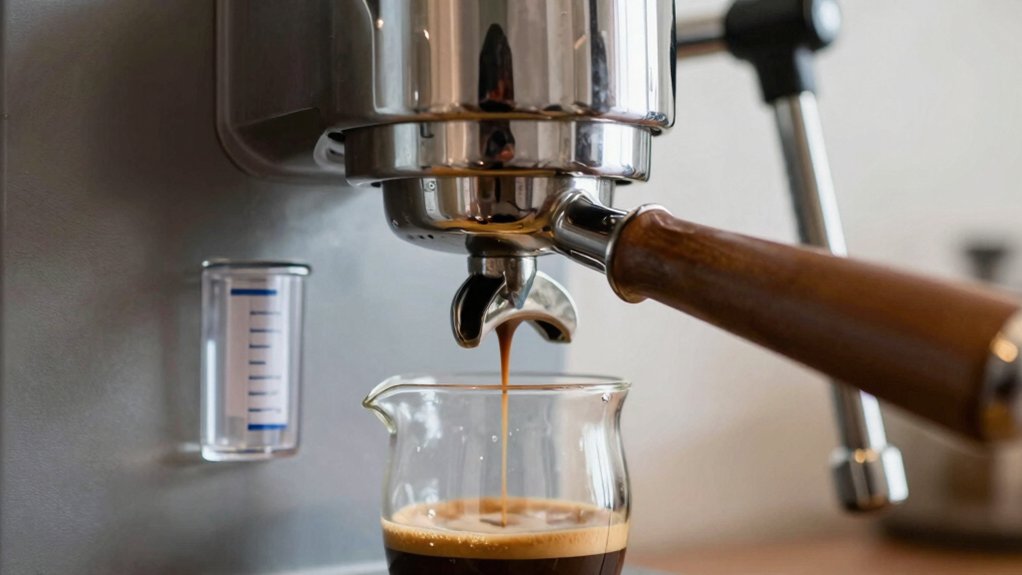
You’ll find that espresso is 98 % water, so any chlorine, sediments, or wrong mineral balance will dull the bean’s aroma, flatten the crema, and stress the machine. Proper filtration strips chlorine and particles while preserving the 35‑85 PPM mineral range that fuels stable pressure, sweet acidity, and body. Too hard water builds scale, slows extraction, and shortens component life, while overly soft water under‑extracts and tastes sour. Keep testing every few months and you’ll discover how to fine‑tune your water for consistent, vibrant shots.
Why Water Quality Matters for Espresso
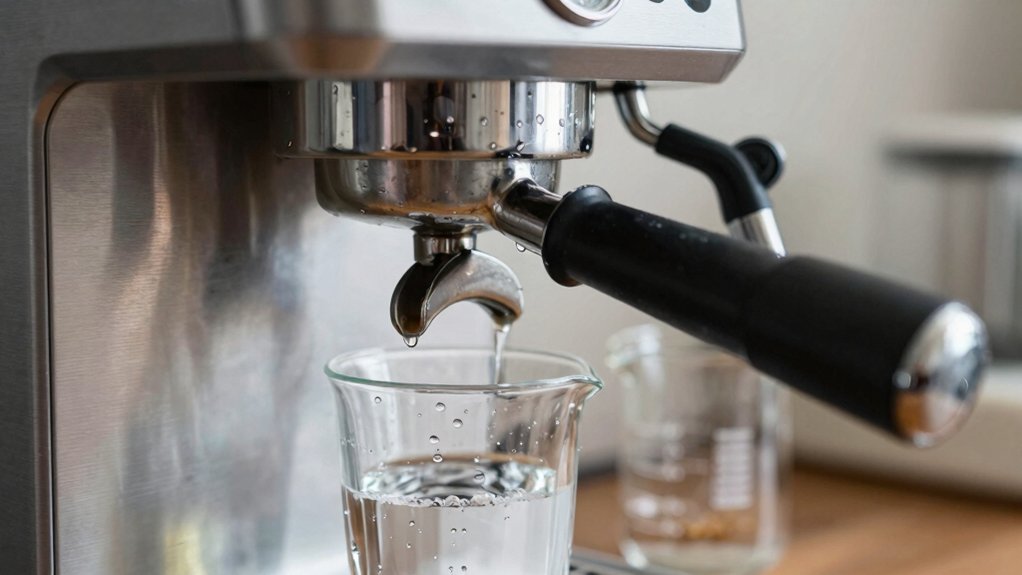
Because espresso is 98 % water, its quality directly shapes flavor, texture, and extraction. You’ll notice that hard water leaves calcium and magnesium deposits that clog boilers, lower heating efficiency, and force frequent descaling. Chlorine and chloramines in untreated tap water mask the bean’s aroma, producing flat, chemical‑tasting shots. A good water filtration system strips chlorine and sediments while preserving the mineral content needed for stable pressure and rich crema. When you keep mineral levels balanced, the espresso extracts evenly, delivering the intended sweetness and acidity. Regular testing every three to four months lets you adjust your filtration, preventing scale buildup and ensuring consistent water quality for every pull. This protects equipment and guarantees the best possible espresso taste. Proper sourcing and sustainability considerations can further influence flavor consistency, including how water quality interacts with origin and processing factors USDA Organic certifications.
The Ideal Mineral Range for Espresso Extraction (35‑85 PPM)
Ever wonder why espresso tastes so balanced when the water’s mineral content sits between 35 and 85 PPM? You need filtered water that hits that mineral range, because water hardness in the 35‑85 PPM window fuels proper espresso extraction. Stick to the sweet spot, and you’ll preserve crema, sweetness, acidity, and body, all of which boost espresso quality. Regular testing with a TDS meter helps you maintain accuracy and consistency across brews mineral range using eco-friendly, reusable filtration options to sustain long-term flavor integrity. Keep a TDS meter handy and run TDS testing every three to four months. Consistently monitoring the mineral range guarantees reliable extraction and scale prevention, delivering the rich, balanced cup you expect.
What’s Wrong With Your Water? Hardness, Chlorine, and Scale Explained?
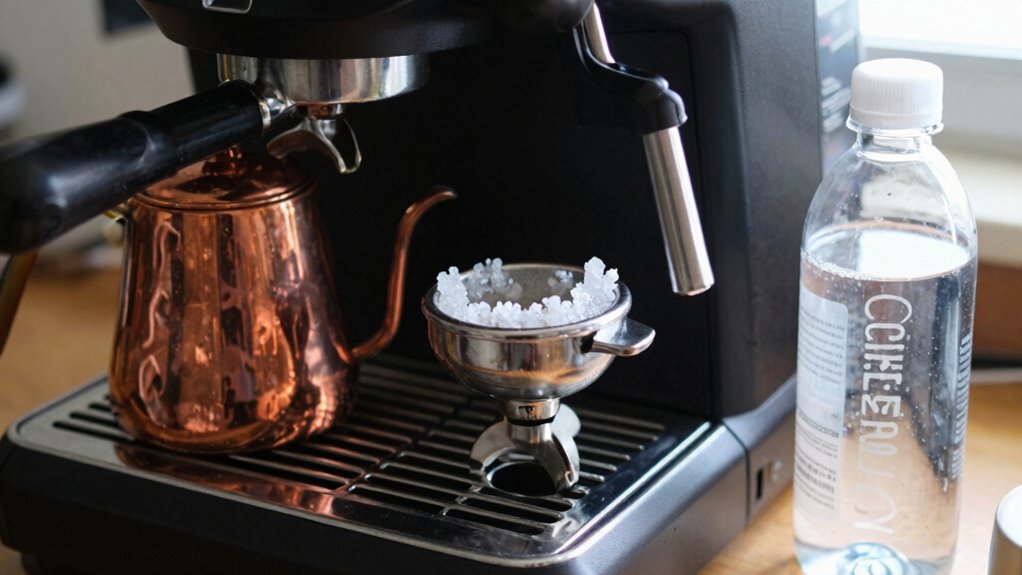
If your water’s too hard, you’ll notice slower, uneven extraction and premature scale buildup in the machine. Chlorine or chloramine will mask the coffee’s natural sweetness and introduce harsh, chemical notes. Reducing hardness and stripping chlorine lets the espresso shine while protecting the boiler and sensors. Temperature ranges and measurements used in identifying and managing scale buildup can guide you toward selecting the right filtration approach distance-to-spot to ensure consistent readings of water quality and its effects on your machine.
Hardness Impacts Extraction
What’s wrong with your water? Hardness directly shapes extraction, and when it spikes above 85 PPM, calcium and magnesium fuel scale buildup in your boiler and pipes. That crust raises internal resistance, slows water flow, and forces the machine to work harder, draining energy and compromising temperature stability. You’ll notice under‑extraction—often called dehydration—when the water is too soft, producing sour, flat espresso with weak body. Regular water testing every few months lets you catch these shifts early, and a good water filtration system can strip excess hardness while preserving enough minerals for balanced extraction. Keep chlorine out of the equation, and you’ll maintain consistent pressure, temperature, and flavor in every shot. The right setup also complements the overall aesthetic of your coffee corner with vintage-inspired decor.
Chlorine Alters Flavor Profile
Because chlorine in tap water reacts with coffee’s natural compounds, it can mask the fruitiness and delicate aromatics you expect, leaving a medicinal or chemical off‑flavor in the cup. When that chlorine reaches your espresso machine, it creates taste distortions that dull the flavor profile and can even destabilize espresso crema. You’ll notice a flat, harsh aftertaste instead of bright, floral notes. Installing a water filtration system that includes chlorine removal restores balance; filtered water lets the beans’ true character shine and keeps the crema glossy. By cutting chlorine, you protect both taste and mouthfeel, ensuring each shot delivers the nuanced, vibrant experience you’re looking for. chlorine removal helps maintain optimal taste by ensuring the water supports the beans’ true character and crema stability.
Softening Pouches, Mineral Packets, or Bottled Water – When to Use
Ever wondered which water solution best protects your espresso machine while delivering ideal flavor? Softening pouches cut water hardness by stripping calcium and magnesium, so they’re great for plumbed machines that suffer scale buildup. Pair them with mineral packets to boost mineral content back into the 35–85 PPM range, improving crema, mouthfeel, and flavor balance. Bottled water works when you can’t install a softener; just test it with strips to confirm its mineral content fits the target range. If you already run filtered water, you may not need a softener, but adding a packet can fine‑tune extraction. Choose the method that matches your setup, protects your espresso machines, and keeps the brew consistent. Mineral Packets can further refine extraction by restoring essential minerals after softening.
Choosing the Right Filtration System for Espresso Water in Reservoir Machines
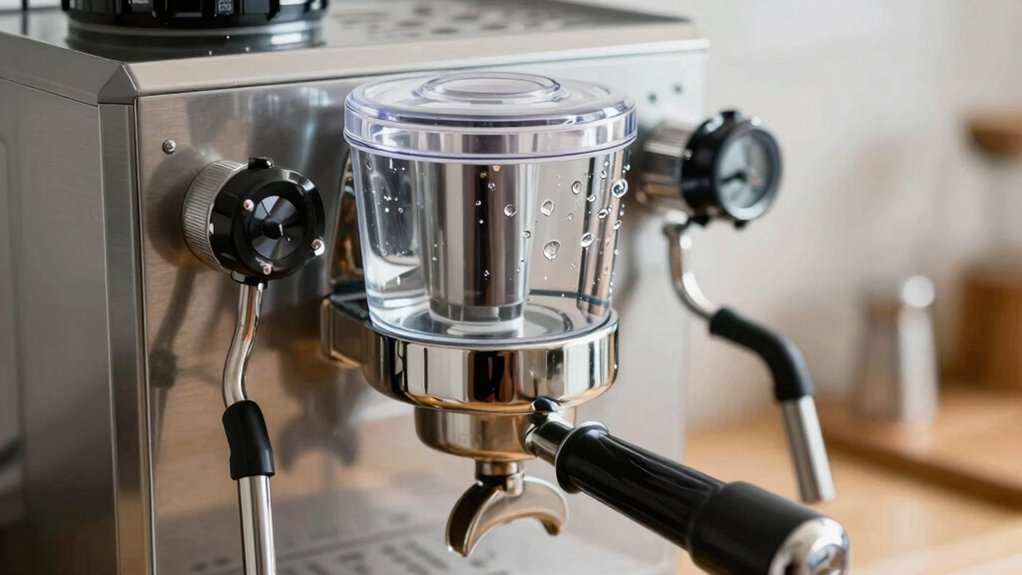
How do you keep a reservoir‑based espresso machine brewing consistently while protecting its boiler from scale? Choose a water filtration system that first removes chlorine and sediments with a carbon filter, then fine‑tunes mineral balance. For reservoir machines, a simple pitcher‑style carbon filter works well for chlorine removal, while a separate hardness (PPM) control—like a softened water pouch or mineral packets—keeps total hardness between 35 and 85 PPM. This range prevents scale buildup yet supplies enough ions for proper extraction. Install the carbon filter at the water source, then add the hardness‑adjusting pouch directly to the reservoir. By combining chlorine removal and precise hardness control, you maintain optimal flavor and protect the boiler in your espresso machines. The choice of a SCA standards compatible cupping approach can help ensure consistent water evaluation impacts on flavor when testing adjusting filters.
How to Test Espresso Water Every 3‑4 Months and Keep It Consistent
You’ll want to grab a set of test strips and check the water every three to four months, noting the TDS reading and any chlorine or chloramine.
Keep a simple log of those numbers so you can spot trends and adjust your filtration if the hardness drifts outside the 35‑85 PPM sweet spot.
This routine lets you maintain steady extraction and avoid scale or flat‑tasting espresso.
Test Water With Strips
Curious about keeping your espresso tasting the same month after month? You can quickly gauge water quality with test strips, a cheap, visual way to monitor TDS and hardness. Just dip a strip, wait the color change, and compare it to the chart. This tells you if your water sits within the 35‑85 PPM mineral balance that keeps extraction smooth without scale buildup or flat flavors.
- Choose the right strip – look for one calibrated for TDS and hardness ranges relevant to espresso machines.
- Test at consistent intervals – every 3‑4 months aligns with seasonal shifts in municipal or well water.
- Adjust filtration – if the strip shows high hardness, upgrade your water filtration; if too soft, consider a mineral cartridge.
Staying on top of these checks protects your espresso machine and preserves every shot’s taste.
Track Hardness Over Time
When did you last check your water’s hardness? You should test every 3‑4 months with a TDS meter or test strips, noting the PPM reading. Keep it between 35 and 85 PPM; anything higher speeds scale buildup in espresso machines, hurting heating efficiency and prompting costly descaling.
Record each reading to spot seasonal shifts in municipal supply and to adjust your water filtration or softening system before performance drops. Consistent mineral content ensures stable extraction, so a simple log helps you anticipate when to descale or replace filters. By tracking hardness over time, you protect your espresso machine, maintain flavor, and extend component life.
Machine‑Life Benefits of Proper Espresso Water Filtration
A well‑filtered water supply keeps your espresso machine’s boiler and pipes free of scale, preserving heating efficiency and preventing leaks or premature part failures. When you use proper water filtration, mineral buildup stays low, so scale prevention is built into every shot. You’ll notice longer machine longevity, smoother temperature stability, and fewer costly repairs. Consistent chlorine removal protects internal seals, while monitoring water hardness lets you fine‑tune the filtration system maintenance for optimal performance.
- Reduced mineral deposits – fewer clogs, steadier heat transfer.
- Extended component life – valves, pumps, and gaskets stay functional longer.
- Lower maintenance costs – fewer part replacements and service calls.
Frequently Asked Questions
Is Filtered Water Better for an Espresso Machine?
Yes, filtered water’s better; it cuts scale‑forming minerals, protects the boiler, and preserves flavor balance, so your espresso extracts consistently and your machine lasts longer.
What Is the 15-15-15 Coffee Rule?
You follow the 15‑15‑15 rule by aiming for 15 ppm total dissolved solids, 15 % mineral proportion, and a balanced mineral mix—roughly 150‑250 ppm TDS—to guarantee consistent espresso extraction and flavor.
Why Is It Important to Maintain the Water Filtration System on the Espresso Machine?
You keep the machine running efficiently, prevent scale and corrosion, preserve consistent flavor, extend component lifespan, and avoid costly repairs—maintaining filtration ensures every shot stays reliable and delicious.
Do You Really Need a Water Filter in a Coffee Machine?
Yes, you need a filter; it removes minerals and contaminants that cause scale, alter flavor, and shorten your machine’s life, ensuring consistent extraction and smoother espresso shots every time.
In Summary
By keeping your water within the 35‑85 PPM mineral range, you protect your espresso machine, ensure consistent flavor, and avoid costly scale buildup. Regular testing and the right filtration—whether a softening pouch, mineral packet, or bottled source—keeps extraction stable and extends equipment life. Stick to a simple maintenance schedule, and your espresso will stay rich, balanced, and reliably delicious.


