
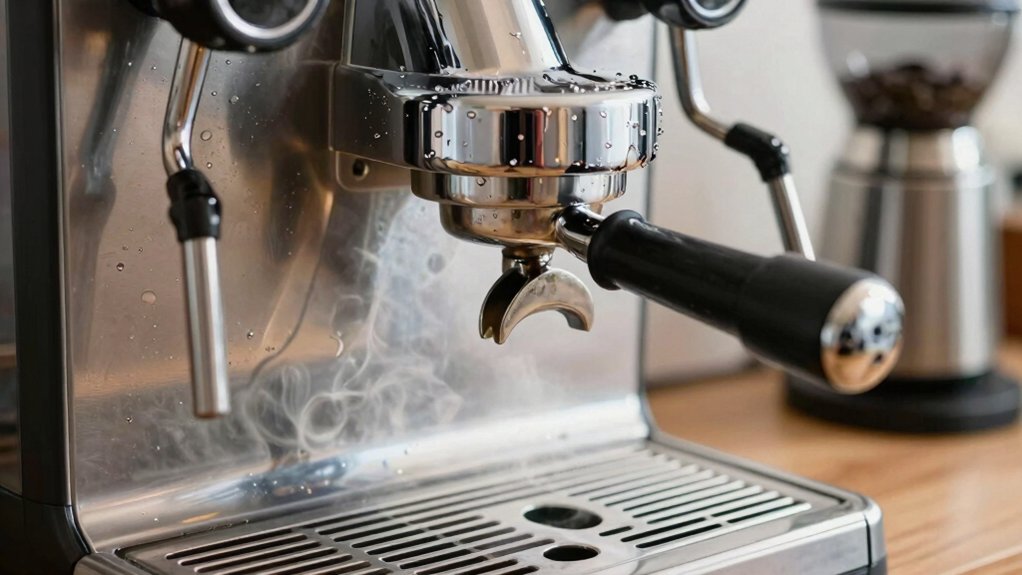
You’ll notice hard water leaves calcium and magnesium limescale on the boiler, heat exchanger, and pump, which acts like an insulating blanket and narrows passages. That raises internal resistance, drops pressure, and makes temperature delivery erratic, so shots become weaker and inconsistent. The mineral balance also shifts flavor—magnesium brightens acidity while calcium adds body. Keep hardness between 35‑85 ppm, test with TDS strips, and follow a proper descaling routine; the next sections show how to fine‑tune your water and maintain the machine.
How Espresso Machine Water Hardness Creates Limescale
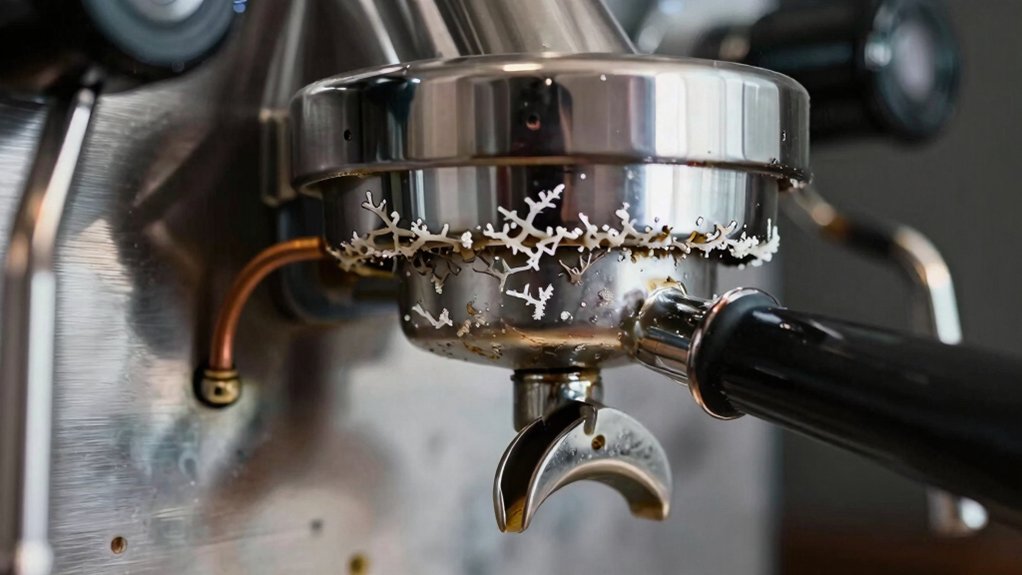
When hot water passes through an espresso machine, the calcium and magnesium ions in hard water precipitate as calcium carbonate and magnesium carbonate, clinging to the boiler, heat exchanger, and valves. You’ll see limescale forming as those crystals accumulate, especially when hardness spikes.
The higher the calcium and magnesium content, the faster scale buildup spreads across heating surfaces, insulating them and cutting heat transfer. Magnesium carbonate may be less stubborn than calcium carbonate, but it still blocks narrow passages, disrupts pressure, and forces you to descale more often.
Regular descaling removes the crust, restores flow, and protects components from wear. If you ignore the link between hardness and limescale, efficiency drops and maintenance costs climb. SCALE FORMATION can be reduced by using softened or filtered water and following manufacturer descaling guidelines.
How Limescale Affects Brewing Temperature Stability
The calcium and magnesium crystals that cling to your boiler don’t just clog pipes—they also act as a thin blanket that insulates the heating element, which can shift how quickly heat is delivered during a shot limescale.
Why Scale Lowers Pump Pressure and Disrupts Extraction Flow
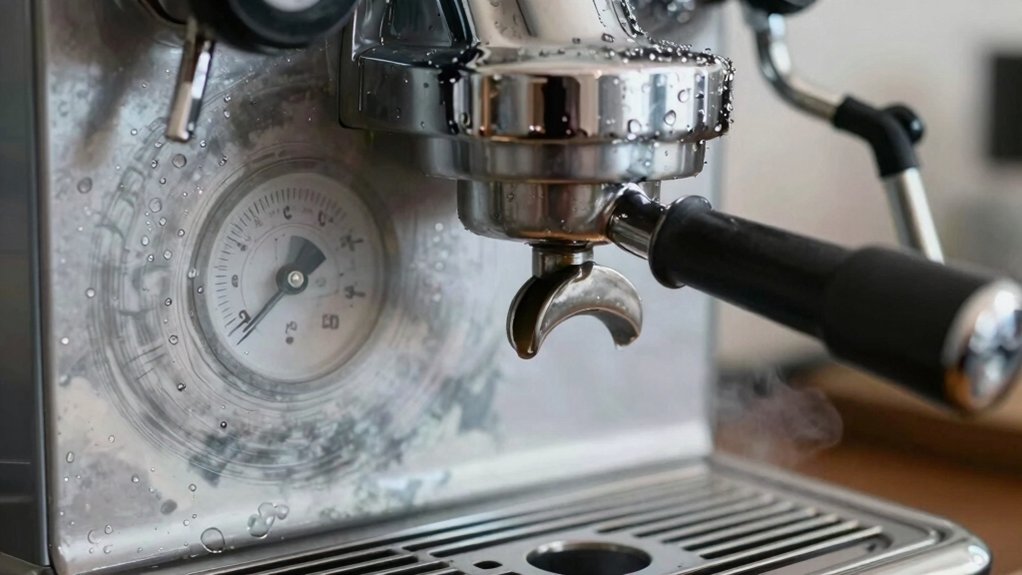
Ever wonder why your espresso shot suddenly drags and the pressure gauge dips? Scale buildup from water hardness coats the boiler and narrows the pump’s channels. Calcium carbonate crystals cling to valves, creating a rough, constricted path that forces the pump to work harder. As the internal resistance climbs, pump pressure drops and extraction flow slows, giving you a weak, uneven shot. The crusty deposits also mislead sensors, so the machine can’t regulate flow accurately, further disrupting crema formation. Regular descaling helps maintain proper pump pressure and extraction flow, and the duration and effectiveness of your sessions can improve with a routine that fits your machine type and usage pattern. Stainless steel components and durable design (as found in some coffee makers) can also influence how resistant the system is to mineral buildup over time.
How Calcium & Magnesium Change Your Coffee’s Taste
Scale buildup not only throttles pressure; it also reshapes the mineral profile that reaches your coffee grounds. When calcium dominates, you’ll notice a richer, chocolate‑like body and smoother mouthfeel, while magnesium lifts acidity, highlighting fruity, delicate notes. A slight magnesium edge preserves brightness and clarity, giving espresso a lively flavor balance. Too much mineral content, however, can choke extraction, leaving a flat, dull cup or a bitter aftertaste. Because magnesium dissolves more readily at brewing temperature, it influences both taste and the rate at which scale forms. Proper water hardness supports crema stability, letting the foam linger and showcase the nuanced interplay of calcium and magnesium in every sip. Calcium and Magnesium balance also informs how minerals interact with espresso oils during extraction, reinforcing the importance of water composition for consistent shots.
Ideal Water Hardness for Espresso (35‑85 ppm)
You’ll want your water’s hardness to sit between 35 ppm and 85 ppm so the espresso extracts evenly. In addition, monitoring hardness can help protect your equipment from scale buildup over time. ATC/ATC-like temperature compensation features in some refractometers illustrate how temperature-aware measurements can improve accuracy for brew calculations. Keep testing every few months to stay in the sweet spot.
Target Hardness Range
What Does Water Hardness Do to Espresso Machines?
Target Hardness Range (Ideal Water Hardness for Espresso (35‑85 ppm))
What’s the sweet spot for espresso water? You want a water hardness that fuels flavor without choking your espresso machine. The 35‑85 ppm hardness range hits that balance: enough minerals to guide extraction, yet low enough to keep scale at bay. Aim for around 50 ppm to minimize descaling while preserving stable pressure and temperature. Test your water every few months with a TDS meter or test strips; watch the total dissolved solids stay within the target. Adjust with a filtration system or remineralizer if you drift outside the range, and you’ll keep your brew bright and your machine healthy. Regular maintenance and choosing the right filtration can further support consistent extractions and extend the life of your equipment water hardness management.
Optimal Extraction Balance
Finding the sweet spot in water hardness—35‑85 ppm—lets you extract espresso that’s both flavorful and consistent while keeping scale at bay. Within this range, the mineral content provides enough calcium and magnesium to promote proper espresso extraction, yielding rich crema and balanced acidity. You’ll notice temperature stability improves because the heating element stays clean, avoiding the insulating effect of calcium carbonate scale. Maintaining optimal hardness supports better grinder performance and reduces the risk of channeling in the puck water hardness and helps protect your machine’s internal components over time.
How Often to Test Espresso Machine Water Hardness?
Regularly testing your espresso machine’s water hardness—ideally every three to four months—keeps scale buildup in check and ensures consistent extraction quality. You’ll catch seasonal shifts in municipal or well water before limescale threatens heating elements. A TDS meter or test strips reveal whether hardness stays near the sweet spot of 50 ppm (3 gpg). If readings creep above 100 ppm, expect more frequent descaling and potential clogging. Softening or filtration systems can keep hardness between 35‑85 ppm, balancing flavor and machine wear. Monitoring testing frequency protects both taste and equipment longevity.
- Use a TDS meter for precise hardness readings.
- Check water hardness every 3–4 months.
- Aim for 50 ppm; stay below 100 ppm to limit limescale.
- Adjust filtration/softening if hardness spikes.
- Verify reservoir water stays within 35‑85 ppm range.
Test Your Water With Simple TDS Strips
You can grab a pack of simple TDS strips and get an instant read on your water’s mineral load. A quick dip tells you whether the total dissolved solids are within the 35–85 PPM range that keeps limescale at bay. If the strip shows a high reading, you’ll know it’s time to tweak your filtration or softening setup.
Simple TDS Strips
When you dip a TDS strip into a cup of water, the color change instantly tells you the total dissolved solids—essentially the mineral load that drives both extraction quality and scaling risk. You can read the strip within seconds, compare it to the chart, and decide if your water sits in the sweet spot of 35–85 PPM. Keeping TDS in that range means your espresso flavor stays balanced, scale buildup stays low, and you can fine‑tune machine calibration without guesswork. Test every few months, especially after seasonal municipal changes, to catch any drift before it harms your brew.
- Quick visual cue for mineral concentration
- Direct link to water hardness and scale risk
- Guides filtration or softening adjustments
- Protects espresso flavor and crema quality
- Supports regular machine calibration and maintenance
Quick Mineral Content Check
Wondering if your water’s mineral load is espresso‑ready? Grab a TDS strip, dip it in your brew water, and compare the color to the chart. Aim for 35–85 ppm; that range balances water hardness for optimal espresso extraction while keeping scale formation low. Test every 3–4 months, because seasonal shifts can push mineral content out of range.
If the strip reads above 85 ppm, expect faster buildup and schedule more frequent descaling. Below 35 ppm, your coffee may taste flat, lacking the ions that aid extraction.
For reservoir systems, run the strip after any filtration, softening, or mineral‑packet treatment to confirm the water stays within the sweet spot for flavor and machine health.
Choose Filtration or Softening for Reservoir‑Based Machines
If you own a reservoir‑based espresso machine, balancing filtration and softening is key to keeping mineral buildup in check while staying within the ideal 35‑85 PPM hardness range. Filtration removes sediments and chlorine, but it doesn’t lower calcium or magnesium enough to curb limescale on the boiler. Softening pouches exchange Ca²⁺ and Mg²⁺ for sodium, pulling the water hardness down to a safe zone and protecting heating elements. Use a combined approach: install a high‑capacity filter, then add a softening pouch to the reservoir. Test the water every three months with a TDS meter or strip to verify you stay within target hardness. Bottled water works, but always confirm its mineral content first.
- Install a certified filter in the water line.
- Place a softening pouch directly in the reservoir.
- Test hardness with TDS strips every 3‑4 months.
- Keep hardness between 35‑85 PPM to avoid limescale.
- Replace filter and pouch according to manufacturer schedule.
Add Minerals With Third‑Wave Water for Perfect Espresso Hardness
Ever wondered how to turn perfectly filtered water into espresso‑ready liquid? You can achieve ideal water hardness by using Third Wave Water packets that sprinkle precise amounts of calcium and magnesium into distilled or RO water. Those minerals restore the balance needed for a stable espresso machine extraction, keeping the brew within the 35–85 PPM range. The packets prevent the flat taste of fully demineralized water while avoiding excessive scale buildup. Just dissolve one packet per gallon, stir, and let the solution sit briefly before filling your reservoir. The result is a consistently rich shot with proper crema and flavor, and you’ll notice the difference instantly. Use the promo code for De’Longhi customers to save 10 % on your purchase.
Descaling Schedule and Expected Results After Each Cycle
How often you should descale hinges on your water’s hardness—harder water builds scale faster, demanding more frequent maintenance. Aim for a descaling cycle every 3 months if your water is soft, and tighten to every 2 months when hardness exceeds 85 PPM. Each cycle dissolves calcium carbonate and magnesium carbonate, restoring heating efficiency, water flow, and pressure stability in your espresso machine.
Descale every 3 months for soft water, 2 months when hardness exceeds 85 PPM.
- Check your machine’s hardness setting or sensor alerts.
- Run a descaling solution through the boiler and group head.
- Rinse thoroughly to flush dissolved minerals.
- Verify temperature and pressure return to normal.
- Record the date to track future intervals.
Following this schedule keeps mineral buildup at bay, preserves flavor consistency, and extends the life of your espresso machine.
Frequently Asked Questions
Will Hard Water Ruin My Espresso Machine?
Yes, hard water will ruin your espresso machine if you ignore it. It deposits scale, clogs valves, reduces heating efficiency, and accelerates wear, leading to costly repairs or early replacement.
What Is the Best Water Hardness for Espresso Machines?
You should aim for roughly 50 ppm (3 gpg) hardness; it keeps scale low, guarantees proper extraction, and protects your machine, while staying within the 35–85 ppm sweet spot for optimal performance.
Is 9 Bar or 15 Bar Better for Espresso?
You’ll find 9 bar generally beats 15 bar; it gives steadier pressure, smoother extraction, and less strain on pumps and seals, while 15 bar can over‑extract and wear the machine faster.
What Is the 30 Second Rule for Espresso?
You aim for a shot that pulls in roughly twenty‑five to thirty seconds from grind to cup, balancing flavor and crema; if it’s faster, grind finer, and if slower, coarser.
In Summary
By keeping your water between 35‑85 ppm hardness, you’ll prevent limescale, maintain stable brewing temps, and preserve pump pressure for consistent extraction. Proper filtration or softening protects your machine, while occasional mineral addition fine‑tunes flavor. Stick to a regular descaling routine, and you’ll enjoy richer, smoother espresso without costly repairs.


