

You need a grind profile because particle size decides how quickly water pulls flavors; a uniform grind avoids channeling and gives consistent extraction, while matching grind to method—extra‑fine for espresso, medium‑fine for pour‑over, coarse for French press—keeps balance and prevents bitterness or sourness. When the grind is off, you’ll see swampy, weak, or overly acidic cups, and quick tweaks to coarseness or fineness can fix it. Keep reading to discover how fine fine‑tune your brew.
Why Grind Size Controls Extraction Rate and Flavor Balance
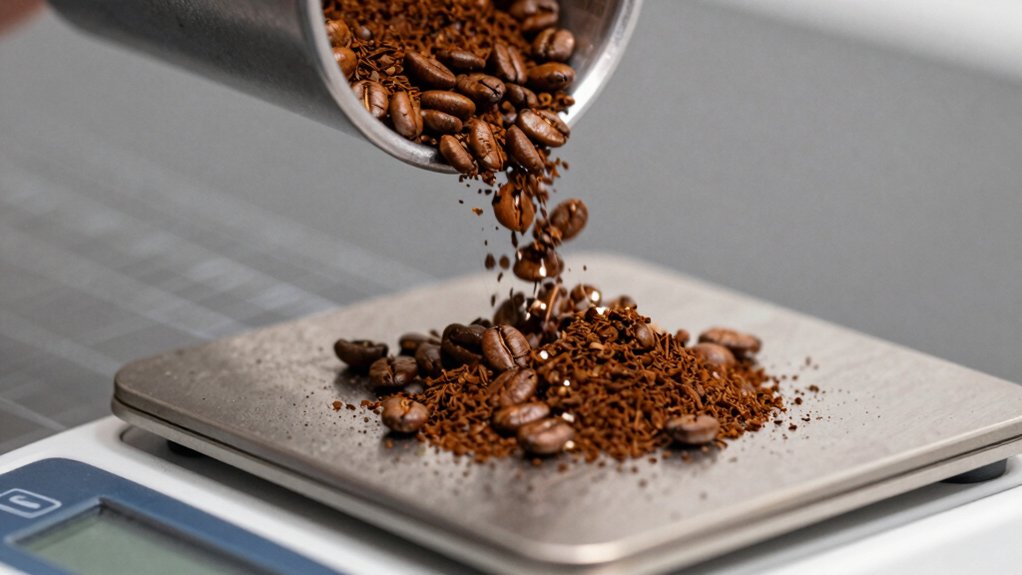
Grind distribution also influences extraction consistency by reducing channeling and promoting uniform particle access to water uniform grind.
Grind‑to‑Brew Matching: Choose the Right Grind Size for Each Method (and Spot Early Issues)
Ever wondered which grind will make your espresso shine or your French press stay crystal‑clear? Matching grind size to brew method is the core of grind‑to‑brew matching. For espresso, use an extra‑fine grind (≈0.3 mm) to force rapid extraction under pressure and create crema. French press and cold brew need a coarse, uniform particle size (1–1.5 mm) so immersion extracts gently without sediment. Drip and pour‑over thrive on a medium‑fine to medium grind (0.5–0.75 mm) for balanced extraction and clear cup. Medium‑coarse grinds work across single‑cup brewers, Aeropress, and short brew times. Adjust the grind profile when brew time shifts; a device‑specific grind keeps extraction balance in check and helps you spot early brewing issues before they ruin flavor. Grind Settings help maintain consistency across different methods and grinders.
When Your Grind Size Is Wrong: Typical Problems and Quick Fixes
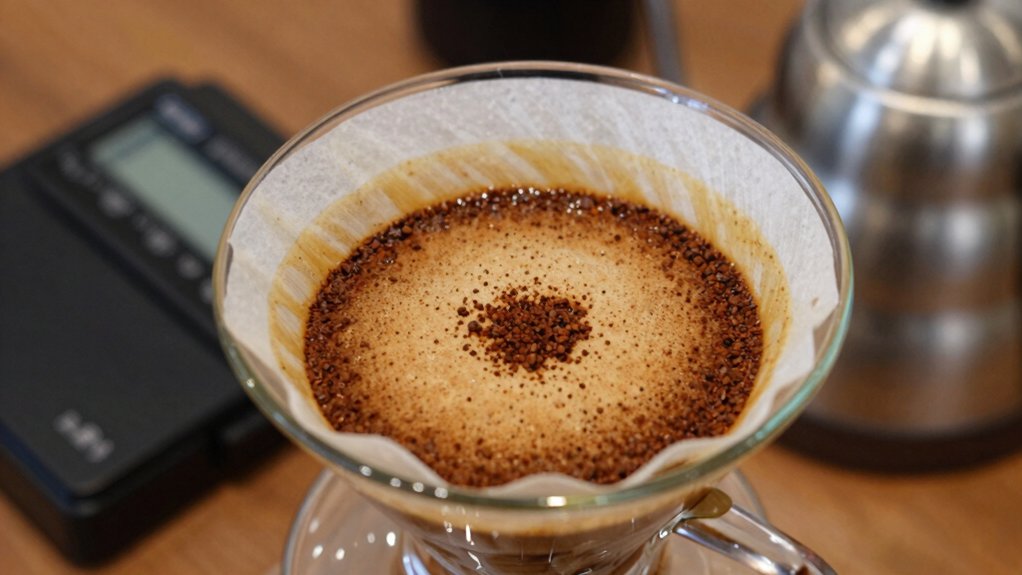
Even if you nailed the grind‑to‑brew match, a mis‑sized grind can still sabotage the cup. A fine grind in a French press speeds extraction, giving you a swampy texture, bitterness, and over‑extraction. A coarse grind in espresso or Aeropress leaves you with sourness, weak body, and under‑extraction. Inconsistency in grind size creates pockets that over‑extract while others under‑extract, throwing off brewing time and flavor balance. Quick fixes are simple: coarsen for bitterness, fine‑tune for sourness, and adjust brewing time accordingly. Ensuring uniform grind size supports a more consistent extraction grind consistency and helps you track how grind size interacts with brew time and flavor.
Frequently Asked Questions
What Is the 15-15-15 Rule for Coffee?
You grind fresh beans, brew within fifteen minutes, pour for about fifteen seconds, then finish brewing within fifteen minutes, keeping flavor and aroma at their peak before oxidation sets in.
What Are the 4 Main Coffee Flavor Profiles?
You enjoy four main flavor profiles: fruity/acidic, chocolatey‑nutty, caramel‑sweet, and floral‑herbal. Each ties to origin, roast level, and processing, letting you tailor brew choices for distinct taste experiences.
What Is the 80 20 Rule for Coffee?
You’ll find that roughly 20% of your coffee variables—mainly grind size, uniformity, brew time, and water temperature—produce about 80% of flavor consistency and extraction quality. Adjust those, and you’ll see most of the improvement.
Does Grind Size Affect Coffee Flavor?
Yes, grind size shapes flavor; finer particles extract faster, boosting body and bitterness, while coarser grounds extract slower, highlighting acidity and brightness. You’ll notice balance shifts as you adjust the grind.
In Summary
By mastering grind size, you control extraction and keep flavors balanced. Matching the grind to each brew method lets you spot issues early and fine‑tune your cup. When the grind’s off, you’ll see over‑ or under‑extraction, bitterness, or sourness—quick fixes are as simple as adjusting the grinder. Keep the grind consistent, and every brew will deliver the nuanced, vibrant taste that specialty coffee promises.


