

When your burr grinder gets hot, friction turns kinetic energy into heat, raising burr temperature and causing volatile aromatics to off‑gas before they reach the cup. The extra warmth creates more fines, dulls bright acids, and speeds oxidation, so the brew ends up flat and muted. Cooler burrs preserve delicate notes and keep the extraction window wide. If you keep going, you’ll discover practical tricks to control heat and protect flavor.
Why Grinder Heat Ruins Coffee Flavor
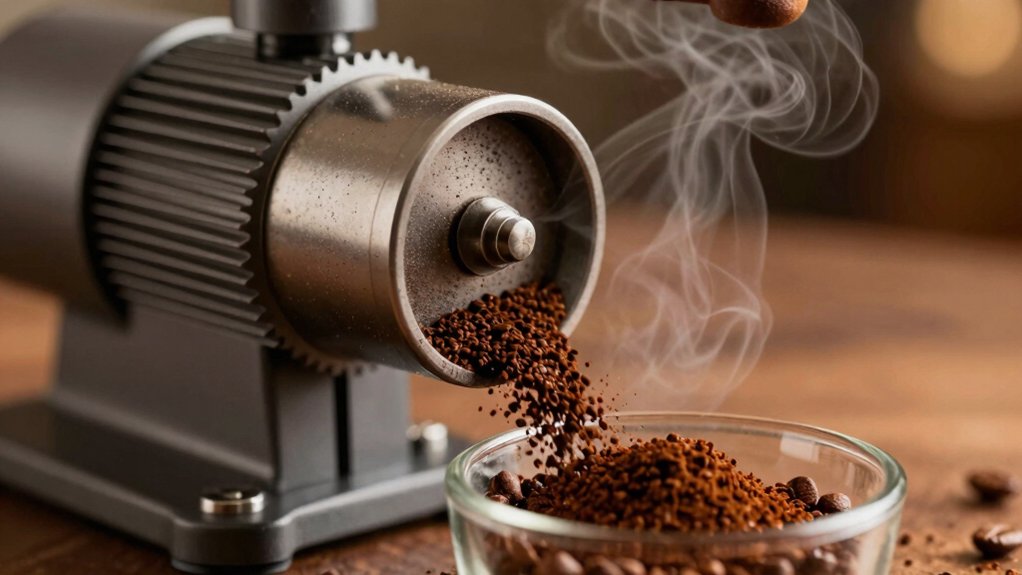
Why does grinder heat ruin coffee flavor? You notice the bitterness and flatness when the grind temperature climbs. Friction between burrs spikes as you push for finer particles, and the longer contact time pushes the temperature higher. Those extra degrees accelerate chemical changes, breaking down delicate aroma compounds that give coffee its brightness. As the grounds heat, volatile oils off‑gas, leaving a dull, muted cup. Heat also creates more fines and brittle particles, which channel water unevenly and further skew extraction. To keep flavor intact, you can grind in short bursts, dose single servings, or choose a low‑RPM or larger burr set. Those tactics lower grind temperature, preserving aroma compounds and delivering a balanced brew. Grinding temperature can influence extraction and final cup quality, so selecting equipment and techniques that minimize heat helps maintain brightness and nuanced flavors.
How Friction Raises Burr Temperature While Grinding
When you grind, friction between the burrs and coffee particles turns kinetic energy into heat, and that heat instantly changes how the grounds extract. This temperature swing directly reshapes the coffee’s flavor profile. ATC-enabled readings from refractometer-equipped systems show how consistent temperature compensation can stabilize measurements across different brewing conditions.
Friction Generates Heat
Ever wondered how a simple grind can heat up your beans? You generate heat when the burrs scrape against each other, and the faster you grind, the more friction you create. Finer settings increase contact time, so the burr surfaces rub longer and the temperature climbs. If you crank the RPM, you boost speed but also amplify friction, while larger burrs can achieve the same grind with fewer rotations, easing the heat buildup. Dense, darker roasts need extra force, so they generate more frictional heat than lighter, oilier beans. Even the motor’s internal warmth can travel to the grinding chamber, especially during long, continuous sessions, compounding the temperature rise. Grinding mechanisms also influence how efficiently heat is transferred away from the burrs, affecting consistency and flavor outcomes.
Heat Alters Extraction
Typically, the heat generated by friction in the burr set directly reshapes how your coffee extracts. As the burrs spin, friction raises their temperature, especially when you grind finer particles or use higher RPMs. The hotter burrs cause the grounds to become more pliable, which releases extra fines into the dose. Those fines create micro‑channels that let water rush through too quickly, leading to uneven extraction and a thin, acidic cup. Denser, lighter‑roasted beans demand more force, amplifying friction and further boosting chamber heat. Continuous grinding compounds the effect, as motor heat and chamber heat transfer add to the burr temperature. The result is a shift in extraction dynamics, with more fines promoting channeling and compromising flavor balance. Thermal buildup can further influence grind consistency, affecting extraction outcomes over extended sessions.
Temperature Impacts Flavor
The extra fines you generate during a fine grind don’t just affect extraction—they also heat up the burrs, and that heat directly alters the coffee’s flavor. As you push the beans through tighter gaps, friction spikes, raising grind temperature and causing heat buildup that can scorch delicate aromatics. Faster RPMs speed the process but amplify friction, while dense, light‑roasted beans demand more force, further heating the burrs. The motor’s warmth also seeps into the chamber, adding to the cumulative thermal effect. Over time, this heat buildup changes particle size distribution, leading to over‑extraction and a bitter, muted cup.
- Friction‑driven heat raises burr temperature
- Higher RPM and denser beans increase heat buildup
- Cumulative warmth alters extraction and flavor profile
What Happens to Aroma Volatiles When Burrs Get Hot
What happens to aroma volatiles when burrs heat up? You’ll notice VOC loss and a sharp drop in aroma volatility. Heat forces volatile organic compounds to off‑gas before they reach the cup, so the floral and fruity top notes fade. The grinding surface becomes brittle, creating more fines that trap aromatics and mute their release. Oxidation speeds up, turning delicate scents into dull, stale aromas. As the temperature climbs, you push more aromatics into the air rather than into your brew, cutting perceived intensity. Grinding cooler preserves those fragile compounds, letting a richer, more intact fragrance bloom when you pour. Keep the burrs cool to protect the nuanced aromas you love. Anti-static technology helps reduce ground cling, supporting cleaner extraction and more consistent flavor.
How Heat Dulls Bright, Acidic Coffee Notes
Ever notice how a coffee’s crisp, citrusy bite fades after a hot grind? When Heat climbs, you’re essentially stripping the beans of the volatile compounds that deliver that sharp acidity. The extra warmth makes particles brittle, so you generate more fines that mute the bright notes and push flat flavors to the fore. Meanwhile, the elevated temperature speeds off‑gassing of aromatics, so the brew starts with a dulled, less vibrant profile. You also shrink the extraction window for delicate acids, meaning early sweetness feels muted and the acidity never fully shines. Cooling the grinder keeps the top‑note brightness intact and preserves a cleaner, more lively cup. Additionally, choosing beans and roasts with careful moisture and processing can help maintain brightness when ground at lower temperatures sustainability and sourcing.
How Heat Speeds Oxidation of Ground Coffee Compounds
You’ll notice that heat makes the acids in your grounds oxidize far faster, stripping away their bright bite.
The same temperature boost accelerates lipid rancidity, turning delicate oils into bitter, stale notes.
As a result, the coffee’s sweetness fades quickly, leaving a flat, off‑balanced cup.
Rapid Oxidation of Acids
Cross-back design considerations from barista gear emphasize ergonomic comfort during long shifts comfort for long shifts and can inform how you structure a cooler grinding workflow for better consistency.
Heat‑Accelerated Lipid Rancidity
Why does a hot grinder turn your coffee’s natural oils into a ticking clock of rancidity? Heat raises grinding temperature, which boosts molecular mobility and accelerates lipid oxidation. The hotter the burrs, the faster oils break down into off‑flavor aldehydes and ketones, dulling brightness and sweetness. Fines trap those volatile compounds, sealing in rancidity and muting aromatics. Pre‑ground coffee suffers even more because its larger surface area and heat exposure promote rapid oxidation. Managing grind temperature—using short bursts, cool equipment, and lower heat—preserves lipid integrity and keeps your cup lively.
| Factor | Effect on Coffee | Mitigation |
|---|---|---|
| Heat during grinding | ↑ lipid oxidation | Cool grinder |
| Fine particles | Trap oils, speed rancidity | Adjust grind size |
| Prolonged exposure | Accelerates off‑flavors | Brew promptly |
| Whole beans vs. pre‑ground | Whole beans retain freshness longer | Grind on demand |
| Temperature control | Maintains brighter flavor | Use short bursts |
How Grinder Heat Affects Grind‑Size Consistency
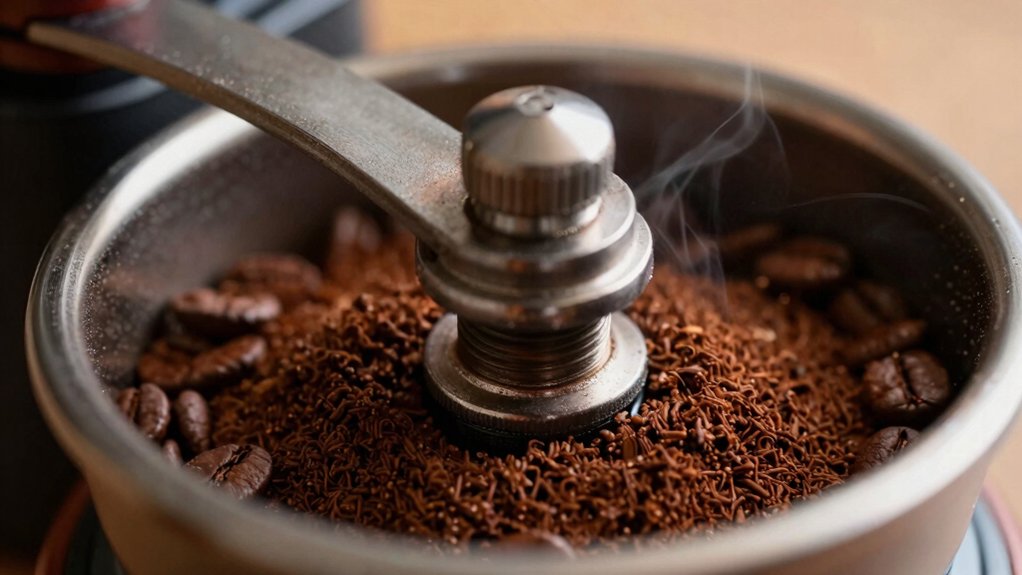
When heat builds up inside a grinder, it can subtly shift the particle‑size distribution, making each dose less uniform. You’ll notice that as temperature rises, the grind size variance widens, especially with uncoated stainless steel burrs. Heat transfers into the burr material, causing slight expansion and altering the cutting edge geometry. This leads to a broader PSD and uneven extraction.
In contrast, DLC‑coated, TiN‑coated, and tungsten carbide‑coated burrs keep the PSD tight, even under sustained heat, while ceramic burrs stay cool thanks to low thermal conductivity, preserving a narrow grind size range.
- DLC and TiN coatings limit PSD variance under heat.
- Ceramic burrs stay cool, maintaining tight grind size distribution.
- Uncoated stainless steel widens PSD as heat accumulates.
Heat Retention: Stainless Steel vs TiN vs Ceramic Burrs
You’ll notice that stainless‑steel burrs heat up quickly, expanding more and potentially altering extraction flavor.
TiN‑coated burrs stay cooler, limiting expansion and keeping the brew profile steadier.
Ceramic burrs barely warm, so their minimal thermal expansion preserves the intended taste.
Thermal Conductivity Differences
Ever wondered how the material of your burrs shapes the heat that reaches your coffee grounds? Thermal conductivity dictates how quickly that energy passes from the burrs to the beans, directly influencing grind temperature. Stainless steel conducts heat efficiently, so the temperature spikes as you grind. TiN‑coated burrs cut that transfer by up to 25%, keeping the grind temperature lower and preserving delicate flavors. Ceramic burrs, with their very low conductivity, barely raise the temperature—often less than 5 °C—so you retain the beans’ original profile.
- Stainless steel: high conductivity → higher grind temperature
- TiN coating: reduced conductivity → cooler grind, up to 25 % drop
- Ceramic: minimal conductivity → minimal temperature rise
Choose the material that matches your flavor goals.
Material Expansion Impacts Flavor
Why does the same grind feel hotter with stainless steel than with TiN or ceramic? You notice the difference because stainless steel burrs raise the grind discharge temperature by 10‑15 °C, so more heat stays in the grounds. TiN‑coated burrs cut that rise by roughly 25 % compared to uncoated steel, keeping the temperature lower and limiting heat transfer. Ceramic burrs go further: their low thermal conductivity means the temperature climbs less than 5 °C, so the coffee retains far less heat. This reduced heat retention preserves volatile aromatics and prevents over‑extraction, especially with delicate roasts. When the burr material expands less, it maintains tighter clearances, ensuring consistent particle size and flavor stability throughout each brew.
Managing Grinder Heat: Short Bursts & Cooling Pauses
What if you could keep your burrs cool without sacrificing speed? You can control grinding temperature by using short bursts of 2‑3 seconds, then pausing long enough for the metal to shed heat. This rhythm stops heat buildup before it spikes, preserving flavor. Pair bursts with single‑dose pulls to cut motor runtime, and clean the burrs regularly so oil and fines don’t trap warmth. For heavy workflows, rotate between two grinders so each gets a cooling window, keeping burr temperature stable and extraction consistent.
- Grind in 2‑3‑second bursts, then pause for a few seconds.
- Use single dosing to minimize motor run time.
- Alternate two grinders for built‑in cooling intervals.
When Pre‑Heating the Grinder Helps or Hurts
After mastering short‑burst grinding to keep burrs cool, you might wonder whether pre‑heating the chamber can actually help. If your grinder’s thermal design includes a built‑in preheating cycle, the chamber and burrs start near operating temperature, smoothing out the temperature plunge that occurs when cold beans hit cold metal. This stabilizes grind size and extraction, especially after a pause, and can improve shot‑to‑shot consistency in models like Mythos. However, if the preheating pushes the burrs into excess heat, you’ll accelerate heat buildup during busy sessions, generating more fines and muting flavor. The net effect hinges on thermostat control, the grinder’s heat‑dissipation capacity, and whether you need immediate readiness or long‑term thermal stability. Use preheating sparingly, monitoring temperature to avoid over‑heating.
How Brew Water Temperature Interacts With Hot Grounds
Ever wondered how the temperature of your brew water reshapes the flavors extracted from hot grounds? You’ll notice that a hotter brew accelerates extraction, pulling acids first, then sugars, and finally polyphenols. If you keep the water at the upper end of the optimal range (200–205 °F / 93–96 °C), light roasts reveal bright sweetness, while darker beans stay smooth at slightly lower temps (195–200 °F). Adjusting contact time prevents the late‑stage bitter compounds from dominating. The key is matching water temperature to roast level and desired mouthfeel, so each extraction stage contributes balanced aroma, sweetness, and body.
- Higher temperature → faster extraction of early acids
- Mid‑range temperature → balanced sugar development
- Lower temperature → reduced bitterness, smoother finish
10 Easy Ways to Keep Your Grinder Cool
How can you keep your grinder from turning into a tiny furnace? Start by grinding in short bursts—two to three seconds—then pause to let the burrs cool. If you have two grinders, rotate between them so each gets a breather, halving the cumulative heat. Use single‑dose loading to keep run time low, and consider ceramic or DLC‑coated burrs; DLC can slash temperature by about 40 %, while ceramic barely rises above five degrees. Uncoated stainless steel typically climbs 10–15 °C, but TiN and BCN coatings trim that by 25 %–30 %. By limiting continuous friction and letting the metal dissipate heat, you preserve aromatic oils, curb VOC off‑gassing, and maintain consistent extraction without overheating.
Diagnosing Flavor Faults Caused by Excessive Grinder Heat
Why does your espresso suddenly taste flat and dull? You’re probably dealing with grinding heat that’s scorching your beans and destroying aroma compounds. The heat makes the grind brittle, spitting fines that clog the burrs and cause uneven extraction. Oxidation speeds up, muting floral and fruity notes while leaving a stale, flat finish.
Grinding heat scorches beans, creating brittle fines, clogging burrs, and muting aromatic, floral, and fruity espresso notes.
You’ll notice a drop in sweetness, muddled acidity, and shot‑to‑shot inconsistency—sometimes sour, sometimes bitter.
- Check for excess fines and channel blockages after each pull.
- Smell the grounds; a loss of bright, volatile aroma compounds signals overheating.
- Measure temperature drift; a rise of just a few degrees can shift grind size and flavor balance.
Frequently Asked Questions
What Is the 15-15-15 Rule for Coffee?
You follow the 15‑15‑15 rule by pre‑heating the grinder for fifteen minutes, waiting fifteen minutes between extractions, and giving it a fifteen‑minute rest to keep temperature stable and preserve flavor.
How Does Temperature Affect Flavour?
You feel hotter beans release sugars and oils faster, boosting body, while cooler beans preserve bright acids. Too much heat burns aromatics, flattening sweetness and adding bitterness, so temperature directly shapes your cup’s flavor balance.
How Does the Grinder Setting Affect the Taste of Coffee?
You’ll notice that finer settings increase friction, heating the grounds and pulling more bitter compounds, while coarser settings keep temperature lower, preserving brighter acidity and sweetness in the cup.
What Are the 4 Enemies of Coffee?
You face four enemies: stale beans, improper grind size, inconsistent temperature, and poor water quality. Each one degrades aroma, balance, and extraction, so you must control them for great coffee.
In Summary
By now you’ve seen how even a modest rise in burr temperature can mute acidity, flatten aromatics, and accelerate oxidation, leaving your cup dull and lifeless. Keep grinding cool, watch friction, and let the beans stay fresh from bean to brew. When you control heat, you preserve the bright, nuanced flavors that make coffee truly enjoyable.


