
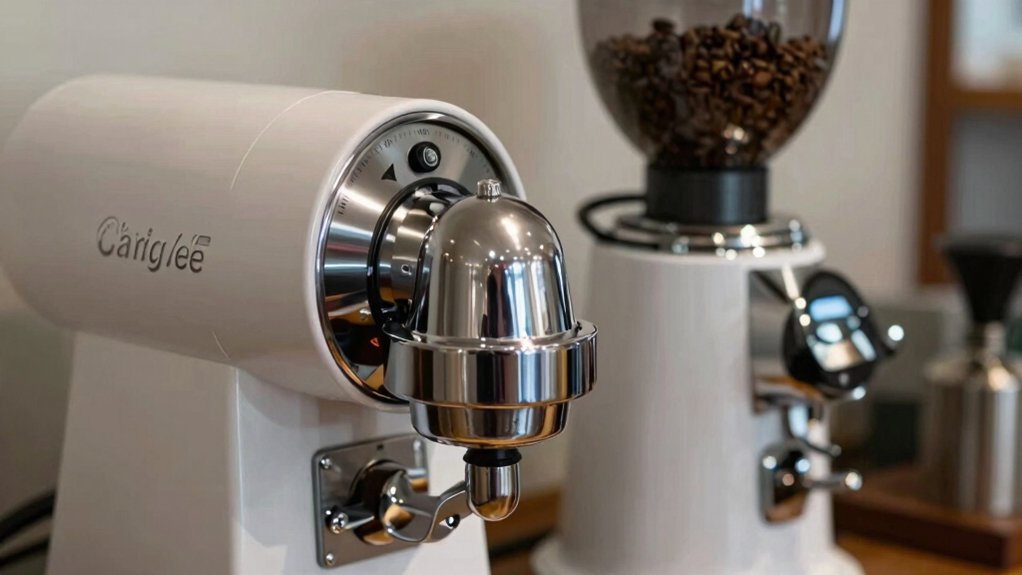
You’ll want a grinder with at least a 60 mm flat steel burr, because the larger burr keeps grind size steady and cuts heat, preserving delicate aromatics. Aim for a 5–6 lb‑per‑hour throughput so you can handle peak‑hour demand without over‑working the motor, and choose a hopper that’s big enough to limit bean retention but not so large it traps heat. Steel burrs give durability for high‑volume use, while flat geometry ensures uniform particles for consistent flavor. Keep reading to discover the exact specs that match your menu.
How Commercial Burr Grinder Size & Material Influence Flavor Consistency
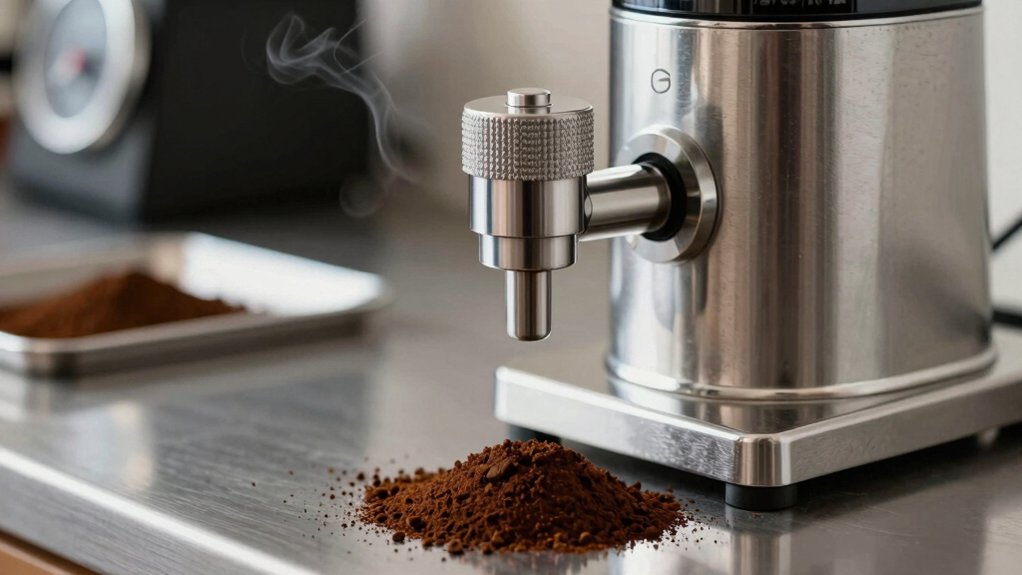
Why does the size and material of a commercial burr grinder matter for flavor consistency? You’ll notice that larger burr size—60 mm or more—keeps grind consistency steady and reduces heat generation, which protects delicate aromatics. Steel burr material tolerates high‑volume use, while ceramic stays cooler but can chip under heavy duty. Flat vs conical burrs shape particle distribution: flat burrs deliver a tighter, more uniform grind, aiding repeatable extraction. Precise grind alignment and grind gap control prevent size shifts that would create uneven extraction across a shift. In commercial grinders, these factors together lock in flavor consistency, ensuring each shot or brew hits the same taste profile despite rapid, continuous operation. Extraction Yield considerations can also inform how grind size translates to brew strength across batches.
How to Size a Commercial Grinder’s Capacity, Duty Cycle, & Hopper for Peak‑Hour Throughput
How do you guarantee your grinder keeps up with the rush without overheating or sacrificing grind quality? Start by matching grind capacity to peak‑hour throughput, not average sales. Aim for a burr grinder that pushes at least 5–6 lb per hour, then map a workflow diagram of bar stations, counter space, and service flow. Choose a hopper size that holds enough beans for the busiest shift—large enough to cut refills but small enough to limit retention and stale flavors. Align the duty cycle with expected continuous use; high‑throughput, espresso‑focused machines should sustain near‑continuous operation without throttling. Finally, verify heat management by monitoring temperature rise during peak bursts; consistent grind size and flavor hinge on keeping the grinder cool while maintaining steady throughput. Additionally, consider selecting equipment that employs UV‑protective design cues and precision stainless steel construction to maintain bean integrity through high‑duty cycles UV protection.
Which Burr Type, Size, and Speed Best Fit Your Café’s Brewing Menu?
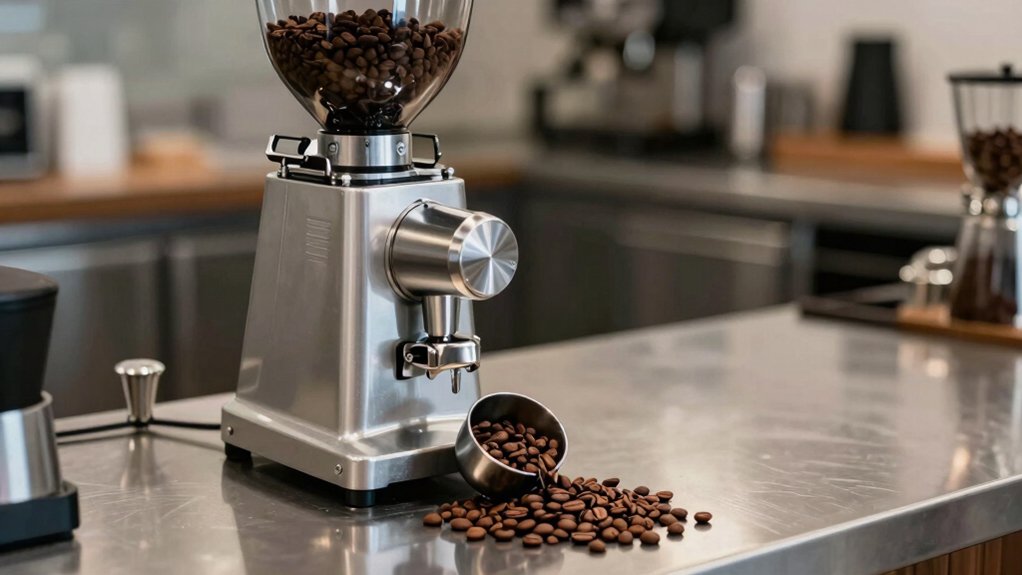
Which burr type, size, and speed will keep your menu running smoothly? If espresso dominates, choose flat burrs; they give tight grind consistency, fast grind speed, and excellent espresso workflow. Pair them with a 64 mm or larger burr size to boost grind stability and reduce tuning frequency. For a multi‑method café, conical burrs shine—cooler operation, broader grind range, and solid heat management. Opt for steel burr material in high‑volume commercial grinder settings for durability; ceramic works if you prioritize heat control over heavy use. Align burr size to your throughput: larger burrs handle more beans per minute, while smaller ones fine‑tune specialty drinks. Balancing burr type, size, and speed ensures consistent extraction across your entire brewing menu surface material and overall design considerations can influence workflow efficiency.
Frequently Asked Questions
What Is the 15-15-15 Coffee Rule?
You follow the 15‑15‑15 rule by aiming for roughly 15 % fine particles, 15 % coarse particles, and 15 % uniformly mid‑sized grounds, creating a narrow distribution that stabilizes extraction and balances flavor.
What Is the 80 20 Rule for Coffee?
You apply the 80/20 rule by focusing on the 20 % of variables—grind uniformity, dose weight, and water quality—that deliver roughly 80 % of your coffee’s flavor, ignoring minor tweaks.
What Country Is Known for the Best Coffee?
You’ll find the best coffee in Ethiopia; its historic, high‑altitude farms produce complex, bright beans that set the benchmark for flavor, aroma, and richness worldwide.
What Coffee Grinder Do Coffee Shops Use?
You’ll find coffee shops using high‑volume commercial burr grinders like Mahlkönig, Nuova Simonelli, BUNN, or Omcan—typically 60‑80 mm flat burrs with grind‑by‑weight, programmable dosing, and rapid‑clean features.
In Summary
By now you know that a grinder’s burr material, size, and speed dictate flavor consistency, while capacity, duty cycle, and hopper volume determine how smoothly you’ll handle peak‑hour demand. Matching the right burr type to your menu ensures every shot or pour‑over hits the same sweet spot. Choose a machine built for your volume and flavor goals, and you’ll keep customers coming back for that perfect cup, every time.


