

Pick a grind that matches your device—table‑salt for V60, coarser for Chemex, slightly finer for Kalita Wave—and keep it uniform to avoid channeling. Brew at 90‑96 °C with a 1:15‑1:18 ratio, adjusting temperature to fine‑tune extraction. Bloom 30‑60 seconds with just enough water, then pulse‑pour in short bursts every 15‑30 seconds to let grounds settle. Choose a fine‑mesh or paper filter for clarity, and measure dose and brew weight with a scale, checking TDS on a refractometer. If you keep these steps consistent, you’ll see higher yields and better flavor balance.
Pick the Best Grind Size for Maximum Extraction Yield
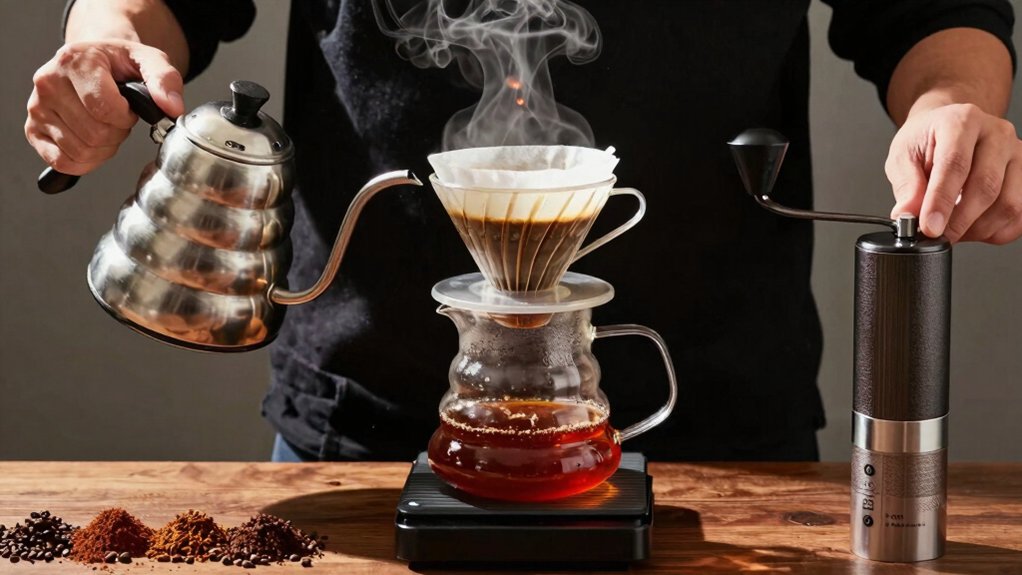
Should you aim for the perfect grind to boost extraction yield? You’ll find that grind size controls how quickly water extracts solubles, whether you’re doing immersion brewing or percolation. Coarser grinds slow diffusion in cold‑brew, while finer particles increase surface area and accelerate extraction, but they can also cause channeling if the distribution isn’t even. Aim for a grind size that balances surface area with uniform water contact; this prevents over‑extraction and keeps the brew consistent. In percolation methods, an even grind size distribution avoids clogging and lets water flow evenly across the bed, maximizing extraction yield. Adjust the grind until you see a steady, full‑bodied cup without excessive bitterness or thinness. Date tracker on lid can help you monitor how changes in grind size affect freshness over time, reinforcing consistent results across batches.
Optimize Water Temperature & Brew Ratio for Consistent Yield
When you set the water temperature between 90 °C and 96 °C and pair it with a precise brew ratio—say 1:15 to 1:18 for drip or 1:7 to 1:2 for espresso—you create a predictable extraction environment that maximizes yield while preserving balance.
In manual brewing, small temperature shifts can offset a slightly looser brew ratio, but misalignment hurts consistency and extraction yield.
Use a digital scale to hit your target ratio and, if possible, a refractometer to verify TDS. Adjust grind size only when you change temperature or ratio dramatically.
Use a digital scale for precise ratios; a refractometer verifies TDS, adjusting grind only when temperature or ratio shifts dramatically.
- Measure water temperature precisely.
- Choose a brew ratio that matches your brew method.
- Record TDS to calculate extraction yield.
- Repeat the same steps for every batch.
Master the Bloom: Pre‑Infusion Techniques to Unlock Solubles
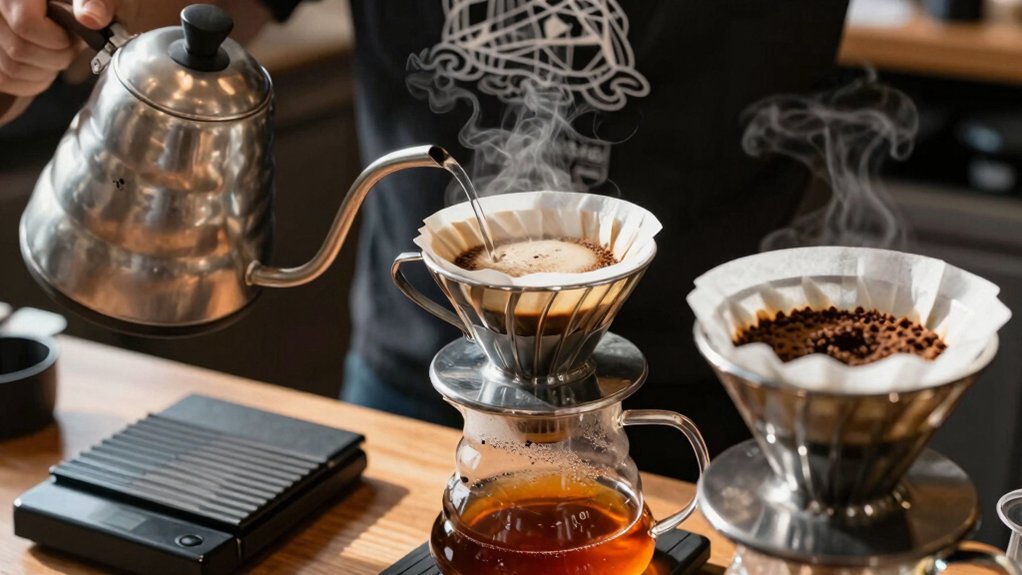
If you let the coffee bloom first, you give the grounds a brief, gentle pre‑infusion that saturates the particles and kick‑starts solute diffusion. Aim for a 30‑ to 60‑second bloom, using just enough water to wet the coffee without fully extracting. Fresh beans will expand visibly, confirming that the bloom is working. In immersion brewing, such as an Aeropress with a bloom step, this early saturation creates a more even wetting front, improving extraction uniformity and preventing channeling. Adjust the pour rate so the water spreads across the puck, then pause before the full pour. By controlling the bloom duration and water volume, you set a solid foundation for consistent flavor and higher yield. Extraction yield can be further influenced by using a precise grind size and maintaining a stable temperature throughout the pour, which helps maximize soluble extraction without over-extraction.
Control Agitation to Boost Yield Without Over‑Extraction
How can you boost extraction yield without drowning the cup in bitterness? You’ll find that gentle, timed agitation in manual brewing can lift soluble compounds while keeping harsh notes at bay. The key is to balance motion and rest, letting water flow through grounds enough to extract flavor but not so aggressively that it pulls unwanted polyphenols.
Gentle, timed agitation lifts flavor while keeping bitterness at bay.
- Start with a light stir after the bloom, just enough to wet all particles.
- Wait 30‑45 seconds, then give a brief, consistent swirl for 5‑10 seconds.
- Repeat the swirl every 2‑3 minutes, maintaining the same intensity.
- Stop agitation after the desired extraction yield is reached, avoiding over‑extraction.
An important concept Ultrafilne microfoam and precise temperature control can help preserve delicate flavors during extraction by reducing overheating and scalding in hot beverage prep.
Choose the Right Filter to Boost Extraction Yield & Clarity
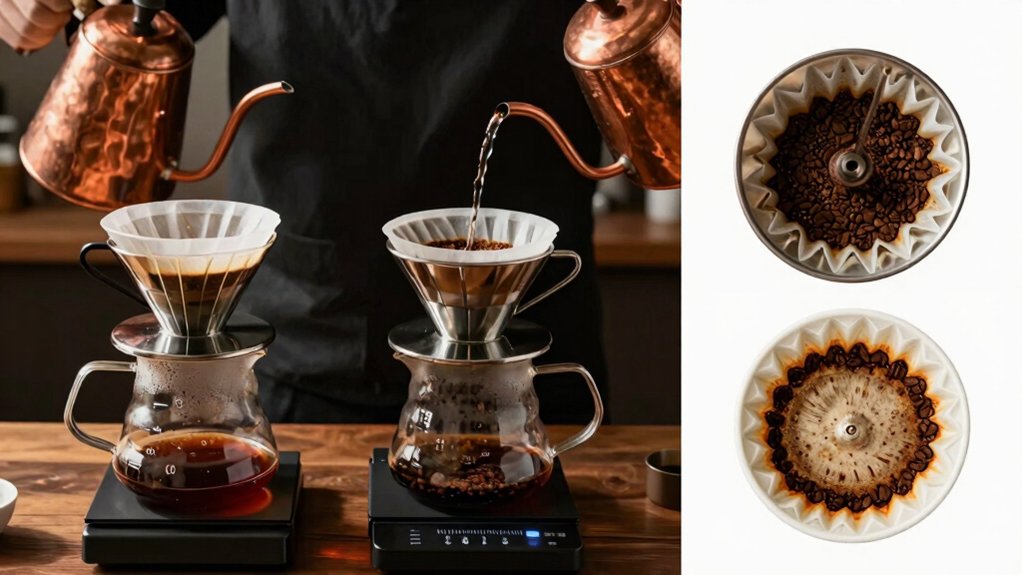
You’ll notice that a fine‑mesh filter captures more of the brew’s dissolved solids while keeping sediments out, which directly lifts extraction yield and clarity. In practice, selecting the right filter also helps preserve flow stability during extraction and reduces the risk of channeling secure filtration.
Fine Filter Selection Matters
Ever wondered why some brews taste crystal‑clear while others feel gritty? You can boost extraction yield and keep sediment under control by matching filters to your grind size and brew method. A fine filter blocks fines, prevents channeling, and lets water flow evenly, which preserves flavor clarity and improves overall yield.
- Choose a mesh fine enough to trap sediment without choking flow.
- Pair it with a grind size that lets water access the coffee uniformly.
- Align the filter with your brew method—percolation or recirculation benefits most from finer media.
- Test the result; a clean cup signals optimal extraction yield and effective sediment controls.
Fine vs. Coarse Pore
Why settle for a cloudy cup when a simple filter choice can sharpen both yield and clarity? You can match grind size to pore size, balancing filtration speed and extraction yield. A fine mesh traps sediment fines, giving a crystal‑clear brew, but it slows brew time and may over‑extract if the grounds are too coarse. A coarser pore speeds water flow, reducing brew time and yielding a brighter profile, yet it lets more fines slip through. Pairing a fine filter with controlled agitation—like Hardtank’s automated system—keeps solutes moving while retaining clarity. The key is to avoid extremes: too fine a filter with coarse grounds under‑extracts; too coarse a filter with fine grounds over‑extracts and muds the cup. Additionally, selecting filters with appropriate IP-rated durability can help ensure consistent performance in various brewing environments, aligning with the durability emphasis in reputable refractometer-equipped kits. Extraction-focused data-driven adjustments can further optimize yield while preserving clearness.
Filter Material Impact
Where does the filter material make the biggest difference in your brew? It governs bed flow, percolation uniformity, and the amount of fines that slip through, directly shaping extraction yield and clarity. Choosing the right filter lets you fine‑tune resistance and oil retention, so you avoid channeling and keep sediment low. Reusable metal filters can preserve oils for fuller body, while paper filters absorb oils for a cleaner cup, aligning with your preferred extraction yield and mouthfeel. filter type selection also influences how consistently you achieve repeatable high yields across multiple brews.
Set the Ideal Steep Time for Each Roast Profile
How long should you steep each roast to hit the sweet spot of flavor? For a balanced coffee extraction, match steep time to the roast profile. Light roasts thrive in a 14‑16‑hour immersion brew, letting bright, varietal notes develop.
Medium roasts sit comfortably at 8‑12 hours at room temperature, achieving a smooth acidity‑body balance.
Dark roasts need a shorter 12‑16 hour window, or even a 2‑4 minute percolation‑style brew with fine grind, to avoid bitterness.
Start with a 1:12–1:15 coffee‑to‑water ratio, then tweak brew parameters by ±1‑2 hours based on taste. Remember, origin and grind distribution affect flavor, so use sensory feedback to fine‑tune each roast’s steep time.
Use a Scale to Measure Extraction Yield Accurately
After setting the right steep time, you’ll need a reliable way to confirm that the coffee is extracting the intended amount of solids. Grab a digital scale that reads to 0.1 g and weigh your coffee dose, then brew and record the brew weight. Measure the TDS with a refractometer, plug the numbers into the extraction‑yield formula, and compare the result to your target. This workflow eliminates guesswork and lets you tweak variables with confidence. Additionally, ensure your grinder maintains consistent grind size to support repeatable extraction 64mm burrs and use anti-static design features to minimize mess and contamination during measurement. Standardize moisture and CO₂ corrections to keep results consistent across batches.
Enhance Extraction Yield With Manual Pulse‑Pour Techniques
Ever wondered why a steady stream sometimes falls short of perfect extraction? Pulse pouring changes that. By delivering short, rhythmic bursts, you let the grounds settle between each pour, which smooths the saturation front and boosts extraction yield. In manual brewing, this rhythm creates a gentler flow, cutting channeling and keeping the pour‑over even.
Try 5–10 % water bursts every 15–30 seconds; the pauses let the coffee bed re‑equilibrate, reducing over‑extraction risk while enhancing clarity.
Adjust burst size and interval until the brew hits your desired strength and flavor balance. The result is a more consistent cup, higher extraction yield, and a cleaner, brighter profile.
Fine‑Tune Grind Size for Different Pour‑Over Devices
Why settle for a one‑size‑fits‑all grind when each pour‑over device demands its own texture? You can boost extraction rate by matching grind size to flow rate control, ensuring uniform particle size for consistency.
Match grind size to flow rate for consistent extraction and optimal flavor.
Start with a table‑salt grind for a V60 and tweak ±1 step until the brew drips at your target pace.
For a Chemex, go coarser to keep the slow drip steady; for a Kalita Wave, aim slightly finer to maintain an even bed. Adjusting these variables lets you fine‑tune each device’s performance without over‑extracting.
- Identify the device’s typical flow speed.
- Choose a baseline grind size (coarse‑fine).
- Test and observe extraction rate.
- Refine until uniform particle size yields desired flavor.
Troubleshoot Common Yield Issues: Under‑Extraction, Over‑Extraction, Channeling
You’ll notice sour or weak coffee when grind inconsistencies give you under‑extraction, so tighten your grind and extend the brew time a bit.
If the cup turns bitter or muddy, you’re likely over‑extracting; fine‑tune the dose and lower the water temperature to balance it.
When water streams through channels, a quick, gentle stir can even out the flow and keep the extraction on target.
Identify Grind Inconsistencies
What’s the tell‑tale sign that your grind is sabotaging extraction? You’ll notice sour, weak sips or a thick, muddy brew, both pointing to grind inconsistency. Uneven particle size creates hot spots and dead zones, skewing contact time and dropping extraction yield.
To diagnose, follow these steps:
- Visual inspection – Spread grounds on a white surface; spot coarse chunks beside fine dust.
- Sieving test – Run a small sample through a fine mesh; excess fines indicate over‑grinding.
- Flow observation – Brew a quick pour‑over; rapid drip signals channeling from coarse spots.
- Taste check – Compare acidity and body; sourness hints at under‑extraction, bitterness at over‑extraction.
Fix the issue by grinding to a tighter uniformity, then re‑measure contact time and extraction yield for consistency.
Adjust Brew Time
When brew time drifts too short, under‑extraction leaves you with sour, weak cups; extending the steep lets the water pull more sugars and acids, boosting sweetness and body. In immersion methods, you can fine‑tune brewing time to hit your target extraction yield, usually 18–22 %.
If the cup turns bitter, cut the steep by a few seconds or pause stirring once you sense the desired balance.
Consistent grind size prevents channeling, ensuring every gram of coffee sees the same contact. Use a refractometer to track TDS and adjust the brew length until the extraction yield aligns with your flavor goals. Small, precise timing tweaks keep your brew steady without over‑ or under‑extracting.
Balance Water Temperature
A few degrees can swing your brew from bright to bitter, so mastering water temperature is essential for troubleshooting under‑extraction, over‑extraction, and channeling. When the water’s too cool, solubility drops and you get sour, weak cups despite long brew time. Too hot, and harsh tannins dominate, making the brew bitter. Keep temperature steady to protect extraction yield, and tweak grind size and brew time accordingly.
- Set a target temperature (e.g., 92 °C) before heating.
- Match grind size to the chosen temperature—coarser for hotter water, finer for cooler.
- Adjust brew time to compensate for temperature shifts; shorter for higher heat.
- Use an immersion method to maintain uniform temperature throughout extraction.
These steps let you fine‑tune each variable, delivering a balanced, repeatable cup.
Frequently Asked Questions
How Does Ambient Humidity Affect Extraction Yield?
You’ll notice that higher ambient humidity slows solvent evaporation, so the grind stays moist longer and extraction yields rise slightly; lower humidity dries the grounds faster, decreasing contact time and lowering yield.
Can Water Hardness Impact the Consistency of Manual Brew Yields?
Yes, you’ll notice that hard water can make your brew yields less consistent; the extra calcium and magnesium affect solubility and extraction rates, so you may need to adjust grind size or dosing to maintain uniform results.
What Role Does Bean Age Play in Optimal Extraction Ratios?
You’ll find that fresher beans extract more quickly, so you’ll need a coarser grind or lower temperature to avoid over‑extraction, while older beans release flavors slower, requiring finer grind or hotter water for ideal ratios.
Do Different Grinder Burr Materials Influence Extraction Uniformity?
Yes, different burr materials affect uniformity. Steel burrs tend to produce consistent particle sizes, while ceramic burrs can generate a broader distribution. That variance changes how evenly water extracts flavors during brewing.
How Does Cup Pre‑Heating Alter Perceived Extraction Quality?
You’ll notice a smoother mouthfeel and brighter acidity because pre‑heating the cup keeps the brew at advantageous temperature longer, preventing rapid cooling that dulls aromatics and masks subtle flavor nuances.
In Summary
By mastering grind size, water temperature, bloom, agitation, and filter choice, you’ll consistently hit the sweet spot for extraction yield. Use a scale and pulse‑pour methods to fine‑tune results, and adjust your grind for each pour‑over device. When issues arise—under‑extraction, over‑extraction, or channeling—diagnose and tweak accordingly. Follow these steps, and every cup will deliver optimal flavor and clarity.


