

You can master temperature control by picking a reliable digital thermometer, pre‑heating your mug or carafe, using a bloom‑first pour at 185‑190 °F, then ramping to 195‑205 °F, employing a PID‑controlled kettle or brew station to keep the setpoint steady, maintaining brew heat with a heated pitcher, and adjusting the temperature slightly between pours for uniform extraction. Each step builds consistency, and the next section shows how to fine‑tune these methods.
Why Precise Coffee Brewing Temperature Matters
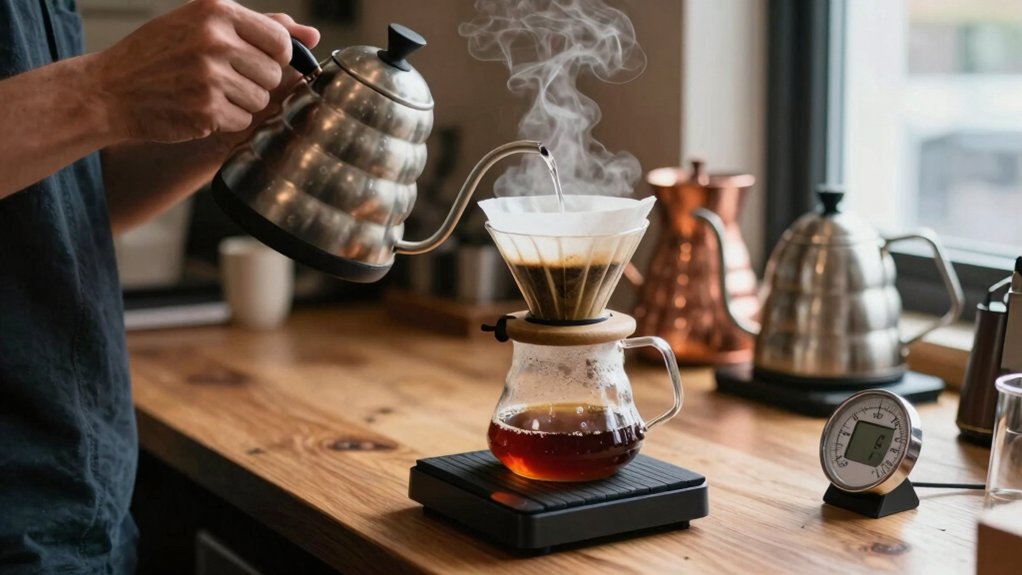
Why does temperature matter? You control brewing temperature to steer extraction, and the water temperature you choose dictates whether you hit the optimal temperature range or drift into over‑extraction or under‑extraction. In a pour‑over, aiming for 200–205°F (93–96°C) extracts balanced sweetness and acidity without scorching the grounds. Too hot water burns the roast level, pulling bitter compounds and flattening aroma; too cold water leaves the brew sour and thin, missing soluble oils. Adjustments matter for light versus dark roast levels, since darker beans extract faster and need slightly cooler water. Altitude shifts boiling points, so you may lower the temperature a few degrees to keep extraction consistent. Mastering these nuances lets you craft a cup that reflects the coffee’s intended flavor profile. Temperature control is also a practical skill that can help you maintain consistency across different brew methods and equipment.
Choose a Reliable Thermometer for Accurate Coffee Brewing Temperature
What makes a thermometer reliable for coffee brewing? You need consistent thermometer accuracy across the 195–205 °F (90–96 °C) range, especially for pour‑over temperature and espresso shots. A digital thermometer with quick‑read sensors lets you monitor brew temperature in real time, while a PID‑controlled kettle maintains steady heat without manual adjustments. Preheating equipment, including the probe, reduces initial temperature drop and stabilizes readings. Regular calibration against ice‑water and boiling‑water benchmarks keeps your device trustworthy. Verify that the sensor tolerates altitude‑induced shifts and heat loss from vessels. By choosing a calibrated, fast‑responding digital thermometer and pairing it with a PID‑controlled kettle, you secure precise temperature control for every manual brew. The inclusion of a thermometer with data tracking and calibration history can further improve consistency across multiple brews, especially when comparing different grind sizes and temperatures calibration history.
Pre‑Heat Your Vessel to Preserve Coffee Brewing Temperature
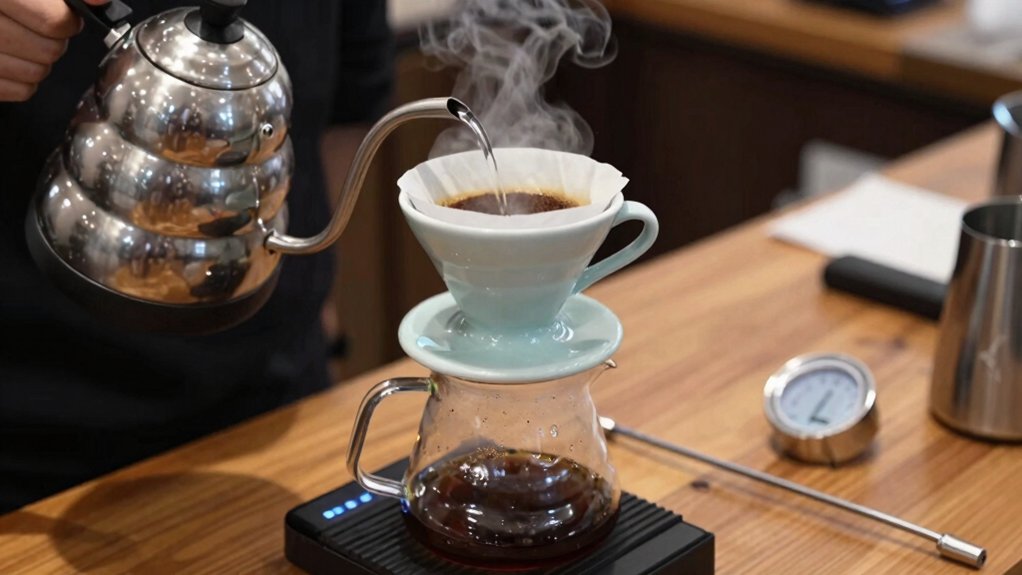
You’ll want to warm your mug or carafe before brewing so the coffee doesn’t lose heat to a cold surface.
Use a heat‑retaining vessel, like a pre‑heated French press, to keep the extraction temperature steady.
Even a quick rinse of the kettle with hot water helps maintain the target 195–205°F range throughout the pour‑over.
Also, choose cupping/spoon-compatible vessels with non-reactive heat properties to minimize flavor transfer during preheating and brewing. non-reactive
Warm Up Mug
Preheating your mug is a simple step that keeps the brew’s temperature steady after you pour, preserving aroma and flavor. When you preheat the mug with a hot water rinse, you boost temperature stability and thermal retention, so the coffee stays near its ideal serving temperature of 195–205°F. This quick ritual minimizes the heat loss that would otherwise flatten aroma and taste, letting you experience the full spectrum of your brew. Consistently preheated mugs support brewing consistency, enabling you to compare recipes without temperature bias and to maintain a uniform extraction profile across sessions. Thermal stability helps ensure your final cup delivers the intended flavor balance and aroma. Just fill the cup with hot water, swirl, and discard before pouring. The result is a warmer sip, better aroma preservation, and a more reliable coffee experience.
Heat Retaining Vessel
Ever wondered why your coffee cools so fast after it hits the cup? Preheating the vessel is your first defense against heat loss. Fill a carafe or mug with hot water, let it sit a few seconds, then discard. This pre‑warming step creates a warm shell that boosts heat retention and temperature stability during extraction.
Choose an insulated vessel or add a thermal insulation sleeve; metal retains heat better than ceramic or glass, slowing the drop in temperature. If you brew in stages, briefly reheat the carafe between pours to keep the brew within the 195–205 °F range. By minimizing heat loss, you preserve flavor balance and achieve a consistently strong cup.
Pre‑Heat Water Kettle
A warm carafe only does half the job; the kettle must start hot too. By pre‑heating your gooseneck kettle, you lock in heat retention before the first pour. Fill the kettle, set the temperature control to just below boiling, and let it sit until the display hits your target temperature range of 195‑205°F. When you lift the kettle, the water stays within that band, preventing the dip that ruins extraction consistency in a pour‑over. Pre‑heating vessel and kettle together reduces the thermal shock that otherwise slows the brew. Track the temperature drop each time, compare it to your heat retention, and tweak the pre‑heating duration until the extraction stays steady from start to finish. This approach aligns with selecting filters that preserve consistent flavor and temperature dynamics across the brew, ensuring a stable extraction every time temperature stability.
Use the Bloom‑First Technique to Stabilize Temperature Before Extraction
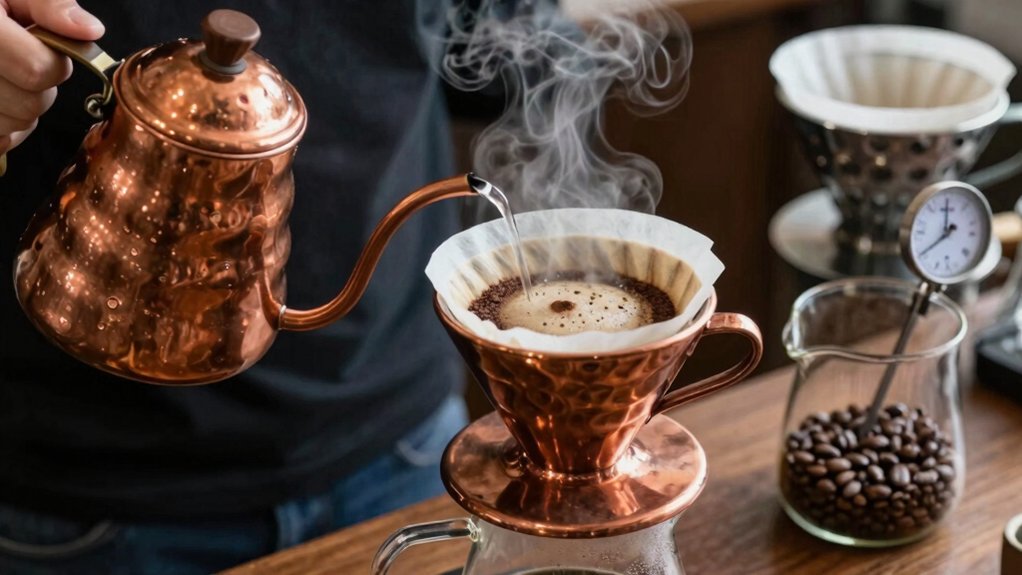
Why not start your brew with a cooler pour? The bloom‑first technique drops water to a 185–190°F (85–88°C) cooling/bloom temperature, letting gases escape and preserving origin notes. Use a gooseneck kettle for a steady, controlled pour, then switch to the extraction temperature of 195–205°F (90–96°C) to complete the manual brewing process. Maintaining temperature stability during the bloom is essential; a temperature‑controlled brewer or precise kettle keeps the cooling/bloom temperature consistent, preventing early over‑extraction. This two‑stage approach gives you brewing temperature control without guesswork, delivering a sweeter cup and repeatable results batch after batch. The approach also aligns with standard 64 oz and 128 oz nitro maker configurations that emphasize stable, repeatable pours and controlled gas diffusion for crema and mouthfeel Nitro diffusion and nitrogen focus.
Maintain Coffee Brewing Temperature With a Pid‑Controlled Brew Station
You’ll keep your brew steady by letting the PID system monitor temperature in real time and tweak the heating element as needed. The system also tracks flow rate and uses precise, 0.1 g measurements to maintain consistent extraction, especially when paired with a max capacity of 2000 g and compact, portable scales such as those with USB-C charging. Real-time temperature monitoring helps you stay within the 195–205°F sweet spot, avoiding the flavor swings caused by even a few degrees off. With adjustable brew profiles, you can fine‑tune the target and ramp rates for any coffee you’re pulling.
PID Temperature Stabilization
Even though brewing temperature can swing wildly with simple heaters, a PID‑controlled brew station keeps the water steady at your chosen setpoint by constantly calculating proportional, integral, and derivative adjustments. PID temperature stabilization gives you precise temperature control, eliminating fluctuations that ruin extraction consistency. The brew station’s Thermocoil heating responds instantly to the PID loop, maintaining a constant temperature even when you pour water or stir grounds.
You can set a target between 195‑205 °F and watch the display update in real time, while the integral term corrects any drift and the derivative term damps overshoot. This steadiness lets you treat manual brewing like a repeatable process, delivering the same flavor profile batch after batch.
Real‑Time Heat Monitoring
PID stabilization keeps the water at your setpoint, but you still need to see what’s happening in real time. Real‑time heat monitoring lets you watch brew temperature fluctuations as you pour, so you can correct drift before it spoils extraction. Pair a PID‑controlled station with a calibrated probe and preheated equipment, and you’ll catch thermal drift caused by room temperature or vessel cooling. The data you log helps you fine‑tune settings for consistent extraction, letting each cup hit the target 195‑205 °F range without guesswork.
| Metric | Why it matters |
|---|---|
| Brew temperature | Directly impacts solubility and flavor balance |
| Temperature stability | Prevents over‑extraction or under‑extraction |
| Calibration | Ensures sensor accuracy despite thermal drift |
Adjustable Brew Profiles
Ever wondered how a single brew station can deliver multiple temperature curves without manual juggling? With a PID‑controlled unit, you set adjustable profiles that lock in a precise brew temperature from bloom to final extraction. The controller modulates heater power, giving you heat stability even as you pour‑over with a gooseneck kettle. Start the bloom cooler, around 185–190°F, then let the profile ramp to 195–205°F for full extraction, offsetting the inevitable heat loss when water contacts the grounds. Because the PID maintains the setpoint, each pour stays on target, eliminating temperature drift that ruins flavor. This flexibility lets you fine‑tune acidity, body, and bitterness across beans, all without constantly re‑adjusting the kettle.
Keep Brew Hot With a Heated Pitcher for Consistent Flavor
A heated pitcher keeps your brew at the ideal 195–205°F, preventing the rapid heat loss that occurs once the coffee contacts the grounds.
When you preheat the pitcher to near the target extraction temperature, you lock in thermal retention and give manual brewing a solid temperature stability foundation.
This steadiness translates into brew consistency, because the water stays within the optimal range throughout the pour.
As a result, the final cup temperature remains predictable, and extraction control stays tight, eliminating flavor swings caused by cooling on the countertop.
If you’re brewing multiple cups or extending a session, regularly check the pitcher and reheat as needed to keep the temperature locked and the taste uniform.
Adjust Temperature Between Pours for Uniform Extraction
How can you fine‑tune each pour to keep extraction even? Start the bloom at 200–205°F (93–96°C) using a gooseneck kettle with precise temperature control, then lower the brewing temperature gradually for the next pours. Small, consistent adjustments keep the extraction uniform and prevent over‑extraction. Track the temperature shift—200°F → 198°F → 195°F—to maintain a stable average and repeatable results, especially at altitude where you add 2–3°F.
**1. 200°F for bloom – softens acidity.
2. 198°F for second pour – balances flavor.
3. 195°F for final pour – extracts depth.**
Frequently Asked Questions
What Is the 15-15-15 Rule for Coffee?
You follow a 15‑second bloom, then pour for 15 seconds, and finish with a final 15‑second pour, keeping each stage short and even to promote uniform extraction and balanced flavor.
What Is the 80 20 Rule for Coffee?
You follow the 80/20 rule by focusing on the 20 % of variables—grind size, water temperature, brew time—that dictate 80 % of flavor, so tweaking those yields most taste improvements.
What Is the Best Manual Coffee Brewing Method?
You’ll find the pour‑over method tops the list; it delivers consistent extraction, bright acidity, and nuanced flavors, especially when you control water temperature precisely and use a gooseneck kettle.
Is Cold Brew Coffee Ok for Diabetics?
Yes, cold brew can fit a diabetic diet if you watch the carbs. Stick to unsweetened brew, limit added sugars or syrups, and consider portion size; it’s low‑acid and slower‑absorbing than hot coffee.
In Summary
By mastering these seven temperature‑control tricks, you’ll keep your brew steady from start to finish. A reliable thermometer, pre‑heated vessel, and bloom‑first method set the stage, while a PID‑controlled station and heated pitcher lock in consistency. Adjusting the temperature between pours ensures every cup extracts uniformly, giving you richer flavor and repeatable results every time you brew.


