
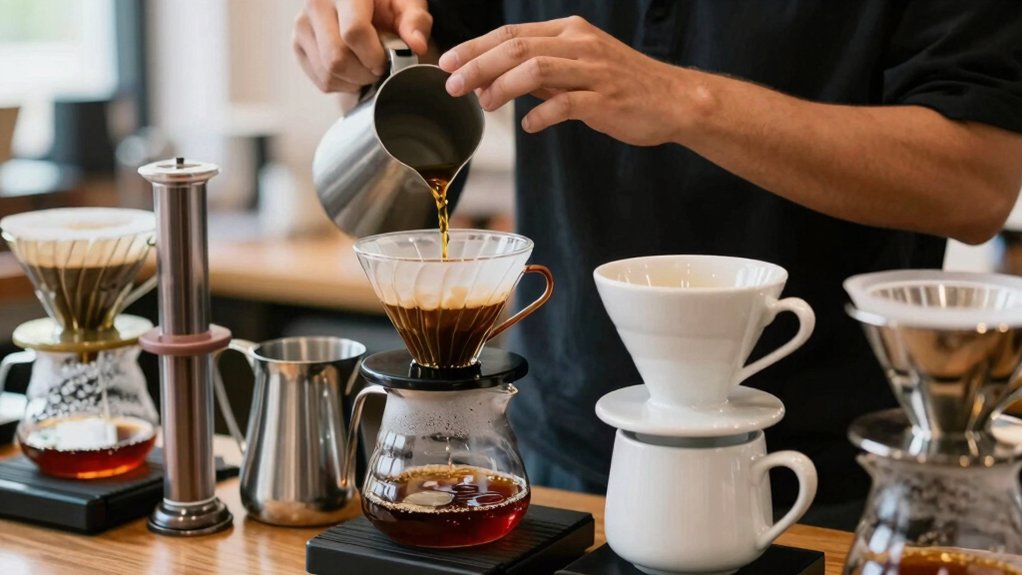
You’ll get the brightest notes from a light‑roast single‑origin with a V60—medium‑coarse grind, 1:16 ratio, 195‑205 °F water, pre‑wet filter, 30‑second bloom, then a slow concentric pour for a 3‑4‑minute brew. A dark‑roast shines in a French press using coarse grounds, 1:15 ratio, 195‑205 °F water, a quick stir, and a 4‑minute steep before pressing. For light roasts, the inverted AeroPress with medium‑fine grind, 1:17 ratio, 200‑205 °F water, 10‑15‑second stir, and 1‑minute steep preserves floral and citrus tones. The Chemex brings clarity to any origin—medium‑coarse grind, 1:16 ratio, 92‑96 °C bloom, and a steady concentric pour for a 3‑4‑minute brew. Finally, a Moka pot delivers espresso‑style strength—coarser‑than‑espresso grind, 1:4–1:5 water‑to‑coffee ratio, low heat, and a brief lid opening to monitor flow. Keep going to discover the exact steps for each method.
How to Brew Light‑Roast Single‑Origin Coffee With a V60
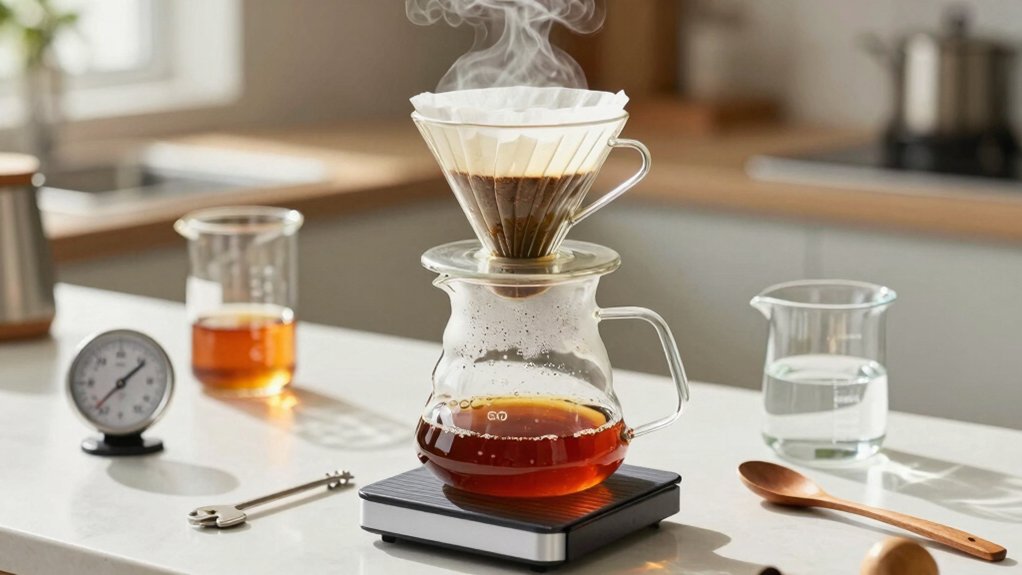
Ever wondered how to coax bright acidity and floral notes from a light‑roast single‑origin bean with a V60? Start by setting your grind size to medium‑coarse and weighing a 1:16 coffee‑to‑water ratio. Heat water to 195–205°F (90–96°C), then pre‑wet the filter to eliminate paper taste and stabilize temperature. Begin with a bloom: pour just enough water to saturate the grounds, wait 30 seconds, then launch your pour technique. Use a slow, concentric pour, keeping the stream steady and moving in circles to avoid channeling. Aim for a total brew time of 3–4 minutes, ending with a clean, bright cup that showcases the beans’ floral and fruit‑forward sweetness. One-way CO₂ valve
How to Brew Dark‑Roast Single‑Origin Coffee in a French Press
After mastering the bright, floral profile of a light‑roast V60, you can bring out the deep, chocolatey richness of a dark‑roast single‑origin with a French press. A clean, well‑organized barista towel setup at the workstation can help keep the grounds and equipment pristine during the process hang‑free cleanliness. Start with a coarse, chunky grind to keep sediment low and avoid over‑extraction. Measure roughly 1 gram of coffee per 15 grams of water, then heat water to 195–205 °F (90–96 °C). Pour, stir briefly to ensure all grounds are submerged, and let the slurry settle for a few seconds. Place the lid, let it steep for four minutes, then press slowly. Serve immediately to preserve the full‑bodied chocolate, toffee, and spice notes, and enjoy the richer oils that the immersion method highlights.
How to Use the AeroPress Inverted Method for Light Roasts
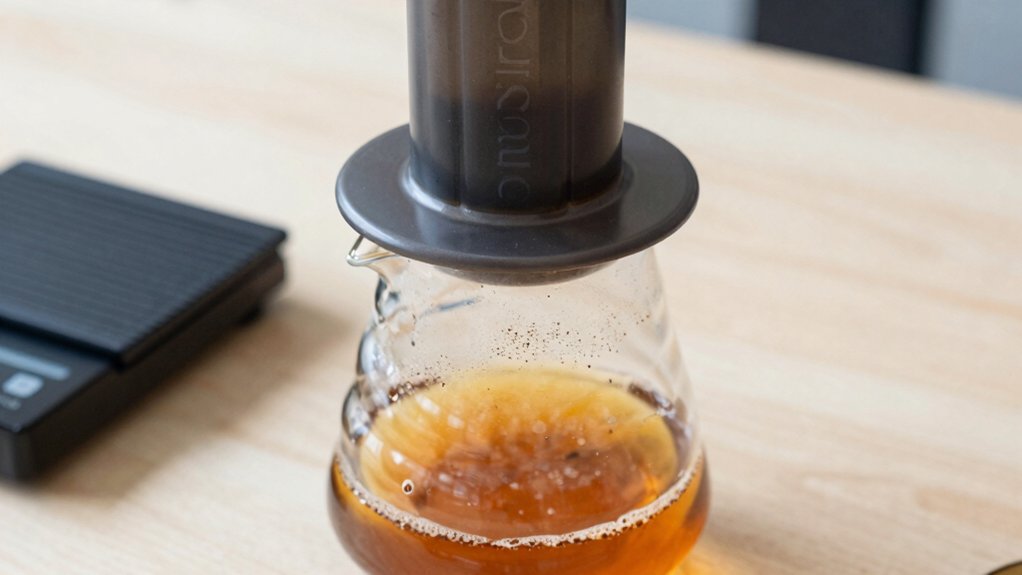
Curious how to coax bright, fruity notes from a light‑roast with an AeroPress? You’ll start by assembling the AeroPress upside‑down, placing the plunger first so the grounds stay fully submerged. Use a medium‑fine grind and a 1:17 coffee‑to‑water ratio, then pour 200–205°F water. Stir for 10–15 seconds, let it steep a minute, flip, and press gently into a paper‑filtered cup. The inverted method preserves delicate floral and citrus tones, preventing over‑extraction that would mute the roast’s sparkle. This approach leverages the AeroPress’s 3‑in‑1 brew versatility to yield a smooth, full‑bodied cup with balanced acidity. Inverted brewing emphasizes speed and control, aligning with the AeroPress’s reputation for rapid, customizable extraction.
| Step | What you feel |
|---|---|
| Assemble inverted | Anticipation |
| Stir & steep | Curiosity |
| Flip & press | Satisfaction |
| Sip the brew | Delight |
How to Extract Clarity With a Chemex Pour‑Over for Single‑Origin Beans
Switching from the AeroPress’s inverted technique, the Chemex lets you highlight a single‑origin’s bright acidity with a clean, crystal‑clear cup. Start by folding a thick Chemex filter, then rinse it with hot water to strip paper taste and pre‑heat the vessel. Place a medium‑coarse grind (1:16 coffee‑to‑water ratio) in the filter, pour a small amount of 92‑96 °C water to bloom for 20‑30 seconds, then continue with a slow, concentric pour. Keep the water steady and even, maintaining a stable slurry temperature and preventing channeling. Aim for a total brew time of 3‑4 minutes. The result is a bright, nuanced single‑origin brew where citrus, floral, and fruity notes shine with unmistakable clarity, and it benefits from precisely controlling the water temperature and flow rate to preserve delicate nuances temperature control and achieve an optimal extraction.
How to Get Espresso‑Style Strength Using a Moka Pot for Single‑Origin Coffee
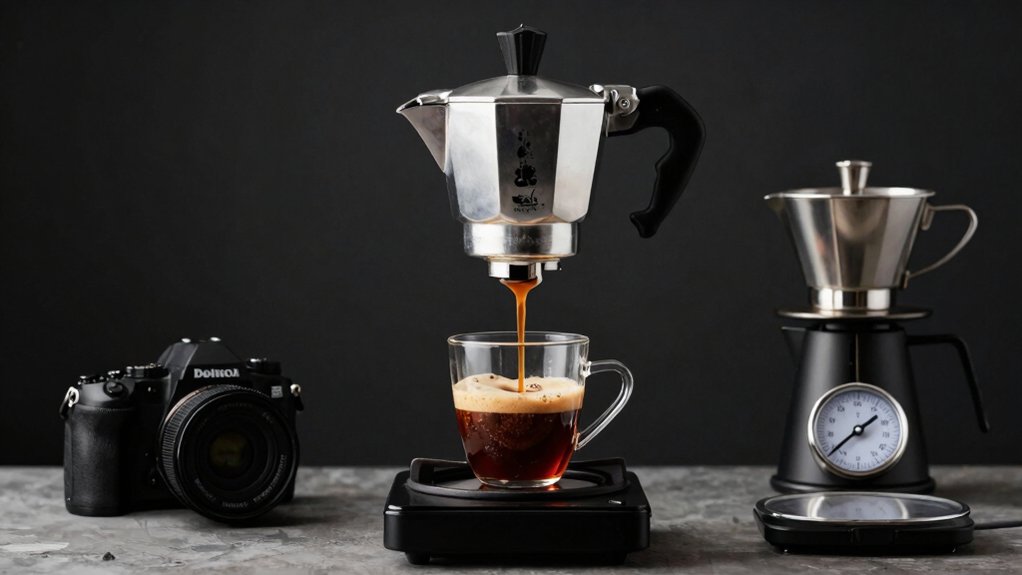
When you load a Moka pot with single‑origin beans, the key is to balance pressure and temperature so the brew stays strong yet bright. Fill the bottom chamber just below boiling, then add a coarser‑than‑espresso grind, packing lightly to keep flow steady. Screw the top on, place the pot over low heat, and watch the coffee rise; open the lid briefly for extraction control, then remove the pot the moment the stream lightens. Immediately chill the base with a wet towel or run it under cold water to halt over‑extraction and curb bitterness. Using a 1:4‑to‑1:5 water‑to‑coffee ratio lets the Moka Pot deliver single‑origin espresso‑style strength while preserving the fruit’s bright acidity and body. Regularly cleaning and maintaining your Moka pot helps prevent buildup that can affect taste and performance brew‑quality maintenance.
Frequently Asked Questions
How Does Altitude Affect Single‑Origin Coffee Extraction?
Altitude thins the air, so water boils at lower temperatures; you’ll extract slower, yielding brighter acidity and lighter body. Adjust grind size or brew time to compensate, ensuring balanced flavor from your single‑origin beans.
Can I Use a Metal Filter Without Losing Terroir Nuances?
Yes, you can use a metal filter and still capture terroir nuances, but expect a slightly fuller body and more sediment; the metal lets oils through, preserving flavor while altering texture.
What Grind Size Works Best for a Siphon Brew of Single‑Origin Beans?
You should use a medium‑fine grind, about the texture of sand, for a siphon. It extracts evenly, preserves delicate origin flavors, and prevents over‑extraction or channeling during the brew.
How Does Water Mineral Content Influence Flavor Clarity in Manual Brewing?
You’ll notice that higher calcium and magnesium levels enhance body and sweetness, while low mineral water preserves bright acidity and clean, crisp flavors, letting the bean’s nuanced notes shine through in manual brewing.
Should I Adjust Brew Time for Beans Harvested Post‑Rainy Season?
Yes, you should shorten the brew time a bit. Post‑rain beans tend to be denser and release flavors faster, so cutting a few seconds prevents over‑extraction and keeps the cup bright.
In Summary
By mastering these five manual methods, you’ll release each single‑origin bean’s unique personality—whether it’s the bright clarity of a V60 pour‑over, the bold depth of a French press, the balanced nuance of an AeroPress inverted brew, the clean precision of a Chemex, or the rich punch of a Moka pot. Experiment, tweak, and savor the distinct flavors that only careful, hands‑on brewing can reveal.


