
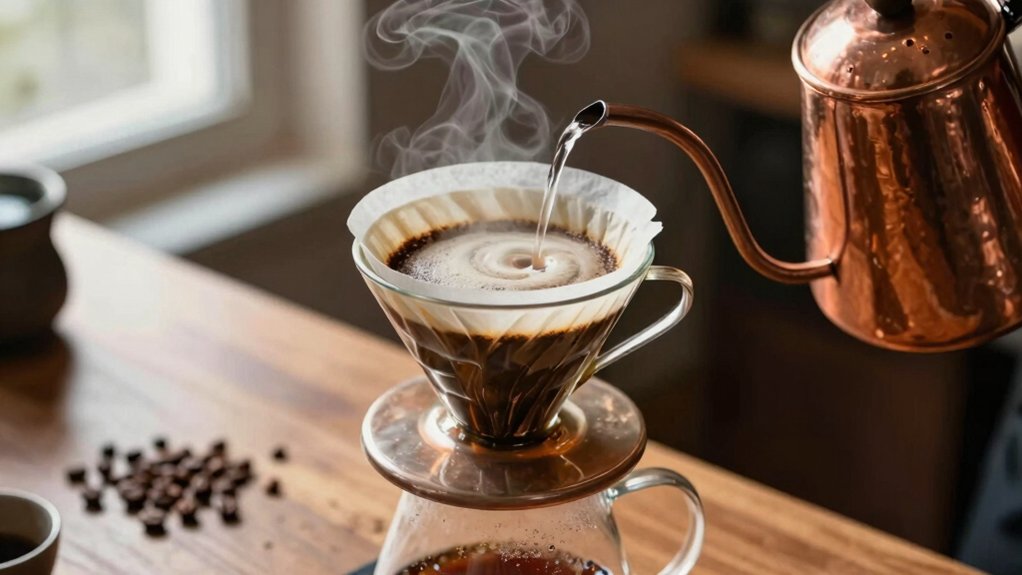
You’ll get a brighter, more balanced cup by mastering ten effective bloom techniques: start with a 1:2 coffee‑to‑water ratio and 195‑205 °F water, then use a circular spiral pour from the center outward. Add a quick 10‑second warm‑up pre‑pour to prime the bed, and always use a gooseneck kettle for precise control. Pre‑rinse your filter to strip paper taste, and follow Chemex‑specific timing for slow CO₂ release. Troubleshoot with a checklist of grind size, temperature, and bean freshness, and you’ll discover even more refinements.
Why Blooming Matters: The Science Behind Better Extraction
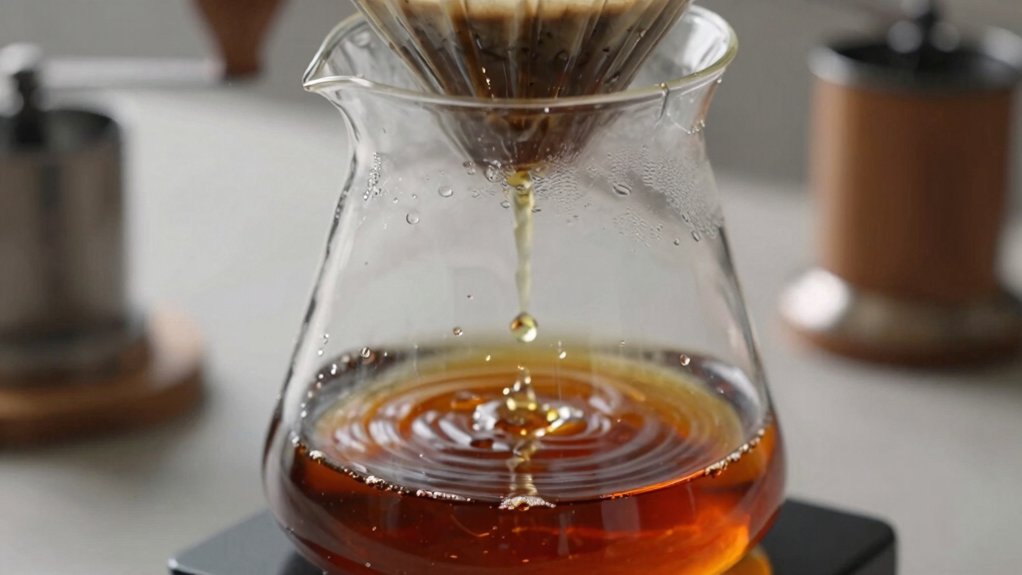
Blooming not only releases CO₂ but also helps regulate extraction by creating an evenly hydrated bed CO₂ release.
The Ideal Bloom Ratio – 1 Part Coffee to 2 Parts Water (1:2)
You’ll get the best flavor when you use a 1:2 coffee‑to‑water bloom ratio, like 15 g coffee with 30 g water.
Keep the bloom going for 30–45 seconds so the CO₂ escapes and the grounds swell evenly.
A gooseneck kettle’s steady, centered pour ensures every particle gets wet and the aroma shows you’re on track.
Using freshly roasted, USDA Organic beans can help emphasize the blooming aromas and preserve natural tasting notes during extraction Freshness and certification.
Optimal Coffee‑Water Ratio
Ever wonder how a simple 1:2 coffee‑to‑water ratio can transform your bloom? Hitting that bloom ratio gives you a predictable water-to-coffee balance, so the grounds expand evenly and release CO₂ before the pour over continues. Using a scale lets you measure 30 g of blooming water for 15 g of coffee, creating a gentle, uniform bed. The result is a cleaner extraction and richer flavor in the final cup.
Weigh coffee and water separately for precision. Add blooming water slowly, stirring just enough to wet all grounds. Watch for bubbles and a full bed expansion. Let the bloom sit 30‑45 seconds before the main pour. Non-toxic
Timing the Bloom Phase
Bloom timing hinges on a simple 1:2 weight ratio—30 g of water for every 15 g of coffee—paired with a 30‑45‑second pause. You start by pouring the water in a gentle center‑to‑out spiral, letting it soak the grounds evenly. The AeroPress approach supports this method by enabling a quick, controlled extraction that minimizes bitterness through micro-filtration in suitable filters. Bloom consistency indicates the bed expands uniformly, signaling that the 1:2 bloom is complete and ready for the next stage. The bloom duration gives CO2 release time, so you’ll see steady bubbling and a fragrant aroma. If the pause is too short, you’ll notice dry patches and under‑extraction; too long, and the coffee may become over‑diluted.
Keep an eye on the bed’s expansion—when it swells uniformly, the 1:2 bloom is complete. After the 30‑45 seconds, continue with the steady pour, confident that the grounds are fully saturated and ready for optimal extraction.
195°F Water for Bright, Floral Bloom: Temperature Tweak Explained
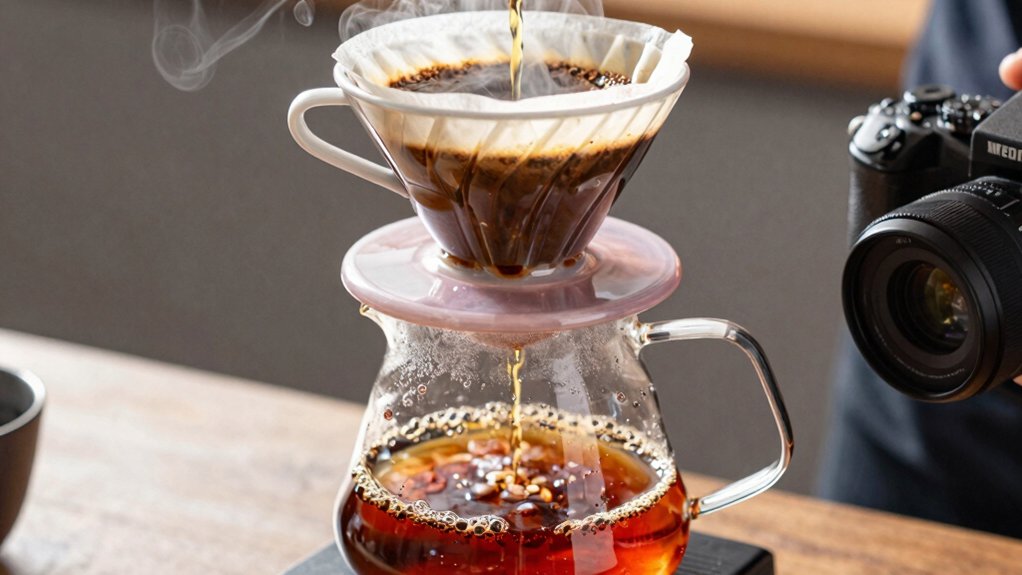
You’ll notice that a bloom at around 195–205 °F releases just enough CO₂ to let the coffee’s delicate floral aromatics shine.
Keeping the water in that sweet spot—neither too cool nor too hot—ensures the grounds swell evenly and the flavor stays bright.
A steady 30‑45‑second bloom at this temperature gives you the optimal balance for a fragrant, lively cup.
Additionally, maintaining the ideal brew environment supports consistent flavor release across batches, aligning with proper Processing and freshness standards to preserve aroma and aroma integrity.
Bright Floral Extraction
A slightly cooler brew water—about 195–205 °F (90–96 °C)—preserves the delicate aromatics of floral coffees while still coaxing CO₂ release. You’ll notice a brighter, cleaner cup when you treat the bloom as a deliberate step, not a rush. Use a 2:1 water‑to‑coffee ratio, pour slowly from the center outward, and let the grounds sit 40–45 seconds. The gentle spiral from a gooseneck ensures every particle meets water, extracting citrus and blossom notes without over‑diluting. Cross-back apron designs for comfort during long shifts can support steadier pours and steadiness over extended bloom times cross-back comfort.
- Set water temperature to 195‑205 °F.
- Apply a 2:1 bloom ratio.
- Pour in a centered, spiral motion.
- Extend bloom time to 40‑45 seconds.
Optimal Bloom Temperature
Ever wondered why a slight temperature tweak can make your floral coffee sing? You’ll find the sweet spot at a bloom temperature of 198‑205 °F (92‑96 °C), just off boil. Drop the water at the lower end of that range for bright, delicate beans, and you’ll preserve aromatics while avoiding bitterness. Use a gooseneck to pour steadily, keeping the water temperature stable as it contacts the coffee bed. This steadiness ensures uniform gas release, preventing CO₂ from trapping and skewing flavor. If the water climbs above 205 °F, the bloom turns harsh; below 198 °F, the bed stays under‑saturated and the bloom stalls. By mastering this temperature window, you’ll coax a clean, floral bouquet and a balanced final cup. Additionally, precise water temperature helps maintain consistent performance across different brewing equipment, including the use of controlled pouring tools in single-origin methods temperature control.
Circular Bloom for Pour‑Over Coffee: Spiral Pour From Center Outward
Why not start your pour‑over with a circular bloom that spirals outward from the center? You’ll see instant water saturation, a gentle puff as CO₂ escapes, and a bed primed for even extraction. The spiral pour distributes heat evenly, preventing dry pockets and channeling. Follow these steps for a flawless bloom:
- Measure 30 g of water for 15 g of coffee (2 : 1 ratio).
- Begin at the center, pouring in a smooth clockwise spiral until the water reaches the rim.
- Let the bloom sit 30–45 seconds, watching bubbles rise.
- Continue with a steady, controlled pour to maintain uniform flow.
This technique maximizes contact time, balances flavors, and yields a cleaner cup every time.
Warm‑Up Bloom: Quick 10‑Second Pre‑Pour to Prime the Bed
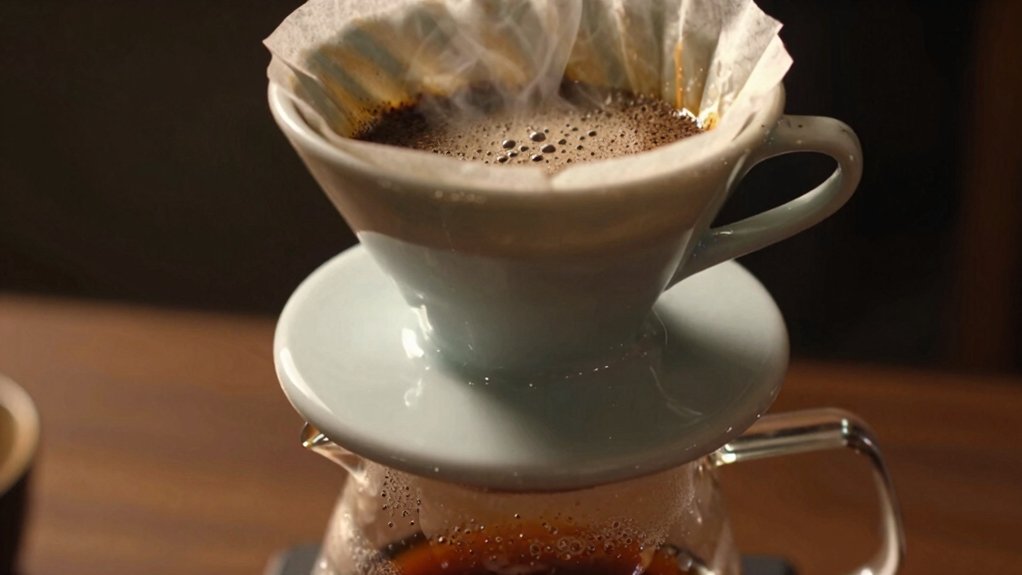
You’ll give the grounds a rapid 10‑second pre‑pour, letting hot water activate the bed and push out the first burst of CO₂. This quick warm‑up saturates every particle, preventing dry pockets and uneven expansion. The result is a more uniform bloom that sets the stage for balanced extraction.
Rapid Bed Activation
How does a 10‑second pre‑pour transform your brew? You kick‑start the bloom, coaxing a gentle CO₂ release that prevents channeling and sets the stage for a balanced extraction. A quick pre‑pour saturates every particle, so the main pour flows evenly and extracts uniformly. By using a 1:2‑1:3 water‑to‑coffee ratio and a controlled gooseneck pour, you prime the bed without over‑saturating it, preserving clarity and flavor.
- Measure 15 g coffee, add 30‑45 g water for the pre‑pour.
- Hold the gooseneck steady, spiral a slow, even stream.
- Pause exactly 10 seconds, watching the bubbles rise.
- Continue with the full bloom, maintaining the same steady pour.
Quick CO₂ Release
A quick 10‑second pre‑pour jump‑starts the bloom by releasing CO₂ and wetting every coffee particle just enough to prevent channeling. You pour a splash of water, just enough to pre‑wet the grounds, watch the bubbles rise, then pause. This brief CO₂ release clears trapped gases, so when the main bloom time begins the bed stays uniform and avoids channeling.
After the 10‑second warm‑up, you let the coffee sit for the standard 30–45‑second bloom time before continuing the pour‑over. The early degassing sharpens clarity, softens sour notes, and keeps extraction balanced. By priming the bed with this quick pre‑wet, you set a steady foundation for the rest of the pour‑over.
Double‑Bloom Method in Pour‑Over Brewing: Two 15‑Second Blooms for Dark Roasts
Why does a dark roast often taste flat in a pour‑over? Because its rapid CO₂ release can cause uneven extraction and muted flavors. The Double‑Bloom Method tackles this by giving the grounds two short, controlled blooms, letting the gas escape before the main pour.
- First bloom – Add 30 g water to 15 g coffee (2:1 ratio) and wait 15 seconds.
- Stir gently – Ensure all particles are wet, promoting even CO₂ release.
- Second bloom – Repeat the 30 g water addition, wait another 15 seconds.
- Main pour – Continue with a slow, circular pour, maintaining a stable flow.
Use a Gooseneck Kettle for a Smooth, Even Bloom
After mastering the double‑bloom technique, you’ll notice that the key to a truly even bloom lies in how you pour. A gooseneck kettle gives you precise pour rate control, so you can deliver water in a slow, centered or circular motion that achieves uniform saturation across the grounds. The narrow spout prevents splashing and channeling, keeping every particle wet during the 30‑45‑second bloom window.
Aim for the optimal 2:1 bloom ratio, adjusting the flow to maintain a steady stream that releases CO₂ consistently. Pair the kettle with a timer and scale to repeat the timing and extraction balance each brew. This disciplined approach eliminates dry patches, ensuring a smooth, even bloom every time.
Pre‑Rinse Your Filter Before Bloom to Remove Paper Taste
When you pre‑rinse a paper filter with hot water, you instantly strip away the papery flavor and warm the dripper, setting the stage for a clean, even bloom. The rinse eliminates filter taste, so the coffee’s natural notes shine, and it prevents dry spots that would ruin bloom consistency. Discard the rinse water, then pour your brewing water directly onto the grounds—this ensures only fresh water contacts the coffee, avoiding burrs vs. paper flavor confusion. A gooseneck kettle lets you spread the water evenly, keeping the pre‑rinse controlled and quick.
- Use hot water just off the boil.
- Swirl the filter to wet every corner.
- Dump the rinse water completely.
- Proceed with your bloom, watching for uniform expansion.
Chemex‑Specific Bloom Tips for Slow CO₂ Release
Ever wondered how to coax a Chemex’s thick filter into a smooth, even bloom? Start with a 2:1 bloom ratio—30 g of water for 15 g of coffee—and let it sit 30–45 seconds. This gentle pre‑wet slows CO₂ release, letting gas escape before the main pour. Use a coil or center‑out technique, keeping the flow steady and medium to avoid dry patches. After the bloom, pour in gradual pulses, filling the Chemex to about half‑to‑two‑thirds of its capacity. Complete the brew in 3–4 minutes for clarity and body. Freshly roasted beans benefit most, as their denser CO₂ can cause channeling if you pour too aggressively early on. This method ensures a balanced, consistent pour over.
Troubleshooting Bad Blooms: Quick Checklist for Common Issues
If the Chemex bloom isn’t bubbling or leaves dry spots, you’re likely dealing with a bad bloom. You can fix it fast by checking four common culprits.
- Grind size – Too coarse slows CO2 release and creates dry patches; aim for a medium‑fine grind.
- Water temperature – Below 92 °C hampers bloom saturation; heat water to 92‑96 °C.
- Bloom water volume – Using less than the 2:1 coffee‑to‑water ratio leaves grounds under‑wet; pour 30 g water for 15 g coffee.
- Bean freshness – Stale beans lack CO2; use beans roasted within the last 2‑3 weeks.
Adjust each factor, watch the bubbles, and you’ll restore a lively bloom, even extraction, and a brighter cup.
Frequently Asked Questions
Can I Use a Metal Filter for Blooming Instead of Paper?
You can use a metal filter for blooming, but expect a faster flow and less retention of gases, which may shorten the bloom and alter flavor extraction compared to paper. Adjust your grind and timing accordingly.
How Does Water Hardness Affect Bloom Quality?
You’ll notice that hard water slows the bloom, because calcium and magnesium bind the coffee oils, creating a thicker crust that releases gases slower, leading to weaker aroma and uneven extraction.
Is a Bloom Needed for Cold Brew Pour‑Over Methods?
You don’t need a bloom for cold‑brew pour‑over; the coarse grind and low temperature let the coffee steep without releasing gases, so skipping the bloom saves time and still yields smooth, balanced flavor.
What Grind Size Works Best for a 30‑Second Bloom?
You should use a medium‑fine grind, similar to table salt, for a 30‑second bloom. It lets water saturate the grounds evenly, releasing gases quickly without over‑extracting or causing channeling.
Can I Reuse the Bloom Water for the Final Pour?
No, you shouldn’t reuse the bloom water for the final pour. It’s already saturated with coffee grounds, which can cause over‑extraction and bitterness, compromising flavor balance and overall brew quality.
In Summary
Mastering the bloom transforms your pour‑over from ordinary to extraordinary. By timing the pre‑wet, keeping the water at 195°F, and using a circular pour, you disclose brighter flavors and smoother extraction. A gooseneck kettle, pre‑rinsed filter, and a quick 10‑second warm‑up keep the coffee bed even and ready. Follow these tips, troubleshoot any hiccups, and every cup will taste consistently perfect.


