
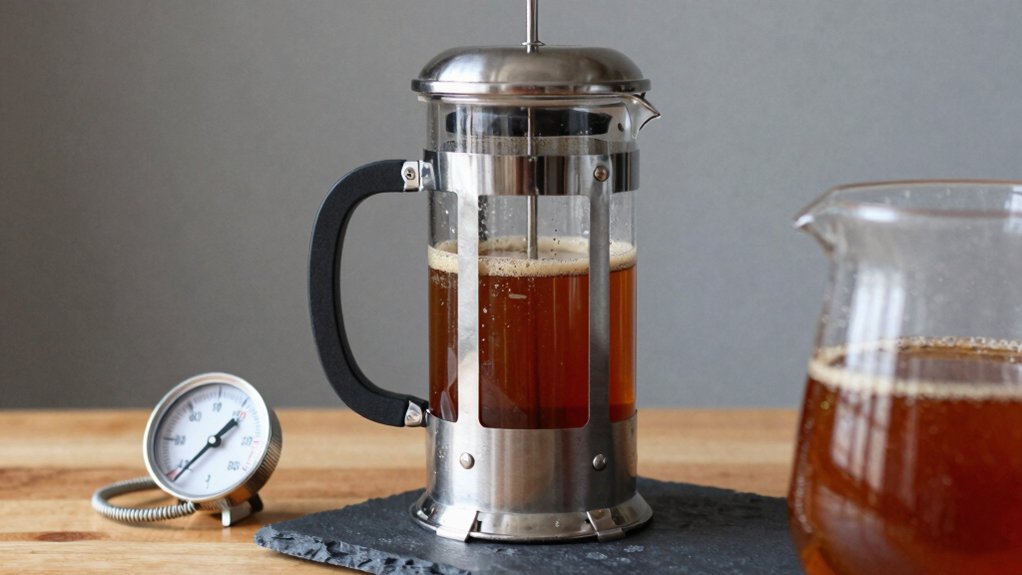
Keep your water between 195‑205 °F (90‑96 °C) by heating, then letting it sit a minute after a boil, and check with a thermometer. Pre‑heat the French press and mug by rinsing them with hot water, then discard. Use a gooseneck kettle to pour in a steady, clockwise spiral, blooming the grounds first and finishing the pour within 30‑45 seconds. Maintain a coarse grind, a 1:16 coffee‑to‑water ratio, and a four‑minute brew. Follow these steps and you’ll master the perfect temperature, plus more tips ahead.
Why Temperature Matters for French‑Press Extraction
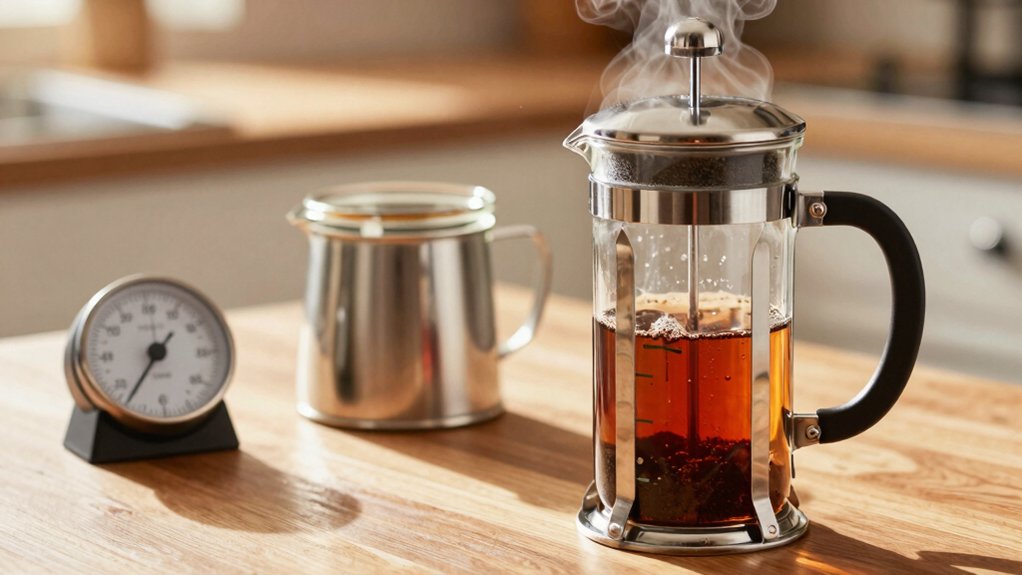
Temperature is the key driver of flavor balance in a French press, and you’ll notice the difference the moment you hit the sweet spot. When water temperature sits near 200 °F (93 °C), compounds soluble oils and acids dissolve evenly, while bitter alkaloids stay restrained. This precise extraction window prevents under‑extraction, which leaves the cup thin, and over‑extraction, which turns it harsh. Consistent brewing temperature also helps maintain the solubility balance throughout the four‑minute steep, especially if you preheat the press and use a heat‑retentive mug. In short, controlling temperature directly shapes the flavor profile you experience from each French press brew. Auto cleaning cycles and careful maintenance of your equipment help ensure your temperature control remains accurate and reliable over time.
Measure & Keep Water at 195‑205 °F (90‑96 °C)
Now that you’ve seen why the right temperature matters, keep the water between 195 °F and 205 °F (90‑96 °C) for optimal extraction. Fill a gooseneck kettle with fresh water, bring it to a boil, then let it sit about 30 seconds. Use a thermometer to confirm the water temperature lands squarely in the 195‑205°F range before you pour. If your kettle lacks a built-in readout, the thermometer becomes essential for consistency. As you pour, maintain a steady stream to avoid temperature spikes. Preheat the French press and mug with a splash of the measured water, then discard it before adding the coffee grounds. This quick preheat step stabilizes the brewing environment, ensuring the water stays within target limits throughout the steep. Temperature control helps maintain consistent extraction across batches.
Pre‑Heat Your French Press & Mug Properly
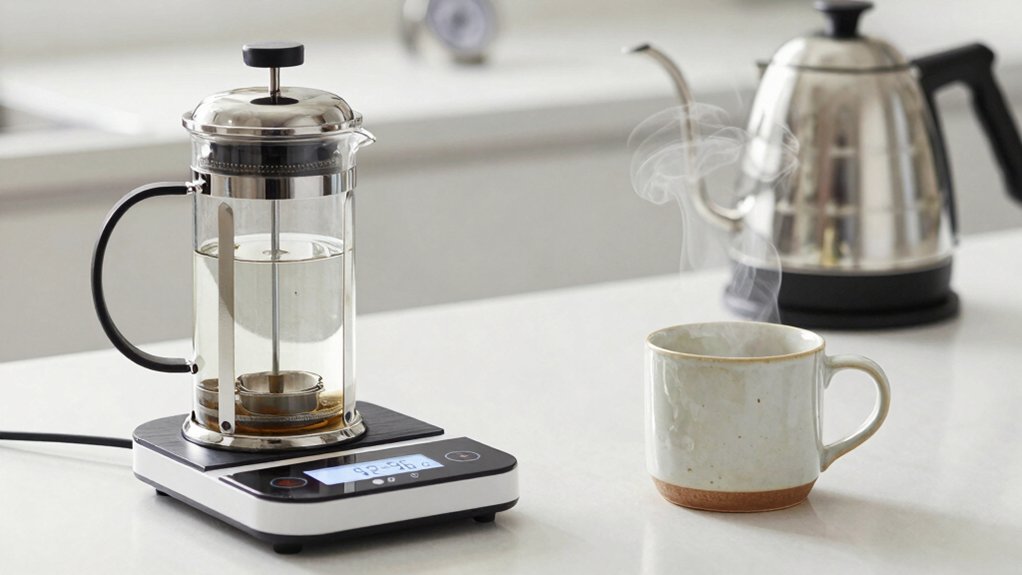
How can you keep your brew from cooling too fast? Start with a French press preheat: rinse the carafe with hot water for a few seconds, then discard it so the grounds stay undiluted. The same trick works for mug preheat—fill your mug with hot water, swirl, and pour out before the pour hits. This step locks in heat, keeping the water temperature steady once you add coffee. Use a gooseneck kettle to pour water at the optimal brewing temperature, 195‑205 °F, and stir gently. By pre‑heating both vessel and mug, you minimize temperature loss, ensuring the coffee stays at the right temperature throughout the 4‑minute steep. Power Outlets and Electrical Features can help you manage warming accessories or electric kettles if you’re using powered warming trays.
Select & Filter Water for Consistent French‑Press Heat
Rinsing the press and mug already locks in heat, but the water itself determines how long that heat lasts. Choose fresh, clean water with low mineral content; excess calcium or magnesium creates mineral interference that dulls heat retention and skews extraction. Aim for a water temperature of about 93 ± 3 °C—just off‑boil. If your kettle lacks a thermometer, bring water to a rolling boil, then let it rest a minute to settle around 200 °F (93–95 °C). Preheating the French press with a quick splash of this hot water, then discarding it, stabilizes the temperature before grounds meet liquid. For consistent heat, consider a double‑boiled or insulated setup, which minimizes temperature loss during the four‑minute steep and keeps your brew steady. Using a multi‑wick or layered fragrance approach from coffee-scented candle knowledge can influence room warmth and aroma ambiance that subtly complements brewing, though it won’t affect the brew itself temperature control.
Adjust French‑Press Brew Time When Water Is Hotter or Cooler
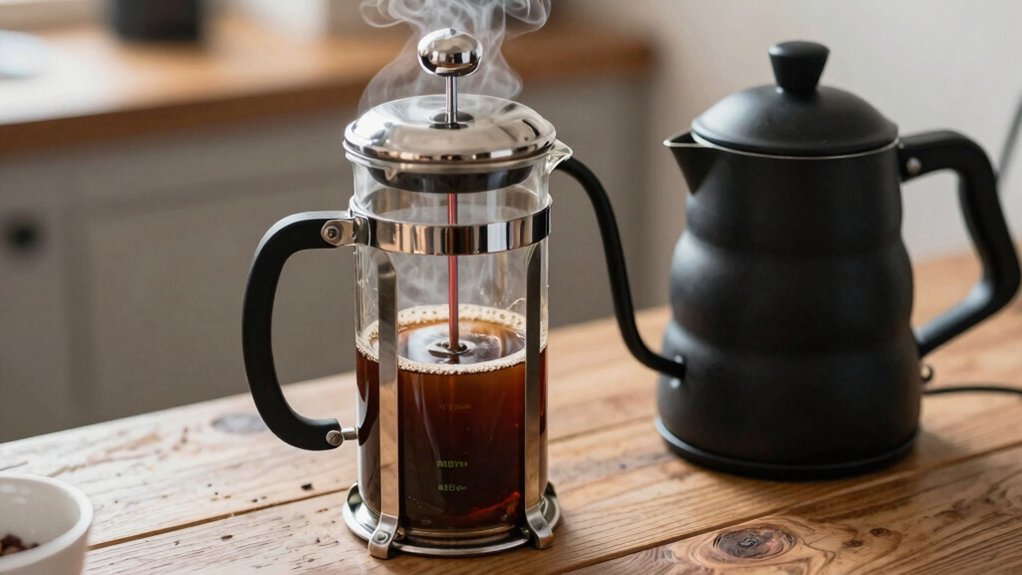
If your water runs hotter than the sweet spot, cut the brew to about 3.5‑4 minutes to keep bitterness at bay.
When the temperature drops toward 195 °F, extend the steep to 4.5‑5 minutes for a richer body.
A quick stir after pouring and a slow press at the end help maintain even extraction despite the temperature shift.
The choice of refractometer can help you monitor your brew density TDS measurement to refine your grind and brew times for future batches.
Adjust Brew Time
Wondering how to tweak your French press when the water temperature strays from the ideal? If your water runs hotter than 205 °F, cut the brew time to about three minutes. The higher temperature speeds extraction, so a shorter steep prevents bitterness and over‑extraction.
Conversely, when the water temperature drops below 195 °F, extend the brew time to four–four‑and‑a‑half minutes. The cooler liquid extracts more slowly, and extra minutes give the grounds enough contact for full flavor.
Always stir gently right after pouring to keep the grounds evenly wet, especially with hotter water that forms a quick crust. Use a reliable timer and aim to plunge within a three‑to‑four‑minute window for consistent, balanced coffee. Maintaining a precise temperature range is part of achieving consistent extraction and aroma brewing temperatures.
Temperature‑Dependent Extraction Rate
Ever wondered how a few degrees of temperature can swing your French‑press extraction?
When you raise the French press temperature toward 205 °F (96 °C), the extraction rate spikes, so you’ll need to shorten the brew time by 30‑60 seconds for the same coffee grind size.
Conversely, dropping the water temperature to about 195 °F (90 °C) slows extraction, meaning you should extend the steep toward nearer 4‑5 minutes to avoid a thin cup.
A 5‑10 °F shift can alter the ideal brew time noticeably, so adjust your timer accordingly.
If the water is consistently hotter, press earlier than the standard four minutes to prevent bitterness.
If it’s cooler, give the grounds a bit more time to reach the desired flavor.
To maintain consistent results, use a thermometer and reference the standard 200°F (93°C) target when dialing in your preferred profile, aligning with the goal of precise temperature control across equipment and setups temperature control.
Troubleshoot French‑Press Over‑Extraction & Bitterness
Why does your French press sometimes taste harsh and overly bitter? If the French press temperature climbs to 205°F or you exceed a 4‑minute brew, you’ll pull extra tannins and bitter compounds. Keep water just below boil, aim for 195‑205°F, and stop the timer at four minutes. Use a coarse‑to‑medium‑coarse grind; fines create a silty mouthfeel that amplifies bitterness. After pouring, stir gently once or twice, then let the grounds settle before plunging. Avoid agitating the bed during the plunge—let the coffee fully immerse, then press smoothly. Preheat the vessel to maintain a stable temperature, and stick to the 4‑minute window. These steps curb over‑extraction and deliver a cleaner, smoother cup. The choice of cupping spoons can influence how you sample and evaluate aroma and flavor during tastings as you experiment with grind size and brew time design considerations to refine your technique.
Use a Gooseneck Kettle & Thermometer for Precise French‑Press Pouring
Grab a gooseneck kettle and a thermometer, then set the water to about 200 °F (93 °C) for a controlled extraction. You’ll pour in a steady, circular motion, letting the stream gently saturate the grounds without shocking the temperature.
This precise, slow pour keeps the brew within the ideal four‑minute window for a clean, full‑bodied cup.
Precision Pouring Technique
How do you keep the water at the perfect temperature while pouring over your French‑press grounds? You start with a gooseneck kettle and a thermometer, letting precision pouring guide every drop. Aim for 200 °F (93 °C) and adjust quickly if the reading drifts beyond 195–205 °F. Begin with a small bloom pour to wet all grounds, then continue with steady, clockwise spirals that keep the water moving and the temperature stable. By pacing the pour to finish in 30–45 seconds, you achieve uniform extraction and a cleaner cup.
- Use a gooseneck kettle for a controlled, slow stream.
- Monitor temperature continuously; pause if it drops.
- Employ a bloom pour followed by spiral in‑circulation for even saturation.
Temperature‑Controlled Extraction
Ever wondered how to lock in the perfect brew temperature from start to finish? You’ll start by preheating the French press and mug with hot water, then discard it to keep the vessel warm. Add coarse ground coffee—about 2 Tbsp per 6 oz—and set a gooseneck kettle to 195–205°F. Use a thermometer for precise water temperature and pour slowly in a circular motion, ensuring even saturation and a uniform blooming. Stir gently, then maintain temperature control throughout the four‑minute brew, watching for any sudden drops that cause under‑extraction. Keep a timer handy; if you notice excessive silting or a thin body, adjust grind size or coffee amount. This disciplined approach delivers a steady, full‑bodied cup every time.
Quick Reference: French‑Press Temp, Ratio & Brew Time
Wondering how to nail the perfect French‑press brew? You’ll want a French press temperature near 200 °F (93 °C) and a consistent brew time of four minutes. Start by preheating the carafe and your kettle to keep the heat steady. Use a coarse grind and aim for a coffee-to-water ratio of about 1:16—30 g coffee to 500 g water works well. Adjust the grind or weight by 1–2 g if you need a stronger or lighter cup, but keep the four‑minute steep unchanged for balanced flavor.
- Preheat the press and vessels to lock in temperature.
- Set coffee-to-water ratio at 1:16 for optimal strength.
- Use a coarse grind and a four‑minute brew time for clean extraction.
Frequently Asked Questions
What Temperature Should You Brew French Press Coffee At?
You should brew French press coffee at about 200 °F (93 °C), aiming for the 195‑205 °F range. Use water just off the boil, let it settle briefly, and verify with a thermometer if needed.
What Is the 15-15-15 Rule for Coffee?
You follow the 15‑15‑15 rule by blooming for fifteen seconds, extracting for fifteen seconds, then waiting fifteen seconds before pressing, ensuring balanced flavor and preventing over‑extraction.
Is Cold Brew Coffee Ok for Diabetics?
Yes, you can enjoy cold brew as long as you keep it unsweetened, watch portion sizes, and avoid sugary add‑ins; it’s low‑acid, low‑calorie, and won’t spike blood sugar if you monitor your response.
What Are the 4 Enemies of Coffee?
You face four enemies: temperature instability, over‑extraction from long brew times, fine or uneven grinds that create grit, and low‑quality or stale water that dulls flavor.
In Summary
By mastering the right temperature, you’ll extract the full flavor of your beans without bitterness. Keep water between 195‑205 °F, pre‑heat your press, and use filtered water for consistency. Adjust brew time if the water’s hotter or cooler, and troubleshoot over‑extraction promptly. With a gooseneck kettle and thermometer, you’ll pour precisely every time. Follow these steps, and your French press will consistently deliver a perfectly balanced cup.


