
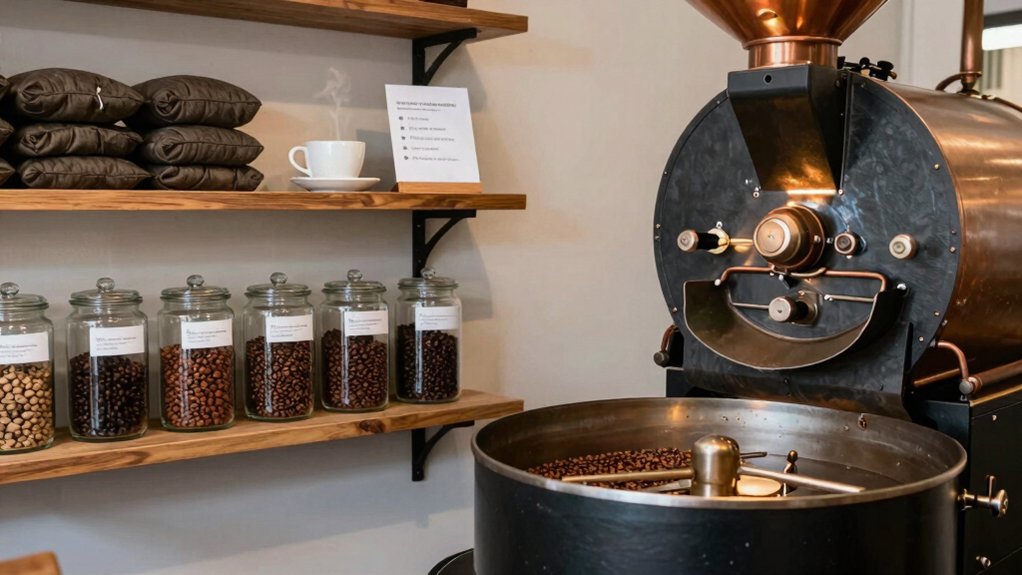
Start with a light‑to‑medium roast that highlights the origin’s bright acidity and delicate aromatics, aiming for first crack around 8‑9 minutes and ending at 392‑418 °F. Charge about 85 % of your roaster’s capacity, set the charge temperature to 385‑400 °F for gas drums (or 430‑440 °F for IR), and let the bean temperature climb quickly before stabilizing airflow. Watch the RoR and hit the turning point just before first crack, then fine‑tune airflow in 5‑10 % steps as the crack begins to flatten the curve. Cup early at 12‑24 hours and again at 2‑4 days, logging charge, end temperature, and development time, and tweak one variable per cup to refine the profile. Keep a consistent grinder setup and you’ll soon see how each adjustment shapes the final cup.
Choose a Light‑to‑Medium Single‑Origin Roast Profile
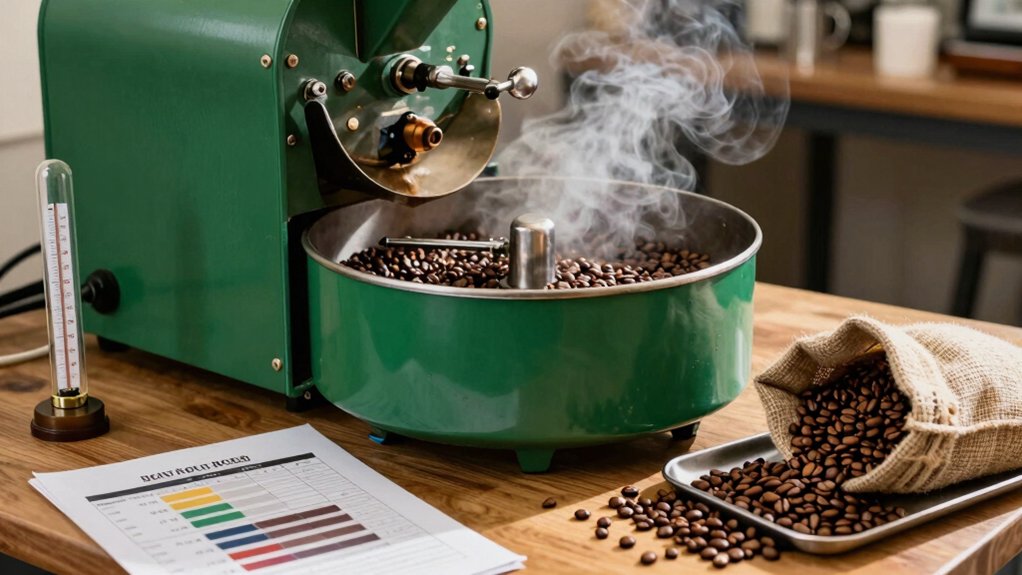
How do you preserve a single‑origin’s bright acidity and delicate aromatics while still coaxing out sweetness? Aim for a light roast that highlights origin traits, keeping development time short and controlled. Set the charge so the bean temperature climbs quickly, then stabilize airflow to hit first crack around 8–9 minutes. Watch RoR monitoring closely; the curve should peak early, then taper smoothly as you approach the roast end temperature of 392–418 °F. Finish by 10–12 minutes to lock in acidity and floral notes without overwhelming roast flavors. Pair sensory cupping with data logs—charge temp, end temp, DT, DTR—to confirm aroma preservation and that the light‑to‑medium profile honors the single‑origin’s character data logging.
Set Charge Temperature & Batch Size for a Consistent Single‑Origin Profile
When you set the charge temperature and batch size, start with about 85 % of your roaster’s full capacity and a charge of 385–400 °F for single‑walled gas drums (or 430–440 °F for a Diedrich IR). This baseline batch size gives you enough energy management to hit the early roast curve without starving the beans. Monitor steady RoR by observing the curve alongside bean and exhaust temperatures, and adjust the charge temperature up or down after a 1‑to‑1:30‑minute turnaround test, tuning gas and airflow to keep the RoR steady. Record the roast curve, bean and exhaust temperatures, and RoR in your provenance notes, then compare cup results. Over time, fine‑tune the equipment settings—drum roaster or Diedrich IR—to lock in a repeatable single origin roast profile. RoR stability
Leverage RoR and Turning‑Point Metrics to Shape Your Single‑Origin Profile
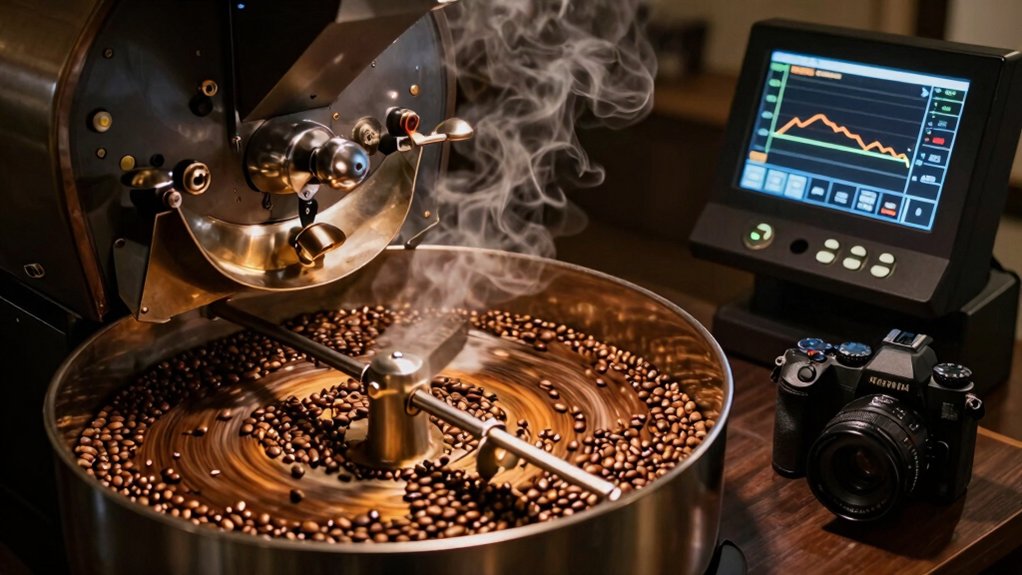
After setting charge temperature and batch size, you’ll want to watch the Rate of Rise (RoR) as the real‑time indicator of energy momentum. When RoR climbs, you’re building the heat that will push beans toward the turning point. Aim to hit that turning point just before first crack; it guarantees enough energy momentum for a balanced development. Track bean temperature alongside RoR to anticipate when to tweak exhaust or airflow, keeping the curve smooth. Compare RoR curves and turning‑point timing across your single‑origin lots to uncover origin‑specific sweet spots. Record each adjustment in your roast logs, noting how it shifts RoR and the turning point. Over time those logs become a blueprint for repeatable, origin-tailored roast profiles. RoR tracking provides a measurable cue that can help you refine your process across different origins and equipment setups.
Fine‑Tune Airflow Around First Crack to Stabilize Development Time
Why not treat the moment of first crack as the key to a steady development? You’ll notice that a modest boost in airflow right as the drum roaster hits first crack flattens the roast curve and keeps bean temperature from spiking. By making incremental airflow adjustments—5‑10 % steps—you can counter a rising rate of rise and lock in a consistent development time. This stabilisation preserves the single origin’s nuanced notes and prevents scorching. Log each change on your roast profile so you can repeat the sweet spot each batch. Additionally, document the exact syrup-level consistency you observe when pairing with different single origins to optimize flavor retention and sweetness balance professional barista kit.
Cup Early, Capture Flavor Data, and Refine the Next Single‑Origin Roast
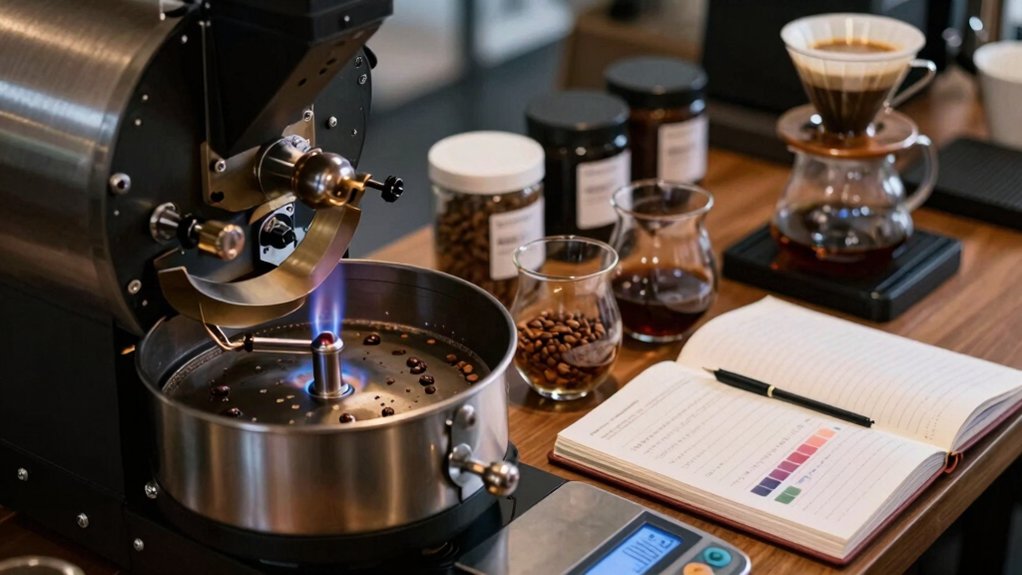
If you cup the beans at 12–24 hours and again at 2–4 days, you’ll capture both the fresh burst of aroma and the evolving flavor profile, giving you concrete data to fine‑tune the next single‑origin roast. Use a strict cupping protocol—195–205 °F water, 1:16 ratio, consistent grind—so aroma notes and flavor targets stay comparable. Log charge temperature, end temperature, development time, and the moment of first crack alongside each cupping. Then adjust one variable, re‑cup, and watch how the roast curve shifts. For consistency, consider standardizing on a single grinder setup to minimize equipment‑induced variation grinder consistency and maintain reliable data collection.
| Metric | Insight |
|---|---|
| Aroma notes | Early burst vs. maturity |
| Flavor targets | Acidity, fruit, body |
| Development time | Impact on body |
| First crack | Timing for aroma capture |
Frequently Asked Questions
How Does Bean Origin Affect Optimal Roast Temperature?
Your bean’s origin determines its density, moisture, and sugar content, so you’ll need to adjust temperature accordingly—higher altitude beans often require lower peak temps, while low‑altitude varieties can handle hotter roasts.
Can Humidity Levels Alter the First Crack Timing?
Yes, humidity can shift first‑crack timing. Moist air slows heat transfer, so you’ll notice a slightly later crack, while dry conditions let it pop earlier; adjust your profile accordingly.
What Equipment Maintenance Impacts Airflow Consistency?
You keep your drum seals, fan blades, and exhaust filters clean; replace worn gaskets, tighten loose bolts, and calibrate the damper regularly. These steps ensure steady airflow and prevent temperature spikes during roasts.
Do Different Roasting Drums Change Flavor Retention?
Yes, different drums affect flavor retention; larger drums preserve more volatile aromatics, while smaller, tighter drums intensify heat exposure, altering acidity and body. Choose the drum size that matches the bean’s desired profile.
How Often Should I Recalibrate My Roaster’s Temperature Sensor?
You should recalibrate the sensor every 30‑50 hours of use, or whenever you notice temperature drift. Consistent checks keep profiles accurate, prevent off‑flavor batches, and guarantee repeatable roast quality.
In Summary
By mastering these five steps, you’ll consistently reveal the true character of each single‑origin bean. Light‑to‑medium profiles preserve nuance, while precise charge temps and batch sizes keep the roast repeatable. Using RoR and turning‑point data lets you fine‑tune development, and adjusting airflow around first crack stabilizes the finish. Finally, cup early, log the flavors, and iterate—turning every roast into a refined, repeatable expression of its origin.


