
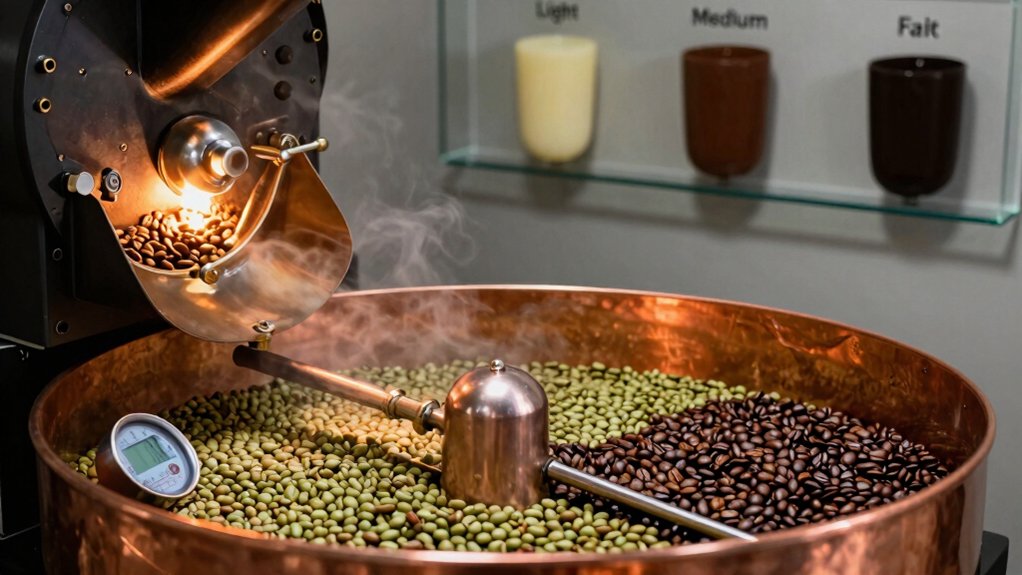
Match light roasts to pour‑over or drip with a medium‑fine grind, 195‑205 °F water, and a 1:15–1:17 ratio for bright acidity and floral notes. Use medium roasts for pour‑over, drip, French press, or cold brew with a medium grind and 93‑96 °C water to balance acidity, body, and caramel sweetness. Choose medium‑dark roasts for espresso or French press, employing a fine grind, 90‑96 °C water, and a short brew to get rich, oily, low‑acididity cups. Dark roasts shine in cold brew with a coarse grind, 12‑24‑hour steep, and low‑acid, smooth flavor. Keep adjusting grind size and temperature for each combo, and you’ll discover deeper nuances.
Our Recommended Product on Amazon

As an Amazon Associate we earn from qualifying purchases.
What Is a Roast Profile and Why It Matters for Brewing
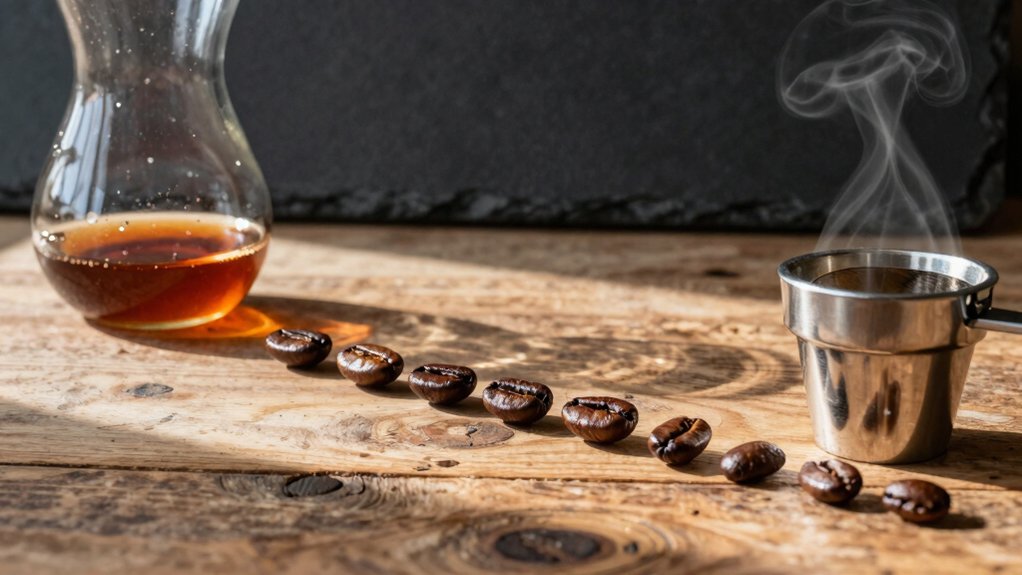
Ever wonder how a coffee’s flavor gets locked in before it even reaches your cup? A roast profile is your blueprint: you set time and temperature, then control the rate of rise to guide beans through drying, browning, and development. When the beans hit first crack, you decide how long to stay in the development zone, shaping acidity, sweetness, and body. You log every degree with probes, charting an S‑curve that may dip, bottom out, then surge. Those real-time graphs feed cupping data, letting you match flavor notes to a specific brewing method. By tweaking the curve, you align oil emergence and mouthfeel, ensuring the final cup delivers the intended taste profile every time. Auto-clean cycles can influence how flavors are preserved during equipment maintenance, underscoring the connection between roasting decisions and brewing outcomes.
Quick Brew Guide: Choose the Right Method for Your Roast Level
You’ll find that a light roast shines when you use a pour‑over, letting its bright acidity and floral notes come through.
A medium roast gives you more flexibility, so you can experiment with pour‑over, drip, or French press without losing its balanced flavor.
Choose the method that matches the roast’s character, and you’ll get the most out of each cup.
Coarse grind consistency is essential for cold brew to prevent over-extraction, so pairing the right grind with your brew time helps maximize smoothness. GrindQuality
Light Roast: Pour‑Over Precision
How does a light roast reveal its brightest flavors? You’ll notice crisp acidity and floral notes when you use a pour‑over with a medium‑fine grind and a paper filter. Start with a bloom of twice the coffee weight, then pour near‑boiling water (just off boil) in a circular motion. Keep the coffee‑to‑water ratio between 1:15 and 1:17, aiming for a 3–5‑minute brew. This method ensures even extraction, preserves brightness, and yields a clean, light‑bodied cup with a subtle fruity aftertaste and no oily residue.
| Step | Detail |
|---|---|
| Grind | Medium‑fine |
| Filter | Paper (e.g., Chemex) |
| Bloom | Double weight, 30 s |
| Water Temp | 195‑205 °F |
| Ratio | 1:15–1:17 |
Medium Roast: Flexible Brewing Options
Which brewing method best showcases a medium roast’s balanced nutty‑chocolate profile? You’ll find that its medium body and bright acidity shine across several brewing methods, letting you trade clarity for depth as you wish. A pour‑over preserves the clean aroma and highlights the nuanced flavor profile, while a drip brewer delivers a consistent cup with minimal effort. If you crave fuller body, the French press offers richer mouthfeel, and even cold brew can coax sweet caramel notes from the same beans. The medium roast’s versatility means you can experiment without sacrificing its core character. Bead sizes play a role in how finely a given technique extracts or integrates the flavor notes, particularly when considering grind size and contact time.
- Pour‑over – crisp, aromatic, 3‑5 min brew.
- Drip brewer – reliable, balanced, easy repeatability.
- French press – full‑bodied, longer contact, 4‑cup yield.
- Cold brew – smooth, sweet, extended steep.
Light‑Roast Pairings: Pour‑Over and Drip Brewing Tips
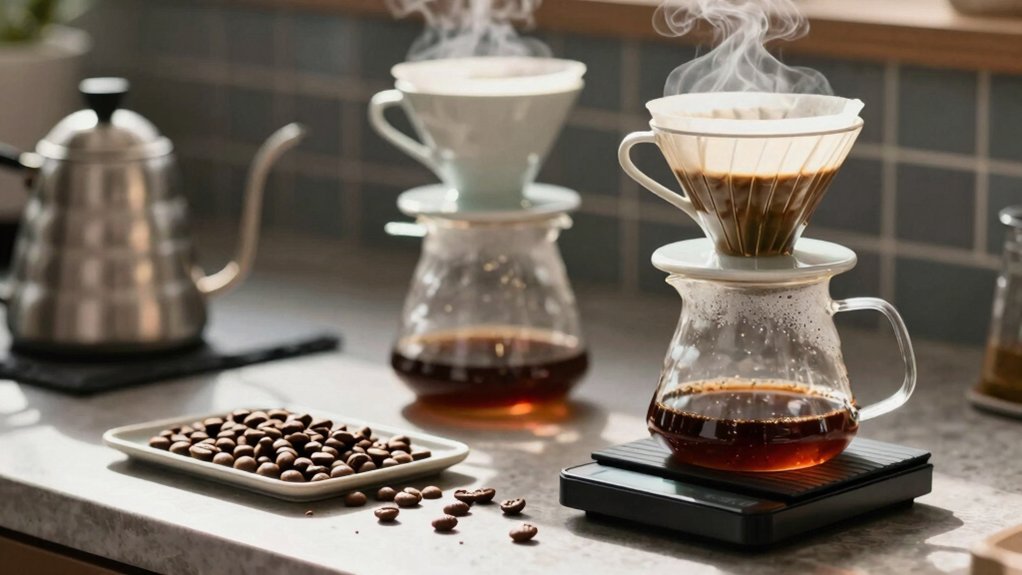
You’ll want a medium‑fine grind to keep the light roast’s bright notes intact, so measure it carefully. Use water just off the boil—around 195‑200 °F—to extract flavor without scalding the beans. Start with a brief bloom of 30‑45 seconds, then pour in a steady circular motion for an even, clean cup. The choice of a compatible scoop can help you achieve consistent measurements across batches, supporting repeatable results with each brew consistent measurements.
Grind Size Precision
Ever wondered why a light‑roast can taste flat in a pour‑over? You’re probably missing the sweet spot of grind size precision. A medium‑fine grind boosts surface area without over‑extracting, keeping brew time around 3‑5 minutes. Uniform particle size stops channeling, letting light roast aromatics shine. Freshly ground beans lock in floral and fruity notes, while consistent grind ensures repeatable results.
- Choose a medium‑fine grind for Chemex or paper‑filter drip.
- Verify grind consistency with a sieve or visual check.
- Adjust dose to hit a 3‑5 minute brew window.
- Taste and tweak grind size until aromatics are bright, not muted.
Filter design considerations can influence whether a cup is crisp and clean or robust with oily extraction.
Water Temperature Control
Grinding to the right size sets the stage, but the next variable that makes a light‑roast shine in a pour‑over or drip is water temperature. You’ll want 92–96 °C (198–205 °F) and keep temperature control tight from start to finish. A steady water temperature preserves the bright acidity, keeps extraction even, and avoids dulling citrus and floral notes. Pre‑wet the paper filter, then pour in a slow, circular motion; this maintains consistency and prevents channeling. Use a medium‑fine grind and watch the brew clock at 3–5 minutes for optimal extraction. Consistency can be aided by using an airtight storage approach that preserves aroma and freshness for peak flavor retention one-way CO₂ valve.
Bloom Timing Technique
How long should you let the grounds bloom before the main pour? For light roasts, start with a 1–2‑second pre‑wet using a splash of 93–96 °C water. This quick bloom releases bright aroma and primes even extraction. Let the grounds sit 30–45 seconds, then continue a slow, circular pour‑over. Keep grind size medium‑fine and aim for a total brew time of 3–5 minutes to preserve delicate flavors. The bloom process benefits from maintaining consistent water temperature during the initial contact phase to support uniform extraction temperature control.
Medium‑Roast Pairings: French Press and Aeropress Techniques
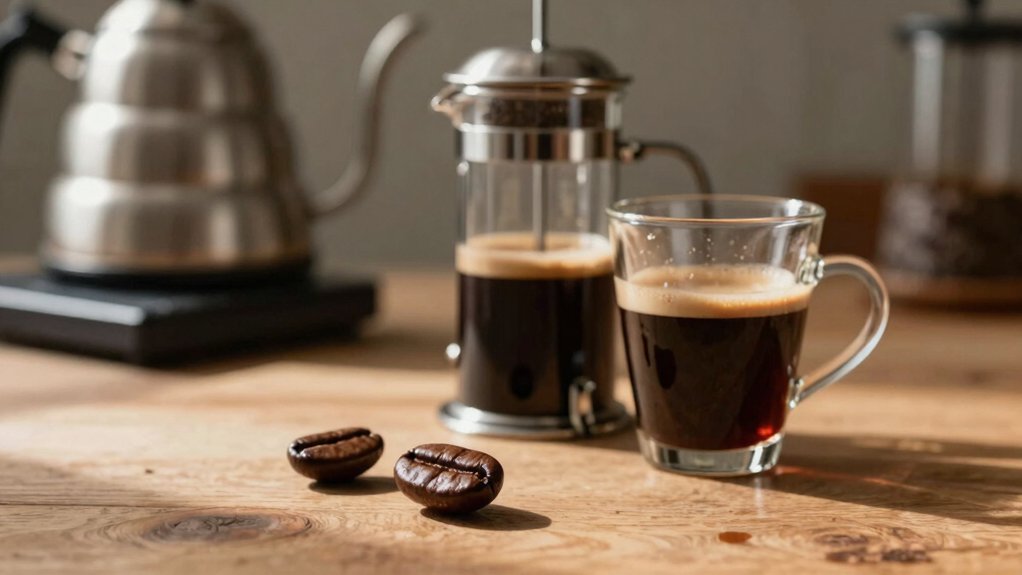
What makes a medium roast shine in a French Press or Aeropress? You’ll find its nutty‑chocolate flavor notes thrive when you match grind size and brew time to the method’s extraction style. For a French Press, use a coarse‑to‑medium grind; let the grounds steep for four minutes, then press slowly. The immersion extracts rich oils, delivering balance and a smooth, full‑bodied cup with moderate bitterness.
With an Aeropress, opt for a medium grind, bloom briefly, then stir and press after a total brew time of 2–3 minutes. Slightly higher agitation pulls out chocolatey sweetness while keeping acidity muted, preserving the bean’s origin character. Both techniques highlight the medium roast’s balanced profile without over‑extracting.
Medium‑Dark Roast Profile Benefits for Espresso Extraction
The medium‑dark roast’s richer, toasted‑sugar sweetness and subtle oil sheen make it a natural partner for espresso’s pressure‑driven extraction. Its roast profile yields lower acidity and higher solubility, so you get a dense, balanced shot with strong crema stability. The slight oil migration creates a fuller body and enhances sensory development, while the caramel‑spice‑chocolate notes complement espresso’s intensity without overwhelming brightness. You’ll need precise extraction parameters and consistent grind size to avoid channeling and keep the shot repeatable.
Medium‑dark roast’s rich, toasted‑sugar sweetness and subtle oil sheen yield dense, balanced espresso with stable crema and silky mouthfeel.
- Body & texture – oil adds silkiness and mouthfeel.
- Flavor concentration – deeper sweetness and reduced brightness.
- Crema formation – stable, dense crema from higher solubility.
- Consistency – tight dosing and grind size control prevent channeling.
Cold‑Brew Best Practices for Dark Roasts (Smooth, Low‑Acid Cups)
Ever tried a dark‑roast cold brew? You’ll notice a smooth, low‑acidity cup when you follow a few key steps. Start with a coarse‑to‑medium‑coarse grind size; it prevents over‑extraction and keeps filtration easy. Combine 1 cup of grounds with 4 cups of cold water, then let the mixture steep time for 12–24 hours. The long steep time builds body and releases chocolatey, roasted notes while the cold environment suppresses acidity. After steeping, filter through a metal mesh or paper to capture fine particles, preserving a slick mouthfeel. Dilute the resulting concentrate to taste, and you’ll enjoy a rich, full‑bodied brew with the characteristic low acidity of dark roasts.
How Temperature, Time, and Rise Rate Shape Flavor Across Methods
Why does temperature matter more than anything else? It drives flavor development, the rise rate and profile duration dictate how quickly sugars caramelize and oils surface, and together they shape the cup for each brewing method. You’ll notice that a light roast (385–410°F) preserves origin notes and bright acidity, perfect for pour‑over’s filter. A medium roast (410–430°F) balances acidity and body, suiting both pour‑over and espresso. Darker roasts (435–465°F) bring deeper sweetness, ideal for espresso or cold brew where roast‑driven flavors dominate.
Temperature dictates flavor, rise rate, and profile duration, shaping each roast’s impact on brewing methods.
- Faster rise rate → rapid flavor spikes, less nuance.
- Slower rise rate → extended time, nuanced origin notes.
- Profile duration at target roast level controls caramelization depth.
- Matching temperature, time, and rise rate to brewing method maximizes flavor.
Adjusting Grind Size and Water Temperature for Each Roast‑Method Combo
Temperatures and grind sizes are the next levers you tweak after setting the roast profile, because they fine‑tune how each bean releases its flavors during extraction. For a light roast in a pour‑over, set a medium‑fine grind size and use water just off the boil (92–96 °C) to keep acidity bright.
Medium roasts work well with a medium grind and 93–96 °C water, balancing body and sweetness without over‑extracting.
Dark roasts in immersion methods like French press need a coarser grind and 96–98 °C water to reduce sediment and enhance mouthfeel.
Espresso across any roast calls for a fine grind and tightly controlled 90–96 °C water, aiming for an 18–22 % extraction yield in a 25–30‑second shot.
Adjust grind size one step at a time and watch the extraction yield to dial in perfection.
Roast Profile ↔ Ideal Brew & Flavor Highlights Cheat Sheet
Which roast level should you match to each brewing method to highlight its best flavors? Your cheat sheet pairs a Roast profile with a brewing method and the key flavor highlights, so you can dial in aroma and taste without guesswork.
- Light roast → Pour‑over / filter – Bright acidity, fruity notes, origin‑forward aroma; light roast preserves delicate flavors.
- Light‑medium (City+) → Pour‑over / drip – Slight caramel sweetness, balanced acidity, still bright; medium‑light aroma shines.
- Medium roast → Pour‑over / automatic drip – Nutty, chocolate, fuller body; medium roast offers a rounded aroma and balanced flavor highlights.
- Medium‑dark → Espresso / moka pot – Toast, spice, reduced brightness, richer body; medium‑dark roast deepens aroma and sweetness.
Dark roast pairs best with espresso, French press, or cold brew, delivering smoky chocolate, low acidity, and a bold, oily aroma.
Frequently Asked Questions
Which Roast Profile Can You Use for All Types of Brewing?
You can use a medium roast, around 410‑420 °F, because it balances acidity, body, and flavor, letting you brew pour‑over, drip, espresso, or other methods with only minor adjustments.
What Is the 15-15-15 Rule for Coffee?
You follow the 15‑15‑15 rule by using 15 g coffee for 250 ml water, blooming 15 seconds, then pouring in steady circles for about 15 minutes total, with water at 195‑205 °F.
What Is the 80 20 Rule for Coffee?
You apply the 80/20 rule by focusing on the 20% of variables—origin‑specific beans, roast level, grind size, water quality, and temperature—that deliver roughly 80% of your coffee’s perceived flavor.
What Are the Different Roasting Profiles?
You’ll find five main profiles: light, light‑medium (City+), medium, medium‑dark, and dark. Each varies in temperature range, crack timing, acidity, body, and flavor intensity.
In Summary
Pick the roast that matches your brew, then tweak grind, temperature, and timing to let its strengths shine. Light beans thrive in clean, bright pour‑overs; medium roasts excel in balanced French presses and Aeropresses; medium‑dark delivers rich espresso punch, while dark beans smooth out in cold‑brew. By aligning roast profile with method, you’ll consistently pull the flavor you crave.


