

You’ll notice a brighter, more complex cup because a diverse microbial crew—over 600 bacterial and 150 fungal genera—creates a richer pool of flavor precursors that turn into acids, esters, and aromatic compounds during wet fermentation. LAB dominate, producing lactic and acetic acids, while yeasts and AAB add fruity and floral notes. Their interactions balance pH and prevent off‑flavors, so the coffee stays consistent. Keep going and you’ll see how to harness these microbes for predictable results.
How Microbial Richness Drives Coffee Flavor Complexity?

How does microbial richness shape coffee’s flavor complexity? You’ll notice that during wet fermentation, a staggering 695 bacterial and 156 fungal genera populate the beans, and Lactic Acid Bacteria like Leuconostoc and Acetobacter dominate alongside Saccharomyces/Pichia yeasts. This microbial diversity fuels a richer pool of flavor precursors, which then convert into volatile organic compounds and lactic/acetic acids. Co‑occurrence networks reveal LAB‑AAB and yeast‑AAB synergies that steer metabolite profiles toward floral and fruity notes. Porcelain Espresso Cup with Saucer and Spoons (2-Pack)
Which Microbial Interactions in Coffee Fermentation Ensure Consistent Cup Quality?
The rich microbial tapestry that fuels flavor complexity also underpins the reliability of each cup. You’ll find that consistent cup quality hinges on tightly linked microbial partnerships that balance acid production and aroma development. When LAB‑AAB interactions and yeasts‑AAB interactions stay in sync, they regulate lactic acid and acetic acid levels, preventing off‑flavors. Leuconostoc‑Prevotella links further stabilize pH, while fungal richness—especially Kazachstania, Pichia, and Pseudomonas—adds depth and consistency. Unclassified Lactobacillales act as hidden stabilizers, buffering fluctuations and supporting the core community. Compostable filters contribute to environmentally conscious processing that can influence post‑fermentation conditions and, consequently, microbial stability.
How to Design Starter Cultures for Predictable Coffee Fermentation Results?
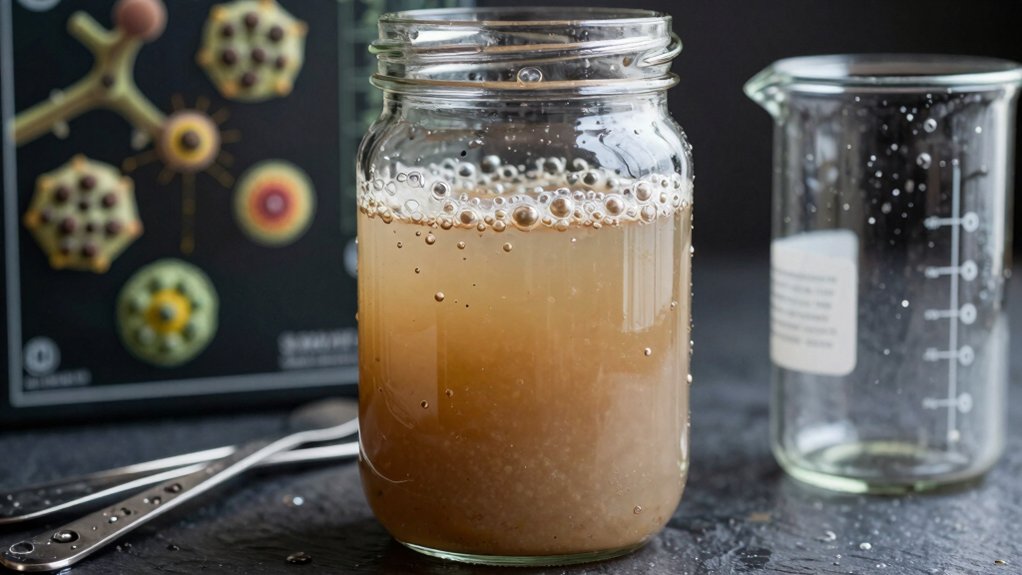
Ever wondered how to craft a starter culture that consistently delivers the flavor profile you crave? You begin by selecting a blend that mirrors the microbial diversity highlighted in SNSM wet fermentations. Pair a robust lactic acid bacteria strain such as Leuconosteroides/L. mesenteroides with complementary yeasts like Kazachstania and Pichia. Leverage co‑occurrence patterns—LAB‑AAB, yeasts‑AAB, and Leuconostoc‑Prevotella—to reinforce synergistic pathways that shape lactate, acetate, and aromatic metabolite signatures. By tuning these variables, you steer fermentation outcomes toward predictable, specialty‑grade cup qualities, ensuring each batch reproduces the desired caramel, fruity, and spice notes. Co-occurrence patterns provide a framework for predicting interaction effects under different processing parameters, enabling more reproducible results across batches.
Frequently Asked Questions
How Does Microbial Diversity Affect Coffee’s Caffeine Content?
You’ll find that richer microbial diversity can boost caffeine breakdown, so beans fermented with varied microbes often end up with slightly lower caffeine levels than those fermented by a single, dominant strain.
Can Microbial Diversity Reduce Fermentation Time While Preserving Flavor?
You can shorten fermentation by harnessing diverse microbes; they speed metabolism, outcompete slower strains, and still produce the complex acids and aromatics that preserve coffee’s flavor profile.
What Safety Concerns Arise From Using Wild Microbial Consortia?
You should watch for pathogenic strains, toxin production, and antibiotic resistance; wild consortia can introduce unwanted microbes, cause off‑flavors, and jeopardize worker safety if not properly screened and controlled.
How Does Altitude Influence Microbial Community Composition in Fermentation?
You’ll find that higher altitude lowers temperature and oxygen, favoring slower‑growing yeasts and acid‑tolerant bacteria, while lower altitudes boost faster yeasts and diverse microbes, shaping fermentation profiles.
Do Different Coffee Varieties Attract Distinct Microbial Populations?
You’ll find that each coffee variety pulls in its own microbial crew; genetics, sugars, and acids differ, so distinct bacteria and yeasts colonize, shaping flavor and fermentation dynamics uniquely.
In Summary
You’ve seen how microbial diversity fuels the nuanced flavors and consistency in coffee fermentation. By harnessing a rich, balanced community and tailoring starter cultures, you can steer the process toward predictable, high‑quality cups. Embrace these insights, experiment with microbial blends, and let science guide your brew to richer, more reliable taste profiles.


