

Hybrid coffee processing blends the dry‑fruit sweetness of natural methods with the clean acidity of washed techniques, keeping enough mucilage to nurture flavor while cutting fermentation time and mess. You’ll find pulped natural (skin stripped, most pulp removed), honey (varying mucilage after depulping), and semi‑washed (pulp removed, parchment retained) variants, each offering distinct sweetness, body, and acidity levels. These methods also use less water, aligning with sustainability goals, and if you keep going you’ll discover how each choice shapes the cup.
What Makes a Coffee Process “Hybrid”?
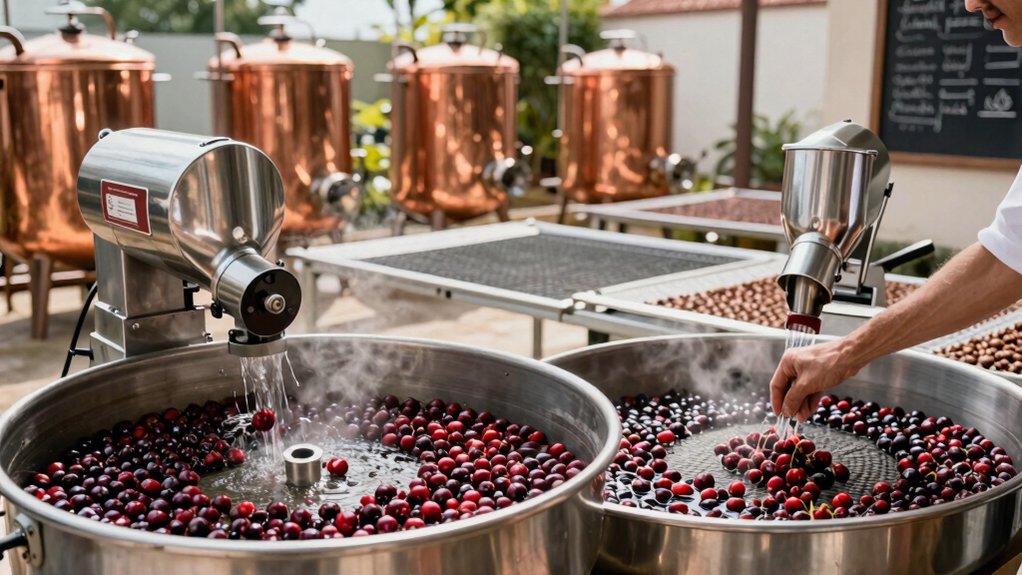
What makes a coffee process “hybrid”? You blend natural’s dry sweetness with wet’s clean acidity, keeping enough mucilage to nurture flavor while cutting the time and mess of full fermentation. In a pulped natural or honey process, you strip the skin and most pulp, then let the beans dry with a layer of mucilage, letting sweetness and body develop as the beans lose moisture. The hybrid approach can also benefit from controlled drying to achieve a smoother acidity profile and more consistent cup notes, especially when paired with pressure-extraction methods found in portable systems like 20-bar setups. mucilage preservation
How Do Pulped Natural, Honey, and Semi‑Washed Hybrid Coffee Processing Methods Differ?
Pulped natural, honey, and semi-washed hybrids each shape a coffee’s flavor. You’ll notice that pulped natural strips the cherry skin, keeps most mucilage, and dries the beans on patios, delivering strong sweetness and a heavy body. Honey leaves a variable mucilage coat after depulping, so the sticky beans ferment longer, giving a fuller, sweeter profile with pronounced body. Semi‑washed removes the pulp, dries to 30‑35 % moisture, peels the parchment, then finishes drying, resulting in lower acidity and a rounder body than fully washed. The choice of processing method can also influence fermentation dynamics and the final aromatic profile, contributing to a broader spectrum of flavor examples and preferences for different coffee lots. Flavor profile
Choosing the Right Hybrid Coffee Processing Method for Flavor and Sustainability

Which hybrid method you choose can make the difference between a cup that bursts with fruit‑forward sweetness and one that delivers a clean, rounded body while conserving resources. If you crave intense fruitiness, opt for pulp natural or honey/miel with high mucilage; the retained mucilage fuels fermentation during drying, creating a lush flavor profile and moderate acidity. For a balanced cup with lower acidity, semi‑washed offers a brief drying phase, removes most pulp, and preserves body. Consider sustainability: eco‑pulping technologies cut water use to under a tenth of traditional washing, letting you scale hybrid processing without draining supplies. Match the mucilage level (black, red, yellow, white) to your desired sweetness, and align water‑efficient methods with your farm’s environmental goals. Sustainability signals further clarify the environmental and social benefits tied to different processing choices.
Frequently Asked Questions
What Are the 4 Types of Coffee Processing?
You have four main processing types: natural (dry), washed (wet), pulped‑natural (honey/miel) with varying mucilage levels, and semi‑washed (wet‑hulled) often used in Indonesia.
What Is the 15-15-15 Rule for Coffee?
You aim for roughly 15% total dissolved solids, 15% extraction, and 15% yield loss; this quick heuristic lets you tweak grind, time, and ratio to keep your brew balanced and consistent.
What Coffee Is Good for Gastritis?
You should choose a lightly washed or honey‑processed coffee, medium‑roasted, with low acidity and smooth, chocolatey notes; avoid dark, bitter, or overly fruity beans, and start with a small cup.
What Is a Hybrid Coffee?
You’re looking at a coffee that’s processed using both wet and dry techniques, like pulped natural or semi‑washed, giving you richer body, sweeter flavors, and less water usage than traditional methods.
In Summary
You’ve seen how hybrid methods blend the best of washed and natural processes, giving you richer flavors and more flexibility. By picking the right hybrid—whether pulped natural, honey, or semi‑washed—you can tailor acidity, body, and sustainability to your goals. Embrace these techniques, experiment, and let the nuanced profiles they create elevate your coffee experience.


