
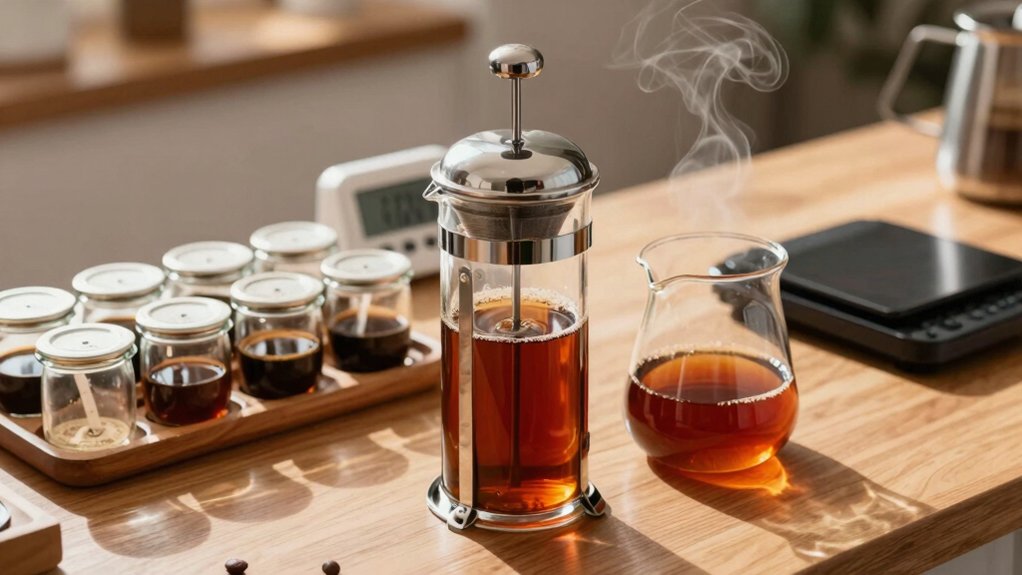
Use a coarse grind like kosher salt and pre‑wet the grounds with a splash of cool water before adding the rest. Keep a 1:8 coffee‑to‑water ratio, heat the water to about 200 °F, then stir for 30‑45 seconds to release CO₂ and saturate the grounds. Plunge gently to preserve viscosity, then double‑filter through a fine mesh and paper for a crystal‑clear concentrate. Store it airtight in the fridge for up to ten days and dilute to taste. Continue for more tricks.
Choose a Coarse Grind for French Press Concentrate
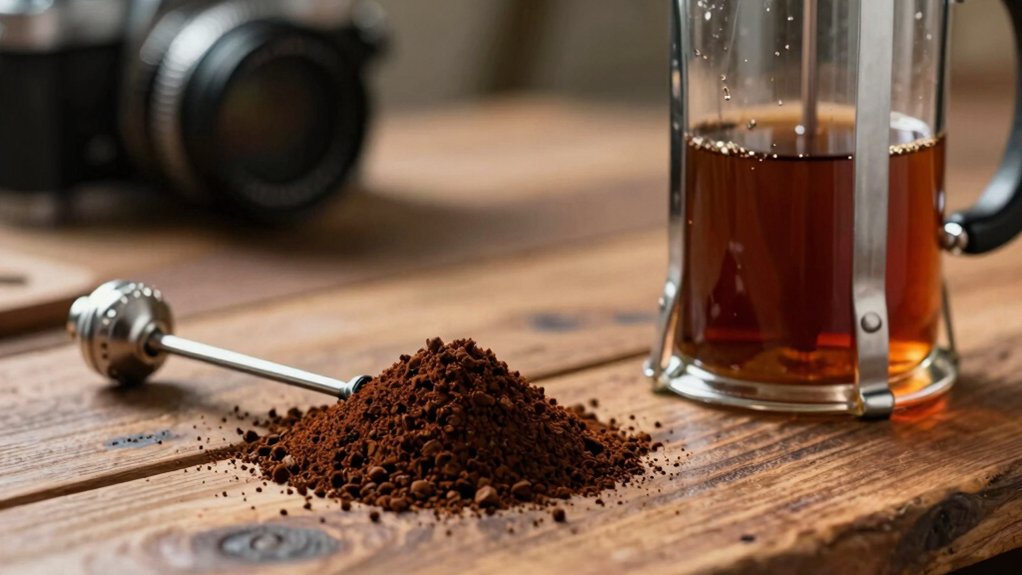
Ever wondered why a coarse grind is essential for French‑press concentrate? You’ll find that a coarse grind, like kosher salt, keeps filtration clean and prevents over‑extraction. When you use too‑fine grounds, they slip through the mesh, creating coffee mud that ruins texture. If you must go finer, drape a filter over the press mouth, but the best route is a coarse grind that supports fuller flavor and strong extraction strength without gritty sediment. Freshly grinding just before brewing guarantees optimal grind size and preserves bright notes that could otherwise turn stale. This approach maximizes body, ensures smooth filtration, and lets your French press concentrate hold its intensity with minimal fuss. Extraction Yield can influence how you measure strength and consistency across batches.
Set a 1:8 Coffee‑to‑Water Ratio for Maximum Sweetness
Wondering how to dial in the perfect sweetness for your French‑press concentrate? Use a 1:8 coffee‑to‑water ratio: one gram of coffee for every eight grams of water. This ratio, common in cold brew recipes, yields a syrupy concentrate that stays smooth when you dilute it. Measure 40 g of coffee to 320 g of water, then let the French Press sit in the fridge for 14–20 hours. The balanced extraction pulls soluble solids while keeping fines low, so you get bright sweetness without heaviness. This approach aligns with using larger burrs and precise grind settings to ensure uniform extraction and minimal fines 64mm burrs. Stick to the 1:8 baseline for maximum sweetness; only tweak toward 1:4 if you deliberately want a stronger, more bitter brew. This simple ratio is the sweet spot for any French Press concentrate.
Pre‑Wet the Grounds to Eliminate Dry Pockets
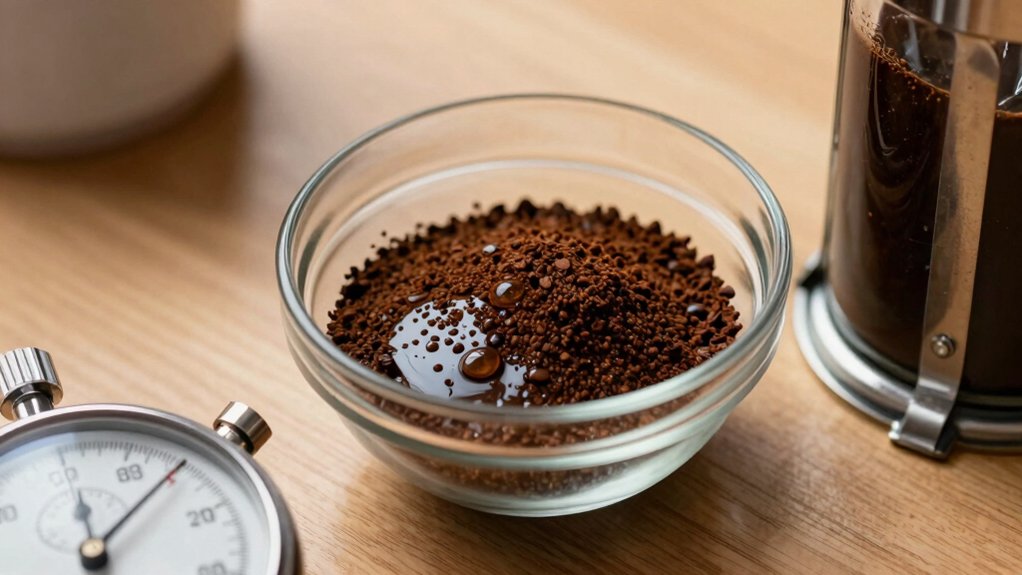
You’ve nailed the 1:8 ratio, now make sure every gram of coffee actually gets wet. Pre‑wetting the grounds in your French press prevents dry pockets and guarantees uniform saturation, a trick that works for both hot brew and cold brew concentrate. Start by pouring a small amount of cool water—just enough to cover the coffee—then stir gently. This hydrates the particles, so when you add the remaining liquid the grounds stay fully immersed and won’t creep above the filter.
- Measure coffee, add half the water.
- Stir briefly to wet all particles.
- Pause 30 seconds for absorption.
- Add the rest of the water and steep.
The two‑stage addition eliminates dry spots, delivering a smoother, more consistent concentrate. Achieve Even Wetness to maximize extraction efficiency and foam stability across your beverages.
Heat Water Just Off the Boil for Balanced Flavor
You’ll want the water just off the boil—around 200 °F (93 °C)—to hit the sweet spot between extraction and scorching. This temperature lets the coffee dissolve evenly during the immersion phase, preserving its natural sweetness and body. For best results, use a thermometer to maintain temperature as you brew and avoid letting the water re-boil between pours. Additionally, using coffee ice cubes can help maintain a steady chill without diluting flavor when cooling the brew Release Methods and keep your cold brew or iced coffee at an optimal temperature.
Ideal Water Temperature
A good rule of thumb is to heat the water just off the boil—around 200 °F (93–95 °C)—so the concentrate extracts evenly without scorching the grounds. This water temperature gives the French press a strong, consistent brewing temperature that promotes rapid wetting and early dissolution. It preserves sweetness while keeping the extraction balanced. If you use a darker roast or decaf, drop the temperature 10–15 °F to avoid bitterness. For cold‑brew concentrate, preheat then cool slightly before pouring.
- Heat water to 200 °F.
- Pour over grounds, watch the bloom.
- Stir gently, let steep.
- Press and separate concentrate.
Balanced Flavor Extraction
Keeping the water just off the boil not only protects delicate aromatics but also lets a coarse grind work its magic, giving you a smooth, balanced concentrate. You’ll notice the French press delivers a perfect balance when the temperature stays just below boiling, because the cooler water prevents scorching while still extracting sweet compounds. Use a consistent grind size—coarse enough to keep the brew from turning bitter, yet fine enough for steady extraction. Stir gently after adding water, then set a brew time of six to eight minutes; this window lets flavors meld without over‑extracting harsh notes. When the plunger reaches the bottom, press immediately and pour, locking in the desired syrupy body and ensuring the extraction stays on point.
Stir at 30‑45 Seconds to Release CO₂ and Saturate
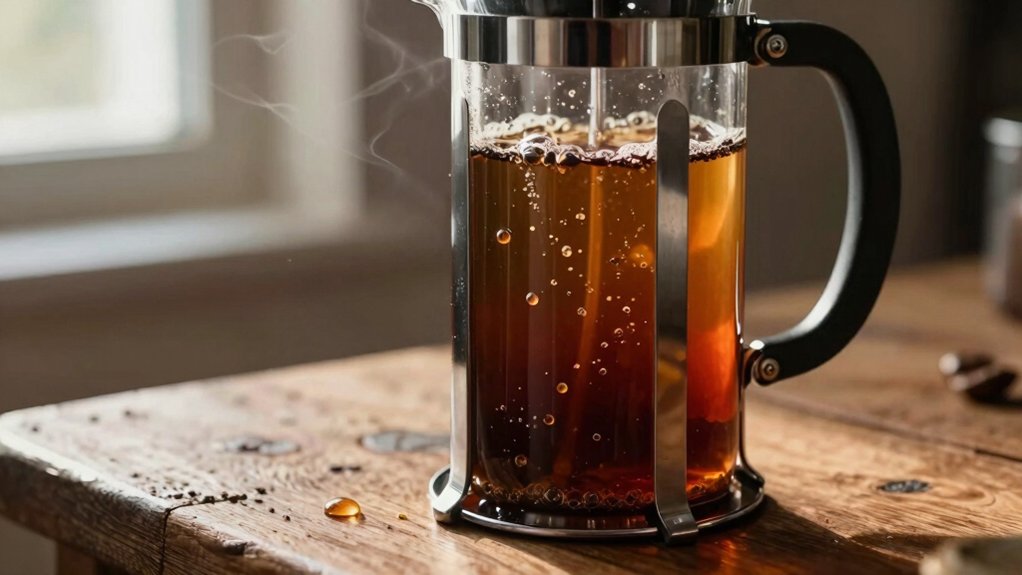
After you add the water, give the grounds a quick stir at the 30‑45‑second mark to let the CO₂ escape and the coffee saturate evenly. This timing spreads the solubles before diffusion slows, ensuring a uniform concentrate. Avoid vigorous mixing beyond this window, or you’ll disturb sediment control and risk over‑extraction. The choice of filter type can influence how oils and fines interact during that initial saturation, affecting the final body and clarity. filter design
CO₂ Release
Wondering why a quick stir at 30‑45 seconds matters? You’re actually triggering a CO2 release that jump‑starts blooming and locks in a uniform wetting phase. The early agitation lets trapped gas escape, preventing floating islands that would later skew diffusion and ruin extraction balance. The result is a cleaner cup and a smoother press.
- Stir gently – break surface tension without splashing.
- Watch bubbles – they signal CO2 release and proper wetting.
- Pause briefly – let the grounds settle, ensuring even diffusion.
- Resume brewing – the balanced extraction now proceeds uniformly. Air pressure
Even Saturation Timing
Ever wondered why a quick stir at the 30‑45‑second mark makes such a difference? You add the first splash of water, wait a few seconds, then stir to kick off blooming. That agitation releases trapped CO₂, wets every particle, and guarantees full saturation before the bulk of the water joins. By timing the stir precisely, you prevent dry pockets and floating clumps that would otherwise cause uneven extraction and a sludgy bottom. If you see grounds still floating, pause briefly and give a gentle re‑stir before sealing the lid. After this initial move, let the coffee steep with minimal agitation; the early saturation sets the stage for a clean, balanced cup. Properly calibrated extraction relies on consistent ratios and attentive timing across all steps, reinforcing the importance of precise measurements.
Steep 14‑20 Hours in the Refrigerator for Full‑Body Brew
Steeping your French‑press concentrate in the refrigerator for 14–20 hours—ideally 16 hours—extracts deep, full‑body flavors without over‑extraction. You’ll notice the cold brew concentrate develops a richer mouthfeel and smoother acidity, perfect for a full‑body brew. To nail the process, follow these steps:
- Measure 1 cup coarsely ground coffee (Kosher‑salt size) and 8 cups cold water.
- Stir gently, then seal the French press and place it in the refrigerator.
- Let it sit for 14–20 hours, aiming for 16 hours for optimal balance.
- After steeping, press slowly, filter through a rinsed sieve, and store the concentrate chilled.
This routine yields a robust, ready‑to‑dilute concentrate that retains its depth when mixed with water, milk, or plant‑based alternatives. Foam
Plunge Gently to Keep Viscosity and Avoid Over‑Extraction
| Action | Why it matters | Result |
|---|---|---|
| Slow, steady plunge | Maintains viscosity | Smooth mouthfeel |
| Light pressure if resistance | Prevents over‑extraction | Less bitterness |
| Prompt pour after plunge | Stops ongoing extraction | Preserves body |
Double‑Filter the Concentrate for Extra Clarity
You’ll want to run the concentrate through a fine‑mesh sieve first, then place a paper filter or cheesecloth for a second pass.
This double‑layer filtration pulls out the remaining sediment that can make a cold‑brew brew look cloudy, without stripping its body.
If you’re using a medium‑coarse grind, the extra filter step will give you a crystal‑clear cup every time.
Fine Filter Paper UseFineRe‑Filter for Clarity
Ever wondered why some French‑press concentrates still feel gritty after pressing? You can banish that sandpaper feel with a fine filter paper and a quick secondary filtration step. First, rinse the paper to erase any papery taste, then drape it over the press mouth while you push the plunger. The paper catches the last of the fine grounds, delivering a smoother mouthfeel. If you still see specks, repeat the process with a second filter—this double‑filter approach maximizes sediment removal and boosts clarity.
- Rinse filter paper before use.
- Place paper over press mouth during pressing.
- Press the concentrate through the paper.
- Run the liquid through a second filter for extra clarity.
Double‑Layer Mesh Filter
How can you make a French‑press concentrate crystal clear without sacrificing flavor? Use a double‑filter setup. First, pour the hot brew through a fine mesh filter, then place a second mesh or a coffee filter on top. The double‑filter catches finer particles, delivering cold brew clarity and strong sediment reduction. The extra screen adds a tiny step, but it yields a thinner mouthfeel and a glass‑clear finish that still carries the full aroma of your French press concentrate.
| Step | What to Do |
|---|---|
| 1 | Brew concentrate in French press |
| 2 | Press and pour through first mesh filter |
| 3 | Add second mesh or coffee filter |
| 4 | Collect clarified liquid |
Cold‑Brew Sediment Removal
Wondering how to keep your cold‑brew concentrate crystal clear while preserving its rich flavor? Start with a French press, then double‑filter the liquid for spotless clarity. Follow these steps:
- Pre‑wet the filter – rinse a paper or cheesecloth filter to avoid paper taste.
- First filtration – pour the concentrate through a filter‑lined sieve or drape a coffee filter over the press mouth, catching most cold‑brew sediment.
- Second filtration – strain the liquid again through a fine cheesecloth or a second paper filter; this double‑filtering removes fine grounds and reduces viscosity.
- Store properly – seal the double‑filtered concentrate in an airtight jar in the fridge; it stays clear and flavorful for up to a week.
These filtrations keep the brew bright, smooth, and free of unwanted grit.
Store French Press Concentrate Fresh for Up to 10 Days
Want to keep your French‑press concentrate tasting fresh for up to ten days? Transfer the freshly filtered French press concentrate into an airtight container right after brewing. Seal it tightly to block other odors and lock in flavor. Store the container in the refrigerator at all times; consistent refrigeration preserves the concentrate’s brightness and prevents bacterial growth. Aim to use the batch within a week, but you can stretch it to ten days if the fridge stays at 35‑40 °F. Check the liquid daily for any off‑smells or cloudiness—those signs mean the freshness is fading. By limiting exposure to air, keeping the temperature steady, and avoiding repeated temperature swings, you’ll maintain optimum taste and aroma throughout the storage period.
Dilute and Customize the Concentrate to Taste
Looking to perfect your cup without starting from scratch? You can turn a French press concentrate into any brew you crave by mastering dilution and taste customization. Adjust the concentrate‑to‑diluent ratio to hit the right strength, then add flavors or chill for iced drinks. Here’s a quick guide:
- 1:1 ratio – equal parts concentrate and water or milk for a balanced cup.
- 1:2 ratio – one part concentrate to two parts diluent for a lighter sip.
- 2:1 ratio – two parts concentrate to one part diluent for an intense, bold flavor.
- Iced drinks – dilute first, chill, or pour over ice and finish with your chosen diluent.
Mix in cinnamon, vanilla, or chocolate before dilution for extra depth, and enjoy a fresh, personalized brew every time.
Frequently Asked Questions
What Is the 15-15-15 Rule for Coffee?
You follow the 15‑15‑15 rule by adding 15 g coffee, pouring 15 g water, and stirring for exactly 15 seconds, then continue the brew. It creates uniform wetting, reduces channeling, and balances extraction.
What Are Common French Press Mistakes to Avoid?
You should avoid using a too‑fine grind, over‑stirring, rushing the plunge, forcing a stuck plunger, and plunging before grounds settle. These errors cause mud, bitterness, and uneven extraction.
Is Cold Brew Coffee Ok for Diabetics?
You can enjoy cold brew, but watch the dilution and any sweeteners. Stick to sugar‑free additives, keep portions modest, and track carbs from added milk or flavorings to protect your blood‑sugar levels.
How to Make Concentrated Coffee Using a French Press?
You steep medium‑coarse grounds in cold water, let them sit 12‑24 hours, then slowly plunge. Filter the brew, store it airtight, and dilute 1:1 or to taste when you serve.
In Summary
Now you’ve got the perfect French press concentrate—rich, smooth, and ready whenever you need it. Follow those steps, keep it fresh, and you’ll always have a versatile base to craft iced coffees, lattes, or cold brew cocktails. Enjoy the consistent flavor and the convenience of a concentrate that’s both quick to make and easy to store.


