

Use a breadcrumb‑size, uniform grind (≈600 µm) so the particles settle quickly and the oil stays in suspension. Heat the water to 88‑96 °C, pre‑heat the press and carafe, then pre‑infuse with a quick rinse to clear fines. Add water, stir gently at the halfway point, and steep in two 5‑minute intervals. Plunge slowly once the crust forms, keeping turbulence low, and filter with a fine mesh to capture the oil‑rich emulsion while trapping sediment. Follow these steps, and you’ll discover even more tricks for a silky, oil‑laden cup.
Choose a Grind That Maximizes French‑Press Oil Extraction
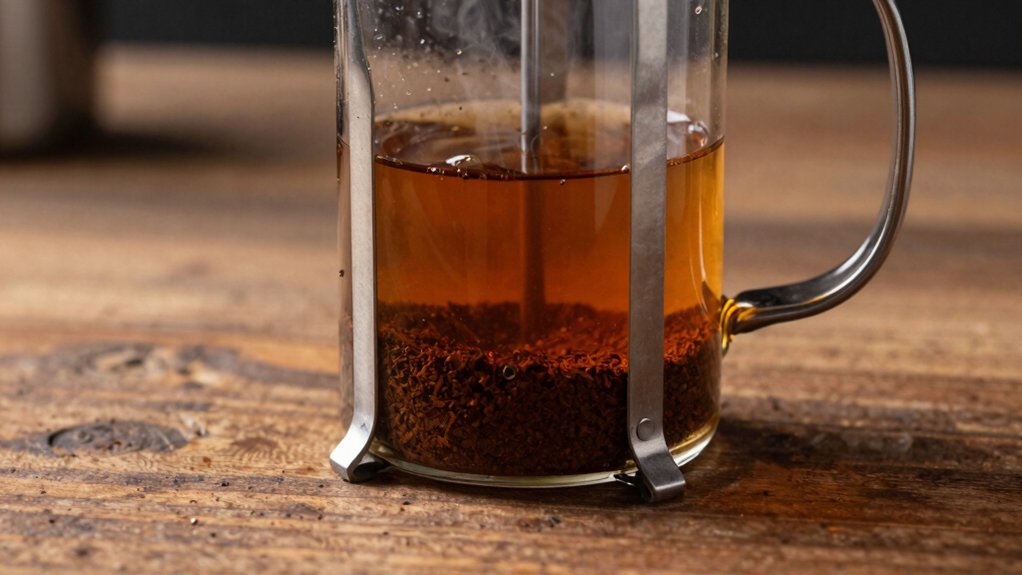
Start by selecting a grind that looks like breadcrumbs—coarse to medium‑coarse, around 500–800 µm, with 600 µm being a sweet spot. This grind size gives you a coarse grind that lets water flow freely while keeping particles large enough to settle quickly, which is essential for sediment control. When the particles stay within that micron range, the coffee cells rupture uniformly, boosting oil extraction efficiency without creating a murky brew. Regularly using a uniform grind helps minimize fines that can re‑suspend during pressing and trap oil in the sediment, preserving the delicate balance between clean cup clarity and maximum flavor‑rich oil release. Grind Uniformity
Set Water Temperature to Protect Coffee Oils
You’ll want to keep the water between 88 °C and 92 °C so the delicate coffee oils stay intact.
This temperature range extracts the lipids efficiently while minimizing oxidation of cafestol and kahweol.
Optimal Brewing Temperature
When you keep the water between 92 °C and 96 °C, you maximize oil solubility while preventing the delicate coffee oils from breaking down. A French press benefits from this temperature range because it balances extraction speed with oil stability. Preheating the press and carafe further minimizes heat loss during the ten‑minute brew and helps maintain a consistent temperature for optimal oil dissolution. Pour in a steady circular motion, avoiding vigorous stirring that could over‑agitate the oil layer. Monitor the serving temperature and aim to pour within a narrow window—usually just below 90 °C—to preserve aroma and prevent the oils from oxidizing. Temperature control is a crucial element that ties together steady pour, preheating, and the final serving temperature for best oil preservation.
Oil Preservation Strategy
Why settle for a brew that burns away coffee’s delicate oils? You can protect those flavors by setting the water temperature to 92‑96 °C instead of a rolling boil. Preheat the French press so the liquid stays steady, preventing temperature drops that would otherwise reduce oil solubility and cause premature oxidation. Use a controlled pour and a steady immersion time—Hoffmann’s approach works well—to limit agitation that can strip oils. Pair this with grind freshness, grinding beans just before brewing, because older beans have already oxidized their oils. This extraction method balances heat and time, preserving diterpenes and tocopherols while delivering a rich, aromatic cup. 0
How Long Should You Steep for Optimal Flavor and Lipids?
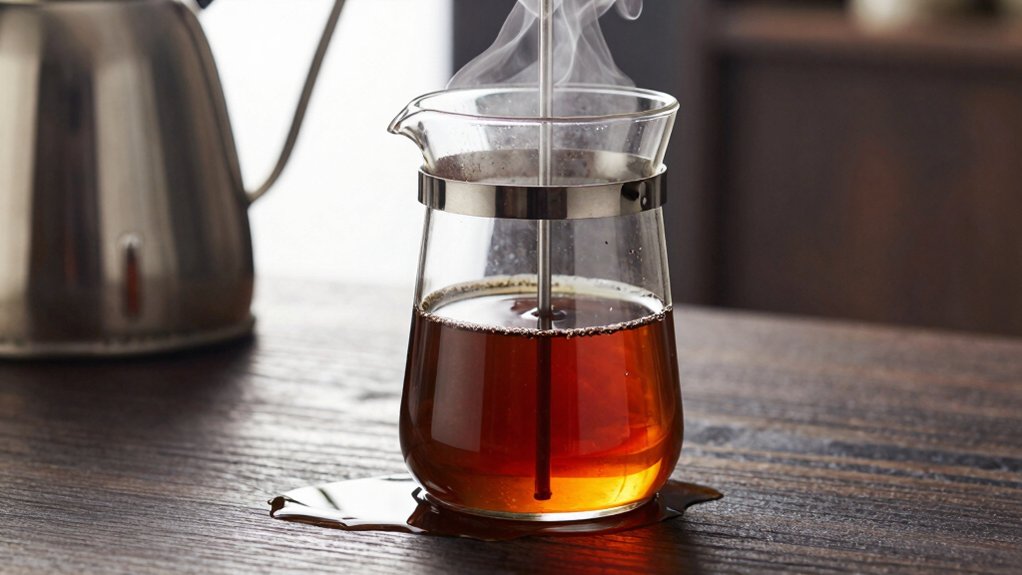
If you keep the steep to two consecutive five‑minute intervals, you’ll extract the coffee’s flavor and lipids efficiently while limiting bitterness and silt. In a French press, the Hoffmann method dictates a first five‑minute infusion, a gentle stir, then another five‑minute rest. This 10‑minute total steep time balances lipid extraction with silt reduction. Keep the water temperature hot but not boiling—around 92‑96 °C—so the oils release without oxidizing. Avoid extending beyond the two intervals; longer steeping pulls unwanted compounds and more sediment. After the final plunge, decant into a carafe and let it cool slightly to halt further extraction. This disciplined timing yields a clean cup rich in flavor and healthy lipids. Optimizing temperature control further helps maintain stable extraction performance across different batches temperature management.
Stir Gently to Boost Oil Release Without Over‑Extracting
You’ll start stirring just after the halfway point of the water addition, using a slow, circular motion to loosen the crust and let the oil escape. Keep the agitation brief and gentle so you don’t pull fines back into the brew, which would cloud the cup. This timing and light touch maximize oil yield while preserving clean separation. Temperature-controlled frothing can help maintain stable emulsions and improve consistency across batches Strix temperature control.
Gentle Stirring Technique
Ever wondered how a simple stir can reveal more oil without over‑extracting? You start by adding half the water, then use gentle handling to swirl the grounds in a light, circular motion. This stirring disrupts oil cells just enough to boost oil extraction while keeping the crust intact. When the crust forms, give it another brief stir; the motion encourages even oil migration without re suspending fine particles. Stop stirring as soon as the crust begins to settle, right before you pour. By timing the stir this way, you maintain extraction control, preserve the French press’s aromatic profile, and avoid over‑extraction that would increase sediment and bitterness. Regularly checking grind consistency and adjusting coarseness with 40+ settings helps maintain smoother extraction across methods burr material matters.
Timing For Maximum Yield
A well‑timed stir can release the most oil without pushing the extraction into bitterness. You’ll want to stir gently once the water hits the halfway mark, breaking the bloom crust and letting the Hoffmann method work its magic. Keep the agitation light; a brief, steady motion mid‑cycle awakens trapped oil without re‑suspending fines. Aim for two five‑minute intervals, pausing only for that single stir. This balanced extraction time maximizes oil yield while preserving flavor and clarity. Selecting the right thermometer can help you monitor precise temperatures during extraction and ensure consistent results professional-grade clip-on to optimize control over the process.
If you stir too hard or pour too quickly, you’ll introduce excess agitation, which can cloud the brew and reduce perceived yield. Stick to the timing, and you’ll extract the richest, most aromatic oil possible.
Pre‑Infuse With a Quick Rinse to Cut Silty Particles and Improve Clarity
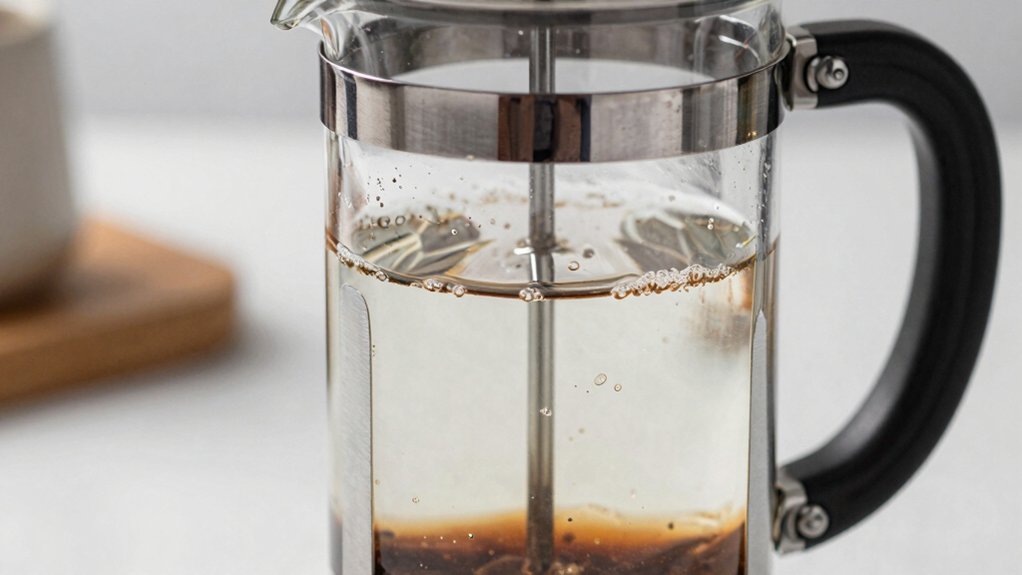
A quick pre‑infuse rinse not only clarifies the cup but also aligns with the objective of lowering bitterness by supporting micro‑filtration filtration quality.
Plunge Slowly: Why a Gentle Press Yields a Richer, Oil‑Rich Cup
When you let the grounds settle and then press slowly, you keep the coffee’s natural oils intact. In a French press, a gentle press after crust formation lets the settled layer stay compact, preventing turbulence that would re‑suspend fines. By plunging only to the top of the liquid, you avoid disturbing the crust, so oil extraction proceeds cleanly and the cup retains oil richness. The steady, slow plunge limits agitation, reducing emulsification and preserving stable oil separation. Empirical tests show that this method, combined with precise temperature control and preheated vessels, yields a fuller body and brighter oil‑rich flavors. Embrace the gradual plunge to maximize the oil‑laden, velvety texture you crave.
Filter the Brew to Capture the Most Oil Without Losing Flavor
After the gentle plunge has settled the grounds, you can preserve that oil‑rich body by filtering the brew carefully. A smooth filtration step captures the oil‑rich emulsion while keeping fine sediment out of the cup. Keep water temperature steady and grind coarsely to avoid excess fines that cling to oil. When you pour, use a coffee filter or fine mesh and decant into a pre‑warmed carafe to lock in flavor and prevent the oil from separating.
- Gentle pour – let gravity do the work, no vigorous stirring.
- Fine filter – choose a paper or metal mesh that traps sediment but lets oil flow.
- Warm decanter – maintain temperature to keep the oil‑rich emulsion stable.
Frequently Asked Questions
Which Method Is Best for Oil Extraction?
You’ll get the highest yield with a cold‑pressed expeller, because it avoids solvents, preserves bioactives, and delivers 60‑80% recovery while keeping temperatures low enough to protect delicate compounds.
How to Remove Oil From French Press Coffee?
You can separate the oil by letting the brewed coffee sit, then skimming the surface layer with a spoon or fine mesh, or by pouring the coffee through a coffee filter that traps the oil droplets.
What Are Common French Press Mistakes to Avoid?
You should avoid grinding too fine, using water outside 92‑96 °C, skipping the five‑minute steep, neglecting a gentle crust stir, and pouring too forcefully, which all cause sediment, bitterness, and weak extraction.
What Is the French Press Method of Extraction?
You steep coarsely ground coffee in hot water, let it sit ten minutes, then gently press the plunger, separating the liquid from the grounds while preserving oils and flavor.
In Summary
By mastering grind size, temperature, steep time, gentle stirring, a quick pre‑infusion, and a slow plunge, you’ll coax every last drop of coffee oil into your cup. Filtering at the end preserves those buttery lipids while keeping the brew clean. Follow these steps and you’ll consistently enjoy a richer, fuller‑bodied French press coffee that’s brimming with flavor and natural oils.


