

Pick a food‑grade stainless‑steel tank with a 180‑320 grit finish so it stays non‑porous and easy to CIP. Size it about 20 % larger than your cherry load and give it a sloped, rectangular or conical shape for even flow and gentle drainage. Insulate with high‑R foam and add a cooling jacket if you’re in a warm climate. Install low‑shear agitators, DO, pH, and temperature probes, plus a sealed lid with airlock and pressure‑relief valve. Add sanitary sampling ports and sight glasses for monitoring, and you’ll have a robust, scalable system that keeps cherries intact while maintaining stable fermentation conditions.
Choose Material for Hygienic Coffee Fermentation
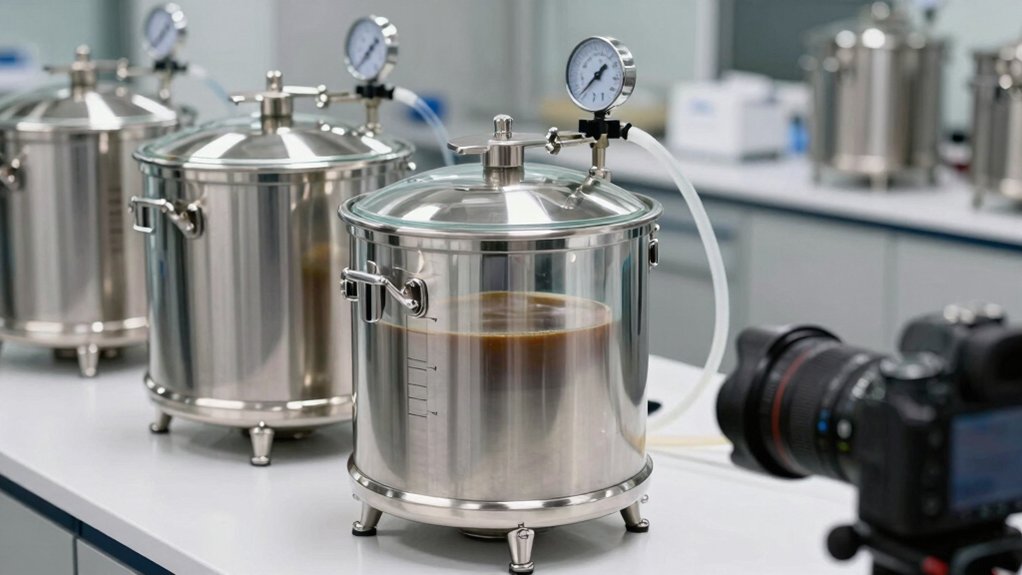
Choosing the right material for a coffee‑fermentation vessel is essential because it directly impacts sanitation, durability, and cost. When you pick stainless steel, you get a non‑porous surface that resists scratches, holds up to high temperatures, and simplifies sanitation. Its opacity limits visual checks, but the material’s robustness minimizes contamination risk, especially when you pair it with proper sampling ports and temperature probes. Plastic vessels made from HDPE or PP are lighter and cheaper, yet they demand meticulous care; scratches can trap microbes, forcing stricter cleaning routines to protect hygiene. Align the vessel material with your cleaning protocol, temperature control, and budget, ensuring all fittings—sampling ports, aeration devices, and probes—remain compatible and easy to sterilize. BirdRock Home 36 Peg Wall-Mounted Coffee Mug Organizer shows how integrated organization supports steady workflow, which is also important when coordinating sanitation steps across equipment and accessories.
Match Tank Capacity to Cherry Volume
How much cherry volume will you process each batch? Match your fermentation capacity to that volume so you keep enough headspace for aerobic activity without crowding. If you aim for 500 L of cherries, choose a tank volume around 600 L to allow a 20 % buffer. Align batch sizing with tank size to simplify loading, unloading, and uniform mixing. Oversized tanks waste energy; undersized tanks cause uneven fermentation and temperature spikes. For optimal results, consider having a gravity insert-style approach with flexible capacity options tank design to support scalable processing.
Select Shape for Even Coffee Fermentation Flow
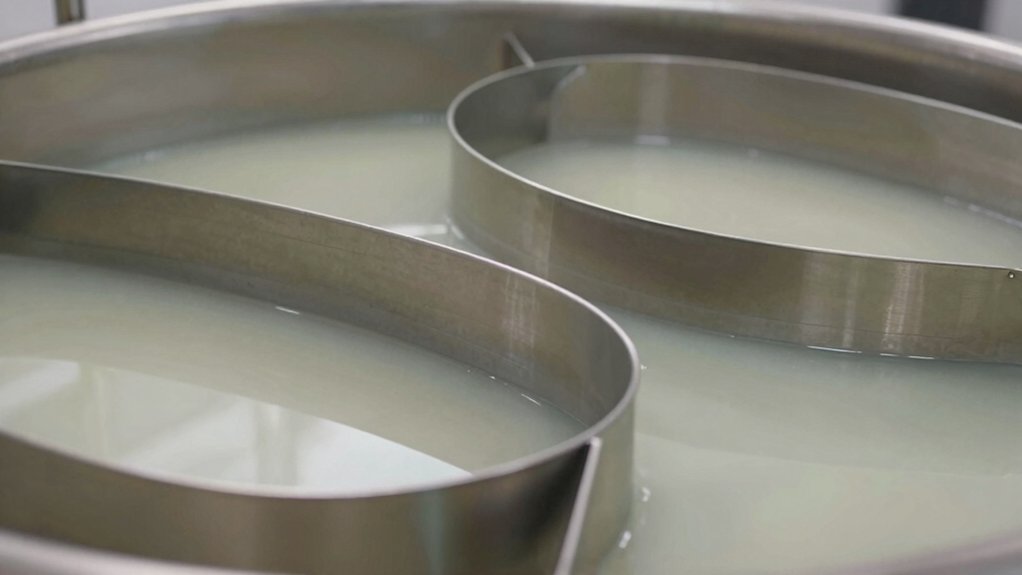
After sizing your tank to match the cherry volume, the next step is picking a shape that keeps the fermentation flow uniform. Rectangular vessels give you a wide footprint, spreading cherries and liquid evenly, which boosts flow uniformity and reduces dead zones. A gently sloped bottom in a rectangular or cylindrical tank drives gravity‑driven drainage, letting pulp settle without compacting the fruit. Favor a horizontal orientation so the surface area for gas exchange expands, supporting smooth aerobic to anaerobic transitions across the batch. Install sight glasses and manways to watch the flow and tweak loading as needed. Choose the shape that lets you load and unload with minimal turbulence, ensuring every cherry contacts the liquid consistently. Maintaining consistent pressure and monitoring with reliable sensors gas exchange helps optimize fermentation dynamics.
Insulate Coffee Fermentation Tank for Stable Temperature
Ever wondered how to keep your coffee fermentation at a steady 15‑25 °C? Start by wrapping your stainless steel fermenters in high‑R‑value insulation like polyurethane foam, ensuring the outer shell stays seamless and welds are smooth. This insulation cuts heat exchange, preserving the desired range and preventing hotspots that skew microbial activity. Pair it with an active temperature control system that can add or remove heat as needed, but keep the focus on the insulating barrier to minimize external influences. Install real‑time monitoring probes at several depths; they alert you to stratification and let you fine‑tune the control loop. Regularly check seam integrity and clean the inner surface to maintain hygiene and consistent temperature throughout fermentation. insulation effectiveness
Add Cooling Jackets or Coils for Warm Climates
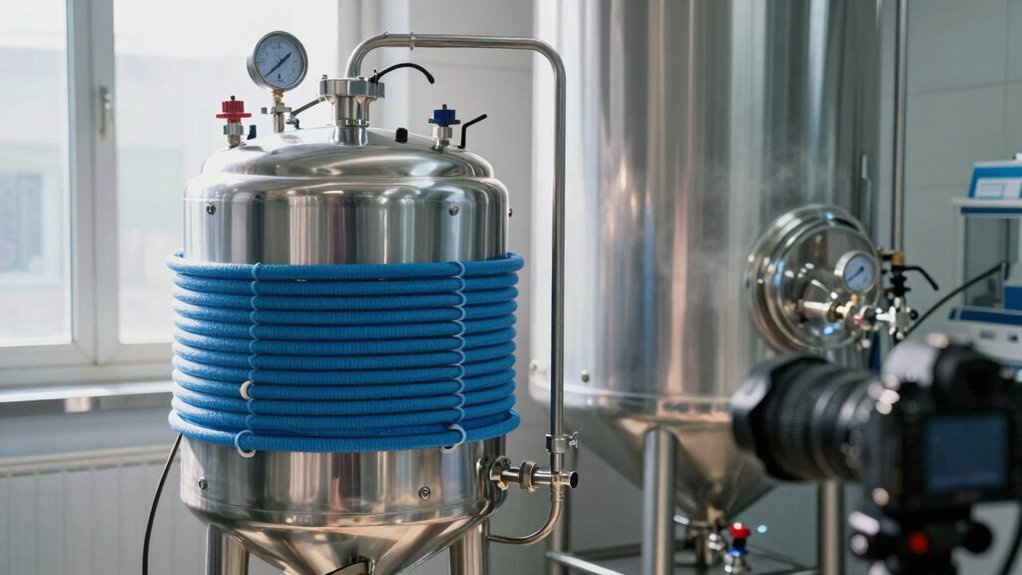
Want to keep your coffee fermenting at 15‑25 °C in a hot climate? A cooling jacket or internal coils give you the temperature control you need for reliable hot climate fermentation. Wrap the fermentation vessel in a jacket that circulates glycol or chilled water, or install coils near the wall to target hot spots. Pair the system with probes and a feedback loop so coolant flow adjusts automatically, keeping microbes happy and off‑flavors at bay.
Cooling jacket or internal coils with probes and feedback loop keep coffee fermenting at 15‑25 °C in hot climates.
- Choose a jacket for uniform heat exchange across the whole vessel.
- Use coils when space is limited or you need localized cooling.
- Select glycol for lower freezing points in extreme heat.
- Install temperature probes at multiple heights to detect gradients.
- Connect to a programmable controller for real‑time flow regulation.
SmartRef Digital Refractometer by Anton Paar Coffee TDS provides a good example of how precise monitoring (including ATC) can support consistent fermentation conditions when paired with data logging and climate control strategies.
Design Aeration to Preserve Delicate Cherries
Cooling the vessel is only half the battle; you also need to keep the cherries moving gently enough to stay intact while still supplying oxygen. In your fermentation vessel design, prioritize a sloped bottom and smooth, non‑abrasive interior walls so bubbles glide without bruising. Install low‑velocity diffusers or fine‑pore vents that create a steady stream of aeration, delivering dissolved oxygen just enough for microbes without over‑oxidation. Position baffles to break up dead zones and promote even gas distribution, preserving cherry integrity throughout the bulk. Hook the system to a real‑time dissolved‑oxygen sensor; when readings drift, tweak airflow or valve settings to keep conditions consistent. This controlled aeration keeps the fruit intact and the fermentation lively. oxygen control
Implement Gentle Low‑Shear Mixing Systems
You’ll want to choose gentle agitation mechanisms like slow‑turning paddles or large‑diameter impellers to keep the cherries intact while spreading microbes evenly. By keeping Reynolds numbers low, you reduce shear forces and avoid pulverizing the mucilage, which preserves flavor precursors. This approach also promotes uniform temperature and oxygen distribution without creating vortex‑induced surface contamination. Bor osilicate glass provides a non-porous surface that preserves flavor integrity across Chemex-style brewing systems.
Gentle Agitation Mechanisms
Typically, you’ll keep agitation gentle by using low‑shear mixing that protect delicate coffee cherries while still circulating oxygen and heat evenly. You’ll choose motorized agitators that are fully enclosed, smooth, and non‑porous, allowing remote monitoring of torque and temperature. Variable‑speed drives let you dial in the exact shear rate needed for uniform mixing without vortexing or damaging the fruit. In both open and closed fermentation vessels you’ll preserve anaerobic barriers while ensuring even exposure. Slow‑turning paddles that glide through the mash; Blade‑free floatation mixers that create gentle circulatory currents; Low‑profile propellers with adjustable pitch; Enclosed gearboxes with sealed bearings to prevent contamination; Real‑time sensor feedback for torque, temperature, and oxygen levels. Optimal control algorithms further ensure consistent fermentation outcomes by adjusting agitation in response to sensor data.
Low‑Shear Mixing Benefits
Ever wondered why low‑shear mixing is a game‑changer for coffee fermentation? You’ll see that gentle agitation keeps cherries whole, preventing bruising and fragmentation that can release unwanted tannins. Using slow‑turning impellers, low‑pitch paddles, or magnetic planetary mixers in a custom vessel, you achieve uniform oxygen exposure without over‑agitating. The low‑shear environment boosts mass transfer while preserving cell integrity, so fermentation proceeds evenly and off‑flavors drop. You can monitor color, juice extraction rate, and turbulence indicators to stay within safe parameters. Smooth, wide surfaces prevent fruit snagging, and the reduced RPMs keep the coffee pulp intact, delivering a cleaner, more consistent flavor profile in the final brew.
Install Sloped Bottom Drainage and Large Valves
When you install a sloped bottom drainage system paired with large valves, liquid drains quickly and completely, eliminating residual pockets that can harbor unwanted microbes. The sloped drainage creates a gravity‑driven path that sweeps sediment toward the drain, while large valves handle high‑volume discharge without throttling flow. This setup cuts sanitation cycles, speeds batch turnover, and lets you monitor fermentation in real time.
- Design the floor angle at 2–3° to guarantee full runoff.
- Choose valves ≥ 150 mm diameter for rapid emptying.
- Position the drain at the lowest point for consistent flow.
- Use stainless‑steel gaskets to maintain sanitation.
- Integrate flow meters to track batch turnover efficiency.
Enable Cleaning‑In‑Place With Smooth Surfaces
Because smooth, non‑porous surfaces like polished stainless steel or HDPE/PP plastics leave no microscopic crevices, they dramatically cut microbial harborage and make cleaning‑in‑place (CIP) cycles far more effective. You’ll choose a smooth surface finish of at least 180‑320 grit on stainless steel to ensure streak‑free rinsing and inhibit biofilm.
Minimize welds and seams, rounding any necessary joints so dirt can’t lodge during CIP. Integrate accessible cleaning ports and manways that let you circulate detergent and rinse water without disassembly, supporting a hygienic design.
Verify that your detergents, flow rates, and contact times match the vessel material, guaranteeing consistent sanitation across batches while keeping downtime low. This approach streamlines operations, protects coffee quality, and meets food‑safety standards.
Deploy Real‑Time Temperature and pH Monitoring
How can you keep coffee fermentation on target without constantly guessing? Install probes at representative points in the vessel so real‑time monitoring feeds temperature control and pH sensing directly to your dashboard. Aim for ±1–2 °C accuracy and continuous pH readings to catch contamination early and track the gradual acid drop. Pair the sensors with fermentation data logging so you can compare batches and ensure quality.
- Choose stainless‑steel or food‑grade probes that resist corrosion.
- Mount sensors at the liquid’s mid‑depth for bulk measurement.
- Integrate a PLC or IoT hub for instant alerts when limits are breached.
- Calibrate temperature and pH devices weekly to maintain precision.
- Store logged data in a cloud database for trend analysis and traceability.
Fit Lids, Airlocks, and Pressure‑Relief Valves
Make sure your lid seals tightly while still letting gases escape, using a vented or gasketed cover that keeps contaminants out. Position the airlock where it can vent CO₂ efficiently without risking backflow, and choose a water‑filled or dry‑hose design that fits your vessel’s geometry. Install a food‑grade pressure‑relief valve that opens at a safe threshold to prevent over‑pressurization during active fermentation.
Secure Lid Sealing
Ever wondered how a reliable lid can keep your coffee fermentation both airtight and safely vented? You’ll need a lid that clamps tightly, a gasket that compresses evenly, and an airlock that lets CO₂ escape without inviting oxygen. Choose food‑grade, corrosion‑resistant materials so sanitation stays simple and your vessel stays hygienic.
- Use adjustable clamps to maintain consistent pressure on the lid.
- Select a silicone or EPDM gasket that conforms to the vessel rim.
- Install an airlock directly into the lid’s vent port for controlled gas release.
- Add a pressure‑relief valve to vent sudden spikes during active fermentation.
- Verify that all components survive hot‑water or chemical sanitation cycles.
Airlock Placement Strategy
Wondering where to locate the airlock for optimal gas release? You should mount the airlock at the highest point of the vessel lid, letting CO₂ escape while keeping contaminants out. Choose lids with integrated airlock ports that match standard sizes; stainless steel lids give you a tight seal and durable, sanitary fittings. For larger tanks, spread multiple airlocks across the lid to prevent gas pockets and ensure even gas venting.
If you prefer a sealed system, install a pressure‑relief valve instead of an airlock to avoid over‑pressurization during vigorous fermentation. Make sure every fitting is food‑grade, removable, and easy to clean, so you maintain hygiene and can service the vessel without hassle.
Add Sampling Ports and Observation Windows
How can you monitor fermentation without compromising sterility? Adding sampling ports and observation windows lets you track progress while keeping the vessel sealed. Position ports where flow is steady, use sanitary‑grade fittings, and ensure they seal tightly after each draw. Install sight glasses made of clear, autoclavable material and align them with the tank’s mid‑section for a true view of color and clarity. Both features should integrate with your cleaning cycle and support data logging for pH and temperature correlation.
- Use stainless‑steel or PTFE‑lined ports for chemical resistance.
- Fit observation windows with hinged, gasketed covers.
- Locate ports opposite each other to avoid dead zones.
- Design ports for quick disassembly and CIP compatibility.
- Include a vented, filtered line to prevent pressure spikes.
Scale up With Robust Structure and Load‑Bearing Design
After you’ve secured sampling ports and observation windows, the next step is to make sure the vessel can handle the weight of thousands of liters of cherries and liquid without flexing or leaking. Choose a conical fermenter shape; the sloped bottom and large drain valves speed complete drainage while keeping wall thickness sufficient for pressure resistance. Opt for stainless steel or food‑grade plastics with a calculated gauge that resists corrosion and deformation at 15–25 °C. Reinforce the load‑bearing design with sturdy supports, robust manways, and safe access points so frequent loading and unloading won’t compromise stability. Run finite element analysis to map stress from static loads, agitation, and auxiliary equipment, confirming that the fermentation vessel will remain structurally sound throughout long‑term operation.
Frequently Asked Questions
How Long Can Fermentation Vessels Be Stored Before Use?
You can store fermentation vessels for up to two years if you keep them dry, sealed, and protected from sunlight; after that, material degradation or contamination risks increase, so you should inspect before use.
Can I Use the Same Vessel for Both Coffee and Tea Fermentations?
Yes, you can reuse the vessel for coffee and tea fermentations, but you must clean it thoroughly, sanitize between batches, and guarantee no residual flavors or microbes remain that could affect the next brew.
What Is the Recommended Frequency for Replacing Seals and Gaskets?
You should replace seals and gaskets every six to twelve months, depending on usage intensity and cleaning rigor, and inspect them monthly for wear, cracks, or odor to prevent contamination and maintain airtight performance.
Do I Need a Special Certification for Export‑Grade Fermentation Tanks?
You don’t need a special certification just for export‑grade fermentation tanks, but you must meet the destination country’s food‑contact and safety standards, and provide documentation proving compliance with those regulations.
How Does Ambient Humidity Affect the Fermentation Process?
Ambient humidity speeds or slows microbial activity; higher humidity keeps beans moist, boosting yeast and bacteria, while low humidity dries the pulp, slowing fermentation and risking uneven flavor development. Adjust drying times accordingly.
In Summary
By choosing the right material, sizing your tank to match cherry volume, and picking a shape that promotes even flow, you’ll keep your coffee fermentation hygienic and efficient. Insulating the vessel and adding cooling jackets or coils lets you maintain stable temperatures, even in warm climates. Real‑time temperature and pH monitoring, plus well‑fitted lids, airlocks, pressure‑relief valves, sampling ports, and observation windows, give you full control. Finally, design a robust, load‑bearing structure to scale up confidently.


