
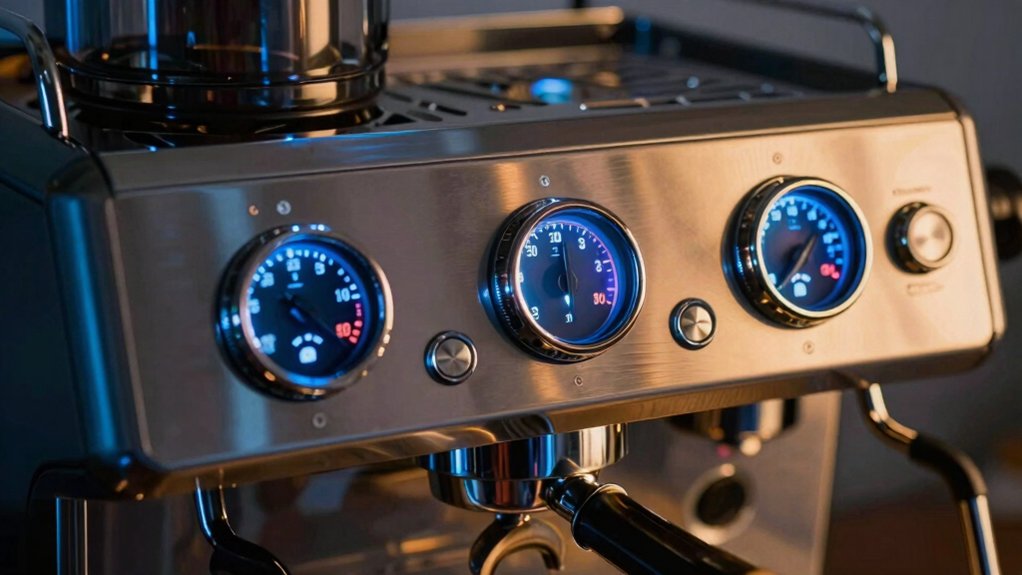
Set your brew boiler to the roast‑matched setpoint—about 195–198 °F for dark, 199–203 °F for medium, and 203–205 °F for light—and lock it with a PID tuned to ±0.5 °C for tight stability. Keep the steam boiler PID looser so it doesn’t interfere with brew temperature. Then fine‑tune pre‑infusion to 6–8 seconds at 2–4 bars, adjusting a second or two until the puck wets evenly and the shot stays sweet and balanced. The next steps will show you how to perfect each setting.
Our Recommended Products on Amazon


As an Amazon Associate we earn from qualifying purchases.
Set Your Temperature Setpoint for Your Roast
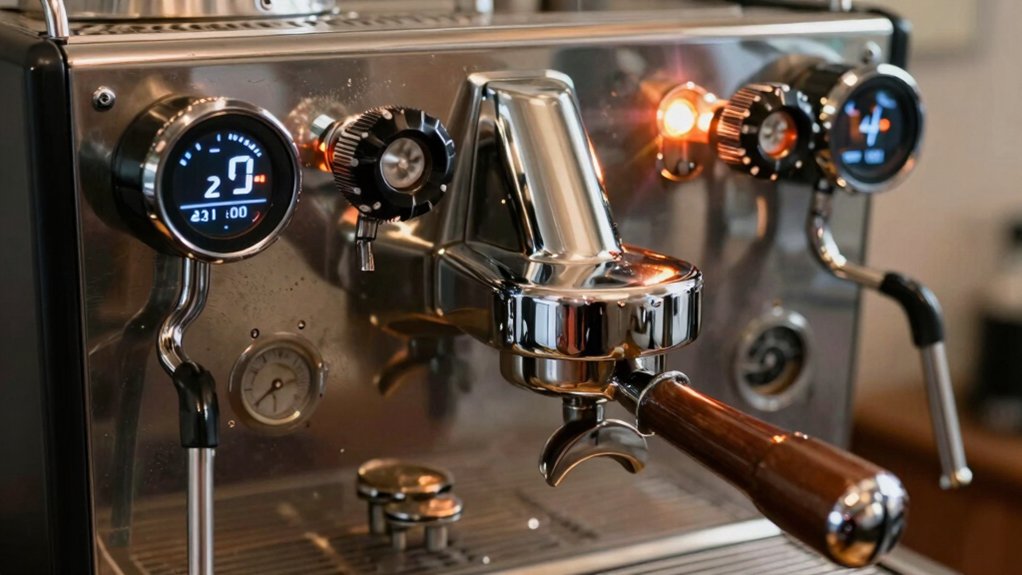
How do you choose the right temperature setpoint for your roast? Start by matching brew temperature to roast level: dark roasts thrive at 195–198 °F (90–92 °C), medium at 199–203 °F (93–95 °C), and light at 203–205 °F (95–96 °C).
Pick a baseline—201 °F (94 °C) works well for medium—and then tweak the setpoint in 1–2 °F (0.5–1 °C) steps after each tasting. Use a PID‑enabled espresso machine to lock in that setpoint, ensuring water temperature stays within ±0.5 °C (±1 °F) for stability.
Warm up the machine just below the target before pulling shots, and run a quick calibration to confirm the PID maintains the desired temperature throughout extraction. This disciplined approach gives you consistent flavor and repeatable results.
Consider confirming your extraction consistency with a refractometer reading to correlate taste with dissolved solids changes across roasts, reinforcing your temperature tuning decisions measurement consistency.
Tune the PID for Precise Espresso Temperature Control
You’ve set the brew temperature, now lock it in by fine‑tuning the PID. Start with the factory defaults—P 2.0, I 0.8, D 0.2—and adjust in tiny increments, watching the espresso after a few shots for consistency. Aim for a temperature setpoint that matches your roast: light 93.5–94 °C, medium 92.5–93 °C, dark 91–92 °C, then nudge 1–2 °F based on flavor. Tighten the brew boiler PID on Dual boiler or HX machines to keep fluctuations within ±0.5 °C, which boosts stability and repeatable coffee extraction. Keep the steam boiler PID looser for quick milk‑steam recovery. Record each change, compare shot taste, and settle on the PID values that give you the most reliable brew temperature. 20-bar
Fine‑Tune Pre‑Infusion Timing to Keep Shots Consistent
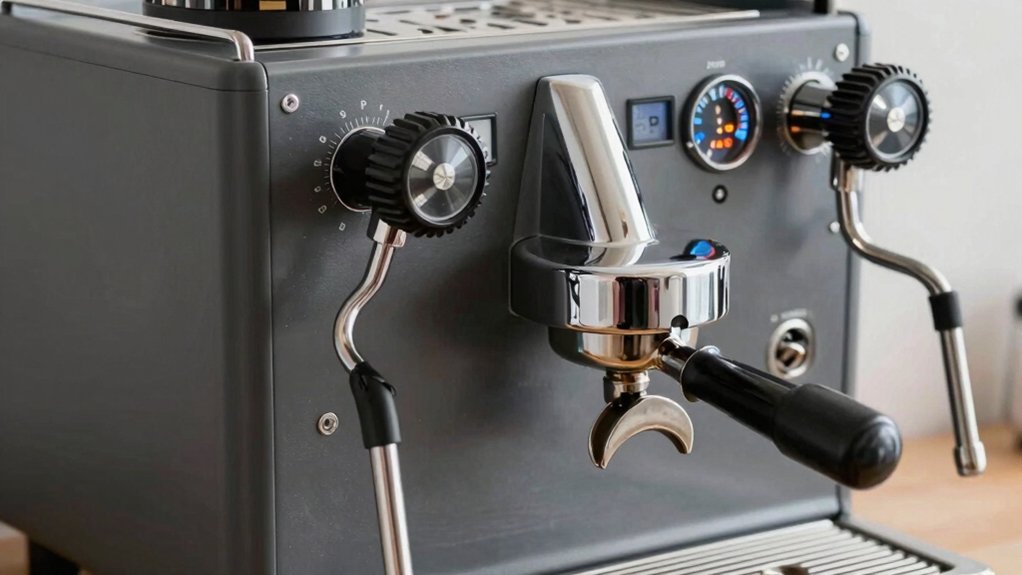
Ever wondered why some shots taste flat while others burst with sweetness? Start with a 6‑8 second pre‑infusion at light pressure, then stretch to 10‑15 seconds as you see the bed wet evenly. Keep the pre‑infusion rate steady at 2‑4 bars and watch for flow stability before ramping to target pressure. If your tamp density is high, shorten the pre‑infusion to avoid channeling; if the puck needs more bloom, lengthen it for better saturation. Record grind size, dose, and shot timing each pull, then tweak the pre‑infusion by 1‑2 seconds until extraction yields smooth sweetness and less bitterness. This systematic log builds a repeatable baseline across roasts. For reference, you can align the process with verified flavor extracts and their dedicated uses to ensure your coffee notes remain consistent across batches. pre‑infusion
Frequently Asked Questions
How to Adjust Temperature on Espresso Machine?
You adjust the temperature by setting the PID, pre‑purging the group, then fine‑tuning in 1‑2 °F increments until the shot tastes balanced, raising for sourness, lowering for bitterness.
What Is the 15-15-15 Coffee Rule?
You follow the 15‑15‑15 rule by pulling a shot for roughly fifteen seconds, using fifteen grams of coffee, and aiming for about fifteen grams of espresso output, adjusting grind and dose as needed.
What Temperature Should My Espresso Machine Be At?
Set your machine’s brew temperature to about 94 °C (201 °F). Dark roasts may need 90–92 °C, light roasts 95–96 °C. Keep the group head around 93–95 °C for consistent extraction.
What Is the 30 Second Rule for Espresso?
You aim for a 25‑35‑second extraction, ideally 30 seconds, by adjusting grind, dose, and pressure. If it finishes early, grind finer or increase dose; if it drags, grind coarser or reduce dose.
In Summary
By setting the right temperature setpoint, you match the brew to your roast’s flavor profile. Fine‑tuning the PID keeps that temperature steady, eliminating fluctuations that ruin consistency. And adjusting pre‑infusion timing ensures each shot extracts evenly, delivering the perfect balance of body and acidity. Master these three controls, and you’ll consistently pull espresso that highlights every nuance of your beans.


