
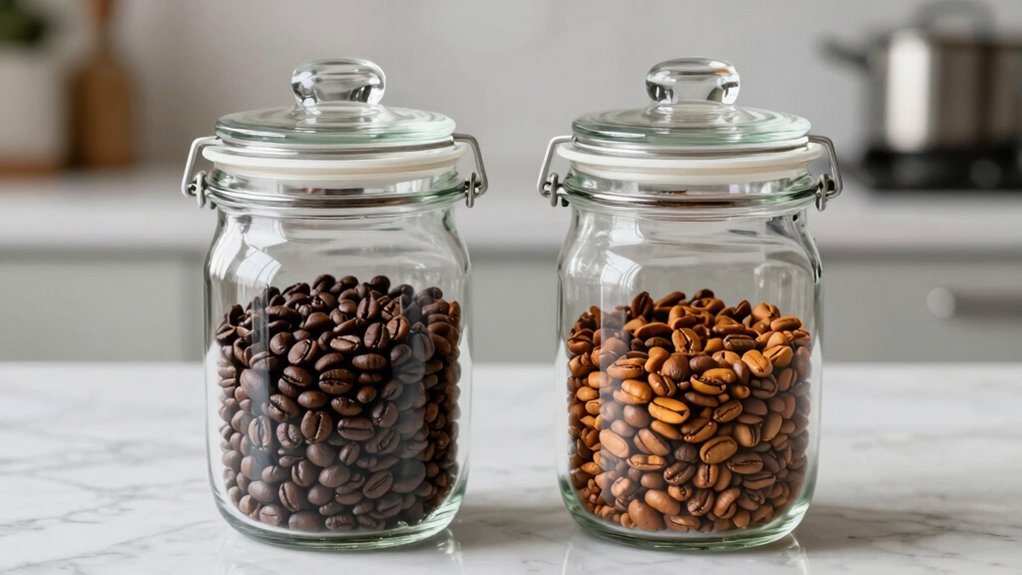
Pick a sturdy, airtight container—use a valve for dark roasts to let CO₂ out while keeping oxygen in, and a sealed glass jar for light roasts to preserve brightness. Store beans in a cool, dark, dry spot, ideally 55‑65 °F, away from heat. Burp jars without valves briefly before resealing. Let light roasts rest 3‑8 weeks and dark roasts 30‑plus days for peak flavor. Grind only when you’re ready to brew and rotate stock FIFO to stay within a 4‑6‑week freshness window. More details await if you keep going.
Pick the Right Airtight Container for Dark Roasts
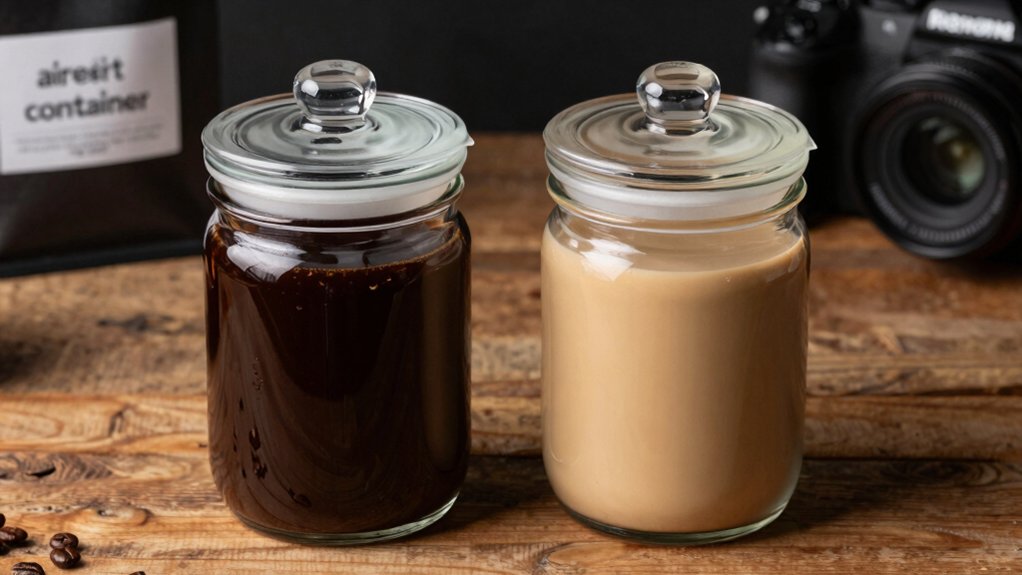
Because dark roasts release more CO₂ than lighter beans, you need a container that lets the gas escape while keeping oxygen out. Choose an airtight container with a one‑way valve to provide venting without compromising the seal. The valve acts as storage ventilation, allowing CO₂ to exit as the beans degas, yet blocks ambient air that would oxidize flavor compounds.
Opt for an opaque design so light can’t accelerate degradation, and keep the container in a cool, dark spot away from heat sources. Avoid opening it repeatedly; each breach invites oxygen and speeds flavor loss.
For longer‑term storage, transfer beans from a vacuum‑sealed bag into this container, ensuring moisture and light stay out while the CO₂ vents safely. TDS Refractometer
Pick the Right Airtight Container for Light Roasts
You’ll want a one‑way valve container so the CO₂ can escape while oxygen stays out, preserving the bright notes of your light roast. A sealed glass jar works too, blocking light and keeping air at bay for maximum flavor clarity. Both options let you store the beans in a cool, dark spot and grind just before brewing.
Way Valve Container
Ever wonder why a one‑way valve container is the smart choice for light roasts? It lets CO₂ vent while keeping oxygen out, so the delicate aromatics stay fresh during the 3‑8‑week rest. C onsistent use of Arabica beans and careful storage practices further preserve brightness and nuanced notes, aligning with the emphasis on origin, freshness, and craft highlighted in light roast guidance. The valve’s design preserves flavor clarity, prevents stale buildup, and supports the subtle aroma preservation you crave. Pair it with an opaque, airtight storage solution and you’ll see a smoother, brighter cup. – CO₂ venting: excess gas escapes, stopping pressure spikes that can flatten taste. – Airtight seal: blocks oxygen, protecting the light roast’s nuanced notes. – Opaque container: shields beans from light, further safeguarding aroma. Choose a one‑way valve for light roasts, and your beans will rest, develop, and deliver peak flavor on schedule.
Glass Jar With Seal
Looking for the best way to keep light‑roast beans fresh? Choose an opaque glass jar with a true airtight seal. The tight‑fitting lid blocks oxygen and, when stored in a cool, dark cupboard, curbs photodegradation. Label the jar with roast level and date, then let the beans rest for 3–8 weeks. In addition, consider selecting containers that align with established best practices for storage efficiency and freshness preservation, such as airtight seal to minimize air exposure and maintain aroma compounds over time.
Cool, Dark, Dry Storage for Dark vs. Light Roasts
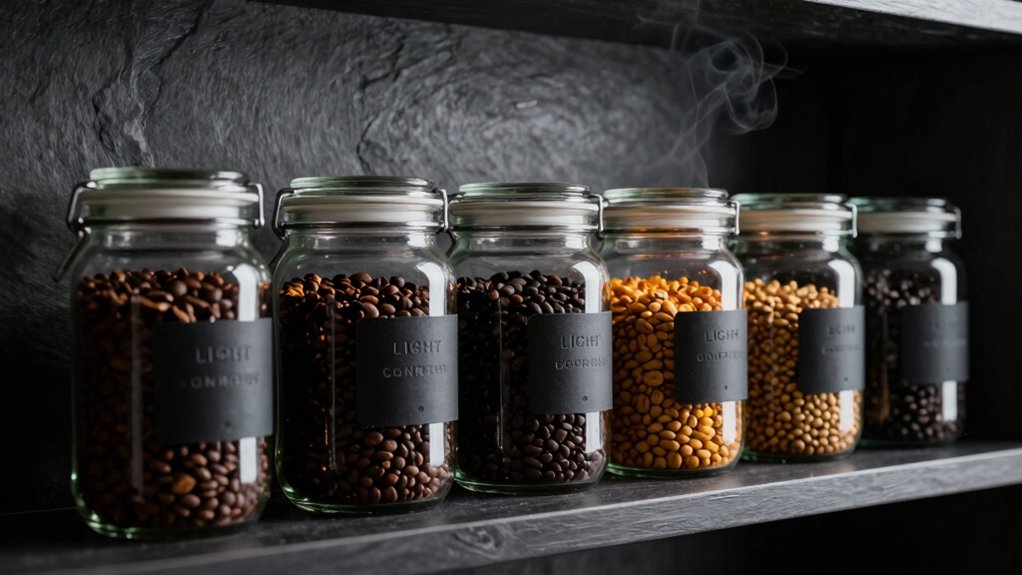
You’ll keep your beans fresher by storing them in a cool, dark spot away from heat and light.
A dry environment preserves the delicate flavors of light roasts while shielding dark roasts from oxygen that accelerates their decline. USDA Organic certifications
Cool Dark Storage
Why does cool, dark, dry storage matter for your beans? Dark roasts hold more CO2 after roasting and release it slowly, so keeping them in cool dark conditions preserves aroma and slows oxidation. Airtight storage with one‑way valve containers lets CO2 degassing happen without letting oxygen in, giving both light vs dark roasts a better shelf life. Here’s how you set it up:
- Store beans in a pantry or cabinet away from sunlight, temperature around 55‑65 °F.
- Use a sealed, one‑way valve container to let excess CO2 escape while blocking air.
- Keep the space dry; moisture accelerates staling and flavor loss.
Follow this routine, and your dark roast stays fresh longer while light roasts still enjoy their extended rest CO2 degassing.
Dry Light Preservation
Ever wondered how a cool, dark, and dry pantry can stretch the flavor life of both light and dark roasts? In dry storage, a light roast benefits from reduced oxygen and light exposure, which slows aroma loss while it continues degassing. Keep the beans in airtight containers to trap the remaining CO₂ and protect the freshness window, which for light roasts can extend 3–8 weeks after roasting. Avoid heat sources; a consistently cool, dark shelf prevents premature oxidation. Seal the container tightly after each use, and resist opening it too often to keep air out. By controlling temperature, light, and humidity, you preserve the bright, nuanced notes of a light roast far longer than in a warm, sunlit pantry. The same principles of ensuring stable power and safe handling apply to how you manage your brewing gear and its placement in a dedicated, low-dust workspace energy efficiency.
Separate Roast Shelving
How can you keep a light roast’s bright notes separate from a dark roast’s deeper flavors? Use separate shelving to create cool, dark, dry zones for each roast type. By zoning your pantry, you let light roasts stay in a cooler, drier spot while dark roasts occupy a slightly warmer, opaque area. This arrangement preserves delicate aromatics in light roasts and protects the robust compounds of dark roasts during their rest period.
- Place light roasts on the lower shelf, away from heat sources, in breathable storage containers.
- Reserve the middle shelf for dark roasts, using airtight, opaque containers to block light.
- Keep a small gap between shelves to prevent CO₂ cross‑contamination and maintain optimal rest periods.
Keep Oxygen Out With Valves and Burping
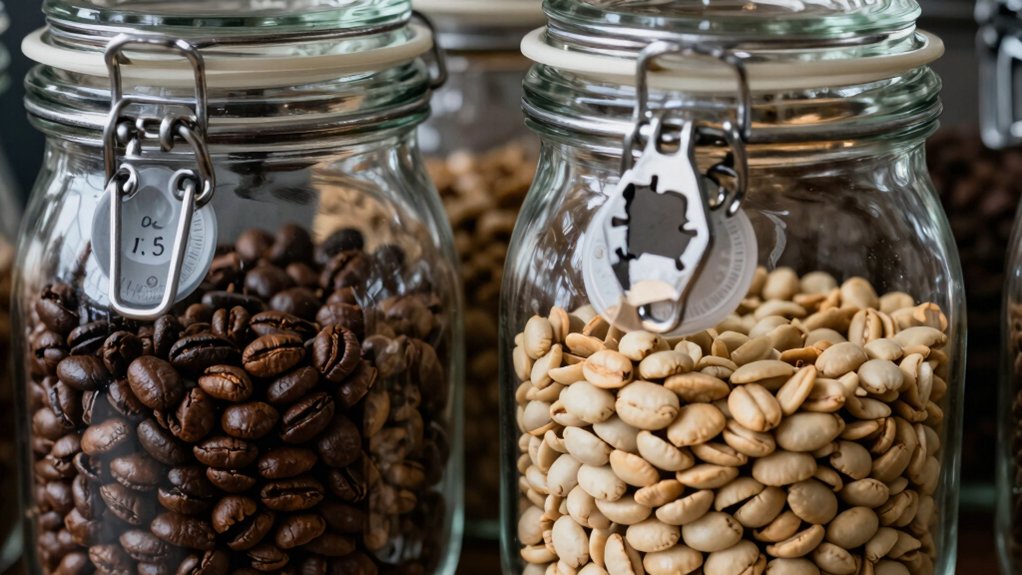
Ever wondered how to keep your beans fresh longer? Use containers with one‑way valves; they let CO₂ escape while blocking oxygen, preserving freshness for gassy beans. If your jar lacks a valve, burping it daily for a few days releases built‑up CO₂ and eases pressure without exposing the coffee to air. To burp, simply open the lid for a second, then reseal tightly—this keeps the storage environment mostly sealed.
Choose a valve‑type container for beans that need a rest period, as it protects against oxygen ingress while the beans finish degassing. Remember, light, heat, and moisture still threaten quality, so keep your valve‑equipped storage in a cool, dark spot for ideal longevity.
Time the Rest: When Dark vs. Light Roasts Peak
When does each roast hit its sweet spot? You’ll notice light roast flavor brightening after about three weeks as CO2 degassing eases, and the resting window can stretch to eight or ten weeks for peak flavor. Dark roast needs more time; its higher CO2 lingers, so the optimal window often lands around thirty days or later. Light roast can also benefit from a short rest to reduce acidity and improve balance resting window, after which aroma and sweetness become more pronounced.
Grind Only When You’re Ready to Brew
After letting your beans rest to hit their peak flavor, the next step is to grind them right before you brew. When you grind only when ready, you lock in aroma and curb oxidation, which is essential for both dark and light roasts. Whole beans hold moisture, CO₂, and delicate aromatics longer, so delaying the grind preserves freshness. Measure the exact dose for each cup, then grind it fresh; this avoids the rapid flavor loss that occurs once the surface area expands. If you must pre‑grind, keep the grounds in an airtight, opaque container at a stable storage temperature, and use them quickly. Proper pre‑grind timing and storage keep your coffee tasting vibrant and true to its roast profile.
Rotate Stock to Keep Flavor Within 4‑6 Weeks
How can you keep your coffee tasting its best for weeks? Rotate stock so the oldest beans leave the container first, keeping every cup within the 4‑6‑week freshness window. When you buy freshly roasted beans, split them into small, sealed, opaque jars. Store coffee beans away from light, heat, and air, and pull the back jar each time you brew. This habit works for both light vs dark roast profiles, preserving flavor clarity and aroma.
- Keep a “first‑in, first‑out” system with clearly dated jars.
- Use airtight, opaque containers to block light and oxygen.
- Purchase in modest batches so you never have beans lingering beyond 4‑6 weeks. First‑in, first‑out
Frequently Asked Questions
Do Light or Dark Roasts Last Longer?
You’ll find light roasts stay fresh longer; they degas faster and keep flavor clarity for up to 8–10 weeks, while dark roasts lose peak quality sooner because of higher CO₂ retention.
What Is the 15-15-15 Coffee Rule?
You won’t find a 15‑15‑15 coffee rule here; the material doesn’t define it. If you’ve heard it, it’s an outside concept, not covered in this guide.
What Is the 80 20 Rule for Coffee?
You follow the 80/20 coffee rule by concentrating on the essential 20 %—roast choice, grind size, brew ratio, water temperature, and airtight storage—because those actions deliver roughly 80 % of flavor quality.
What Are the 4 Enemies of Coffee?
You’ll fight oxygen, moisture, light, and heat. Oxygen oxidizes beans, moisture invites mold, light—especially UV—breaks aromatics, and heat speeds chemical reactions, all of which ruin flavor and aroma quickly.
In Summary
By storing dark roasts in cool, dry, airtight containers and keeping light roasts slightly cooler with proper ventilation, you’ll lock in flavor and aroma. Use valves or burp jars to keep oxygen out, and time your rest so each roast hits its peak within weeks. Grind only when you’re ready to brew, and rotate stock regularly to enjoy fresh coffee for the full 4‑6‑week window.


