
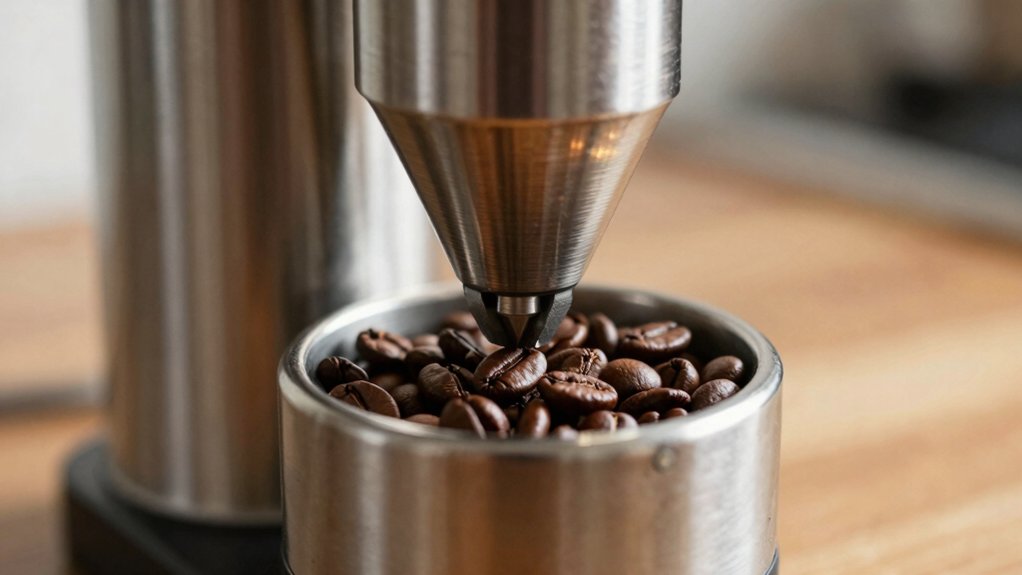
You’ll love that conical burr grinders grind at low RPM, so the beans stay cool and their volatile aromatics stay intact, giving you a cleaner, brighter espresso. Their gravity‑fed design cuts retention, making clean‑out quick and keeping grind size consistent without the clatter of flat burrs. They run quieter, run cooler, and wear less, so the modest upfront price pays off over years. Keep reading to discover how to pick the perfect model for single‑dose, titan‑level espresso.
Flat vs Conical Burrs: Which Wins for Espresso?
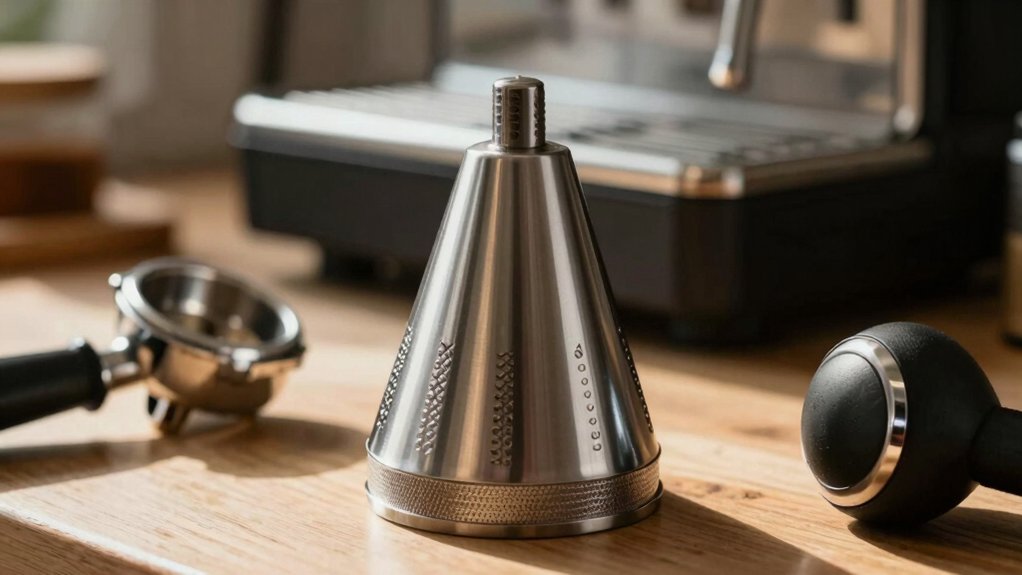
Where does the grind‑type truly matter for espresso? You’ll notice that flat burrs give you a tighter grind size control, delivering a uniform grind that promotes consistent extraction. That uniformity translates into a clean, bright flavor profile where each note separates clearly.
Conical burrs, on the other hand, tend to introduce a bit more variability in grind size because of assembly tolerances, but they often produce a thicker mouthfeel and fruitier sweetness. If you value precision and want a shot that showcases clarity, flat burrs win. If you prefer texture and a richer, more rounded flavor profile, conical burrs can be worth the trade‑off. Choose the burr that aligns with the espresso experience you’re chasing.
Why Low‑Speed Grinding Keeps Coffee Cooler and Preserves Aromatics
When you grind at low speed, the motor generates far less heat, so the coffee’s volatile aromatics stay intact. This cooler process prevents temperature‑driven shifts in grind size, keeping extraction consistent from start to finish. The result is a cleaner, more nuanced cup that preserves the coffee’s natural flavor profile. Low-heat grinding helps maintain consistent temperature control during processing.
Reduced Heat Generation
Ever wonder why a slower‑spinning conical burr keeps your coffee cooler? The low‑speed design of conical burrs cuts heat generation dramatically. By letting gravity feed the beans and using a slower motor, friction stays minimal, so the grinding surface stays cool. Cooler burrs mean the coffee particles don’t expand or contract mid‑grind, which preserves grind stability across a brewing session. Efficient ventilation and the gravity‑fed discharge further prevent temperature spikes that could otherwise shift particle size. As a result, you enjoy a consistent extraction without the thermal drift that plagues high‑rpm flat‑burr grinders. This reduced heat also protects delicate flavors, letting you taste the coffee as the roaster intended. grind stability
Preserves Aromatic Compounds
Slow grinding also helps preserve aromas by reducing heat transfer to the grounds, and the conical design promotes a gravity-assisted feed that keeps beans moving gently through the burrs. thermal management This combination helps minimize aroma loss and keeps the cup bright and nuanced.
Maintains Consistent Extraction
Preserving those aromatic compounds naturally leads to a more reliable extraction, because the cooler, low‑speed grind keeps the coffee’s temperature stable from bean to cup. When you use conical burrs, the gravity‑fed, low‑RPM design keeps heat down, so the grounds stay cooler and the aromatic oils don’t volatilize. This approach also aligns with how durable material choices in gear—like 304-grade stainless steel and BPA-free plastics in reusable tools—support long‑term consistency and hygiene in your workflow material quality.
How Conical Burr Design Controls Particle Distribution for Better Flavor
How does a conical burr’s geometry shape the coffee you taste?
You’ll notice that conical burrs funnel beans through concentric channels, and that inner cone and outer ring stay parallel, which directly drives particle distribution and grind consistency.
The design creates a broader, sometimes bimodal spread, especially at higher RPMs, giving you more fines that brighten espresso and add body.
Because the feed is gravity‑assisted, retention drops, so each dose stays true to the set size.
The cooler, quieter operation also limits heat‑induced expansion, preserving the intended particle size.
The result is a richer crema, thicker mouthfeel, and a flavor profile you can fine‑tune by adjusting the burr gap and speed grind consistency.
Retention & Clean‑out Ease: Practical Differences Between Flat and Conical
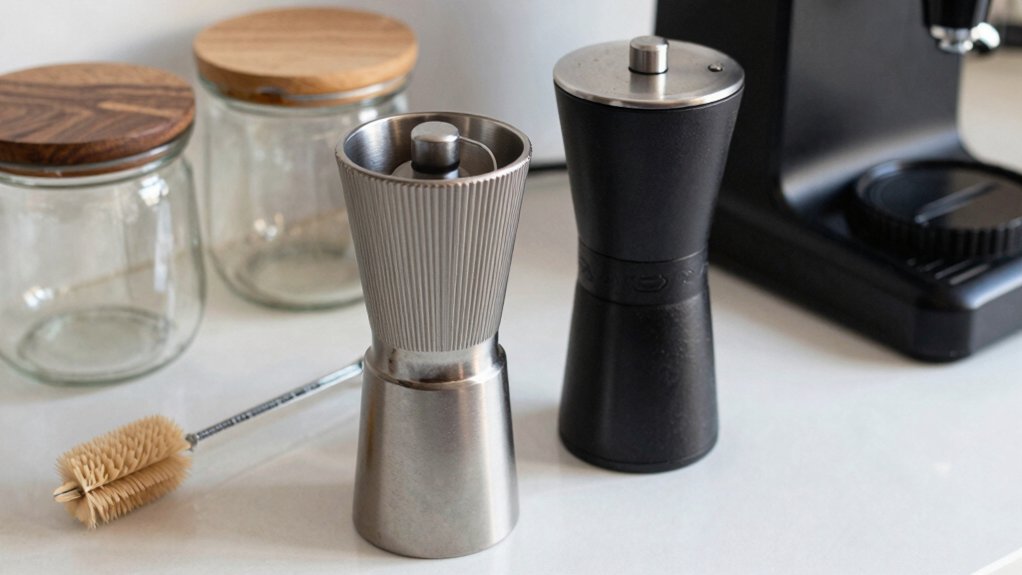
You’ll notice flat burrs tend to trap more grounds because their sideways feed pushes chips into corners, while conical grinders let gravity pull beans straight out, cutting retention.
Cleaning a flat grinder often means disassembling the chamber and scrubbing stuck particles, whereas a conical unit usually comes apart in a few steps and clears with a quick brush.
Those design‑driven differences mean you spend less time battling buildup with a conical burr.
Understanding grind consistency and roast level can further influence your experience, since coarse grounds and medium roasts help prevent over-extraction in cold brew, contributing to a smoother final cup. Coarse grounds and their compatibility with cold brew timeframes help ensure a balanced extraction and flavor preservation.
Retention Mechanics Comparison
Ever wondered why your conical grinder seems to empty itself faster than a flat‑burr model? The secret lies in how each design handles retention. Conical burrs let gravity pull grounds through the grind chamber/outlet design, so particles slide out quickly. Flat burrs, with parallel surfaces, often trap coffee in the chamber, increasing dry‑weight retention. Even though burr shape matters, the geometry of the grind chamber/outlet design can mitigate those differences.
- Gravity‑aided flow reduces retention in conical vs flat burrs.
- Flat burrs can trap grounds due to their chamber shape.
- Improved outlet mouths lower flat‑burr retention.
- Overall, design, not burr type alone, dictates clean‑out ease.
Cleaning Procedure Simplicity
Why does cleaning a conical grinder feel so much quicker than tackling a flat‑burr unit? You’ll notice that gravity‑assisted feed in conical burrs pushes grounds out of the outlet, so retention drops dramatically.
The wider chamber and fewer tight crevices let you brush or tap out residue in seconds, while a flat‑burr grinder traps particles between parallel surfaces, demanding disassembly and meticulous scrubbing.
When you perform routine cleaning, the conical design’s larger exit reduces the need for deep‑dive tools, cutting maintenance time in half. In contrast, flat burrs often require you to dismantle the grinding chamber to reach hidden coffee, extending the process.
The result is a simpler, faster cleaning routine that keeps your grinder ready for the next brew. Retention and ease of cleaning
Design‑Driven Bean Release
- Gravity feed – conical designs use gravity, so grounds flow freely.
- Chamber shape – flat burrs create a narrow outlet that holds more residue.
- Access points – conical burrs expose the inner cone and outer ring for easy brushing.
- Maintenance rhythm – less retention means fewer deep‑clean cycles, keeping your workflow smooth.
When you single‑dose, the conical setup reduces retention and speeds up clean‑out, letting you stay focused on brewing rather than scrubbing.
Noise Levels & Home‑Barista Comfort With Conical Burr Grinders
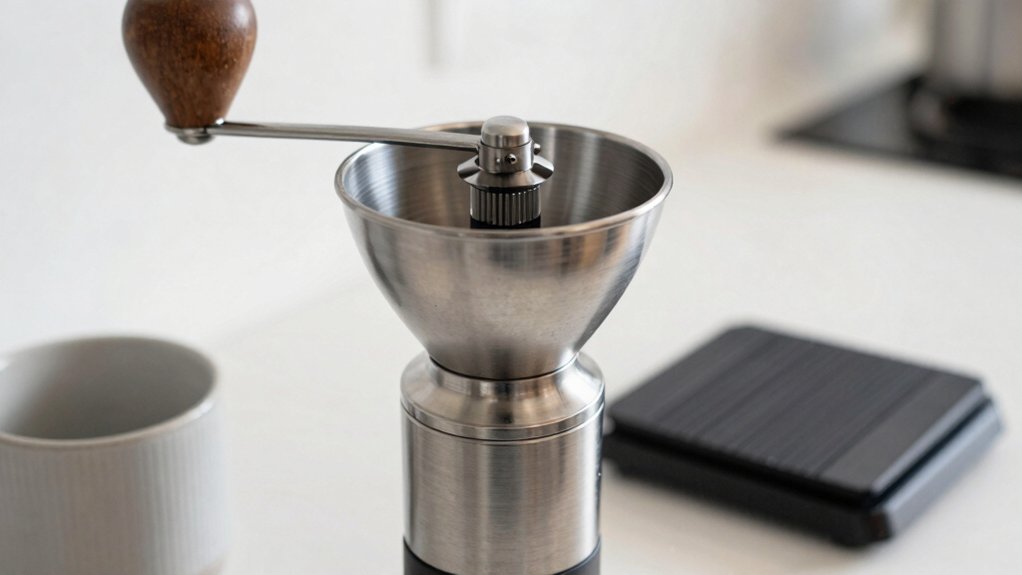
How much quieter could your morning routine be with a conical burr grinder? You’ll notice lower noise levels because the motor spins at a reduced RPM and gravity assists the feed, so the grinder hums rather than roars.
The design also keeps the unit cooler, preserving delicate flavors while minimizing heat‑induced vibration.
For home‑barista comfort, the smoother grind feel and consistent audible output let you focus on timing, not on a rattling machine.
Lower retention means fewer grounds cling to the burrs, so each brew starts fresh, and the ceramic or metal conical burrs give reliable performance without the clatter of flat‑burr rivals.
Is the Up‑Front Cost Worth the Long‑Term Savings?
The quieter mornings you just read about also mean you’re spending less on maintenance and parts over the years, which makes the lower upfront price of a conical burr grinder a compelling start. You’ll notice the upfront cost is modest, yet the long‑term savings stack up when the cooler, quieter operation reduces wear. Still, you may spend extra time dialing in, because conical burrs sometimes produce bimodal grind distributions. We’s the trade‑off: you get an affordable entry point, but you’ll need patience for consistent espresso.
- Lower purchase price
- Reduced maintenance fees
- Cooler operation prolongs burr life
- Potential extra tuning time
Choosing the Right Conical Burr Grinder for Single‑Dose, Titan‑Level Espresso
Ever wondered which conical burr grinder will deliver the precision you need for single‑dose, titan‑level espresso? Start by checking the RPM range; lower speeds keep the beans cooler, preserving grind consistency. Look for models with gravity‑assisted feed, because they reduce heat buildup and let you fine‑tune the dose without overheating. A sturdy burr housing and adjustable grind‑size dial are essential for repeatable single‑dose shots. Compare price points—many home‑grade units offer solid conical burrs at a fraction of flat‑burr costs, giving you approachable precision without breaking the bank. Finally, read user reviews for grind‑size stability; even subtle variability can affect titan‑level espresso, so prioritize grinders known for tight grind consistency.
Practical Tips to Extend the Life of Your Conical Burr Grinder
Even if you grind daily, a few simple habits can keep your conical burr grinder humming for years. Start with regular maintenance and cleaning: brush out coffee oils and fines after each session to protect grind consistency. Next, avoid aggressive high‑RPM bursts; prolonged heat speeds up burr wear and ruins particle size. Keep an eye on retention—empty the hopper and grind chamber often so stale grounds don’t linger. Finally, check burr alignment and schedule professional servicing or burr replacement per the manufacturer’s timeline.
- Clean burrs and chamber daily.
- Grind at moderate speed, short bursts.
- Empty retained grounds weekly.
- Verify concentric burrs and replace when worn.
These steps preserve your conical burr grinders’ performance and extend their lifespan.
Frequently Asked Questions
Are Conical Burr Grinders Better?
Yes, you’ll find conical burr grinders better for home use because they run quieter, stay cooler, and are easier to calibrate, giving you consistent espresso with a richer, smoother texture.
What Do Coffee Shops Use Flat or Conical Burr Grinders?
You’ll find most coffee shops use flat burr grinders for espresso precision, while many favor conical burrs for drip and pour‑over consistency, because they’re quieter, cooler, and easier to maintain under high‑volume demand.
Do Conical Grinders Make Thicker Rdpresso?
Yes, conical grinders can give you thicker espresso because they often produce a broader particle range and more fines, which enhance body and mouthfeel, especially when you dial in the grind properly.
Why Is Costco Getting Rid of Its Coffee Grinders?
You’re seeing Costco drop its grinders because they’re cutting low‑margin, high‑maintenance items; supplier contracts ended, and the retailer prefers focusing on higher‑turnover, proprietary coffee accessories that boost overall sales.
In Summary
You’ll find that a conical burr grinder delivers the consistency, flavor control, and quieter operation you need for top‑tier espresso without breaking the bank. Its low‑speed design keeps beans cooler, preserving aromatics, while the particle‑size distribution it creates extracts the best taste. With easy cleaning and durable parts, the upfront cost pays off in long‑term savings and superior shots—making it the smart choice for any serious home barista.


