

When you store beans in light, heat, moisture, or oxygen, those elements trigger oxidation and chemical decay that quickly dull your aroma, sweetness, and complexity. Light and UV accelerate photo‑oxidation, heat speeds volatile‑oil breakdown, moisture causes clumping and mold, and oxygen steadily degrades flavor compounds. Even opening the bag repeatedly lets fresh air in, shrinking the peak‑flavor window. Using airtight, opaque containers in a cool, stable spot and portioning beans will keep your brew richer longer, and the next sections reveal exactly how to perfect your storage setup.
Why Coffee Beans Lose Flavor Fast When Stored Poorly
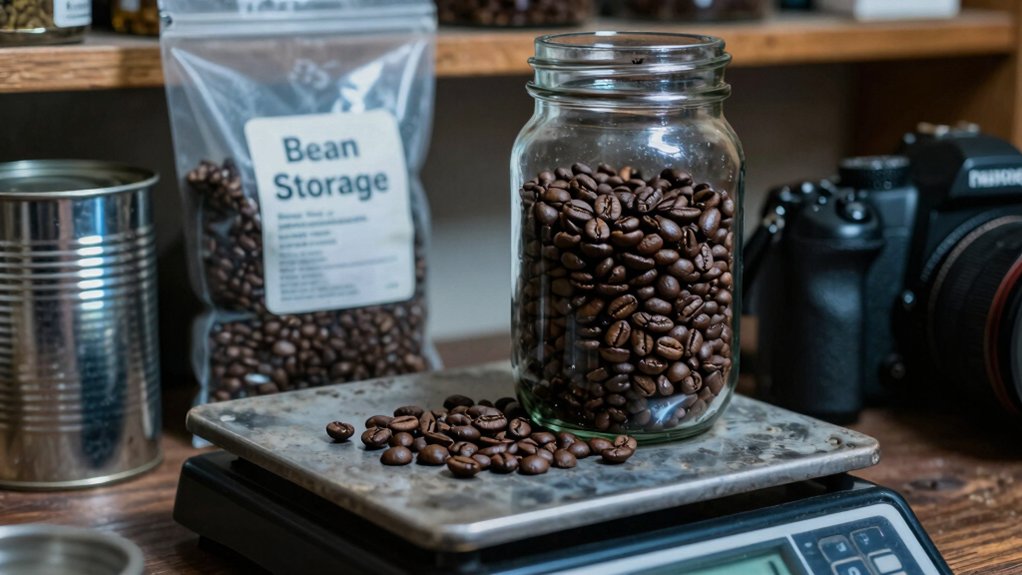
Why do your coffee beans lose flavor so quickly when you store them poorly? After roasting, they undergo CO₂ degassing, but oxygen ingress soon follows if you use inadequate storage containers. Even a brief exposure to light, heat, or moisture accelerates oxidation, dulling aroma and flattening sweetness. When you open a non‑airtight container repeatedly, fresh oxygen rushes in, cutting the window of peak flavor to just a few weeks. Keeping beans in airtight containers with UV protection helps minimize oxidation, and selecting a container with a one-way CO₂ valve can further preserve freshness, especially for larger batches like those in 2.2 lb canisters UV protection. Moisture invites clumping and mold, while heat speeds up chemical breakdown, leaving you with a flat, bitter cup. To preserve the nuanced oils and bright acidity, you must keep beans in airtight containers, shielded from light, and stored in a cool, dry place. Anything less invites rapid staling and a noticeable drop in mouthfeel.
Avoid the Top 5 Mistakes When Storing Coffee Beans
Ever wonder which simple habits are silently ruining your coffee’s flavor? You’re likely letting oxygen and light exposure creep in, so start using airtight containers that block light. Don’t store beans near heat sources; the extra warmth accelerates oxidation and staling. Skip the habit of opening the same bag repeatedly—each opening adds fresh oxygen and moisture, eroding freshness. If you freeze, seal beans in airtight, moisture‑proof bags and never refreeze after thawing; otherwise you’ll invite condensation and flavor loss. Finally, practice portioning: split the roast into smaller, opaque containers and consume within 2–4 weeks of the roasted date. These five tweaks preserve aroma, keep oxidation at bay, and let every cup taste its best. Oxygen exposure can accelerate staling, so controlling it is crucial for peak flavor.
Create the Perfect Spot for Your Beans – Containers, Location, and Temperature
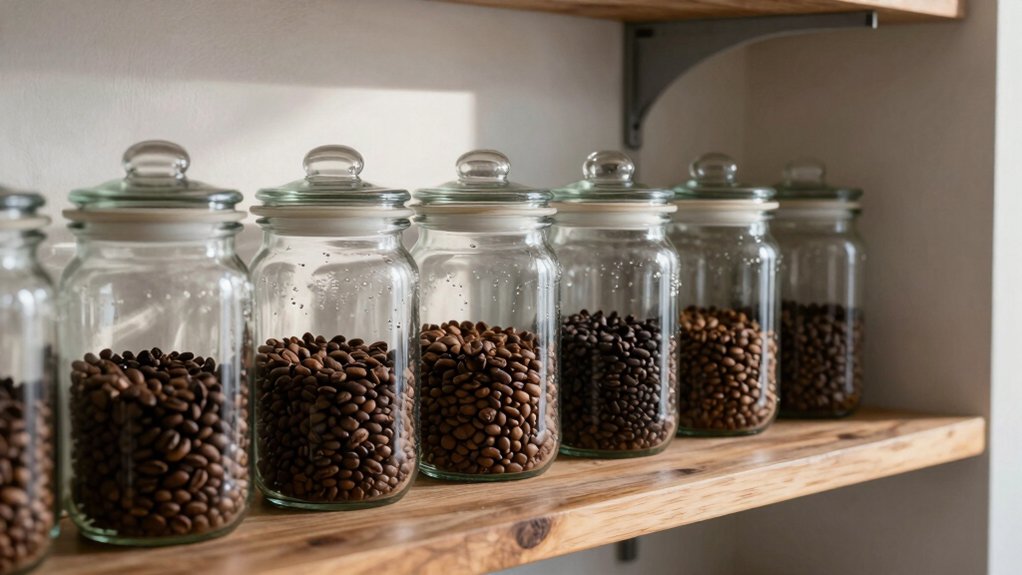
How can you keep coffee beans at their peak flavor? Choose airtight containers that seal out oxygen and block light. Glass jars work if you pick amber or other opaque storage; they keep beans in darkness while still being airtight. Place the jars in a cool storage spot—aim for 60–70 °F and keep them away from ovens, radiators, or sunny windows. Temperature control matters more than fancy gadgets; a pantry or cupboard with stable temperature does the trick.
Portion beans into smaller batches, so each container opens only once, limiting oxygen ingress. Keep the storage location consistent, and avoid moving jars around, which can expose them to temperature swings. This simple setup preserves aroma and flavor until you brew.
How Light, Heat, Moisture & Oxygen Attack Coffee Aroma While Storing Beans
You’ll notice that even a brief flash of light kick‑starts oxidation, stripping away the coffee’s bright aromas.
Heat accelerates the chemical decay, turning fresh notes into dull, stale flavors in a matter of weeks.
Moisture invites clumping and mold, speeding staling and eroding the bean’s overall quality.
Additionally, exposure to air promotes gradual degradation of aroma compounds, diminishing complexity over time through oxygen exposure.
Light Accelerates Oxidation
Why does a simple kitchen window ruin your coffee’s aroma? Light exposure, especially UV light, triggers oxidation that shreds volatile oils and acids, causing rapid aroma loss and flavor degradation. When sunlight streams onto your jar, photons break down the same compounds that give fresher beans their punch, accelerating staling far beyond what oxygen alone does. Even a bright pantry can hasten this process; the more light that reaches the beans, the faster oxidation proceeds, and the quicker the coffee turns flat. Opaque containers help shield beans from light and further preserve aroma by reducing exposure to photochemical reactions.
Heat Speeds Chemical Decay
Ever notice how a coffee bean left near a stovetop loses its punch in a day? Heat spikes the chemical reactions that drive staling, so the aroma and flavor of roasted beans evaporate faster. When temperature rises, oxidation accelerates: oxygen molecules break down volatile compounds, causing degradation that dulls sweetness and richness. Even a modest rise in kitchen heat can trigger the same loss of freshness you see after weeks of storage. You’ll taste flat, muted notes as the once‑vibrant aroma fades, and off‑flavors emerge from the heated oils. To keep your brew lively, store beans in a cool, dark spot, seal out oxygen, and avoid any heat source that could jump‑start the decay process. Proper storage also hinges on using airtight containers and minimizing exposure to light, which can further accelerate aromatic loss through photooxidation oxygen exposure.
Moisture Promotes Staling
Moisture is the silent saboteur that accelerates coffee staling, turning vibrant beans into dull, flat particles. When humidity sees, water droplets settle on the surface, causing clumping that blocks even extraction and speeds aroma loss. Even in airtight storage containers, condensation can form during temperature swings, delivering moisture that leaches water‑soluble flavor compounds and triggers staling. The damp environment fuels mold growth, which further degrades flavor and introduces off‑notes. Foam
Practical Tips for Storing Coffee Beans Until Grinding
How can you keep your coffee beans fresh until you’re ready to grind? Start with an airtight, opaque container that blocks light and oxygen. Keep the beans whole, not pre‑ground, to limit surface area and slow staling. Store them at a steady temperature of 60‑70 °F, away from ovens, radiators, or sunlight, which reduces oxidation and light exposure. Portion the beans into small batches, opening the container only when you need a portion, and keep the rest sealed to curb oxygen exposure. Check the roasting date and aim to use the beans within 2‑4 weeks for peak flavor. By controlling storage temperature, light exposure, and batch size, you extend shelf life and preserve aroma until you grind.
Quick Fixes for Extending Bean Freshness & When to Discard Stale Coffee
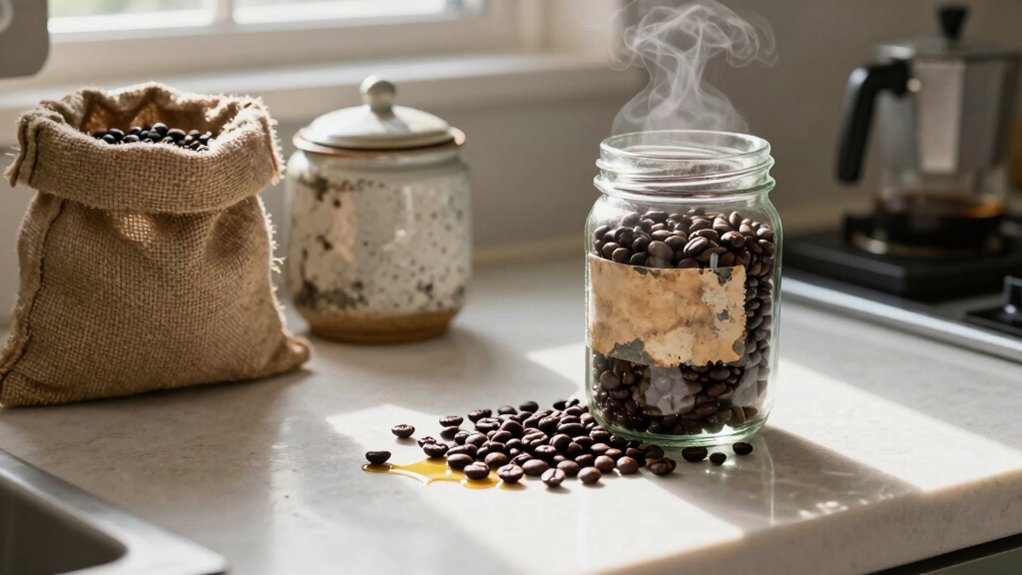
You can keep your beans lively by sealing them in an airtight container right after you open the bag. A cool, dark storage spot helps slow aroma loss and flavor degradation, especially for whole-bean coffee. Storing correctly in an airtight container can preserve essential oils and freshness longer. If the aroma turns flat or sour, it’s a clear sign the coffee has gone stale and should be tossed. Trust these quick fixes to preserve flavor and know when to discard the dead beans.
Seal Airtight Containers
When you seal beans in an airtight container, you cut off oxygen, slowing the oxidation that dulls aroma and flavor. Airtight containers limit oxygen exposure, while a degassing valve lets CO₂ escape without letting air in, so you can preserve aroma longer. Light‑proof storage blocks UV that degrades volatile compounds, and keeping beans whole reduces surface area contact with air. Use bag seals or a one‑way valve, store in a cool, dry place, and portion out small batches to prevent oxygen ingress each time you open the container. Repacking beans into smaller portions can further minimize exposure each time you open the container, especially when you’re frequently traveling with your grinder. Degassing valve ensures CO₂ release without letting air back in, which helps maintain freshness during transit.
Discard After Stale Aroma
Ever notice that a once‑vibrant cup suddenly tastes flat, bitter, or sour? That’s aroma loss in action, a sign that oxidation has taken hold. When oxygen seens the beans, the freshness window shrinks and staling accelerates. Keep beans in airtight containers, away from light exposure, and avoid repeated opening. Each time you break the seal you invite fresh oxygen, hastening aroma loss. If the beans smell dull, woody, or sour, it’s time to discard them—no amount of grinding will revive the flavor. Store in opaque, airtight jars, limit exposure to air, and you’ll extend the peak flavor period. Once the scent is gone, the coffee is past its prime.
Frequently Asked Questions
What Is the 15-15-15 Coffee Rule?
You follow the 15‑15‑15 rule by keeping beans out of light for 15 minutes, sealing them airtight for 15 seconds, and storing them at a steady temperature for no more than 15 days to preserve flavor.
What Do Doctors Say Not to Put in Your Coffee?
You should avoid adding sugar, high‑fat dairy, extra syrups, or heavy cream to your coffee, especially if you have diabetes, cholesterol issues, acid reflux, insomnia, anxiety, or are pregnant.
Where Is the Best Place to Store Coffee Beans Long Term?
You should store your beans in a cool, dark pantry or cupboard at 60‑70 °F, sealed in an airtight, opaque container, and keep humidity below 60 % to preserve flavor for months.
What Are the 4 Enemies of Coffee?
You face four enemies: oxygen, which oxidizes and dulls flavor; light, especially UV, that breaks down compounds; heat, which accelerates staling and creates off‑notes; and moisture, which causes clumping, mold, and rapid degradation.
In Summary
By now you know that beans lose their punch fast if you store them wrong. Keep them airtight, cool, and dark; avoid heat, moisture, and oxygen. Use a proper container, stash it in a pantry, and grind just before brewing. If the aroma fades or the taste turns flat, it’s time to toss the old beans and start fresh. Your coffee will thank you.


