

You’ll discover that co‑fermentation seals coffee cherries together with fruit or organic additives in an anaerobic tank for 48‑120 hours, letting microbes break down sugars and weave natural aromas straight into the bean’s matrix. Temperature, timing, and yeast selection steer the formation of acids, alcohols, and esters, creating seamless, fruit‑forward flavors that go far beyond surface‑level flavored coffees. Keep exploring to see how this technique reshapes coffee’s flavor profile.
Co‑Fermentation: Definition and Core Process
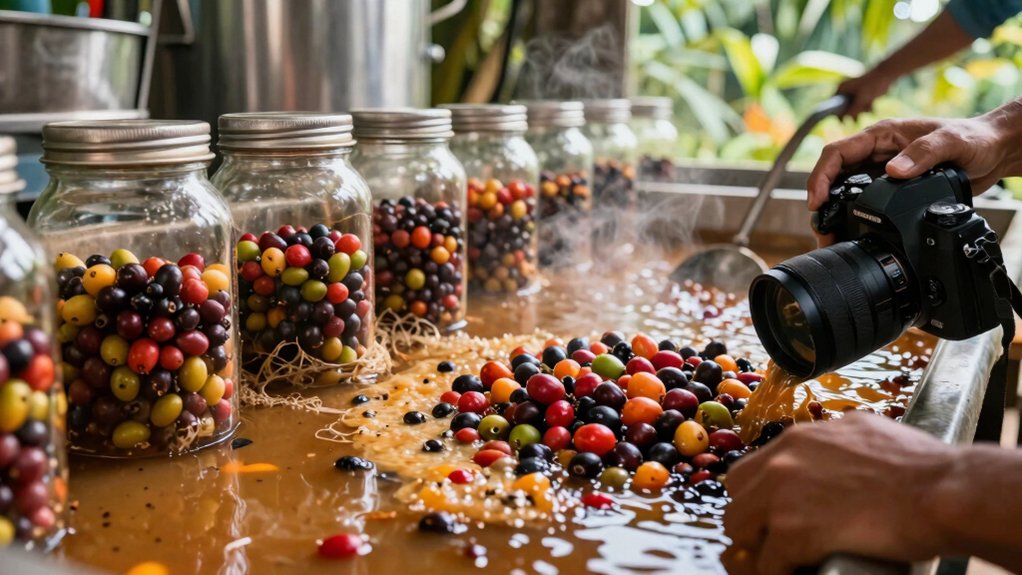
Co‑fermentation is the process of fermenting coffee cherries together with added fruits or other organic materials, letting the extra ingredients join the natural microbial activity that breaks down the fruit. You load coffee cherries, sugars, and fruit pulp into fermentation tanks, seal them for an anaerobic, controlled environment, and monitor temperature for 48‑120 hours. During post‑harvest processing, microbes convert sugars into acids and aromatic compounds, weaving fruit‑forward notes into the bean matrix. The added organic matter fuels microbial fermentation, enriching the profile with natural flavors rather than applying oils later. By managing oxygen levels, timing, and temperature, you steer the biochemical pathways that create a seamless, integrated cup, distinguishing co‑fermentation from simple infusion. Stainless steel compatibility and durability considerations from percolator design discussions can inform equipment choices used in industrial fermentation setups.
Co‑Fermentation Flavor‑Science: How Aroma Compounds Form
When you add fruit or spices to the fermentation tank, the microbes instantly start breaking down those extra sugars and volatiles, weaving new aroma molecules directly into the coffee bean matrix. In co‑fermentation, enzymes released by yeasts and bacteria convert fruit‑derived sugars into organic acids, alcohols, and esters, while anaerobic fermentation preserves delicate volatiles. Microbial monitoring lets you tweak pH, temperature, and fruit additives to steer aroma compounds toward bright, fruity notes or creamy, sweet tones. The result is a seamless integration of fruit chemistry into the coffee’s cellular structure, producing a flavor profile that feels both natural and engineered. Critical control methods help ensure consistent outcomes across batches, aligning with industry practices that emphasize data tracking and process stability.
Co‑Fermentation vs. Flavored Coffee: Key Differences

What sets co‑fermentation apart from flavored coffee is where the flavor originates: during the post‑harvest fermentation of the whole cherry, natural microbes weave fruit‑derived sugars, acids, and esters into the bean’s matrix, whereas flavored coffee merely coats roasted beans with synthetic oils or extracts after the fact. In co‑fermentation, you introduce fruit inputs—watermelon, strawberry, panela, or herbs—into anaerobic, sealed tanks, letting microbial activity drive aroma development that becomes part of the bean’s structure. Flavored coffee skips that integration; it adds aroma oils after coffee processing, masking intrinsic notes. The fermentation’s controlled temperature, duration, and yeast selection shape a nuanced profile, while flavored coffee offers a quick, surface‑level boost without true biochemical transformation. Flavor integration can also influence how consistently these notes are expressed across batches.
Frequently Asked Questions
How Does Co‑Fermentation Affect Coffee’s Caffeine Content?
You’ll find co‑fermentation usually leaves caffeine unchanged, but microbial activity can slightly boost or reduce it depending on strains used; overall, the effect is modest, rarely exceeding a few percent variation.
Can Co‑Fermentation Be Applied to Washed or Natural Processed Beans?
Yes, you can apply co‑fermentation to both washed and natural beans; just adjust the microbial mix and timing to match each processing method’s moisture level and sugar availability, enhancing flavor complexity.
What Equipment Is Needed for Large‑Scale Co‑Fermentation?
You’ll need stainless‑steel fermenters with temperature controls, paddles or agitators, a pH‑monitoring system, filtration plates, a drying tunnel, and an automated cleaning loop to handle the volume efficiently.
Are There Any Food‑Safety Regulations Specific to Co‑Fermented Coffee?
You must comply with FDA food‑safety standards, HACCP plans, and any local coffee‑product regulations; ensure microbial limits, allergen labeling, and traceability are documented, validated, and regularly audited throughout co‑fermentation.
How Does Co‑Fermentation Impact the Coffee’s Shelf Life?
You’ll find that co‑fermentation extends coffee’s shelf life by slowing oxidation and microbial growth, thanks to the acids and protective metabolites it produces, which keep flavor and freshness stable longer.
In Summary
You’ve seen how co‑fermentation transforms coffee fruit into a richer, more complex brew, unsealing aroma compounds that traditional methods miss. By letting natural microbes work together, you get nuanced flavors without artificial additives, setting co‑fermented beans apart from flavored coffee. This technique not only elevates taste but also promotes sustainability, making it a compelling choice for forward‑thinking roasters and coffee lovers alike.


