
You set up a double‑blind cupping session where cups are labeled only on the bottom, so no brand, logo, or price cues influence you. You use a standardized SCA or CQI/Q Grader form, scoring ten sensory parameters on a 100‑point scale, and you follow strict temperature (≈93 °C), weighing (≈8 g per 150 ml), and infusion timing. Calibration with blind reference beans ensures inter‑panel consistency, and you document everything on shared sheets for stakeholder transparency. Keep going to discover how these scores drive actionable quality decisions.
How a Professional Blind‑Cupping Standard Is Structured
How is a professional blind‑cupping standard actually organized? You begin with a double‑blind setup: tasters receive labeled cups they can’t link to any coffee identity. The cupping form follows a standardized protocol, usually the SCA or CQI/Q Grader template, scoring ten sensory parameters on a 100‑point scale. You assess aroma, flavor, acidity, body, uniformity, and more, applying deductions for defects or taints and penalties for negative attributes like contaminated cups. Calibration sessions use blind reference samples to align descriptors across evaluators. Inter‑calibration ensures consistency, while the formal tasting sequence—aroma first, then flavor, acidity, etc.—keeps the process uniform for producers, importers, and roasters alike. This structure removes bias and guarantees reliable, comparable results. A standardized framework supports cross‑brand comparability and methodical training calibration protocols.
Why Blind Cupping Beats Brand Bias Every Time
The double‑blind framework you just saw doesn’t just standardize the tasting process—it eliminates the most insidious source of distortion: brand bias. When you practice blind cupping, you strip away logos, price tags, and roaster reputations, forcing your palate to rely solely on flavor, aroma, and texture. This pure sensory evaluation reveals the coffee’s true merit, untainted by preconceived notions. The approach also aligns with best practices in sensory data tracking, where consistent measurement supports reproducible results extraction/tds focus and helps compare coffees across different batches without external influence. Because neither you nor the host knows each cup’s identity, ego and peer pressure evaporate, leaving only the chemical and physical cues that define quality.
Over time, blind cupping sharpens your perception, making you less vulnerable to bias and more confident in judging coffee on its intrinsic characteristics rather than its label.
Core Elements of a Blind‑Cupping Form
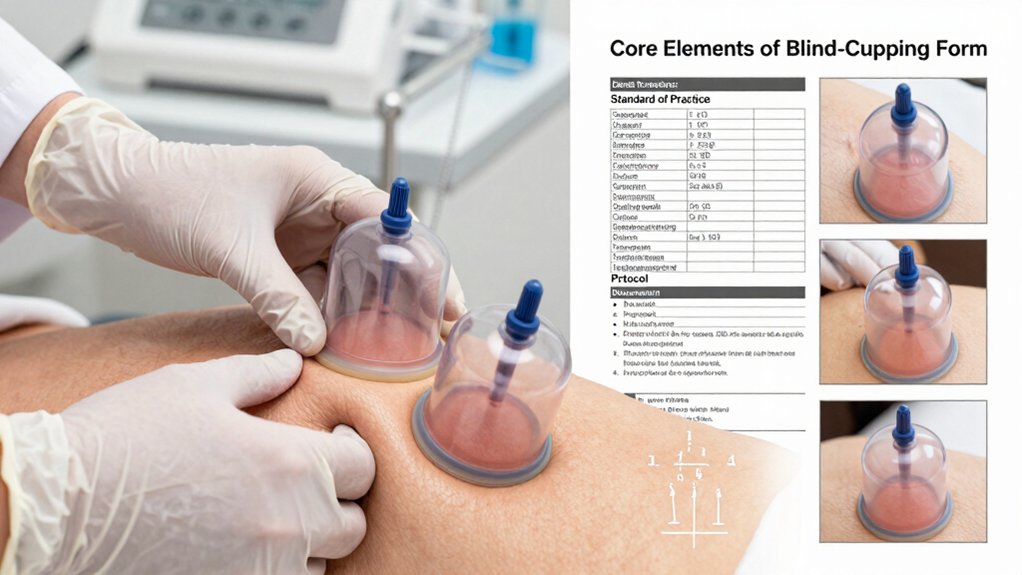
Start by laying out a concise, structured sheet that captures each sensory attribute—fragrance/aroma, flavor, aftertaste, acidity, body, balance, uniformity, clean cup, sweetness, and overall impression—alongside a column for defect penalties. In a blind cupping session you’ll fill this cupping form while keeping the sample identity hidden, ensuring each score reflects pure perception. Use the scoring framework to assign 0‑10 points per attribute, then subtract penalty points for off‑flavors, foreign objects, or brew inconsistencies. Record notes in the margin for unusual nuances, but keep them separate from the numeric column. This layout standardizes data, lets you compare roasters objectively, and supports calibration across the team.
Set Up a Double‑Blind Cupping Session in Your Roastery
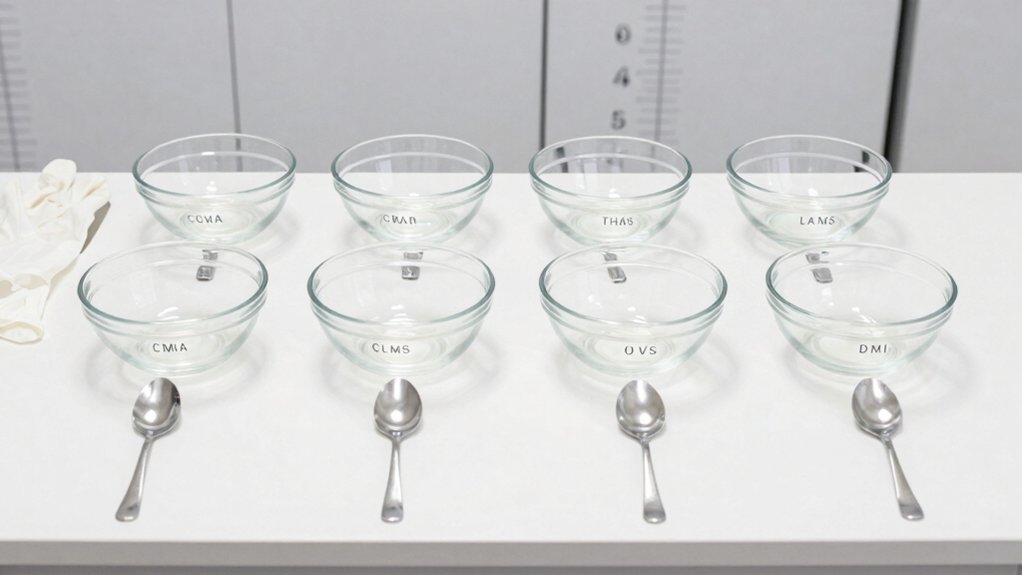
After you’ve drafted the sensory‑attribute sheet, you can move straight into setting up a double‑blind cupping in your roastery. Gather at least two coffees roasted by different roasters and ask a colleague to bring the samples, keeping the origins hidden from everyone. Label the bottoms of identical glass or ceramic vessels, then assign matching cups so the tasters can’t see which coffee is which. Prepare a clipboard, spoons, spittoon, and filtered water. Weigh each batch consistently—about 8 g per 150 ml of water at ~93 °C—and brew for 3–5 minutes. Follow a standardized cupping setup that covers aroma, flavor, acidity, body, and finish. Record each parameter during the sensory evaluation, ensuring objective, unbiased scores. Double‑Blind cupping helps reduce bias and strengthen the reliability of your judgments across all tasters.
Choose and Prepare Samples for Objective Comparison

Where do you begin when selecting coffees for a blind cupping? First, pick at least two distinct beans that showcase contrasting origins or roast levels. Use identical cupping vessels—glass or ceramic bowls 76–89 mm across and 207–266 ml capacity—to eliminate visual cues. Label each cup only on the bottom, then map the numbers to your score sheets after the blind tasting. Keep the water temperature steady at ~93 °C and weigh 8.25 g of coffee per 150 ml of water. After a 3‑5‑minute infusion, you’ll evaluate aroma, flavor, and the ten sensory parameters on a 100‑point scale. Consistency in samples preparation ensures objective comparison and reduces bias.
| Aroma | Flavor | Aftertaste |
|---|---|---|
| Bright | Chocolate | Clean |
| Earthy | Citrus | Sweet |
| Floral | Nutty | Balanced |
Weigh, Grind, and Heat Water: Technical Checklist
You’ll start by weighing each sample to the exact gram, keeping the coffee‑to‑water ratio consistent across the board. Next, you’ll grind the beans to a uniform particle size so every cup extracts the same way. Finally, you’ll heat the water to the target temperature, usually around 93 °C, and maintain it throughout the infusion. Additionally, consider selecting the filter type that aligns with your preferred flavor profile to control bitterness and oil extraction for a cleaner or fuller cup filter type and maintain consistent grind size to ensure uniform extraction across brews.
Weighing Consistency
Weighing consistency starts with measuring the beans—using a calibrated scale to hit the target 8.25 g per 150 ml of water—so each cupping sample begins with the same coffee mass. You then record the weight, double‑check the reading, and wipe the scale between batches to avoid residue. This simple step locks in weighing consistency, preventing a 10 cup from skewing flavor perception. Keep the scale on a stable surface, let it equilibrate to room temperature, and use the same container for every dose. When you replicate these actions across all samples, the cupping process remains objective, and any differences you taste truly reflect roast or origin, not mass variation. Hanging/Storage Design options from barista towel guidance underscore the importance of accessible, organized setup at the machine to maintain consistent workflows.
Grind Size Uniformity
A consistent grind size is the backbone of reproducible extraction, so you should set the grinder to a standardized grind that matches the roast level and batch size before you even touch the beans. Weigh the beans to the gram, then load them into a calibrated grinder that you’ve dialed in for grind size consistency. As the burrs cut, monitor the particle size distribution; a tight distribution reduces channeling and ensures each sample extracts at the same rate. Transfer the grounds immediately to cupping vessels, using a single, clean scoop to avoid cross‑contamination. Keep the grinder clean between batches, and record the setting for every session. This disciplined approach guarantees that the only variable left is the coffee itself, not the grind. Double-filter designs with micro-filters can further enhance mouthfeel by reducing sediment during extraction.
Water Temperature Accuracy
How can you guarantee that every cupping sample extracts under identical thermal conditions? Start by heating water to exactly 93 °C (199 °F) and use a calibrated thermometer to verify the temperature before each pour. Pre‑warm cupping vessels so the water doesn’t lose heat upon contact, and always use freshly boiled, reboiled water to avoid temperature drift. Measure 150 ml of water for each 8.25 g coffee dose, then pour immediately to keep the water temperature consistent across all cupping infusions. Record the temperature reading for each batch; any deviation signals a need to adjust your heating source. By controlling water temperature rigorously, you ensure consistency, reduces sensory variability, and produce reliable, comparable cupping results. USB-C charging can help ensure your scale stays powered between sessions, supporting precise timing and measurement during cupping tastings.
Score Aroma, Flavor, Acidity, Body, and Uniformity (SCA)
You’ll start by ensuring the aroma against the SCA’s standard evaluation sheet, noting intensity, clarity, and any defects.
Then you’ll apply the uniformity scoring guidelines, checking each cup for consistent aroma, flavor, acidity, and body, and subtracting points for any outliers.
This systematic approach assessing your total score reflects both sensory quality and cup‑to‑cup consistency.
Standard Aroma Evaluation
What makes a cupping session truly reliable is the precise scoring of Aroma, Flavor, Acidity, Body, and Uniformity on the 100‑point SCA scale. In a standard Aroma evaluation you first note the dry fragrance, then sniff the wet cup after infusion, recording any floral, fruity, or earthy cues. You compare those notes against the six core attributes, assigning a score that reflects intensity, complexity, and balance. This step anchors the overall cupping evaluation, ensuring each cup’s aromatic profile is quantified before you move to flavor or acidity.
- Capture dry fragrance before brew.
- Record wet aroma immediately after pour.
- Match notes to SCA attribute categories.
- Assign a numeric value that reflects intensity and nuance.
Uniformity Scoring Guidelines
Uniformity ties the whole cupping score together, ensuring that each cup in a sample delivers the same flavor, aroma, acidity, and body. When you assess Uniformity, you first confirm the five SCA parameters—Aroma, Flavor, Acidity, Body, and Uniformity—on the 100‑point scale. After you finish the primary tasting, you revisit each cup for consistency. If a cup deviates, you deduct two points per affected cup. Use the calibrated cupping reference sheets to keep your judgments objective and minimize personal bias. Record any inconsistency immediately, noting which attribute varies. The final Uniformity score then integrates with the other four attributes, shaping the overall cupping result. Follow these guidelines to ensure precise, repeatable scoring.
Integrate the Coffee Value Assessment (CVA) for Descriptors
Ever wondered how to translate sensory nuance into actionable insights? By integrating the Coffee Value Assessment (CVA) into your blind cupping standards, you shift focus from a single numeric score to rich CVA descriptors that capture aroma, flavor, body, and acidity. This approach deepens sensory evaluation, letting you convey quality trends without the constraint of a percentage. It also aligns purchasing decisions with market demand, giving producers, importers, and roasters a common language.
- Use CVA descriptors to replace isolated scores.
- Anchor each descriptor to a shared sensory vocabulary.
- Apply the same terms across sites for cross‑site consistency.
- Translate descriptor trends into actionable product direction.
Calibrate Your Palate to Industry Benchmarks
How can you ensure your palate matches the industry’s gold standard? Start with regular blind cupping sessions that strip away branding and price cues. Use reference beans calibrated by the CQI Q Grader program, then score each cup on the SCAA ten‑parameter form. Track your scores against the benchmark range (80‑100) and note any deviation. Repeat the process weekly, and once a month compare results with a peer panel at a Premier Training Campus like Kauai Coffee Lab. Consistent practice sharpens sensory acuity, reduces personal bias, and aligns your palate with the professional consensus.
| Step | Goal |
|---|---|
| 1. Blind cupping | Eliminate external influence |
| 2. Calibration | Apply CQI Q Grader standards |
| 3. Benchmarking | Reach 80‑100 SCAA points |
Run Inter‑Calibration Checks Across Multiple Panels
You’ll start by selecting a handful of standardized samples that represent the full flavor spectrum you want to benchmark. Then you’ll apply the same scoring protocol across every panel, using shared tasting sheets and reference guidelines. This consistency lets you spot drift quickly, align descriptors, and keep inter‑panel reliability high.
Standardized Sample Selection
Can you guarantee your panels are speaking the same sensory language? You must anchor every session with blind cupping using standardized samples that mirror the product’s range. By doing so, you turn subjective impressions into comparable data and keep panel calibration on track. Consistency starts with the sample itself: select beans that represent the full spectrum of roast, origin, and processing, then freeze‑store them under identical conditions. Run inter‑calibration checks regularly, and let statistical analysis flag drifts before they affect results.
- Use the same coffee lot for all panels
- Match grind size, dose, and water temperature precisely
- Rotate blind cupping sessions to reduce bias
- Record scores on a unified 100‑point or CVA scale These steps ensure every assessor evaluates the same sensory cues, making cross‑panel comparisons reliable and meaningful.
Consistent Scoring Protocols
Anchoring each session with identical blind‑cupping samples sets the stage for a robust scoring system, and the next step is to lock in consistent protocols across all panels. You’ll use the SCA cupping form and a 100‑point scale to rate ten sensory parameters, applying the same negative deductions for defects and taints. Run inter‑calibration checks regularly: bring reference samples to each panel, conduct blind cupping, and compare scores side‑by‑side. Record every rating on standardized scoring sheets, then analyze the data for variance. Certification programs such as Q Graders reinforce shared cupping protocols and language, ensuring every evaluator aligns with the benchmark. By repeating these calibration exercises, you maintain reliability, minimize individual bias, and keep all panels speaking the same sensory language.
Turn Raw Scores Into Actionable Quality Decisions
How do you turn raw cupping scores into concrete quality actions? You first align every cup with the same rubric, then aggregate the category totals—flavour, acidity, body, balance, aftertaste—while subtracting any taints. This standardized approach lets you compare batches objectively and decide whether to purchase, adjust roast profiles, or flag quality issues. By calibrating descriptors and using inter‑calibration data, you convert subjective impressions into measurable, actionable decisions.
- Use a unified scoring sheet (e.g., SCA) for every session.
- Aggregate category scores and apply fault deductions consistently.
- Translate the overall cuppers points into purchasing thresholds.
- Feed the results into roast‑profile adjustments and QC alerts.
Document & Share Blind‑Cupping Results With Stakeholders
Documenting blind‑cupping results starts with a standardized form that captures every category score, deduction, and overall impression on a single sheet. You fill out cupping forms in real time, noting aroma, flavor, acidity, body, uniformity, and any defects, then total the 100‑point score. After the session, you scan or export the sheet to a secure folder, attach a brief summary, and send it to all stakeholders. Use a concise email template that highlights key findings, compares them to reference benchmarks, and flags any outliers. Include a link to the raw data so analysts can run deeper queries if needed. This streamlined stakeholders ensures every stakeholder receives accurate, comparable blind cupping results without delay.
Continuous Improvement: Training, Re‑Testing, and Updating Standards
After you’ve shared the cupping sheet and raw data, the next step is to keep your sensory team sharp. You’ll schedule regular training sessions that blend theory with blind cupping drills, then run calibration exercises using reference samples. Between cycles, conduct re‑testing to spot drift and confirm that each assessor still aligns with the benchmark. When new tools like CVA or SCA forms arrive, trigger a standards update to embed fresh descriptors and reduce regional bias. This loop of practice, feedback, and protocol revision sustains reliability across sites.
Regular calibration, blind drills, and updates ensure sensory teams stay sharp and aligned across sites.
- Run monthly calibration workshops.
- Pair each assessor with a mentor for live feedback.
- Use blind re‑testing to validate skill retention.
- Initiate a standards update whenever a new metric is introduced.
Frequently Asked Questions
What Is Blind Cupping?
You blind cup by tasting coffee samples without knowing their origins, using labeled vessels and a standardized protocol to evaluate aroma, flavor, acidity, body, and uniformity, keeping notes separate from identities.
What Are the Guidelines for Cupping?
You follow precise ratios, weigh 8.25 g beans, use 150 ml water at 93 °C, steep 3–5 minutes, then assess aroma, flavor, acidity, body, uniformity, and overall impression, recording scores objectively.
What Are the SCA Standards for Cupping?
You follow the SCA cupping standards by scoring ten sensory attributes on a 100‑point scale, deducting penalties for defects, keeping the environment controlled, and requiring at least 80 points for Specialty grade.
What Is the Cupping Rating?
You rate cupping on a 0‑100 scale, summing ten sensory scores; 80 plus marks Specialty, 70‑79 is Good, 60‑69 is Acceptable, and below 60 is Off‑grade.
In Summary
By adopting a rigorous blind‑cupping protocol you’ll cut brand bias, boost consistency, and make data‑driven decisions that elevate every roast. Keep the process double‑blind, calibrate your panels, and translate scores into clear action. Share the findings across the team, revisit standards regularly, and train new tasters. With continuous improvement, your roastery will consistently deliver coffee that meets the highest quality benchmarks.


