

Start with green beans and keep a moisture meter handy, adjusting humidity daily so the beans absorb barrel flavors evenly. Turn the barrel every 12‑24 hours to prevent localized pockets and monitor oxygen levels to balance oxidation without over‑exposing the beans. Choose a barrel type and char level that match your target notes—bourbon for vanilla, rye for spice—and keep it clean. Rotate, log temperature and humidity, and watch for off‑notes like mold or metallic tones. Follow these steps, and you’ll discover even more details on perfecting your barrel‑aged coffee.
Optimize Moisture & Oxygen for Barrel‑Aged Coffee

Optimizing moisture and oxygen is the foundation of a successful barrel‑aged coffee. You start with green beans because they absorb aromas better than roasted beans, so you’ll need strict moisture management. Use moisture meters to monitor absorption daily and adjust the aging environment’s temperature and humidity to keep levels steady. Turn the barrel every few days; a consistent turning frequency prevents localized pockets that could skew flavor. Keep oxygen levels in check—too much accelerates oxidation, too little stalls development. Document temperature, humidity, and turning intervals for each batch so you can replicate results. After the desired period, roast the beans to remove residual moisture and alcohol, aligning the final moisture content with your intended roast profile. IP67 Waterproof
Choose the Right Barrel and Char Level for Your Coffee
Because the barrel’s wood and char level dictate the coffee’s final flavor profile, you should match the barrel type and toast to the bean origin and your target notes. Pick a bourbon barrel for vanilla‑caramel depth, a wine barrel for bright fruit, or a rye barrel for spice. Choose a light char if you want subtle oak and tannin; a medium or heavy char adds smoky, spicy undertones. Smaller barrels and a warm, humid aging environment speed up flavor transfer, but keep an eye on timing to preserve freshness. Cleanliness matters—use a barrel with a known history and no off‑flavors, and ensure the char level aligns with the desired profile. This balance of barrel type, char level, and environment yields a consistent, vibrant cup. Additionally, selecting barrels with documented flavor history helps anticipate how the coffee will respond during aging barrel history documentation.
Monitor Bean Humidity and Temperature While Aging
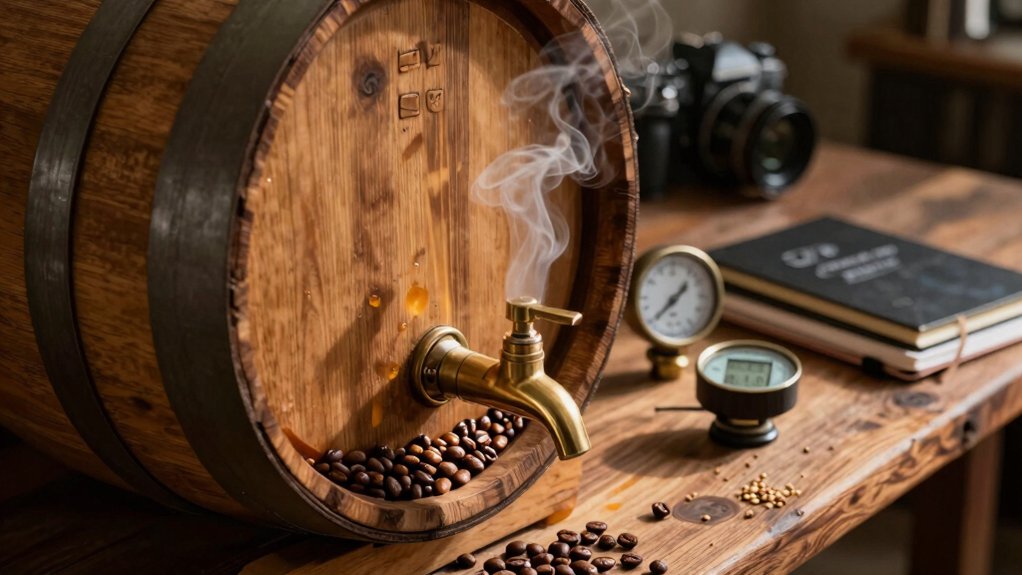
Ever wondered how a few degrees or a splash of moisture can swing your coffee’s flavor? You’ll need tight moisture management while the beans sit in the aging barrel. Track humidity and temperature daily; a rise of just 0.5% or a 2 °F shift can change body and sweetness. Use moisture meters to log each reading, then compare against your target to keep consistency across batches. Rotate the barrel every 12‑24 hours to spread moisture evenly and avoid hotspots that skew humidity data.
- Measure: Record humidity and temperature with calibrated moisture meters at set intervals.
- Adjust: Modify barrel placement or ventilation if readings drift from target levels.
- Rotate: Turn the barrel regularly to ensure uniform moisture distribution and maintain consistency.
Newly added concept: Extraction yield helps you quantify how much of the bean’s mass is extracted during aging, providing a more precise target to aim for as you monitor humidity and temperature.
Taste Tests: Spotting Off‑Notes in Barrel‑Aged Coffee
Keeping humidity and temperature in check is only half the battle; now you need to train your palate to catch the off‑notes that signal a barrel‑aged coffee has gone off‑track. When you sip, pause for any moldy, musty, or damp‑cardboard aromas—these usually stem from poor moisture control or insufficient air exchange. A sharp, chemical solvent scent often points to inadequate cleaning of the barrel. Listen for sudden shifts from vanilla to chalky or metallic tones; they reveal inconsistency in batch handling or uneven roasting. If you detect a faint gym‑sock funk, the barrel likely retained residues from previous contents. By systematically noting these cues, you’ll separate truly nuanced barrel‑aged flavors from flaws before they ruin the cup.
Finish With a Precise Roast to Lock in Barrel‑Derived Flavors

Ready to lock the barrel’s character into every sip? After the fermentation and aging process, you’ll need a precise roast that captures the barrel-derived flavors without masking the bean’s origin. Choose a medium‑to‑medium‑dark profile that balances wood, spirit, and native notes. Roast on demand, then stamp handwritten roast date notes on each bag for freshness control. This timing preserves the subtle vanilla, caramel, and cocoa hints the barrel imparted, and it eliminates residual alcohol that could dull the palate. Roast date tracking helps ensure consistency across batches.
- Match roast level to each barrel‑aged coffee variant (e.g., Sumatra medium‑dark, Rwanda bourbon, Ethiopian rye).
- Roast just before packaging to lock in barrel flavors and maintain freshness.
- Record roast date notes for each batch to track aging process impact and ensure consistency.
Frequently Asked Questions
Can I Use a New Barrel Without Previous Spirits?
Yes, you can use a brand‑new barrel; just clean it thoroughly, rinse well, and let it dry. The fresh wood will impart subtle flavors, and you won’t inherit any previous spirit residues.
How Long Should Beans Rest After Barrel Removal?
You should let the beans rest for at least 24 hours after barrel removal, preferably 48 hours, to let flavors settle and excess moisture evaporate before grinding or brewing.
Do Different Coffee Origins React Differently to Barrel Aging?
You’ll notice each origin reacts uniquely; Ethiopian beans brighten, Central American ones deepen, and African varieties develop richer fruit notes. Adjust barrel type and fermentation time to match each origin’s flavor profile.
Is It Safe to Add Fruit Peels During Fermentation?
Yes, you can add fruit peels, but keep them clean, use small amounts, monitor pH, and watch for mold. The peels boost flavor, yet excess sugar may over‑ferment, so taste frequently.
What Is the Ideal Barrel Size for Small‑Batch Experiments?
You should use a 5‑liter barrel for small‑batch experiments; it’s large enough to develop flavor yet small enough to control variables, and it fits on most kitchen counters without hassle.
In Summary
By mastering moisture, oxygen, barrel choice, and monitoring, you’ll coax the perfect symphony of flavors from your beans. Keep a keen eye on humidity and temperature, taste often to catch off‑notes, and finish with a precise roast that locks in those barrel‑derived nuances. Follow these steps, and your barrel‑aged coffee will consistently deliver depth, complexity, and a truly unique cup.


