

You can control brightness and acidity by keeping the roast short and the development window tight; lighter roasts preserve vivid acidity and a crisp bite. Extending the roast lets caramelization and Maillard reactions deepen, turning sugars into sweet, syrupy notes and adding body while the acidity drops. Aim for a medium roast around eight minutes, using a fast rise to lock in acidity then slowing during the Maillard stage to build richness, and you’ll see how fine‑tuning time shapes flavor.
How Roast Time Shapes Brightness and Acidity
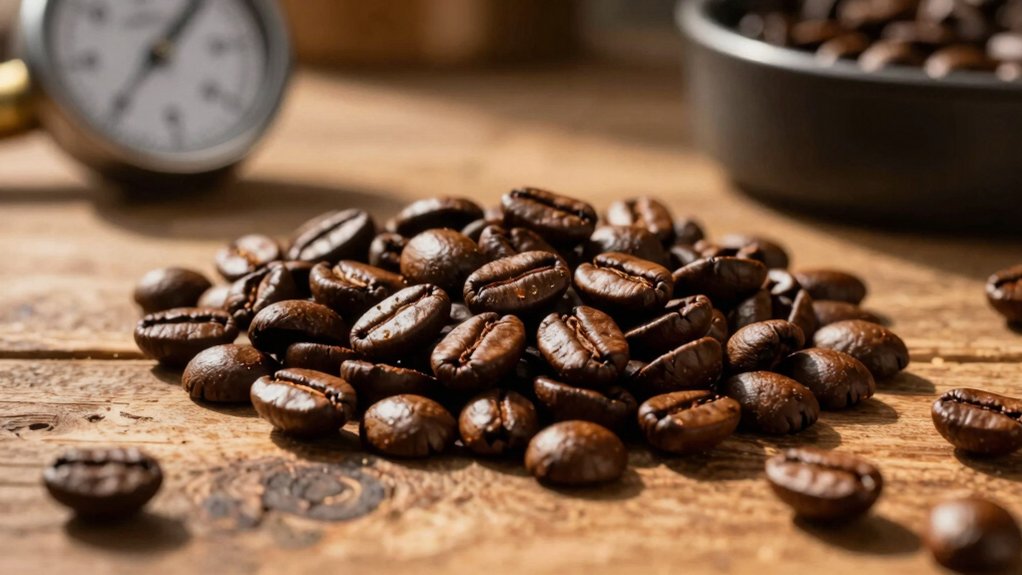
Lighter roasts therefore showcase vivid brightness and higher acidity, whereas longer development drags the peak of brightness past first crack, letting caramel sweetness balance the bite extraction tds.
Why Longer Roasts Boost Sweetness and Body
When you let a bean roast longer, the extended heat deepens caramelization and Maillard reactions, turning more of the sugars into sweet, syrupy compounds that thicken the mouthfeel. The longer roast time expands development time, allowing sugars to break down and re‑form into richer, smoother notes. As roast duration increases, acidity drops and flavor balance shifts toward roast‑forward notes, giving the cup a fuller body and deeper sweetness. Denser beans often need that extra minutes to reach the same level of caramelization, while lighter beans hit the sweet spot sooner. You’ll notice chocolate, caramel, and nutty tones dominating, creating a plush, lingering finish. Maillard reactions contribute to additional complexity and body as roasting progresses.
Balancing Roast‑Time Development to Preserve Acidity While Adding Body

How can you keep a coffee’s bright acidity while still giving it a fuller body? Aim for a medium roast with an 8‑minute Roast Time and a tight development time window. Start with a higher rate of rise to lock in acidity, then slow the curve during Maillard development so the body builds without over‑cooking. Keep batch size around 350 g; smaller loads improve heat transfer and let you hit the target end‑temperature precisely. By ending the roast just before the 12‑minute mark, you preserve the lively acidity while achieving a richer mouthfeel. Adjust the rate of rise and end‑temperature to fine‑tune the balance, and you’ll consistently hit that bright‑yet‑bodied profile. Heat management
Frequently Asked Questions
How Does Bean Origin Affect Optimal Roast Time?
You’ll find that beans from higher altitudes, which develop denser sugars, need shorter roasts to keep bright acidity, while low‑altitude, earthy beans benefit from longer roasts that deepen body and reduce bitterness.
Can Airflow Adjustments Change Flavor Without Altering Roast Duration?
Yes, you can tweak airflow to shift flavor while keeping roast time constant. Increasing airflow cools the bean surface, preserving acidity and brightness, while reducing airflow intensifies caramelization and body without extending the roast.
What Impact Does Pre‑Heat Temperature Have on Final Acidity?
You’ll find that higher pre‑heat temperatures increase acidity, while lower temperatures soften it; the heat spikes early bean reactions, so adjusting that setting lets you dial the final sourness precisely.
Do Different Drum Sizes Influence Development Time Outcomes?
You’ll find larger drums slow heat penetration, extending development time, while smaller drums accelerate it, so you can tweak size to hit target flavors faster or slower, depending on the roast profile you want.
How Does Moisture Content in Green Beans Alter Roast‑Time Decisions?
You’ll need to shorten roast time if beans are wetter, because extra moisture slows heat transfer and delays development. Conversely, drier beans let you extend time slightly, letting flavors mature without burning.
In Summary
By now you’ve seen how a short roast keeps coffee bright and acidic, while a longer roast deepens sweetness and adds body. The key is to find the sweet spot where you preserve that lively acidity but still enjoy a richer mouthfeel. Experiment with timing, taste the differences, and adjust until the flavor profile hits the balance you crave. Your perfect cup is just a few minutes of roast‑time tweaking away.


