
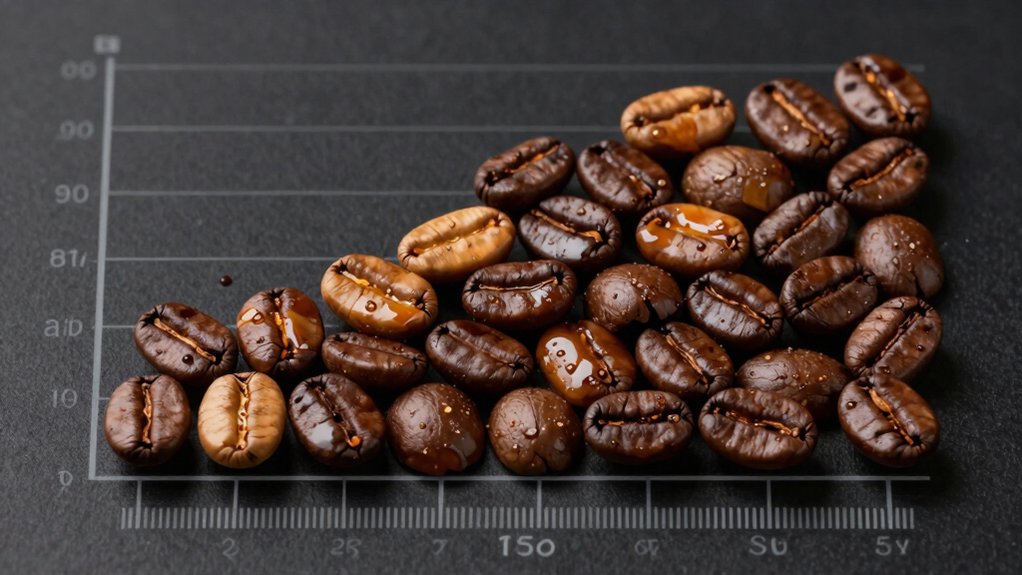
First, check the bean’s center line: a tight, closed line means a hard, dense bean; an open line signals a soft, porous bean. For hard beans, start with a hotter charge (5‑10 °F higher) and push the ramp to about 15 °F/min as you near first crack, then ease back to keep momentum. Soft beans need a gentler charge and a slower ramp, extending the development phase for balanced flavor. Adjust airflow—early high for dense beans, sustained high for light beans—and slow the drum for dense beans, keeping it moderate for lighter ones. Track altitude, moisture, and processing to fine‑tune these settings, and you’ll discover even more tricks ahead.
Identify Hard vs. Soft Beans Before Roasting
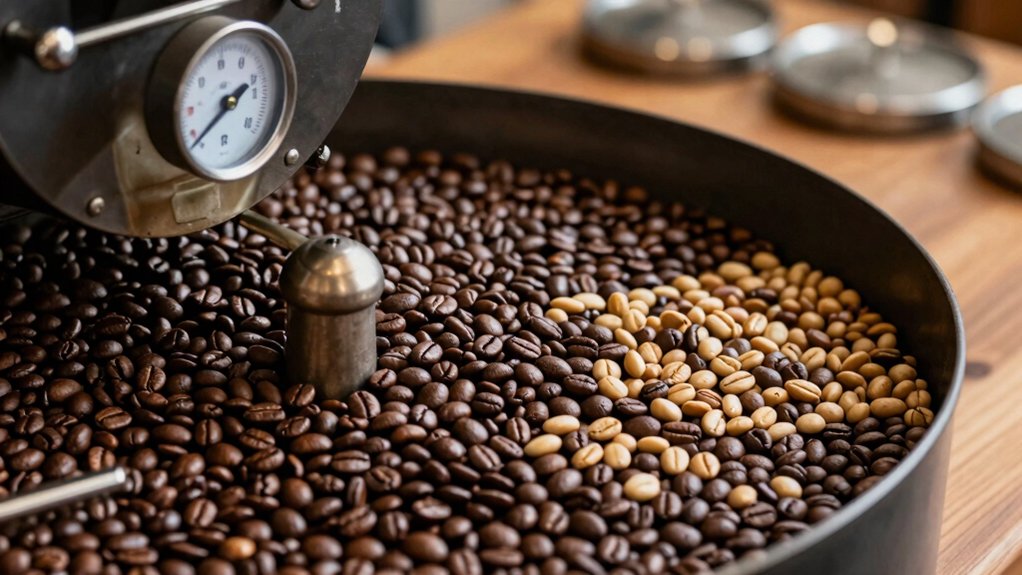
How can you tell if a bean is hard or soft before you even light the roaster? Look at the green coffee beans’ center line: a tight, closed line signals higher density and hard beans, while an open line hints at softer beans. Altitude helps too—beans grown above 4,000–4,500 ft usually develop a denser structure because cooler nights slow ripening and boost sugar concentration. Use this visual density estimation as a quick check on bean structure and moisture content, then match the roasting profile accordingly. Hard beans need a slower ramp and longer soak, whereas soft beans benefit from a gentler heat curve. This simple cue lets you adjust your roast before the first crack. Density signal
Set Charge Temperature & Ramp Rate for Hard Beans
After spotting dense, hard beans, you’ll want to start them at a hotter charge temperature—typically 5–10 °F above what you’d use for softer beans—to overcome their higher heat‑absorption capacity and kick off development without premature gas buildup. Set the charge temperature high enough to push the RoR toward 15 °F/min as you approach First Crack, then dial back the ramp rate to keep momentum through the dry end. This balance lets Maillard development unfold while maintaining steady heat transfer. Because density slows energy uptake, monitor the log and adjust the ramp rate so the beans hit First Crack on schedule without stalling. Shorter overall development prevents over‑extraction, preserving brightness in dense coffees. Carabiner clip attachment for rugged outdoor use can influence how you carry beans during field roasting sessions carabiner clip attachment.
Apply Gentle Heat & Longer Development for Soft Beans
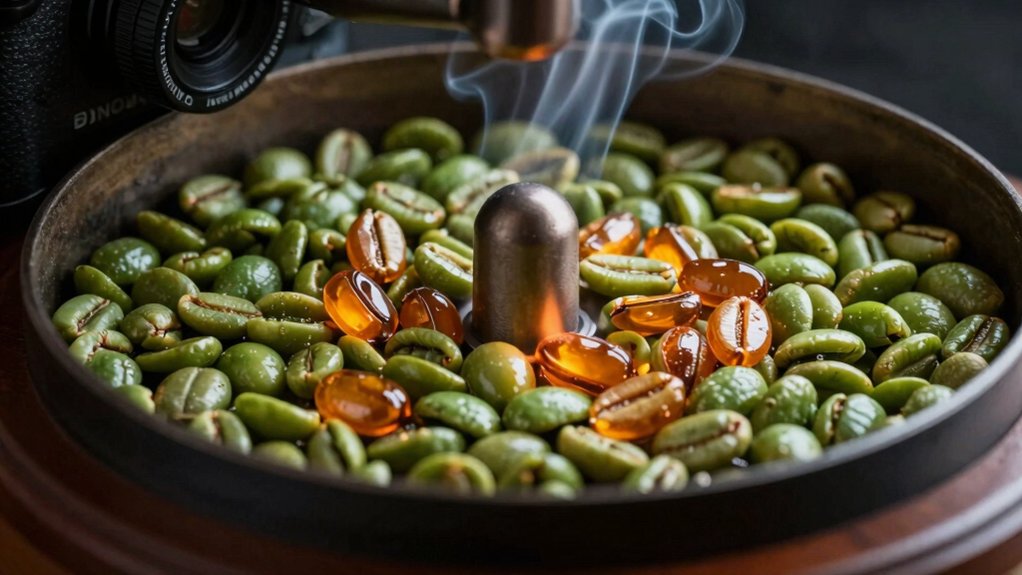
What makes soft beans tricky is their low density and porous structure, which means they take longer to absorb heat. You’ll want to start with gentle heat and extend the development phase so the roast profile stays balanced. By lowering the initial charge temperature, you give the soft beans time to let heat absorption catch up, preventing surface scorching and allowing Maillard reactions to develop fully. Additionally, using a precise temperature control approach that mirrors the best practices from temperature-controlled heating mugs can help maintain consistency across batches temperature control and prevent abrupt heat spikes.
Adjust Airflow & Drum Speed for Hard vs. Soft Bean Momentum
Ever wondered how to keep both hard and soft beans moving smoothly through the roast? When you face dense beans, crank up the airflow early to shield the surface, then pull it back mid‑roast to preserve momentum and spark Maillard development. Pair that with a slower drum speed so each bean absorbs more heat, giving you a steady roasting profile. For light‑density beans, keep the airflow high longer to dodge hot spots and promote even drying, then ease it off as the roast progresses. Use a moderate drum speed to avoid concentrating energy, letting the beans retain a stable RoR. This balanced heat management and momentum control lets you fine‑tune any roast plan for both bean types. ATC/Temperature Compensation can help stabilize readings across varying roast temps in some refractometer setups when tracking extraction consistency.
Track Moisture, Altitude, and Processing for Hard vs. Soft Beans
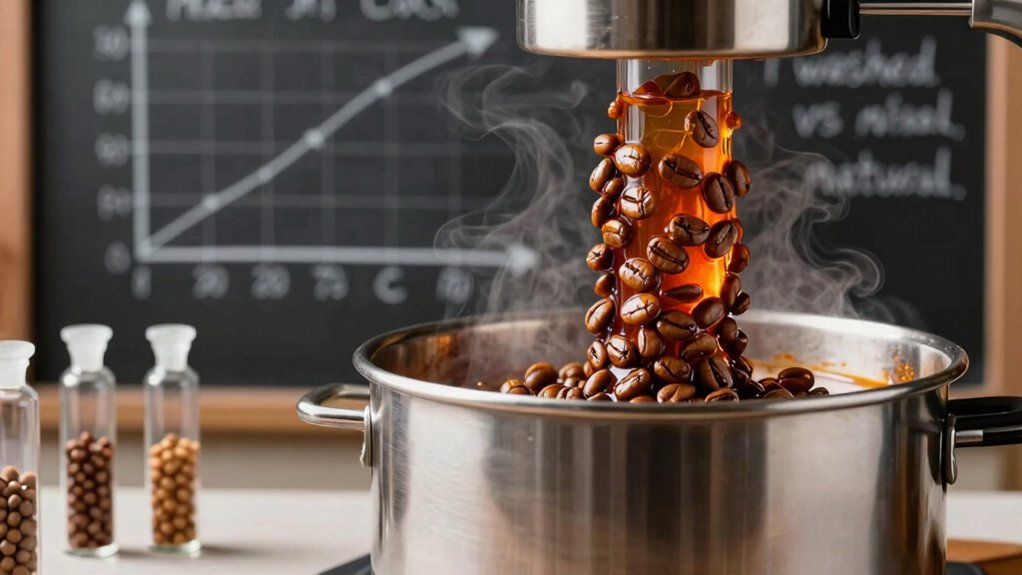
How do moisture, altitude, and processing combine to shape hard versus soft beans? You’ll notice that high‑altitude coffees produce denser beans (hard beans) because cooler, slower maturation preserves moisture differently than soft beans. Washed processing raises density and locks in water activity, while natural methods leave beans looser. By tracking moisture, altitude, and processing, you can fine‑tune the roasting profile, adjusting heat transfer to match each bean’s characteristics. A measured approach also helps optimize extraction when pairing with precise equipment like a Bluetooth coffee scale for consistency.
- Measure water activity – high‑altitude, dense beans show lower activity; compensate with a slower ramp.
- Log altitude – denser beans need more energy to dry; adjust drum speed for even heat transfer.
- Record processing method – washed beans demand a gentler development phase, while natural beans tolerate a quicker finish.
Frequently Asked Questions
How Does Bean Density Affect Post‑Roast Aroma Retention?
You’ll notice denser beans lock in more oils, so their post‑roast aroma lingers longer, while lighter beans release scents faster, fading sooner as volatile compounds escape more quickly.
Can Density Predict Optimal Cooling Time After Roast?
Yes, you can estimate ideal cooling time from bean density; denser beans retain heat longer, so you’ll need a longer cooling period, while lighter beans cool faster and require less time.
Do Dense Beans Require Different Storage Conditions?
Yes, dense beans need cooler, drier storage than lighter ones. Keep them in an airtight container at 60‑70 °F, away from sunlight, and avoid humidity to preserve flavor and prevent premature oxidation.
What Impact Does Density Have on Caffeine Extraction?
You’ll find that denser beans extract caffeine slower, so you need a longer brew or higher temperature to reach the same strength. Their tighter structure limits water flow, reducing solubility compared to lighter beans.
How Does Density Influence Grinder Burr Wear Rate?
You’ll notice denser beans grind slower, increasing friction on the burrs, so they wear faster. The tighter particle pack forces the burrs to work harder, accelerating abrasion and reducing their lifespan.
In Summary
By recognizing whether your beans are hard or soft, you can fine‑tune temperature, ramp, airflow, and drum speed to hit the perfect roast. Adjust the charge temp and ramp for hard beans, keep heat gentle and extend development for soft beans, and factor in moisture, altitude, and processing. This targeted approach ensures consistent flavor, optimal extraction, and a roast that brings out each bean’s best characteristics.


