
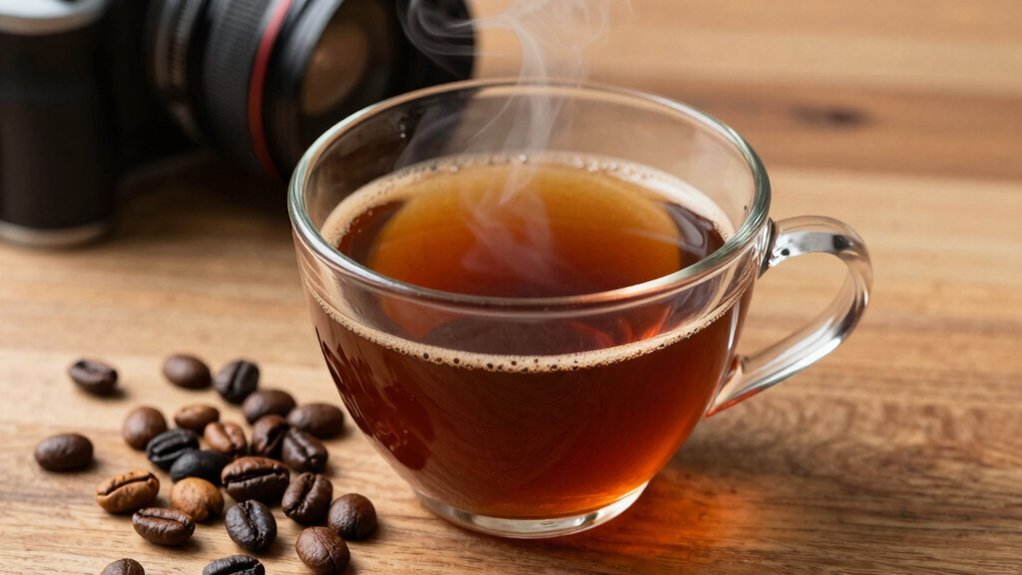
You’ll notice that lighter roasts keep most of the coffee’s natural acids—citric, malic, and chlorogenic—so the cup feels bright, sharp, and citrus‑y. As the roast gets hotter and longer, those acids break down, the acidity drops, and the flavor shifts toward smoother, chocolatey, caramel notes. Darker roasts lose the original bite, making the brew feel mellow and less harsh. Keep going, and you’ll discover how brew methods and tweaks can fine‑tune that acidity.
Our Recommended Product on Amazon

As an Amazon Associate we earn from qualifying purchases.
How Roast Level Shapes Coffee Acidity
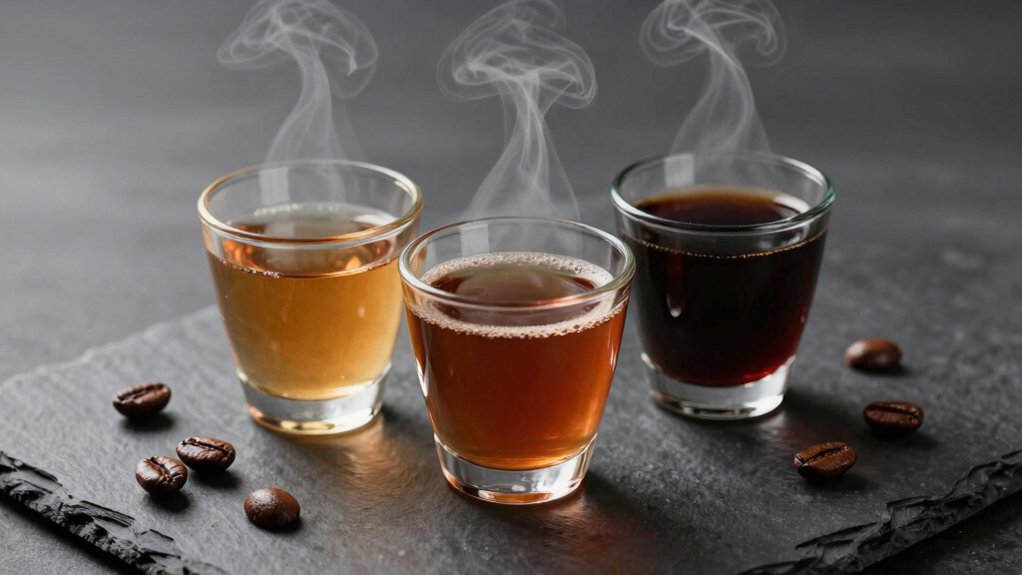
Ever wondered why a light‑roasted brew snaps with bright citrus while a dark one feels smooth and chocolatey? You’ll notice that roast level directly shapes acidity. Lighter roasts preserve natural acids, so you taste higher acidity and brighter flavors like citrus or berries. As the bean darkens, darker roasts break down those acidic compounds, mellowing the cup and revealing chocolatey, caramel notes with a smoother finish. In addition, choosing a roast with a specific texture profile can help tailor the overall mouthfeel to complement the acidity storage and organization.
How Roasting Temperature Affects Natural Acids
What happens when you crank up the roasting temperature? You’ll notice the coffee’s sharpness soften as heat breaks down natural acids. Lighter roasts keep citric, malic, and chlorogenic acids largely intact, delivering bright, tangy notes. When you push the temperature toward 500 °F, those acids degrade, pH levels rise, and the cup feels smoother. Darker roasts, with extended exposure, lose most of the original acidity, and chlorogenic acids break down into less bitter compounds. This shift reduces perceived sharpness while still preserving some body. Balancing development time and temperature is key: too much heat masks origin‑specific acidity, while a moderate rise can mellow the cup without erasing its character. Roasting Parameters can influence how these acids evolve during heat exposure, guiding you toward the desired balance of brightness and body.
Light‑Roast Chemistry: Preserving Citric, Malic, Chlorogenic Acids
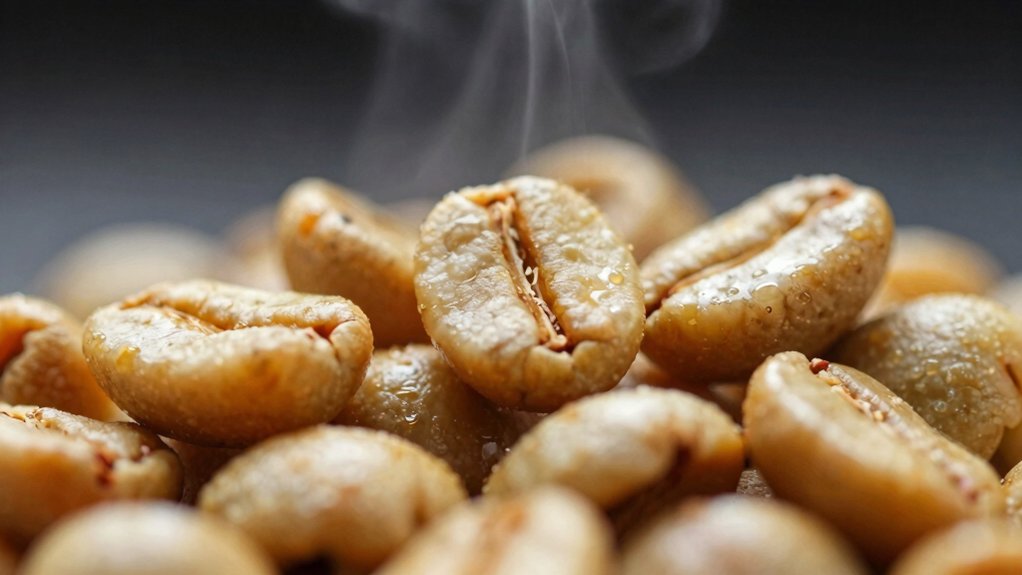
How does a light roast keep coffee’s zing alive? You’ll notice that light roast acids stay mostly intact because the bean never reaches the high temperatures that break them down. Citric acid remains abundant, giving you a lemony sparkle, while malic acid adds an apple‑like juiciness that brightens the palate. Chlorogenic acids, though they degrade with heat, linger in larger quantities when you use shorter development times and gentler heat, preserving both perceived acidity and a subtle bitterness that balances the fruit notes. Clip-Based Milk Frothing Thermometers
Medium‑Roast Balance: Acidity Meets Sweetness
Why does a medium roast feel like a sweet‑sour duet? You’ll notice its acidity is softened yet still bright, weaving together crisp citrus notes with a mellow caramel sweetness. At 410–428°F (210–220°C), the bean’s structure holds enough of the original citric and malic acids to keep the cup lively, while Maillard reactions introduce nutty, buttery flavors that round out the profile. This medium roast balance lets you taste both the lively zing and the comforting sweetness without one overwhelming the other. Brewers often choose it for drip, pour‑over, or Aeropress because the acidity, body, and sweetness harmonize across extraction methods, delivering a cup that’s both vibrant and satisfying, and its versatility acid profile makes it a reliable choice for varying brewing techniques.
Dark‑Roast Transformation: Breaking Down Acids for Smoothness
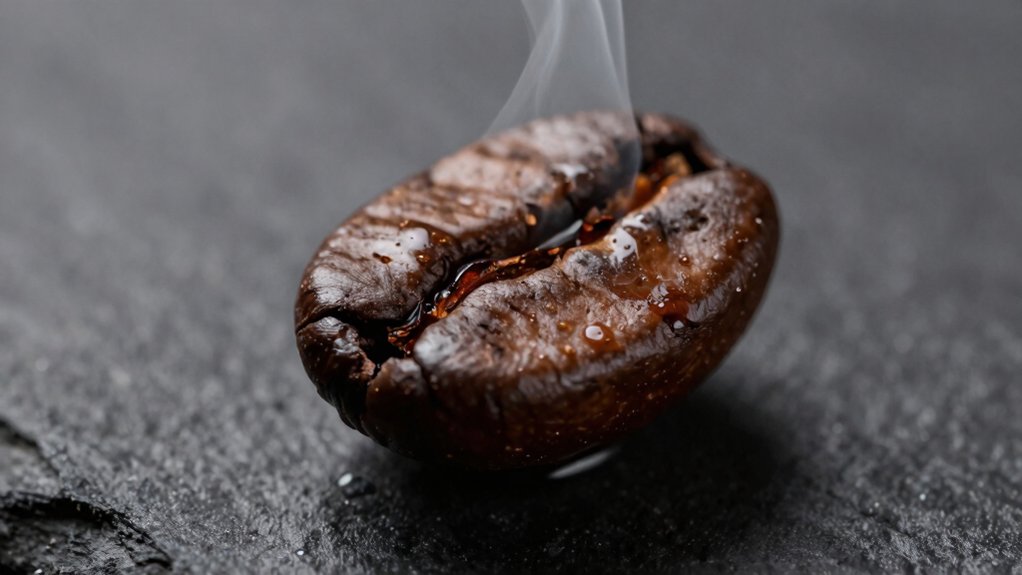
You’ll notice that the intense heat of a dark roast breaks down the coffee’s acidic compounds, smoothing out the sharp edges you once tasted.
As those acids degrade, the brew gains a richer, caramel‑sweetness and a velvety mouthfeel.
The released oils from the second crack seal the flavor, giving you a bold, low‑acidity cup. 18/8 stainless steel
Acid Breakdown Mechanics
When the bean reaches the dark‑roast stage, the heat breaks down chlorogenic acids into quinic and caffeic acids, which softens the cup’s brightness and leaves a smoother, chocolatey profile. You’ll notice that as roasting temperature climbs, the chlorogenic acids diminish, and quinic acid contributes a subtle bitterness while overall acidity fades. The second crack releases oils that coat the palate, further muting sharp tartness and deepening body. Understanding these shifts lets you predict how dark roasting reshapes flavor. Chlorogenic acids degrade into quinic and caffeic acids. Higher roasting temperature accelerates acid breakdown. Second crack releases oils that mask remaining acidity. Controlled heat prevents combustion and preserves desired smoothness. This also aligns with how a well‑organized coffee station can keep your beans and brews consistent, ensuring you taste those nuanced changes with every batch coffee organization.
Resulting Flavor Smoothness
How does a dark roast achieve that velvety smoothness? You’ll notice that as the roasting level climbs, higher temperatures break down acidic compounds, lifting the pH and muting sharp citrus notes. The second crack releases oils that coat the coffee cup, delivering chocolatey and caramel flavors that mask lingering acidity. This transformation yields pronounced flavor smoothness, especially when the bean’s origin already carries high baseline acidity.
Roast development also interacts with Strix temperature control and multi-stage heating to help stabilize foam-like crema in some brewing contexts, subtly influencing perceived mouthfeel and acidity.
| Roast Stage | Typical pH |
|---|---|
| Light‑mid | 5.26–5.62 |
| Early dark | 6.00–6.20 |
| Full dark | 6.30–6.64 |
| Second crack | 6.40–6.70 |
| Post‑crack | 6.50–6.80 |
Origin‑Specific Acidity: Regions That Shine at Each Roast
You’ll notice Ethiopian Yirgacheffe’s lively, floral acidity shines brightest when you keep the roast light. As the roast deepens, Brazilian beans start to dominate, offering a smooth, chocolate‑caramel profile that masks their milder acidity. This contrast lets you match each region’s strength to the roast level you prefer.
Ethiopian Brightness at Light Roast
Ever wondered why Ethiopian beans burst with citrusy brilliance at a light roast? You’ll notice Ethiopian brightness shines when you keep the roast light, letting high‑altitude beans retain their natural malic and citric acids. The result is a vivid, fruity acidity that feels like a citrus orchard in a cup. Light roast acidity preserves those bright notes, while brewing methods such as pour‑over amplify the sparkle.
- Altitude advantage – higher elevations slow bean development, building complex acids.
- Flavor profile – expect lemon, bergamot, and berry‑like acidity.
- Roasting tip – stop before the first crack to lock in brightness.
- Brewing boost – use a fine‑ground pour‑over for maximum clarity.
Brazilian Smoothness at Dark Roast
Brazilian beans shine when you push them into a dark roast, where the natural acidity mellows and the cup gains a silky, chocolate‑nutty body. In this roast range, the beans’ lower acidity becomes even smoother, letting caramelized sugars and nutty notes dominate. You’ll notice the pH edging toward neutral, typically in the mid‑5s, which removes the sharp bite common in high‑acid regions. Roast to about 464 °F or higher to maximize smoothness while preserving a full, rounded body. The degradation of organic acids during a dark roast reduces the bright edge, letting the chocolate and nut flavors shine instead. This approach gives you a low‑acidity cup that feels rich, balanced, and unmistakably Brazilian.
Coffee Acidity and Brewing Methods
One or two brewing methods can dramatically shift how a coffee’s acidity is perceived. Your choice of brew interacts directly with roast degree and pH, tweaking perceived acidity in ways you can taste. Light roasts keep citric and malic acids bright, but a cold‑brew can mute that sharpness, while a pour‑over highlights it.
Dark roasts lose much of that bite, yet an espresso or immersion style can smooth the remaining acidity even further.
- Pour‑over – accentuates bright notes in light roasts, raising perceived acidity.
- Cold brew – mellows acidity across roast levels, lowering perceived sharpness.
- Espresso – compresses extraction, tempering acidity in darker roasts.
- Immersion (French press) – balances extraction, producing a smoother, less acidic cup.
Best Brewing Techniques for Light‑Roast Acidity
You’ll notice the Pour‑Over brings out a crisp, citrusy brightness when you control the grind and pour rate.
The Aeropress lets you lock in a clean, sharp extraction by tweaking pressure and brew time.
And a cold brew gives a smooth, mellow acidity that stays gentle on the palate.
Pour‑Over Brightness Enhancement
Ever wondered how a simple tweak in your pour‑over routine can reveal the bright, citrusy zing of a light roast? You can boost acidity and brightness by dialing in grind size, bloom time, temperature, and pour technique. A finer grind and a 25–30 second bloom let citric and malic acids surge, while 90–92 °C water extracts them without bitterness. Keep the 1:15–1:17 ratio steady, and pour slowly in a circular, turbulence‑free motion to preserve the lively, citrus notes of Ethiopian or Colombian beans.
- Grind finer for a 25–28 % extraction window.
- Bloom 25–30 seconds at 90 °C.
- Use a 1:15–1:17 coffee‑to‑water ratio.
- Pour slowly, circularly, avoiding turbulence.
Aeropress Crisp Extraction
Switching from pour‑over to the Aeropress lets you lock in the bright, citrusy punch of a light roast even faster. Use a salt‑like, medium‑fine grind and bloom briefly, then pour 200‑205 °C water at a 1:12–1:15 coffee‑to‑water ratio. Opt for a metal filter if you want to keep high‑frequency acidity and floral tones; a paper filter will mute some brightness. Stir gently, then invert or keep the standard setup for a total contact time of 1:30–2:00 minutes. This short, controlled extraction pulls out citric and malic acids without drawing out bitter compounds, preserving the crisp acidity that defines a light roast. The result is a clean, lively cup that showcases the roast’s natural acidity and aromatic complexity.
Cold Brew Gentle Acidity
Curious how a cold brew can keep a light roast’s bright fruit while softening its bite? You’ll find that a cold brew’s low temperature and long steep give it gentler acidity, letting the roast degree shine without harsh bite. Use a medium‑coarse grind, steep 12–24 hours, then dilute to taste. Pair the concentrate with milk to smooth any remaining sharp notes.
- Choose light‑roast beans – preserve fruit while keeping acidity low.
- Grind medium‑coarse – reduces surface contact, limiting acidic extraction.
- Steep 12–24 hours – allows smooth flavor development without over‑extracting acids.
- Dilute and add milk – further cushions acidity, enhancing sweetness.
Follow these steps, and your cold brew will deliver a bright, balanced cup with a naturally gentler acidity.
Grind Size for Coffee Acidity Control
Choosing the right grind size is the quickest way to tame coffee acidity. A finer grind boosts surface area, so extraction speeds up and acidity spikes unless you shorten brew time or lower temperature. If you keep the same brew time with a fine grind, the cup will taste sharp, citrusy, and possibly sour.
Switch to a coarser grind and the extraction slows, softening acidity and letting smoother cacao or nutty notes emerge.
Hot water compounds the effect of a fine grind, pulling acids faster and increasing brightness; cooler water tempers it.
Adjust one variable at a time—start with grind size, then tweak brew time or temperature—until the coffee feels lively without harshness.
Tasting Guide: Spotting Acidity in Light, Medium & Dark Cups
Ever wondered how to pinpoint acidity across roast levels? You can train your palate by focusing on three key cues in each cup. First, sip a Light roast and note the bright, citrusy acidity that jumps out—think lemon or grapefruit notes that linger after a quick brew. Second, move to a Medium roast; the acidity softens, blending with sweet caramel and fruit‑forward flavor notes that feel balanced. Third, try a Dark roast; the acidity drops dramatically, leaving a smooth, chocolatey body with muted brightness. Finally, compare the three side‑by‑side, paying attention to how the brew’s temperature and extraction affect each roast’s flavor profile.
- Identify citrus sharpness in Light roasts.
- Detect sweet‑acid balance in Medium roasts.
- Sense reduced acidity in Dark roasts.
- Note how brew variables shift flavor notes.
Pairing High‑Acid Light Roasts With Food
When you pair a high‑acid light roast with bright citrus desserts or fruit‑forward pastries, the coffee’s lively tang mirrors the sweet’s zest, amplifying both flavors and creating a harmonious, rejuvenating bite. You’ll notice the acidity cutting through buttery croissants, while the roast’s floral notes lift the pastry’s fruit compote. Try a spicy taco or chili‑infused flatbread; the coffee’s acidity cools the heat, balancing the spice. Tangy or nutty artisanal cheeses, like goat or aged cheddar, soften the brightness, letting creaminess shine. Nutty breads or almond‑spiced muffins echo the roast’s fruity undertones, enhancing perceived sweetness. Even a cold‑brew pour over citrus‑y yogurt works, showcasing the light roast’s versatility and bright acidity across diverse foods.
Low‑Acid Dark Roasts for Sensitive Stomachs
Why settle for a coffee that up up your stomach? A dark roast can be your ally when you need low‑acid coffee that won’t irritate sensitive stomachs. The longer heat breaks down harsh acids, pushing the brew’s pH toward neutral and delivering chocolate‑y caramel notes instead of bright, sharp bites. Choose beans that thrive in darker roasts—Brazilian or Sumatran varieties work best—while steering clear of extreme over‑roasting that burns flavor.
Dark roast tames acid, delivering smooth, chocolate‑caramel coffee that’s gentle on sensitive stomachs.
- Opt for medium‑dark profiles (around 6.0–6.5 pH) for smooth acidity.
- Select beans known for low natural acidity.
- Avoid light roasts that preserve sharp, irritating acids.
- Keep roast level consistent to maintain mellow, low‑acid coffee.
Home Roasting Hacks to Adjust Coffee Acidity
Curious how a few tweaks at home can tame coffee’s bite? You can dial down acidity by nudging the roast level upward and extending development time during home roasting. Start with a mid‑range temperature, then lengthen the final crack phase to let more acids break down without burning the bean. If you’re aiming for a smoother cup, raise the peak heat a few degrees—500°F pushes pH toward 6.6, while 410°F stays around 5.3. Adjust grind size and brew time in tandem; a coarser grind reduces extraction, further softening acidity. Experiment with short, cool‑first bursts followed by a slower, hotter finish to fine‑tune flavor. Track each batch, compare results, and you’ll consistently hit the acidity balance you want.
Frequently Asked Questions
Does Roast Level Affect Coffee Acidity?
Yes, roast level changes acidity. Light roasts keep more acids, giving bright tang; darker roasts break down those compounds, raising pH and mellowing sharpness, so you’ll taste less acidity as roasting deepens.
What Is the 15-15-15 Rule for Coffee?
You follow the 15‑15‑15 rule by grinding and brewing for 15 seconds, extracting for another 15 seconds, then pausing 15 seconds before tasting, letting you compare acidity and sweetness quickly.
Which Roast of Coffee Is the Most Acidic?
You’ll find the most acidic coffee in light roasts; they preserve chlorogenic acids and bright citrusy notes, giving a sharp, lively flavor that fades as the roast darkens and acidity drops.
What Coffee Is Good for Gastritis?
You should choose low‑acid beans like Brazilian or Sumatran, preferably medium‑dark roasted, and brew them as cold‑brew or with a short, low‑temperature extraction to keep your stomach calm.
In Summary
Now that you know how roast level reshapes acidity, you can pick the perfect bean for your palate and health. Light roasts keep bright, citrusy notes; medium roasts blend tang with sweetness; dark roasts mellow the bite for a smoother sip. Use this insight to match coffee to food, adjust home‑roasting temps, and enjoy a cup that’s exactly how you want it.


