

Temperature surfing is a technique you use on single-boiler espresso machines to stabilize your brewing temperature by timing your shot pull to the machine’s heating cycle. You’ll run a cooling flush after preheating, then monitor your brew-ready light to catch the peak of the heating cycle—pulling your shot roughly 34 seconds after purging. This timing aligns your water temperature in the optimal 92–95°C range, eliminating the temperature swings that cause inconsistent extraction. There’s more to master about this method.
Will Temperature Surfing Actually Improve Your Shots?
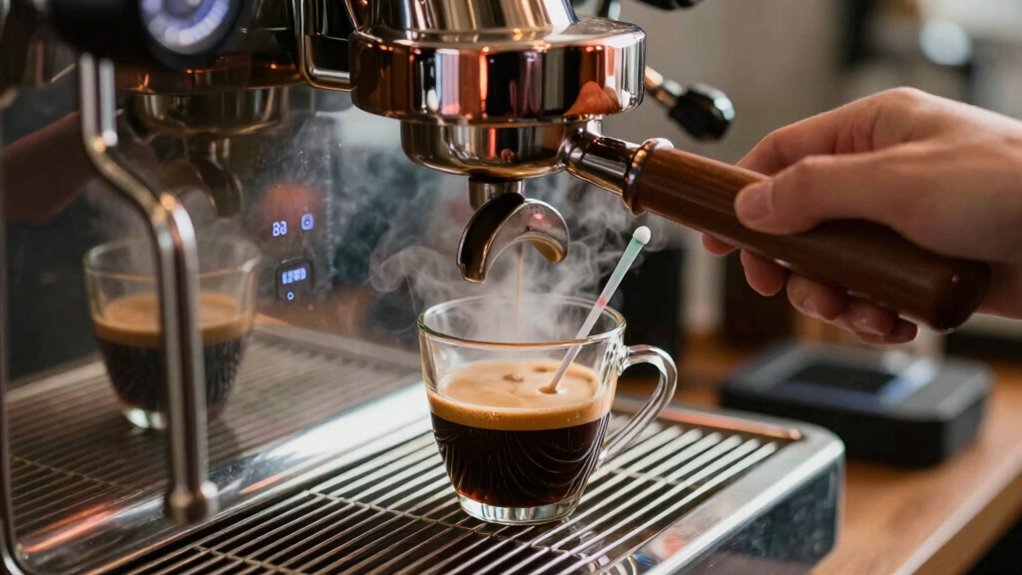
Temperature surfing can improve your espresso consistency, but whether it’ll actually enhance your shots depends on your current setup and results. If you’re already satisfied with your brew’s flavor profile and consistency, temperature surfing may offer minimal benefits. On top of that, choosing the right cup and saucer set can help maintain an even serving temperature by reducing heat loss from the vessel over time espresso cup capacity and ensuring a stable grip when handling hot drinks. However, on single boiler machines like the Rancilio Silvia or Gaggia Classic, you’ll likely notice improvements. These machines rely on thermostats with wide temperature swings—typically 95–105°C—creating unpredictable brew temperatures.
Temperature surfing lets you ride these fluctuations to land your water consistently in the ideal 92–95°C range. This precision reduces variables that cause shot-to-shot inconsistency, yielding smoother finishes and improved sweetness.
The real advantage emerges when your current espresso results vary significantly, making temperature surfing most valuable for machines without PID control.
Which Espresso Machines Need Temperature Surfing (and Which Don’t)?
Why does your machine matter when it comes to temperature surfing? Your espresso machine’s design determines whether you’ll actually need to surf.
Your espresso machine’s design determines whether temperature surfing becomes an essential technique or an unnecessary step.
If you’re using a single-boiler machine like the Gaggia Classic or Rancilio Silvia, you’ll benefit from surfing. These machines experience significant temperature drift between steam wand use and brewing, creating wide boiler deadbands that affect your brew temperature consistency.
However, if you’ve invested in a PID-controlled or dual-boiler system, you don’t need to surf. These machines maintain precise, stable temperatures automatically, eliminating the temperature swings that plague single-boiler setups.
High-end machines with built-in temperature control handle the work for you. Your choice of espresso machine ultimately determines whether temperature surfing becomes an essential technique or an unnecessary step. Cross-back design and durable construction in barista gear can complement your setup by improving comfort and efficiency during long shifts.
Why Single-Boiler Machines Overshoot Temperature
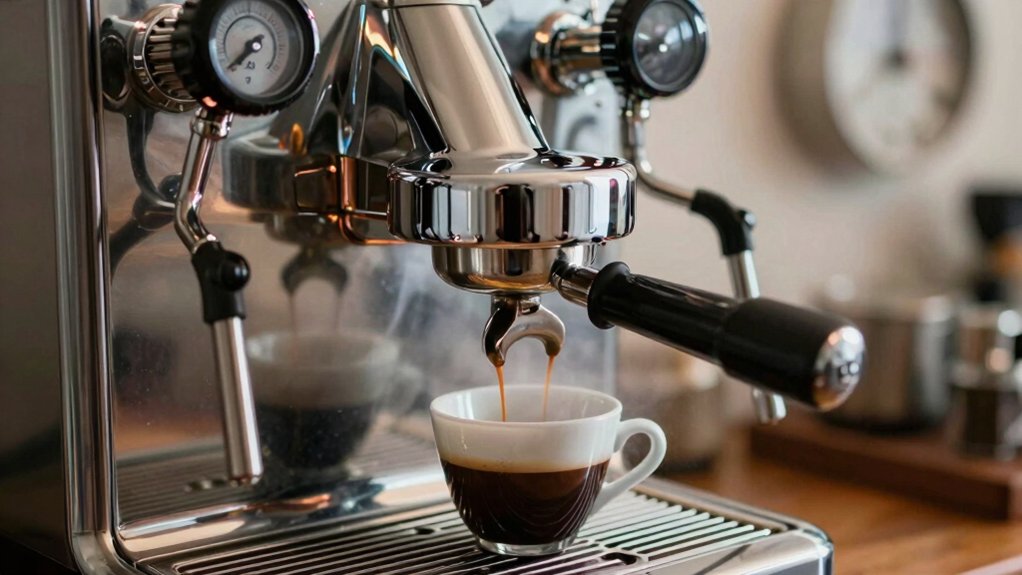
How does a single-boiler espresso machine manage heat so poorly? The answer lies in how your machine’s thermostat operates. Your boiler cycles between 95°C and 105°C, creating a wide deadband that causes temperature swings. After you steam milk, the system temperature rises toward boiling, overshooting your ideal brewing temperature when you switch directly to brewing.
Here’s why overshoot happens:
- Thermostat deadband: The wide temperature range allows significant fluctuations throughout the boiler cycle.
- Steam heating effect: Steaming pushes your boiler near 100°C, leaving it too hot for extraction.
- Delayed cooling: Water temperature doesn’t drop instantly after steaming, causing burnt-tasting shots.
You’ll prevent overshoot by using a cooling flush or timing your rest period after steaming to align your brewing temperature with the boiler cycle’s optimal point. This behavior is consistent with the way single-boiler designs handle heat management and the need to coordinate steaming and brewing phases to maintain stable extraction temperatures temperature control mechanisms.
How to Temperature Surf: Step-by-Step Workflow
Now that you understand why single-boiler machines overshoot temperature, you can master the technique that compensates for it: temperature surfing. You’ll start by fully heating your machine for at least 20 minutes with the portafilter locked in. Perform a preheat purge of roughly 60 ml to trigger the heating element and drop internal temperature. Watch your brew-ready light carefully—when it clicks off, start timing. For Gaggia Classic models, wait approximately 34 seconds after purging before pulling your shot to land near your target brewing temperature.
| Step | Action | Timing | Goal |
|---|---|---|---|
| 1 | Heat machine with portafilter locked | 20+ minutes | Stabilize metal temps |
| 2 | Preheat purge | 60 ml water | Drop internal temperature |
| 3 | Monitor brew-ready light | Watch for click-off | Identify heating cycle peak |
| 4 | Pull espresso shot | ~34 seconds after purge | Achieve optimal brewing temperature |
Troubleshooting Common Temperature Surfing Mistakes
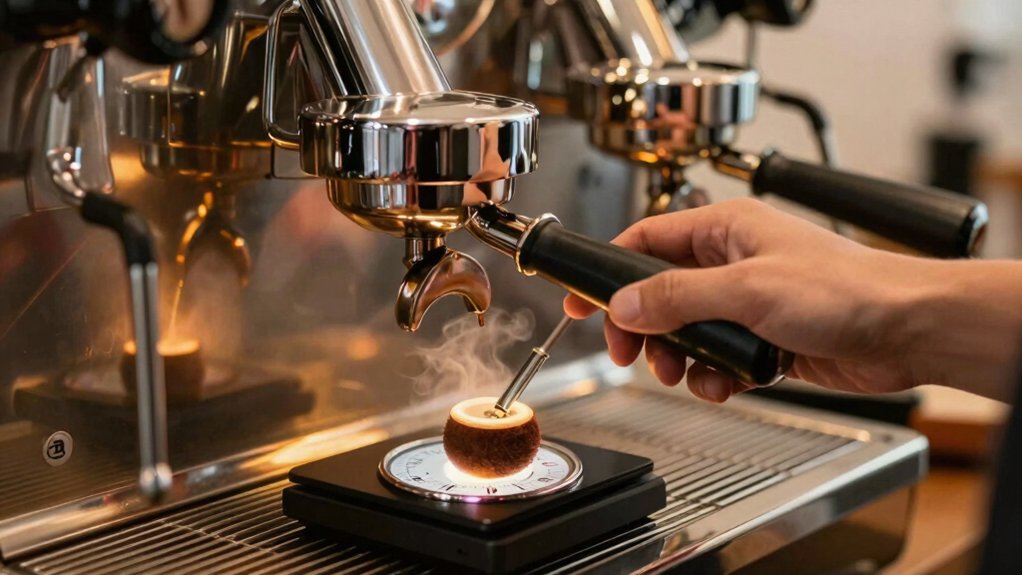
Even with a solid grasp of the temperature surfing workflow, you’ll likely encounter hiccups that throw off your shots. The most common pitfalls stem from timing and thermal management:
- Skipping boiler settling – Starting your shot before the boiler fully stabilizes introduces inconsistent brewing temperature across pulls, undermining extraction consistency.
- Neglecting cooling-flush routines – Forgetting to purge between steams and brews leaves overheated water in the group head, scorching your espresso and creating bitter flavors.
- Ignoring temperature drift patterns – Relying solely on the brew readiness light without timing shots causes you to miss your target brewing temperature since the boiler exhibits wave-like fluctuations during temperature surfing.
Additionally, account for power supply differences affecting steam bursts and ensure consistent portafilter locking during warm-up to maintain temperature stability throughout your brewing session. Demerara
Frequently Asked Questions
What Is Espresso Temperature Surfing?
You time your espresso shots to catch your boiler’s natural temperature cycle, extracting when the water hits your target temperature. It’s how you dial in consistent brews on machines without PID temperature control.
What Is the 30 Second Rule for Espresso?
You’re aiming for a 25–30 second total shot time, including pre-infusion, to balance extraction and flavor. It’ll help you pull consistent shots while adjusting for grind size, dose, and roast variations.
Is 15 Bar or 20 Bar Espresso Better?
You’ll get better results sticking with 9 bars for standard extraction. Higher pressures like 15 or 20 bars risk over-extraction, bitterness, and harsh flavors. They don’t improve taste—adjust your grind, dose, and temperature instead.
What Is the 2:1 Rule for Espresso?
You’re aiming for a 1:2 output-to-dose ratio, meaning you’ll pull roughly twice the espresso’s weight in liquid. You’ll typically extract within 25–30 seconds, adjusting your grind and tamp to balance sourness or bitterness.
In Summary
You’ll find temperature surfing worth mastering if you’re using a single-boiler espresso machine. By timing your shots carefully and monitoring temperature fluctuations, you’ll pull noticeably better espresso with improved flavor complexity and consistency. However, if you’ve already invested in a dual-boiler or heat exchanger machine, you won’t need this technique. Start practicing today—you’ll quickly develop the intuition that transforms your daily shots.


