Check for the blue‑and‑gold JACRA seal on the bag and match the certificate number to the QR code, which should link the beans to a certified parish—St. Andrew, St. Mary, St. Thomas, or Portland—at 3,000–5,500 ft elevation. Verify the label reads “100 % Jamaican Blue Mountain” and that the packaging shows the barrel logo and provenance data. Look for the almond‑praline, milk‑chocolate, and tangerine aroma and a smooth, caramel‑like finish; if you keep going, you’ll discover more details.
Blue Mountain Climate & Soil
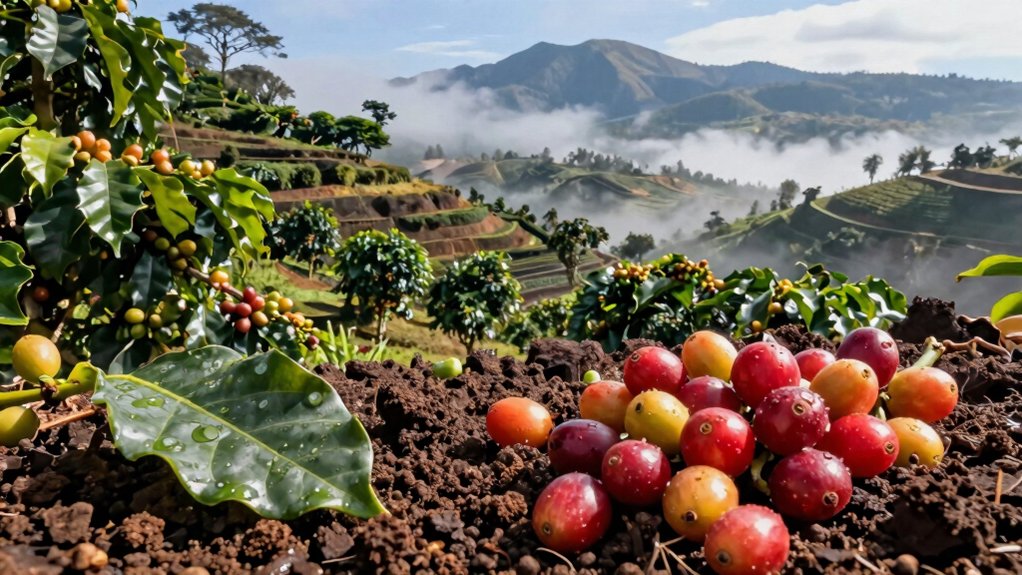
Ever wondered why Jamaican Blue Mountain coffee tastes so distinct? You’ll find it in the Blue Mountain climate: cool, mist‑laden air at high altitude slows cherry ripening, letting sugars concentrate. The volcanic soil, rich in minerals and superbly drained, infuses each bean with clean sweetness and balanced acidity. As mist clings to the slopes of Jamaica, the slow maturation nurtures nuanced aromas—almond, praline, milk chocolate, tangerine—creating a terroir‑specific flavor profile that JACRA certification protects. That certification ties every cup back to the region’s unique climate and soil, guaranteeing you’re tasting the true essence of the Blue Mountains rather than an imitation. JACRA certification further ensures authenticity and traceability throughout the supply chain.
Certified Parishes & Elevations for Jamaican Blue Mountain Coffee
Where can you verify that a coffee truly hails from Jamaica’s Blue Mountains? Look for the JACRA certification on the package, especially the blue and gold seal that guarantees provenance. The seal confirms the beans were grown at the legal elevation of 3,000‑5,500 feet within the four certified parishes of St. Andrew, St. Mary, St. Thomas, and Portland. Only farms in these Jamaican parishes may label their product Blue Mountain, and the seal links each batch to a QR‑code‑enabled traceability record.
| Parish | Elevation (ft) | Certification |
|---|---|---|
| St. Andrew | 3,000‑5,500 | JACRA blue & gold seal |
| St. Mary | 3,200‑5,300 | JACRA blue & gold seal |
| St. Thomas | 3,100‑5,400 | JACRA blue & gold seal |
| Portland | 3,500‑5,500 | JACRA blue & gold seal |
| All | 3,000‑5,500 | Provenance guaranteed |
Official JACRA Seal for Jamaican Blue Mountain Coffee
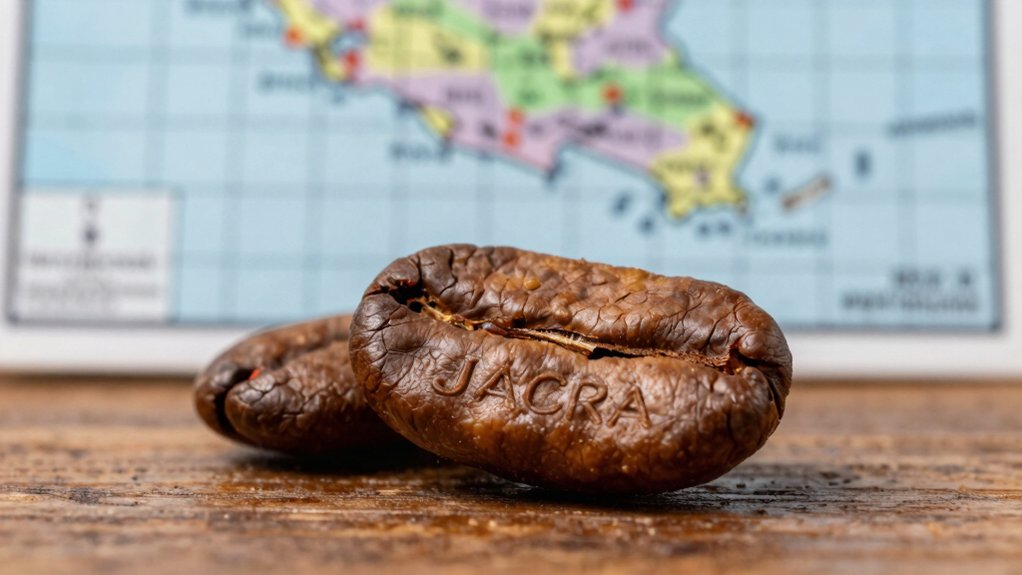
The JACRA seal you see on the bag is more than a decorative badge—it’s a government‑backed guarantee that the coffee truly comes from Jamaica’s Blue Mountains. You’ll spot the blue‑and‑gold emblem with a mountain and barrel graphic, and a certificate number printed on the mark or packaging. The Jamaica Coffee Industry Board enforces the JACRA certification, so you can perform authenticity verification by matching that number to the brand name. Look for “100% Jamaican Blue Mountain” prominently displayed; any blend or other origin disqualifies the claim. Many producers add traceability QR codes, letting you scan and confirm the Blue Mountains origin, altitude, and processing standards instantly. This system ensures every sip reflects genuine terroir. traceability QR codes further support origin verification and altitude details directly from the packaging or brand communications.
Bean Size, Shape & Defect Rate in Jamaican Blue Mountain Coffee
How can you spot genuine Jamaican Blue Mountain beans? Look for uniform bean size and a perfect round shape—these traits signal proper grading and aid even roasting. Authenticity indicators include a defect rate under 2%, achieved through rigorous quality control. Consistent uniformity directly boosts cupping quality, delivering the smooth, balanced flavor profile expected of Jamaica Blue Mountain coffee. By checking these details, you verify the coffee’s provenance and its adherence to the region’s strict standards. Quality control further supports consistent cupping results across batches.
Real Wooden Barrels & Traceability of Jamaican Blue Mountain Coffee
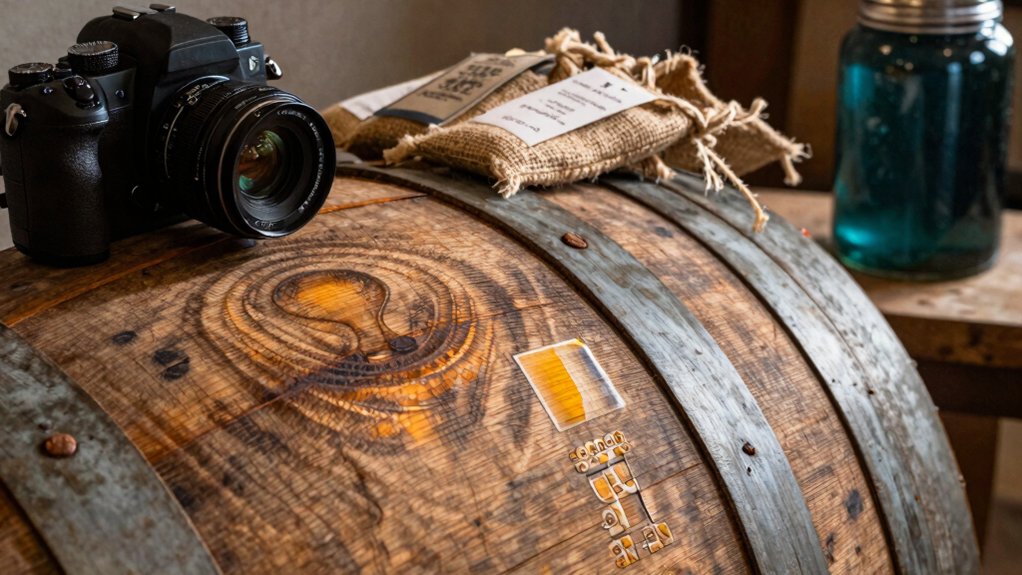
Real Jamaican Blue Mountain coffee arrives in sturdy wooden barrels—15 kg, 30 kg, or 70 kg—each bearing the blue‑and‑gold JACRA seal with its mountain‑and‑barrel logo.
You’ll notice the JACRA certification printed on the barrel packaging, along with a unique certificate number that you can cross‑check against the brand’s database for origin verification.
The label must declare 100% Jamaican Blue Mountain, never a blend, confirming the coffee’s purity.
Scan the QR code on the barrel to trigger QR traceability, which links the lot to farm records, roast dates, and shipment logs.
This system lets you trace every step, ensuring the beans you receive truly come from the famed Blue Mountain region.
Pure Jamaican Blue Mountain vs. Blend Labels
You’ll notice a pure “100% Jamaican Blue Mountain Coffee” label must carry the JACRA seal and certificate number, while a blend will spell out the exact percentage of Blue Mountain content. Look for clear origin claims, tamper‑evident packaging, and the distinctive blue‑and‑gold seal to verify authenticity. Anything vague like “Blue Mountain Style” or lacking the certification mark is a red flag.
Pure vs. Blend Labeling
A pure Jamaican Blue Mountain coffee must be labeled 100 % Jamaican Blue Mountain with the blue‑and‑gold JACRA seal and certificate number, while any blend has to disclose the exact Blue Mountain percentage—typically something like “30 % Blue Mountain”—and clearly state “Blend.” This requirement lets you spot red flags such as “Blue Mountain Style” or “Jamaica Blue Mountain Blend” that omit a percentage, indicating possible misrepresentation.
When you scan a bag, look for the JACRA certification mark and certificate number; a 100 % Jamaican Blue Mountain label will feature the gold‑blue seal prominently. For a Blue Mountain Blend, the label must state the blend percentage and show the certification mark, ensuring labeling accuracy and anti‑misrepresentation. If the percentage is missing, the product likely violates JACRA rules and may be a non‑authentic blend.
Origin Verification Indicators
Pure Jamaican Blue Mountain coffee carries the JACRA seal, a certificate number, and the explicit claim “100 % Jamaican Blue Mountain.” In contrast, a blend must list the exact percentage of Blue Mountain beans—e.g., “30 % Blue Mountain”—and still display the JACRA mark. You should scan the certification mark for a JACRA certification number, then verify the origin details: elevation (3,000‑5,500 ft), parish, and estate name. Authentic labels also include provenance statements and traceability codes that link the beans to a specific farm. Any “Blue Mountain Blend” without a clear percentage or certification is a red flag. Certification mark confirms authenticity and helps distinguish single-origin Blue Mountain from blends.
Price Benchmarks for Authentic Jamaican Blue Mountain Coffee
You’ll notice authentic Jamaican Blue Mountain coffee usually sits in the $25‑$50+ per pound range for green beans and $50‑$80+ for roasted beans, reflecting its scarcity and certification.
If a bag is priced well under $20 for an 8‑ounce serving, that’s a strong warning sign of possible dilution or counterfeit.
Expect reasonable discounts only when blends clearly state a lower Blue Mountain percentage; pure, certified beans should stay within the premium range.
Premium Price Range
Wondering how much you should expect to pay for genuine Jamaican Blue Mountain coffee? You’ll see the Blue Mountain price hovering between $25 and $50+ for an 8‑ounce bag of roasted, certified beans, and green beans can reach $50–$100+ per pound. This premium price range reflects the limited supply, strict origin controls, and the Jamaica Blue Mountain certification that JACRA enforces. Authentic Jamaican Blue Mountain coffee commands higher costs because the terroir is unique and the harvest is scarce. If a bag is priced under $20, it’s a red flag for counterfeit or adulterated product. Expect the steepest prices on 100 % Jamaican Blue Mountain with JACRA certification, while blends must clearly disclose their Blue Mountain content. The designation relies on precise terroir characteristics and verification processes that protect authenticity verification standards.
Reasonable Discount Limits
Where should you draw the line on a discount before a Jamaican Blue Mountain bag looks suspicious? If the price slips below $20 per 8-ounce bag or under $50 per pound, you should pause. Authentic beans command $25-$50+ per bag and $50-$80 per pound because JACRA certification and limited supply drive price integrity. Look for a clear Blue Mountain percentage on the label, a JACRA seal, and a certificate number that links to a traceability QR code. Reputable importers who hold JACRA-licensed certifications rarely offer deep cuts; a steep discount often signals counterfeit risk or false provenance. Cross-check the origin, packaging seals, and traceability data before you buy. A reliable indicator is the presence of a traceability QR code that connects the product back to the farm or cooperative traceability data.
How to Taste Authentic Jamaican Blue Mountain Coffee?
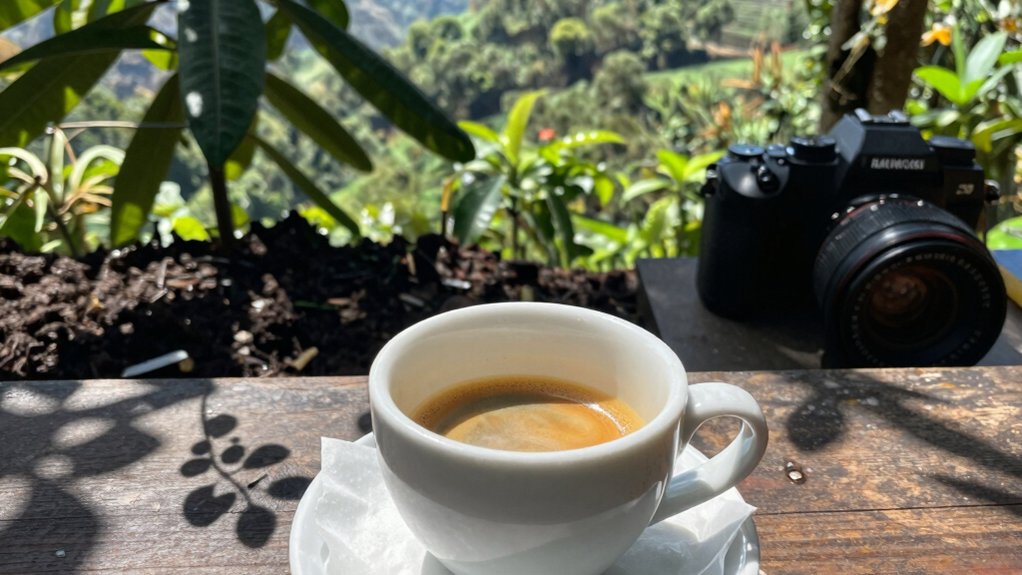
Ever wondered how a genuine Jamaican Blue Mountain cup should feel on your palate? You’ll notice an authentic tasting experience that opens with a silky, chocolate‑hazelnut aroma, then shifts to almond, praline, and a hint of tangerine. The flavor profile stays balanced, showcasing milk chocolate and plum without any harsh bitterness. Acidity is barely perceptible, letting the natural sweetness shine. Because it’s 100 % Jamaica Blue Mountain and JACRA‑certified, the cup delivers a smooth mouthfeel that lingers like velvety caramel. Sip slowly, let the aroma evolve, and watch the refined, pristine finish emerge—no bitterness, just a clean, lingering sweet aftertaste that confirms true mountain terroir. High-absorbency and careful cup-to-cup consistency are key markers in authentic Jamaican presses.
Roaster Reputation & Small‑Batch Practices for Jamaican Blue Mountain Coffee
How can you tell if a roaster truly respects Jamaican Blue Mountain terroir? Look for a JACRA‑certified source and a licensed importer that practices direct trade with the estate.
A reputable roaster will list the roast date and batch number on the bag, giving you traceability back to the farm.
Small‑batch roasting lets them keep the defect rate under 2 %, ensuring only the best beans survive sorting.
You’ll see transparent tasting notes that match the classic chocolate‑praline profile.
When the roaster shares origin details, batch numbers, and a clear supply chain, you know they’re preserving the mountain’s unique terroir, not just selling a generic blend.
Frequently Asked Questions
How Can You Tell if Jamaican Blue Mountain Coffee Is Real?
You verify the JACRA seal, 100% Blue Mountain label, specific farm and parish, elevation, processing details, QR traceability, and price—ensuring it’s not a blend or cheap imitation.
Which Jamaican Blue Mountain Coffee Is the Best?
You’ll find the best Jamaican Blue Mountain coffee by choosing Grade 1, 100 % JACRA‑certified beans from St. Andrew or St. Thomas, sealed in wooden barrels, with a blue‑and‑gold seal and premium price.
What Are the Different Grades of Jamaica Blue Mountain Coffee?
You’ll find four grades: No. 1, the largest, uniform beans with minimal defects; No. 2 and No. 3, slightly smaller or less uniform; and Peaberry, the single‑round bean variety.
What Are the 4 Enemies of Coffee?
You face four enemies: mold and mildew, moisture and humidity, heat, and oxygen exposure. They each accelerate staleness, spoil flavor, and can produce off‑aromas or mycotoxins if you don’t control them.
In Summary
Now you’ve learned the climate, soil, elevations, seals, bean specs, barrel traceability, labeling rules, price cues, tasting notes, and roaster standards that set genuine Jamaican Blue Mountain apart. Trust these markers, verify the JACRA seal, and savor a cup that truly reflects the mountain’s terroir.


