
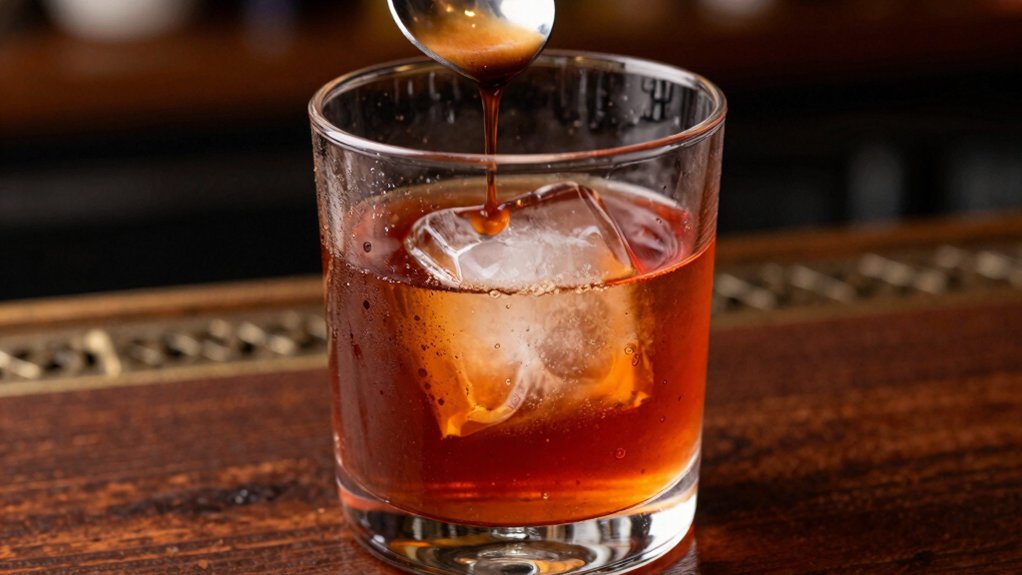
You need espresso’s bitter edge because its concentrated coffee bitterness deepens the herbal sting of Campari, balances the sweet vermouth, and stretches the after‑taste, turning a simple 1:1:1 mix into a richer, longer‑lasting experience. The roasted notes act as a carrier for the other flavors, letting the citrus lime and rosemary syrup shine without being overwhelmed. This coffee‑driven bitterness also softens the mouthfeel when milk‑washed, giving a smoother texture. Keep reading to discover the exact ratios and techniques that perfect this twist.
Why Bitterness Matters in an Espresso‑Negroni

Why does bitterness matter in an espresso‑negroni? You’ll notice the bitter edge immediately, because espresso’s roasted bite fuses with Campari’s herbal sting. That combination creates a layered, long‑lasting palate presence that a plain Negroni can’t match.
The coffee’s bold, caffeinated bitterness contrasts the vermouth’s sweet notes and the dash of sugar, stretching flavor interaction and freeing aromatic compounds. As the drink lingers, the coffee components prolong the aftertaste, making the bitter edge linger longer than a standard version.
Balancing that edge with lime, rosemary, or a touch of sugar prevents it from dominating, while milk‑washing or saline tweaks let you fine‑tune the bitterness without stripping its backbone. This careful modulation keeps the cocktail structured and exciting. Measurement accuracy in brewing and blending processes ensures that the bitterness is consistent and well-balanced, enhancing the overall flavor profile.
How Espresso Boosts the Espresso‑Negroni Flavor Profile
How does espresso transform the Espresso‑Negroni? You’ll notice a pronounced bitter edge and roasted coffee notes that amplify Campari’s bitterness, creating a richer, tertiary flavor without drowning gin or vermouth. The espresso adds a structured mouthfeel and a lingering aftertaste that lengthens the drink’s interaction, acting as a flavor lengthener. When you use the milk‑washed method, the foam lightens the texture and releases rosemary aroma, while the non‑milk version lets the espresso dominate for a bolder finish. You pair 40 g espresso (yield 20 g) with gin, 20 g sweet vermouth, 20 ml Campari, 15 ml lime juice, and 10 ml rosemary syrup, balancing coffee bitterness with citrus and herbal notes. Orange zest, burnt citrus, and rosemary garnish layer aromatics that complement the espresso’s bitterness rather than clash with it. Additionally, understanding the temperature control features of smart mugs can help you keep your coffee at optimal warmth, enhancing your overall tasting experience.
Science of Bitterness in the Espresso‑Negroni
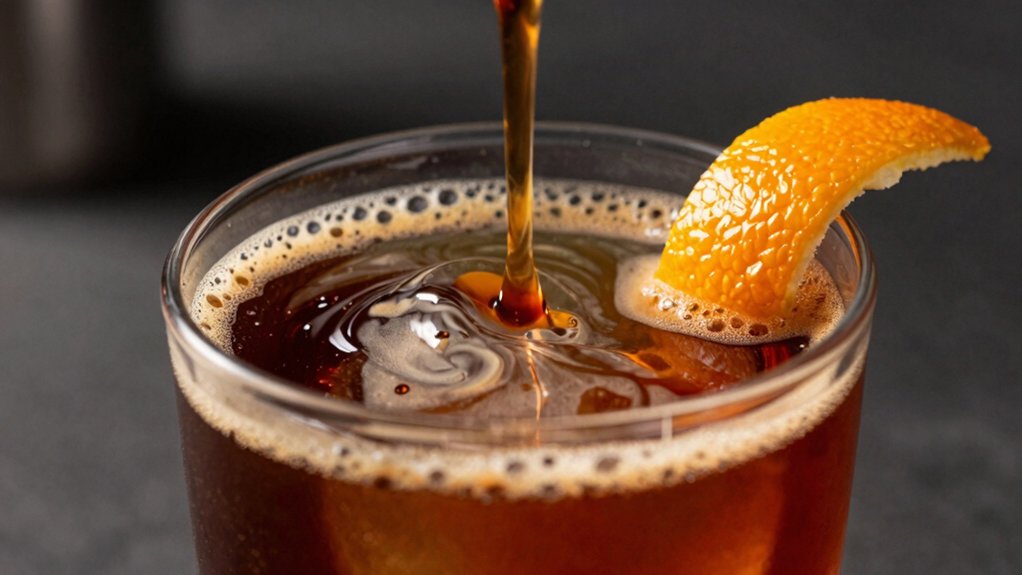
Ever wondered what makes the espresso‑negroni linger so intensely on the palate? The answer lies in the chemistry of bitterness. Espresso contributes caffeine and chlorogenic acids that cling longer than sugars, amplifying the drink’s aftertaste. Those bitter compounds act as a carrier, letting Campari’s herbal notes and vermouth’s tannins weave together, while a splash of citrus and a pinch of sugar keep the profile balanced. Milk‑washing or slight dilution can soften the astringency, altering mouthfeel without losing the core bitter edge. Additionally, the BPA-free borosilicate glass used in some carafes ensures the preservation of flavor integrity by resisting heat and cold-related flavor transfer.
What Changes When You Swap Bitters for Espresso?
What happens when you replace traditional bitters with espresso? You instantly boost the cocktail’s bitter backbone, letting coffee‑derived density and roasted notes dominate the palate. The 40 g espresso adds a long‑lasting bitterness that lingers past the citrus and herbal accents, while its red‑fruit coffee aroma pushes the drink toward intensity and depth. In a milk‑washed version, the espresso’s edge softens, giving a lighter mouthfeel yet preserving the aromatic punch. Without milk, the espresso profile intensifies, creating a creamier texture reminiscent of an espresso martini. This swap forces you to recalibrate sugar, citrus, and herbal balance, ensuring the structure stays intact while the bitter‑espresso axis takes center stage. Additionally, selecting the right handle material/design for your tools can enhance the overall tasting experience.
Crafting the Perfect Espresso‑Negroni Ratio
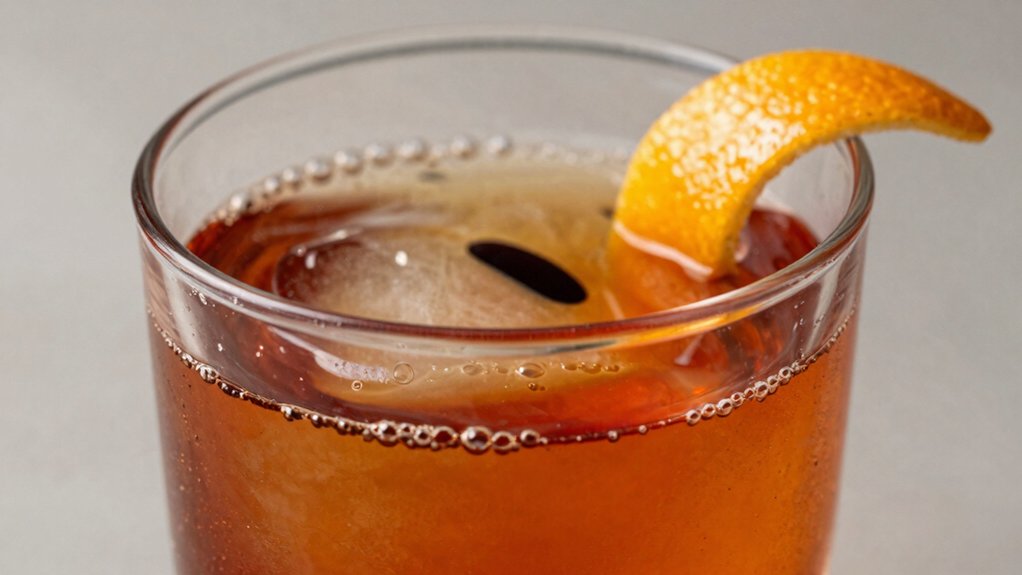
Curious about the exact balance that lets espresso shine without drowning the classic Negroni? You’ll start with the traditional 1:1:1 trio—gin, sweet vermouth, Campari—then add 40 g of espresso (yielding 20 g) to introduce bitter, caffeinated depth. Pair it with 20 g vermouth, 20 ml Campari, 15 ml lime juice, and 10 ml rosemary syrup; these citrus and herb notes temper the espresso’s edge. Sprinkle 1.2 g saline to fine‑tune harmony. For a milk‑washed version, shake with a splash of milk for a lighter mouthfeel and foamy head; for a non‑milk‑washed style, skip the dairy and aim for an espresso‑martini texture. Finish with a burnt orange zest and a rosemary sprig, preserving espresso’s intensity while keeping the Negroni’s signature bitterness. Using precise ice cube size and shape can also influence the dilution and overall texture of the drink as it chills smoothly.
Common Mistakes When Adding Coffee to an Espresso‑Negroni
Balancing the espresso‑Negroni is a tightrope, and the most common slip‑ups happen when the coffee part overwhelms the cocktail. You’ll hear the bitterness dominate if you ignore the delicate dance between espresso, vermouth, and Campari. Below are the frequent missteps that ruin an Espresso‑Negroni:
Balancing the espresso‑Negroni is a tightrope; avoid over‑extracting coffee, skip citrus, and watch dilution.
- Over‑extracting espresso – it injects harsh, a‑burnt notes that drown the gin.
- Skipping citrus or sweetener – the drink turns flat, missing the bright counterpoint.
- Ignoring dilution or ice technique – shaking instead of stirring can amplify bitterness and create a gritty mouthfeel.
- Not adjusting the 1:1:1 base ratio – too much coffee overwhelms Campari and gin, breaking the cocktail’s harmony.
Additionally, using the wrong brewing method or improper grind size can lead to over-extraction and increased bitterness, so paying attention to espresso brewing techniques is essential.
Avoid these pitfalls, and your Espresso‑Negroni will stay balanced, aromatic, and enjoyable.
Variations on the Espresso‑Negroni: Flavored Amari & Sweeteners
Ever wondered how a dash of amaro or a drizzle of rosemary syrup can transform your Espresso‑Negroni?
You can swap Campari for a bitter amaro like Montenegro or Averna to deepen herbal notes while keeping the 1:1:1 gin‑vermouth‑spirit ratio.
Add 10 ml of amaro‑infused simple syrup to lift sweetness without drowning the espresso‑balance.
If you prefer a milk‑washed texture, stir 20 g whole milk into the mix; the milk softens the amaro’s edge and creates a velvety foam.
For a non‑milk‑washed version, let the espresso shine by using a darker roast and a splash of rosemary syrup to bridge coffee bitterness and herbal bitterness.
Finish with a pinch of saline and a burnt orange twist to round the flavor.
Exploring temperature/microwave/dishwasher safe notes can help maintain the optimal presentation and taste when serving these sophisticated cocktails.
Pairing Food & Atmosphere With an Espresso‑Negroni
You’ll notice the Espresso‑Negroni’s bitter‑sweet balance shines when you serve it alongside salty cheeses, charred octopus, or dark chocolate that echo its coffee edge.
Choose a dim, jazz‑filled lounge or a rooftop with city lights to amplify the drink’s smoky, herbal notes.
A subtle rosemary garnish and a splash of saline will tie the atmosphere and palate together, making each sip feel intentional.
Espresso‑Negroni Flavor Balance
How can you make an espresso‑negroni feel both daring and harmonious? Balance starts with the bitter duo of espresso and Campari, then you temper it with citrus, sweetness, and herbs. A splash of lime juice lifts the edge, while rosemary syrup bridges the bitterness and lengthens the finish. Milk‑washing the espresso‑negroni softens mouthfeel and clarifies texture, letting the nuanced bitter notes shine without harshness. Shaking the espresso‑ adds a lively, frothy texture, whereas stirring the base keeps the classic, silky body.
- Use 40 g espresso for a bold bitter core.
- Add lime juice for bright citrus balance.
- Stir in rosemary syrup to extend the palate.
- Choose shaking or stirring to shape texture.
Atmosphere‑Driven Espresso Pairing
Why does the right ambience turn an espresso‑negroni from daring cocktail into an unforgettable experience? You sit in a dimly lit lounge where low jazz hums and the scent of roasted beans mingles with citrus zest. The Espresso’s bitter edge mirrors the room’s moody shadows, while the rosemary syrup catches the flicker of candlelight. Pair the drink with a small charcuterie board—salted olives, aged cheese, and a rosemary‑infused crostini—so the saline adjustment in the cocktail amplifies the savory notes. The lime juice brightens the atmosphere, echoing the subtle citrus aroma that drifts from the glass. As you sip, the lingering bitterness stretches across the palate, just as the music stretches across the night, creating a seamless, memorable pairing.
When to Stick With a Classic Negroni
You’ll find the classic Negroni’s equal‑part balance holds its own when you want pure, unadulterated bitterness. The coffee‑infused version adds layers, but sometimes the straight‑up trio of gin, vermouth, and Campari is just right. Stick with the original when you crave a clean, timeless bite.
Classic Balance Matters
Ever wondered when you should keep a Negroni strictly classic? You’re after a drink where gin, sweet vermouth, and Campari sit on equal footing, delivering a bittersweet harmony that lets bitterness act as a carrier, not a tyrant. The magic lies in the 1:1:1 ratio, the 10–12 g sugar that tames the bite, and the botanical lift from gin. When you respect that balance, each sip feels layered, not chaotic.
- Stick to equal parts for pure, predictable flavor.
- Adjust dilution slightly if the palate feels too sharp.
- Tweak sweetness only to keep bitterness as a backdrop.
- Preserve Campari’s edge; it’s the drink’s defining character.
Espresso Enhances Complexity
When you add espresso to a Negroni, the roasted, caffeine‑driven bitterness amplifies Campari’s edge, creating a richer, more layered bitter‑sweet balance. Espresso brings coffee‑derived notes that stretch the palate, letting the gin‑Campari backbone sit against a longer, more awake finish. You’ll notice a bold, acrid finish that contrasts with vermouth’s floral sweetness, forging a robust, multi‑layered profile.
This complexity can be thrilling, but it also risks overwhelming the drink if you don’t balance the ingredients carefully. Stick with the classic when you want a predictable, pure bitter‑sweet experience; the absence of espresso preserves traditional bitterness and a consistent mouthfeel. Use Espresso deliberately to heighten depth, not to mask the original harmony.
Frequently Asked Questions
What Are Some Common Negroni Mistakes?
You often over‑shake, use wrong vermouth ratios, forget to chill or stir properly, neglect the orange peel garnish, and ignore how sweetness should balance Campari’s bitterness, ruining the Negroni’s harmony.
What Was Anthony Bourdain’s Favorite Cocktail?
You’ll find Bourdain loved the Negroni above most; he often praised its bold, bitter balance, saying it embodied the fearless, well‑crafted cocktails he chased wherever he traveled.
Why Can’t You Shake a Negroni?
You can’t shake a Negroni because shaking over‑dilutes, aerates, and clouds it, destroying the silky texture and precise bitter balance that stirring preserves. The foam masks gin, vermouth, and Campari nuances.
Should You Put Bitters in a Negroni?
You should add bitters, because they deepen the classic bitter profile, balance the sweet vermouth, and complement the espresso’s edge, giving the drink a richer, more complex finish.
In Summary
You’ve seen how espresso’s bitter edge sharpens a Negroni’s palate, balances sweet vermouth, and adds a rich, aromatic depth that ordinary bitters can’t match. By mastering the right coffee‑to‑spirit ratio and avoiding over‑extraction, you’ll craft a cocktail that’s both bold and refined. Keep the balance tight, experiment with flavored amari, and let the espresso’s bitterness guide every sip. Enjoy the perfect espresso‑negroni experience.


