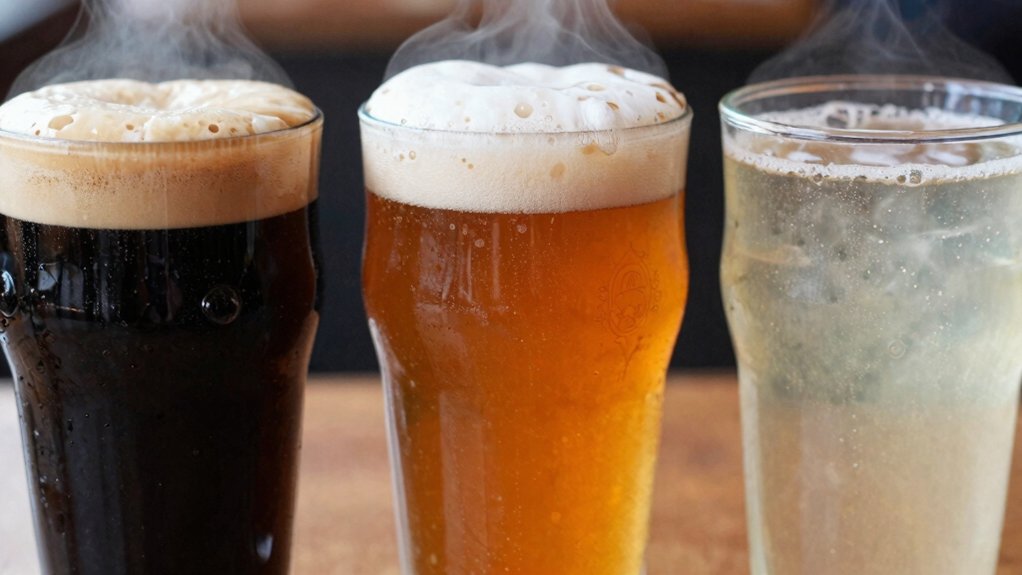
You’ll find three hot trends that blend espresso’s punch with beer’s character. First, the “Screamer” sensation layers a short, bold espresso shot over a chilled nitro pale ale, letting crema contrast with pale foam for a striking “boffee” look. Second, brewers are debating cold‑brew versus hot espresso—cold‑brew offers low acidity and stable carbonation, while espresso adds depth but can introduce bitterness and oils. Third, the pairings vary: stouts and porters welcome a moderate roast shot, IPAs stay bright with cold‑brew concentrate, and light ales keep balance with a cold‑brew approach. Keep exploring to discover the nuances of each method.
The “Screamer” Sensation: How to Make Espresso‑Infused Light Ales

Ever tried a coffee‑beer mash that looks like a latte in a pint glass? You’ll need a chilled nitro pale ale or another light ale as the base, then pull a short, bold espresso shot. Hold a spoon upside‑down, pour the espresso over its back, and let it glide onto the ale, creating espresso layering that stays separate. The crema contrast against the pale foam gives the drink its signature “boffee” look. Light ales keep the bitterness low, while the espresso adds depth, making the Screamer a breakfast‑friendly coffee‑and‑coffee hybrid. Experiment with pilsner or cream ale, tweak roast profiles, and watch this coffee beer trend spread. These brewing techniques let you craft a striking, balanced sip in seconds. Using a precise refractometer, you can fine-tune the espresso extraction for optimal flavor balance.
Cold‑Brew vs. Espresso Shot for Espresso‑Infused Beer: How to Choose?
If the Screamer’s layered look impressed you, the next step is deciding whether to infuse the ale with cold‑brew concentrate or a fresh espresso shot. Cold brew coffee keeps acidity low, preserving beer stability and clarity, especially for light to medium roast profiles. Espresso shots add depth but can introduce harsh bitterness and excess oils that threaten flavor balance in a coffee stout or other beer infusion. Choose the method that matches your desired intensity, consistency, and brewing trends.
A dedicated brewing technique can help optimize flavor extraction and ensure compatibility with the beer’s profile compatibility considerations.
- Cold‑brew concentrate offers consistent, low‑acid coffee beer without clouding.
- Espresso shots boost richness in light beers when matched to a light to medium roast.
- Cold‑brew nitro delivers smooth mouthfeel and stable carbonation.
- Dark roasts in cold brew risk oil overload, hurting beer stability.
- Test small batches to fine‑tune flavor balance before full‑scale production.
Balancing Bitterness: Espresso Pairings for Stouts, IPAs, and Light Ales
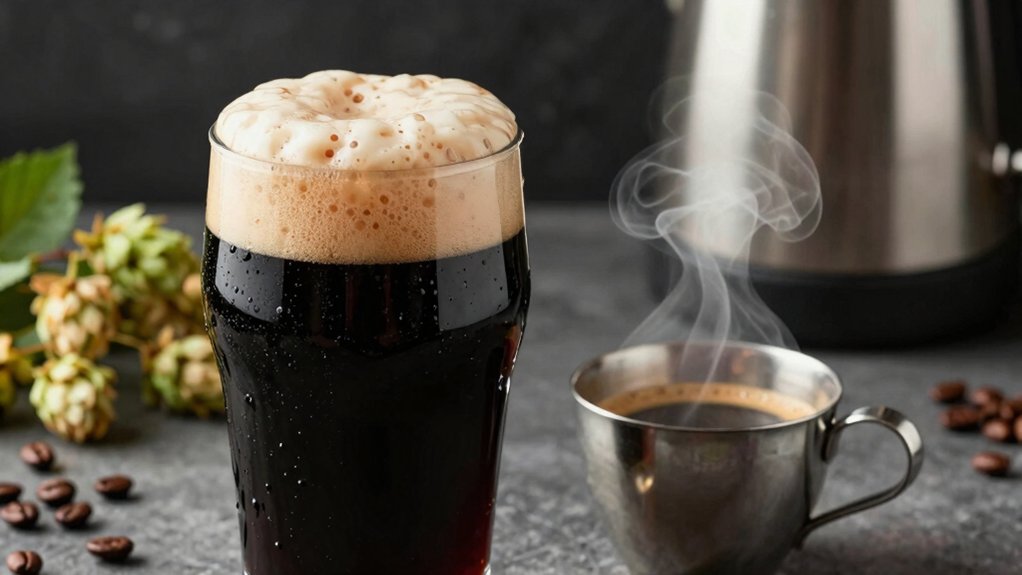
How do you keep espresso’s bold bitterness from overwhelming a brew? Start by choosing a moderate roast level and a small 21‑gram shot, then add it to a stout or porter where chocolatey notes complement the coffee’s oils. The cool temperature of the beer tempers harshness, letting the espresso’s bitterness blend smoothly with the malt. For IPAs, swap the hot shot for a cold brew concentrate; its lower acidity preserves hop‑driven bitterness while keeping the coffee flavor bright. Light ales benefit from the same cold brew approach, because the lighter body lets the espresso’s edge stay in check. In all coffee beer blends, balance under‑hopping with controlled roast to achieve harmonious pairings. Certification standards also influence flavor profiles and sourcing practices, ensuring a sustainable and well-crafted coffee experience.
Frequently Asked Questions
What Is the 3:30-300 Rule for Beer?
You follow the 3:30-300 rule by aiming for roughly 30 IBUs per 3‑3.5 gallons, keeping hops moderate and adding espresso late so coffee complements, not overwhelms, the beer’s bitterness.
Can You Mix Beer and Espresso?
Yes, you can mix beer and espresso. Try layering chilled espresso over a light lager or stout for a “Screamer,” or brew cold‑brew coffee into the wort for a smoother, balanced brew.
What Is the 15-15-15 Coffee Rule?
You follow the 15‑15‑15 rule by letting coffee sit with the beer for fifteen minutes extracting aroma, fifteen minutes extracting flavor, then fifteen minutes balancing aftertaste, ensuring each phase adds distinct, complementary notes.
What Is the 30 Second Rule for Espresso?
You follow the 30‑second rule by pulling a shot that hits roughly 25‑30 seconds of contact, using an 18‑20 g dose and a 1:2‑1:2.5 brew ratio, yielding balanced crema and flavor.
In Summary
You’ve seen how espresso can rev up any brew, from light ales to bold stouts. By picking the right method—cold‑brew for smoothness or a quick shot for punch—you’ll hit the perfect balance of bitterness and aroma. Experiment with pairings, tweak the ratios, and let the coffee‑beer combo elevate your palate. Cheers to crafting the ultimate espresso‑infused pint!


