
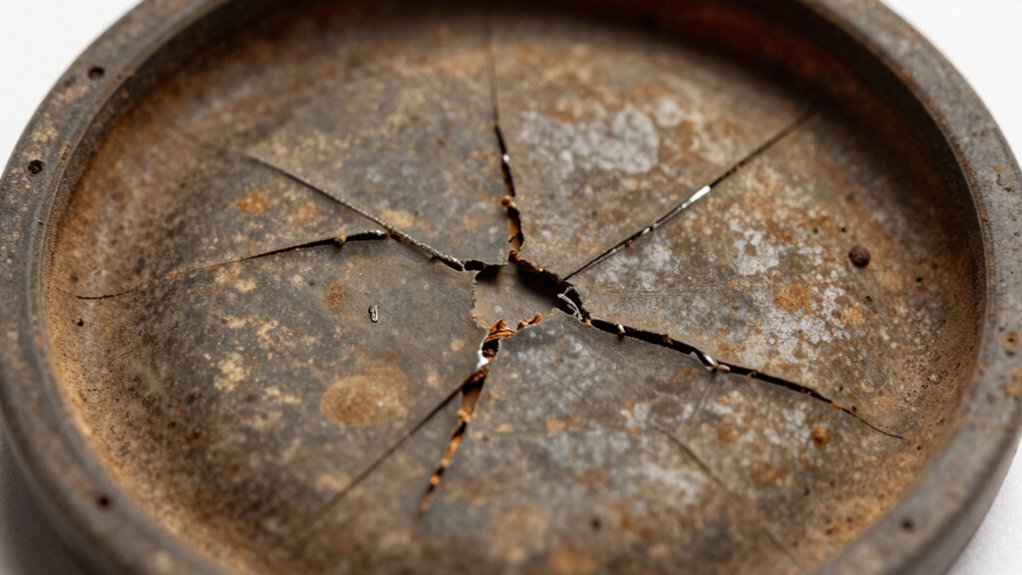
You’ll find antique espresso gaskets harden and crack because repeated heat spikes force polymer chains into tighter configurations, and cooling locks them in place, making the rubber brittle. Coffee grounds settle on the lip like sandpaper, while mineral deposits embed and harden, increasing friction and wear. Old rubber compounds lack modern stabilizers, so thermal cycling and oil exposure accelerate oxidation and micro‑cracking. Overtightening adds stress, creating tiny cracks that spread with each brew. Keep reading to discover how to clean, maintain, and upgrade these gaskets.
Why Antique Espresso Gaskets Lose Elasticity Over Time
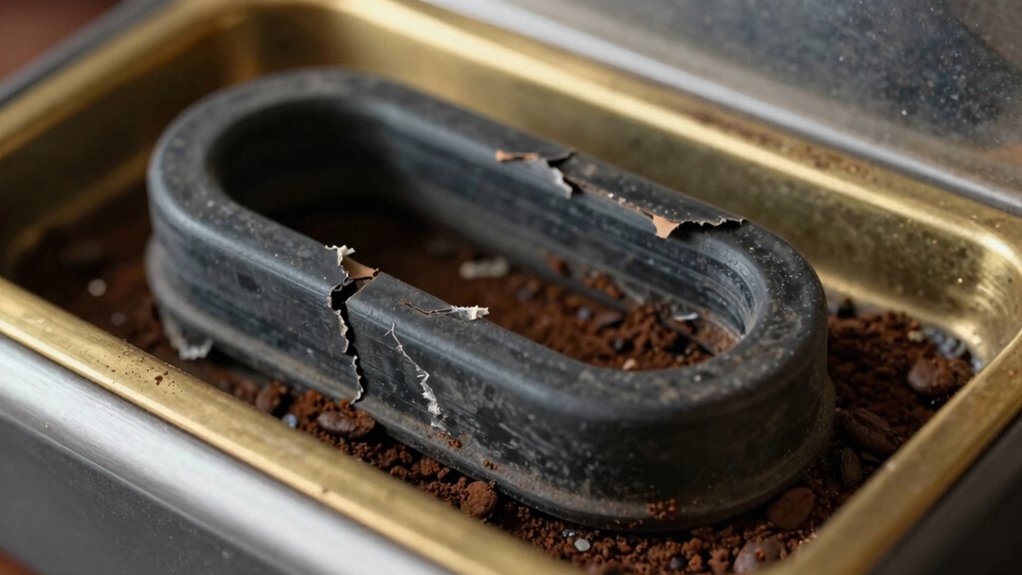
Why do antique espresso gaskets lose elasticity over time? You’ll notice that each time you fire up the machine, the rubber endures thermal cycling that gradually hardens it. The repeated heat spikes cause the polymer chains to break down, turning flexible material into brittle fragments.
As you brew, coffee grounds and wear settle on the gasket lip, acting like abrasive sandpaper; this wear from coffee oils chips away the surface and speeds up the loss of gasket elasticity.
Continuous 24/7 operation accelerates drying, while intermittent use gives the rubber a chance to recover.
Older silicone/MBR recipes simply aren’t as resilient as newer formulations, so the combination of heat, oil‑induced wear, and material aging makes the gasket stiff and prone to failure. Additionally, material durability varies greatly depending on the quality of the gasket’s composition, which impacts how long it maintains its protective seal.
How Heat Cycling Accelerates Antique Espresso Gasket Hardening
Thermal‑cycling fatigue is the primary driver behind antique espresso gasket hardening. When you pull shot after shot, the rubber gasket endures rapid temperature swings that act like thermal shocks, forcing polymer chains to re‑orient and lose flexibility. Each heating phase pushes molecules into tighter configurations; each cooling phase locks them in place, so the material stiffens faster than it would under steady heat. Dehydration compounds the problem—prolonged exposure without adequate cooling dries the rubber, making it brittle at the lip. Antique machines lack modern stabilizers, so their gaskets react aggressively to the inconsistent boiler temperatures between hot group heads and cooler ambient air. This combination accelerates micro‑cracking and eventual failure. Over time, repeated heat cycling causes the gasket material to become increasingly fragile and prone to leaks.
Coffee Grounds & Mineral Deposits: How They Abrade Antique Gaskets

After the gasket hardens from repeated heat shocks, the next big enemy is what sticks to it. Coffee grounds settle on the lip and act like sandpaper, grinding away rubber and causing rapid gasket wear.
Meanwhile, mineral deposits from hard water embed in the surface, turning the flexible seal into a brittle shell that cracks under pressure.
When you lock the portafilter, gritty residues increase friction, making the gasket grind and accelerating thinning. Heat amplifies this effect, because the hardened rubber becomes less forgiving and the deposits harden further.
A quick wipe of the lip after each brew and a periodic descaling routine keep both coffee grounds and mineral deposits at bay, preserving seal integrity and extending the gasket’s life. Additionally, stainless steel durability plays a role in resisting corrosion and wear, helping maintain gasket performance over time.
Weaknesses of Traditional Rubber Gaskets in Vintage Machines
You’ll notice the rubber hardens fast as the machine heats up, losing its elasticity almost overnight. The constant heat accelerates the material’s breakdown, turning a flexible seal into a brittle ring. That’s why vintage gaskets start leaking long before you expect them to.
Aging Rubber Hardens Quickly
Why does the rubber in vintage espresso gaskets become brittle so fast?
You’ll notice rubber hardening as soon as heat aging starts its relentless work. Each shot pumps hot water and steam through the same seal, and the repeated temperature swings push the material toward stiffness. Without modern longevity additives, the old compound loses elasticity, and you see gasket degradation manifest as tiny cracks that quickly turn into leaks. Even if you run the machine only a few hours a day, the cumulative heat exposure over months erodes pliability. The material fatigue isn’t tied to shot count; it’s the relentless thermal cycle that forces the rubber to harden, making your vintage espresso machine lose its seal and its charm. Choosing natural, high-quality moisturizing ingredients in replacement gaskets can help maintain flexibility longer.
Heat Accelerates Material Degradation
Ever notice how a vintage espresso machine’s gasket cracks after just a few months of daily use? Heat exposure is the silent thief that speeds up rubber aging, turning flexible seals into brittle rings. Each time you fire up the boiler, the temperature spikes, drying out the material and forcing the gasket into rapid deterioration. The old formulations in antique machines lack modern heat‑resistance, so repeated cycles of heat, moisture, and pressure wear the lip thin and cause leaks. Additionally, foam stability can be compromised by consistent high temperatures, further weakening the gasket material over time.
- Continuous high‑temp operation dries the rubber, reducing elasticity.
- Heat cycling softens then hardens the material, creating micro‑cracks.
- Older compounds lack additives that protect against thermal oxidation.
- Moisture combined with heat accelerates chemical breakdown.
- Pressurization stresses the already weakened gasket lip.
Understanding these factors helps you anticipate failures and plan timely replacements.
Why Overtightening Damages Antique Espresso Gaskets
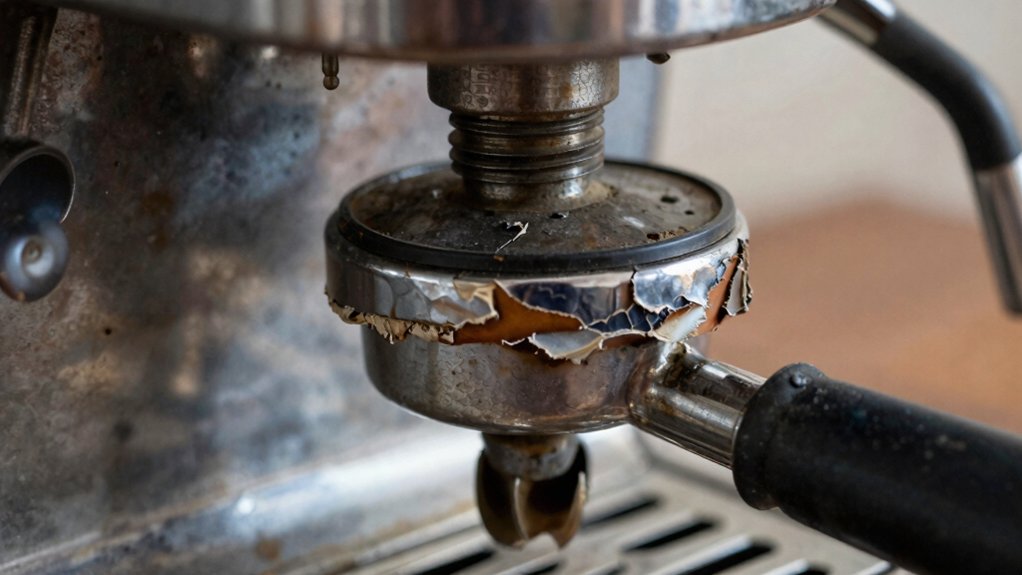
You’ll notice that overtightening puts extra stress on the rubber, making it harden faster. That excess pressure creates tiny cracks that spread with each brew. As a result, the gasket loses its seal and you end up with leaks much sooner. Additionally, repeated stress can weaken the integrity of the water deflecting fins, accelerating gasket failure.
Creased Stress Increases Hardening
Where does the damage start? You feel it at the gasket lip the you over‑tighten, and the moment a permanent crease forms, the material’s future changes. That gasket creasing concentrates stress, forcing the elastomer to flex unevenly each pull. Thermal aging then locks those folds in place, accelerating elastomer hardening. Over time the seal becomes uneven, leaks appear, and the espresso machine loses pressure. Proper tightening techniques can help reduce the risk of creasing and prolong gasket lifespan.
Excessive Tightening Causes Cracks
When the gasket lip already bears a permanent crease from over‑tightening, any extra torque simply pushes the stressed region past its elastic limit, spawning microscopic cracks that quickly coalesce. You’ll notice that repeated over‑tightening subjects the aging rubber to high compressive stress, which accelerates gasket cracking. The hardened material, already brittle from heat exposure, can’t absorb the added load, so tiny fissures turn into full‑scale tears. Uneven seals form as the lip and ears deform, concentrating wear at weak points. If you keep tightening after a leak, the gasket rubs against dirty basket rims, acting like sandpaper on fragile rubber. Inconsistent lock angles and misaligned portafilters further amplify stress, making each cycle a step toward inevitable failure.
How Daily Use Affects Antique Espresso Gasket Longevity
Why does daily use wear out an antique espresso gasket so quickly? You’ll notice that constant heat and thermal cycling harden the rubber gasket, making it brittle and prone to gasket. Each pull pushes hot water through the basket, and the repeated expansion‑contraction stresses the seal. Coffee grounds collect on the lip, acting like sandpaper, while overtightening to stop leaks adds extra pressure. Misaligned basket rims from heavy use amplify the strain, accelerating gasket wear.
- Heat cycles harden and brittles the rubber gasket.
- Continuous operation shortens lifespan more than occasional use.
- Coffee grounds act as abrasive particles on the gasket lip.
- Frequent overtightening compounds degradation.
- Misaligned basket rims increase sealing stress.
How to Spot Early Leak Signs Before Your Gasket Fails?
You’ll notice yourself tightening the portafilter more each pull, and a drip will appear around the handle’s lower‑right corner.
If the seal feels looser and you need extra pressure to keep it closed, that’s a warning sign.
An uneven lock angle—where the portafilter clicks at a different spot—often mimics a gasket failure before the gasket actually cracks.
Tightening Pressure Increases
Ever notice how the portafilter suddenly feels tighter yet the espresso still drips? You’re probably feeling early gasket wear. Over‑tightening pushes the rubber against the basket lip, creating micro‑damage that lets water escape. Heat exposure from long brewing sessions hardens the gasket, reducing elasticity so even normal pressure leaks.
- You need to add extra clicks to lock the portafilter.
- The espresso stream turns into a thin drip at the 4 o’clock position.
- The gasket’s edge feels gritty when you run a finger along it.
- The lock angle feels off, requiring a different hand motion.
- The portafilter ears show faint scratches from repeated pressure.
Spotting these signs early lets you address the problem before a full gasket failure.
Dripping From Handle Area
When the portafilter feels unusually tight, the gasket is already under stress, and the next warning sign shows up as tiny droplets forming around the handle. Those droplets signal a handle area leak and usually mean the portafilter seal is losing elasticity. Inspect the gasket lip for grime or coffee grounds; a clean lip should sit flush against the filter. If you see water pooling at the bottom of the handle while the filter is locked, that’s early gasket wear. Overtightening to stop the drip only accelerates the problem, making the lip wear faster. Align the portafilter properly and verify the seal is even; this helps you separate genuine gasket wear from a mis‑seated or bent component before the failure becomes catastrophic.
Uneven Portafilter Lock Angle
Why does a coffee line drip from the 4 o’clock position even after you’ve tightened the portafilter? An uneven portafilter lock angle often creates a tiny gap that lets water escape before the gasket can seal fully. You’ll notice drip‑leakage despite firm tightening, which usually points to mis‑alignment rather than pure gasket wear. Spotting the early signs saves you from a full‑blown gasket leakage later.
- Check the PF ears for uneven pressure when you lock it with two fingers.
- Look for stray coffee grounds on the gasket lip; they act like sandpaper.
- Inspect the basket rim smoothness; roughness amplifies lock‑angle issues.
- Verify a level contact surface; a tilted PF leaves a gap at 4 o’clock.
- Compare drip patterns: a single spot suggests angle, while widespread leaks hint at gasket wear.
How to Clean Coffee Grounds and Mineral Deposits From Antique Gaskets
How can you keep an antique espresso gasket from turning into a gritty, leaky seal? First, remove the portafilter and brush off loose grounds with a soft, dry toothbrush. Then soak the gasket in warm, mildly acidic water—half a cup of white vinegar per quart of water—for five minutes to loosen mineral deposits. Gently scrub the lip and channel with a non‑abrasive sponge, avoiding harsh scouring pads that could increase gasket wear. Rinse thoroughly with filtered water, then pat dry with a lint‑free cloth. For preservation, apply a thin layer of food‑grade silicone grease to keep the material supple and protect against future mineral buildup. Store the machine upright, allowing air circulation to prevent moisture accumulation.
When and How to Replace an Antique Group‑Head Gasket Properly
Ever notice the portafilter slipping or water seeping from the handle despite tightening? That’s a clear sign your antique group‑head needs gasket replacement. First, let the machine cool, then remove the old rubber ring. Clean the channel and basket rim thoroughly—any debris will cause premature wear. Choose a gasket that matches the standard 8.5 mm, 58 mm size and seat it evenly. Re‑assemble, tighten the portafilter just enough to stop leakage without overtightening. Keep an eye on the frequency of retightening; heavy daily use may demand a new gasket every few months, while occasional brewing stretches it to years.
- Cool the espresso machine before work.
- Remove the worn gasket and inspect for cracks.
- Clean channels and rims with a lint‑free cloth.
- Install the correctly sized replacement gasket.
- Tighten the portafilter just enough to eliminate leakage.
Choosing Modern Silicone Gaskets for Antique Espresso Machines
After you’ve removed the old rubber ring and cleaned the group‑head, you can upgrade to a modern silicone gasket. Silicone gaskets give antique espresso machines the flexibility and heat resistance that original materials lack, so you’ll see fewer leaks and longer sealing life. Choose a gasket that matches the standard 8.5 mm/58 mm size; the fit will be snug and reliable. Because silicone retains elasticity through repeated heating cycles, it resists cracking and prevents overtightening stress on delicate vintage components. When you perform gasket replacement, you’re not just fixing a leak—you’re protecting the machine’s internal tolerances and extending its usability. The result is a tighter, more consistent brew without compromising the machine’s historic character.
Extending the Life of Your Espresso Machine Through Routine Gasket Care
Seal your espresso machine regularly to keep the gasket from turning into a brittle, leaking seal. By treating gasket maintenance as a habit, you protect gasket life and avoid costly repairs. Lightly loosen the group head, pull out the old rubber, and wipe the channel with a soft brush. Inspect for cracks, then seat a fresh silicone gasket with the correct orientation (UP marking, 58 mm/8.5 mm). Avoid overtightening—especially with bottomless portafilters—because excess pressure stresses the lip and accelerates wear. Schedule routine replacement every few months under heavy use or annually for lighter use, and you’ll keep the brew pressure stable and the machine humming.
Seal your espresso machine often; replace the silicone gasket to prevent brittleness, leaks, and maintain stable brew pressure.
- Use a dedicated gasket removal tool to prevent tearing.
- Clean the channel thoroughly to eliminate abrasive residue.
- Verify correct gasket size and orientation before installation.
- Loosen the group head just enough to seat the gasket without distortion.
- Record replacement dates to track gasket life trends.
Frequently Asked Questions
How Long Do Espresso Gaskets Last?
You’ll typically get four to eight months of reliable service, depending on how often you run the machine, how hard you push the pressure, and whether you keep the gaskets properly aligned and maintained.
What Is a Common Cause of Gasket Failure?
You’ll find that overtightening the basket is a common cause of gasket failure; it crushes the rubber, creates uneven pressure, and accelerates wear, leading to leaks and premature cracking.
What Is the Average Lifespan of an Espresso Machine?
You’ll typically get ten to fifteen years from a well‑maintained espresso machine, though heavy daily use can trim that to eight or nine years, and occasional neglect may shorten it further.
What Are the Most Common Repairs for an Espresso Machine?
You’ll replace worn gaskets, clean and reseat the group head, fix bent or dented components, clear grounds from the basket lip, and swap out cracked screens, often using silicone gaskets for durability.
In Summary
By keeping an eye on heat cycles, cleaning out grounds and mineral buildup, and avoiding over‑tightening, you’ll prevent most premature failures. When a gasket finally hardens, replace it with a modern silicone part that matches the original dimensions. Regular maintenance—quick rinses after each pull and a deep clean every few months—will keep your vintage machine sealing tight and performing like new for years to come.


