

You need special care because vintage moka pots have thin aluminum walls that oxidize fast, gaskets that lose elasticity, and safety valves that can corrode, all of which affect flavor and safety. Moisture and harsh detergents accelerate corrosion, while mineral buildup changes heat transfer and adds metallic off‑notes. Proper rinsing, thorough drying, gentle cleaning, and regular descaling preserve the patina and keep the seals intact. Follow these steps and you’ll discover how to maintain both taste and durability.
Why Proper Care Matters for Vintage Moka Pots

Because vintage aluminum Moka pots oxidize quickly, you must dry them thoroughly after each use; otherwise the metal degrades and the coffee’s flavor suffers. You’ll notice that even a thin film of moisture accelerates corrosion, so a disciplined after‑brew routine is essential. Using microfiber towels can help absorb residual moisture more effectively and prevent streaks or lint residue. Rinse the pot promptly, disassemble the filter plate, gasket, and safety valve, then wipe every surface with a soft cloth. Avoid dishwashers and harsh detergents; they strip the protective patina and leave unwanted chemical notes. Pat the parts dry, then store them with plenty of air circulation to keep all aluminum components moisture‑free. Consistent cleaning and drying preserve the pot’s structural integrity, maintain its collectible value, and ensure each brew tastes as it should.
How Age Affects Seals, Gaskets, and the Safety Valve in a Vintage Moka Pot
What happens when a vintage moka pot’s gaskets and safety valve age? You’ll notice the gasket losing elasticity, which lets steam leak and pressure wobble. Aging seals become soft or cracked, so water can bypass the filter, weakening the espresso flow and risking under‑ or over‑pressurization. The safety valve, exposed to repeated heating and cooling, may corrode or warp, reducing its ability to release excess pressure promptly. These changes can cause uneven brewing and even safety hazards. Material durability plays a crucial role in maintaining proper function over time. To keep your pot reliable, inspect the gasket and safety valve before each use, tighten the valve securely, and replace any compromised seals. Regular upkeep ensures consistent pressure, proper extraction, and safe operation.
What Happens to Aluminum Over Time and How It Influences Flavor

You’ll notice a thin oxide patina forming on the interior as the pot ages, and that layer can both mellow the brew and add a metallic edge if it builds up too much. Repeated heating leaves micro‑scratches that trap mineral deposits and coffee oils, subtly shifting the flavor profile. Keeping the pot dry after each wash slows corrosion and helps the patina stay balanced rather than turning harsh. Regular cleaning with descaling tablets can help remove mineral buildup without damaging the aluminum surface.
Oxide Patina Development
Ever wondered how a vintage moka pot’s aluminum transforms over years of brewing? You’ll notice a thin oxide patina forming as brewing oils react with the metal, creating a protective layer that softens the brew’s edge. This patina deposits a smoother, less metallic note, which collectors prize as a sign of seasoning.
When you rinse with hot water and skip detergents, you preserve surface oils, encouraging the patina to mature. Avoid abrasive scrubbing; it strips the oxide, exposing raw aluminum and reviving harsh metallic flavors. Your pot’s water quality and usage frequency shape each patina’s thickness and character, making every vintage’s taste profile uniquely yours.
Mineral Buildup Effects
The protective oxide layer you’ve nurtured can mask the next challenge: mineral deposits from hard water.
As mineral buildup gathers on the pot’s interior and safety valve, a thin limescale film forms, insulating heat and altering boiling behavior. This barrier slows heat transfer, causing the water to overshoot the ideal extraction temperature and producing uneven pressure that can make the brew erratic.
Limescale also interacts with coffee oils and the aluminum surface, leaching metallic notes that spoil flavor. Regular descaling with vinegar, citric acid, or a commercial descaler dissolves the deposits, restoring efficient steam flow and preserving the coffee’s true taste.
Understanding the temperature control of your moka pot can help you avoid overheating and further mineral buildup.
Switching to filtered or bottled water reduces future buildup, extending the pot’s life and keeping each cup consistent.
How to Descale a Vintage Aluminum Moka Pot Without Removing Patina
You’ll start with a gentle acid soak—mix equal parts water and white vinegar, let the pot sit 15 minutes, then rinse thoroughly to keep the patina shining.
If stubborn oil remains, a teaspoon of baking soda per liter of hot water lifts it without stripping the finish.
Finish by flushing several times with clean water and drying completely before reassembly.
Gentle Acid Soak
How can you safely dissolve mineral buildup without stripping the cherished patina? Mix equal parts water and white vinegar for a gentle acid soak that respects the aluminum patina. Submerge the pot for about 15 minutes, then rinse repeatedly with fresh water to erase any vinegar trace. This descaling method lifts limescale while keeping the seasoned surface intact, so you retain that beloved glow. Additionally, using eco-friendly filters can prevent future buildup and maintain the pot’s appearance.
Preserve Patina Shine
When mineral deposits cling to a vintage aluminum Moka pot, a brief soak in a diluted vinegar or citric‑acid solution dissolves them without stripping the seasoned patina. After the soak, rinse the pot thoroughly with hot water, then dry every component with a soft cloth to prevent moisture that can trigger corrosion.
For routine upkeep, run a quick hot‑water rinse after each brew and lightly buff the interior with a non‑abrasive cloth to maintain the sheen. If you notice stubborn spots, repeat the short descaling cycle, but never exceed a five‑minute immersion, as longer exposure can erode the protective layer.
Finally, store the pot dry and consider a light oil coating to seal the patina and keep the metal looking its best.
How Often Should You Descale and Deep‑Clean Your Vintage Moka Pot?
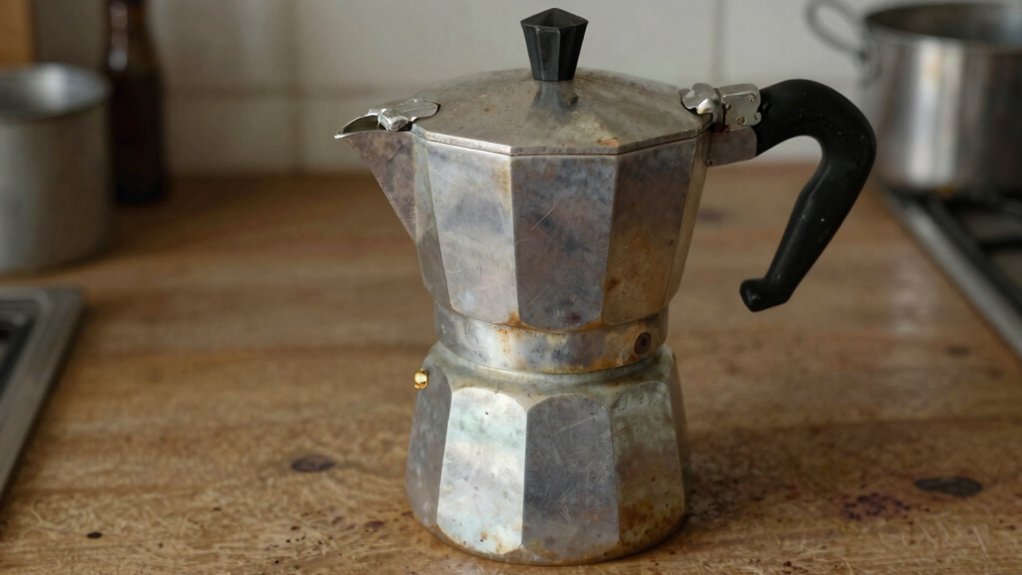
Ever wondered how often you should descale and deep‑clean your vintage Moka pot? Your descaling frequency hinges on water hardness and how often you brew. If you use hard water, aim for a full acid descale every month; with softer water, every two to three months usually suffices. Fill the lower chamber with a vinegar‑lemon solution, let it sit 2–4 hours, then brew plain water to flush the acid. Rinse thoroughly and dry completely before reassembly to avoid oxidation. While descaling tackles mineral buildup, schedule a deep‑clean of the gasket and valve at least once a quarter. Remove the gasket, scrub the valve and filter plate, rinse, and let everything dry. This routine keeps pressure stable, flavor clean, and the pot humming for years. Additionally, using appropriate apron types can protect your tools and workspace during cleaning and maintenance routines.
Restoring the Gasket and Safety Valve for Reliable Pressure Control
Regular descaling keeps mineral buildup at bay, but the real test of a vintage Moka pot’s performance lies in the gasket and safety valve. You should inspect the gasket each time you clean the pot, looking for cracks, tears, or hardening. If you spot any deformation, pull the gasket out, wipe the housing with a damp cloth, and replace it with a fresh one to restore a tight seal.
Next, check the safety valve for blockages or leaks; a malfunctioning valve will release steam too early and compromise pressure control. When it leaks, replace the valve, then rinse all components, dry them completely, and reassemble. This routine keeps the pressure system reliable and prevents premature failure.
Preventing Exterior Oxidation on Vintage Aluminum Moka Pots
Why let moisture linger on your vintage aluminum Moka pot? When water sits on the surface, it sparks exterior oxidation that dulls the finish and can eventually corrode the metal. You’ll keep your pot looking and feeling like new by wiping it dry right after each wash and avoiding harsh cleaners. Using organic-certified cleaning methods can help maintain the material’s integrity and appearance.
Wipe your vintage aluminum Moka pot dry after each wash to prevent oxidation and corrosion.
- Use a soft, lint‑free cloth dampened with warm water for regular exterior cleaning.
- Skip the dishwasher; detergents and abrasive scrubbing accelerate the.
- After rinsing, pat the pot dry with a clean towel; don’t just air‑dry.
- If your model has stainless accents, a diluted white‑vinegar rinse works, but never apply vinegar to aluminum.
Troubleshooting Persistent Metallic Taste After Cleaning
After a thorough wash, a lingering metallic taste usually means something’s still clinging to the pot—whether it’s residual oil, a thin patina, or a degraded gasket.
First, inspect the upper filter and gasket for residue buildup; burnt oil or charred particles can rancidify and leach metal flavors. If the gasket feels soft or cracked, replace it; gasket degradation often releases metallic off‑notes.
Next, dry the pot completely; damp aluminum promotes aluminum oxidation, which subtly alters aroma.
Avoid harsh detergents or dishwasher cycles that can leave film or accelerate oxidation. Rinse with hot water, wipe with a lint‑free cloth, and let it air‑dry in a well‑ventilated spot. Re‑assemble only when every surface feels clean and dry, then brew a test cup to confirm the taste is gone.
Frequently Asked Questions
Do People Not Clean Moka Pots?
You probably skip cleaning, but you should rinse and dry each pot after brewing; otherwise moisture, residue, and oxidation will build up, ruining flavor and damaging the aluminum over time.
How Do Italians Clean Their Moka?
You rinse the pot with hot water, scrub the filter basket and gasket gently, then dry every piece thoroughly. You avoid dishwashers, use a soft brush, and store it dry to prevent oxidation.
Can Moka Pots Go Bad?
Yes, they can go bad if you neglect them; rust, clogged filters, worn gaskets, or mineral buildup will ruin flavor, reduce pressure, and even cause leaks, so dry, clean, and inspect them regularly.
Do Italians Actually Use Moka Pots?
You’ll find Italians still brewing with moka pots daily, especially at home for quick espresso. They cherish the ritual, but many also prefer modern machines for cafés and high‑volume settings.
In Summary
Treat your vintage moka pot like a cherished heirloom: clean it regularly, descale gently, and replace worn gaskets and safety valves. Keep the aluminum’s patina intact to preserve flavor, and protect the exterior from oxidation. By maintaining pressure seal and pressure control, you’ll enjoy rich, authentic coffee without metallic off‑notes, and your classic pot will keep brewing beautifully for years to come.


