
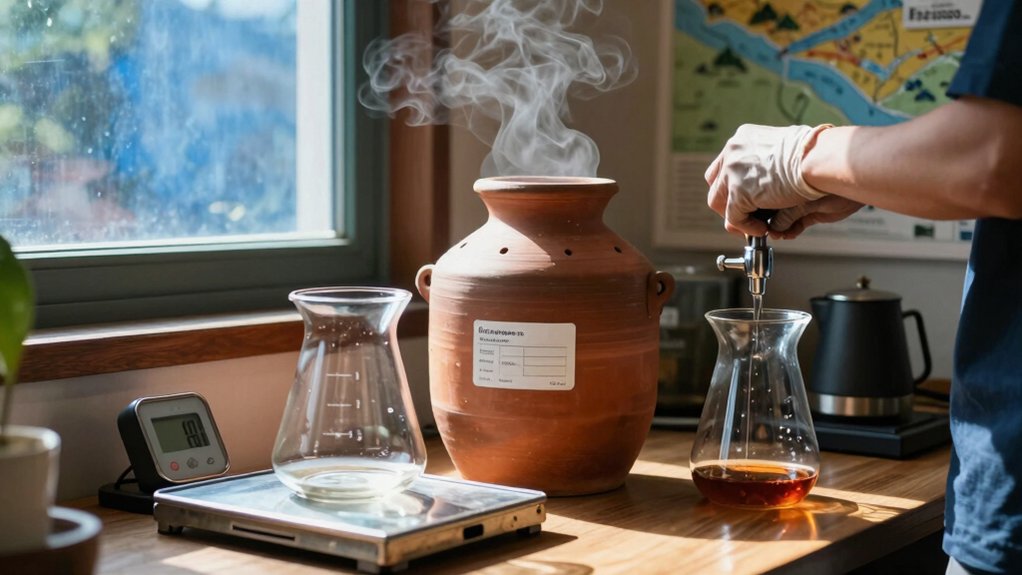
You’ll find that higher altitudes stretch fermentation from 12‑36 hours, while low‑altitude sites finish in 6‑18 hours because cooler nights and thinner air slow microbial metabolism and oxygen diffusion. Mid‑elevation beans (1,000‑1,800 masl) hit a sweet spot at 12‑36 hours, and ultra‑high elevations (1,800‑2,200+ masl) need even longer as respiration slows. Washed processes speed up at altitude due to cooler temps, whereas natural methods lag because beans retain moisture. Denser beans limit oxygen ingress, extending the curve, and sunlight can boost sugars to accelerate fermentation. Adjust start times by 6‑12 hours per 1,000 m rise, monitor CO₂ to avoid overruns, and taste daily. Keep an eye on diurnal swings—cool nights preserve aromatic precursors, while sunrise spikes activity. If you keep exploring, you’ll uncover more nuances.
How to Time Fermentation for Each Altitude Zone
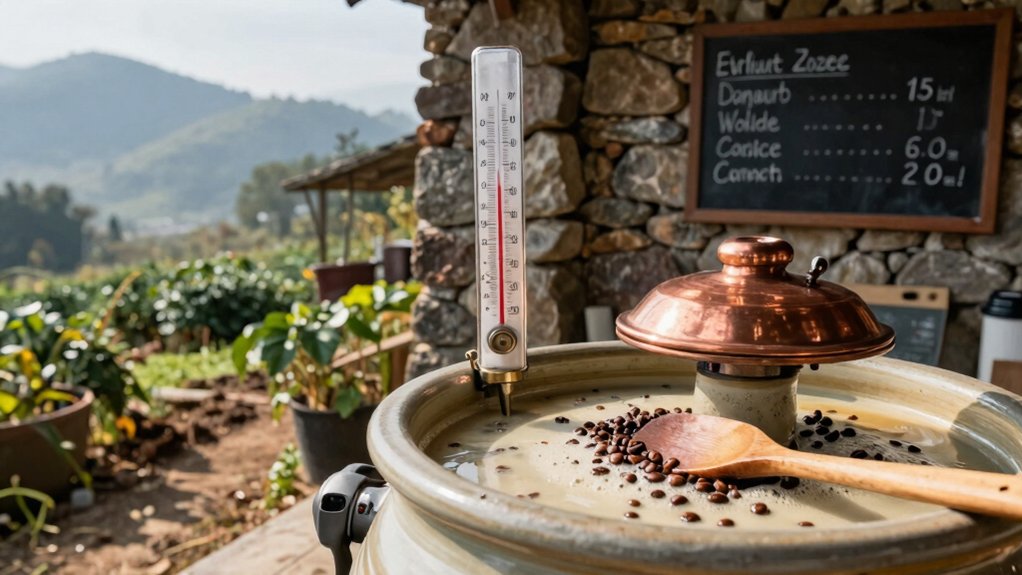
Wondering how to sync fermentation with altitude? You’ll need to match fermentation timing to each altitude zone’s natural rhythm. In low‑altitude, warm sites, the fermentation window shrinks to 6–18 hours; watch CO2 monitoring closely and stop the process before aroma development wanes. For consistent results, manage the timing with an eye on the CO2 monitoring data to avoid overruns. Mid‑altitude beans (1,000–1,800 masl) usually hit their sweet spot between 12 and 36 hours, giving you a comfortable buffer to taste and adjust.
At ultra‑high elevations (1,800–2,200+ masl), respiration slows dramatically, so extend the fermentation window and keep a steady eye on CO2 release to avoid under‑fermentation.
How Cooler Nights Extend Altitude Fermentation at High Elevations
When night‑time temperatures drop at high elevations, your yeast stays active longer, slowing the acid buildup. This cooler backdrop lets the mucilage break down more gradually, giving sugars time to transform into richer flavors. As a result, you’ll notice brighter acidity and more nuanced, tea‑like aromatics in the final cup. non-dairy milk compatibility
Night‑Time Temperature Drop
How do cooler nights at high elevations reshape your coffee’s fermentation timeline? The night-time temperature drop slows bean respiration, giving fermentation a longer, gentler curve. At high elevation, the cooler air tames enzymatic activity, so mucilage breakdown unfolds more gradually. Yeast and bacteria linger in a slower state, letting aromatic precursors develop without rushing into over‑fermentation. This diurnal swing nudges microbes toward nuanced acidity, preserving fruity and floral notes you’ll taste later. A misty valley at dusk, where temperature slides five degrees, and the beans sit in a quiet, cool hush. A slow‑dripping stream of mucilage, each drop a tiny pause that lets flavor molecules linger. A sunrise that reveals a brighter, more complex aroma profile, hinting at the night’s gentle influence. Diurnal swing enhances stability in fermentation dynamics at higher elevations, aligning with how compact, organized setups in coffee processing help manage varied inputs and maintain consistency.
Extended Yeast Activity
Because cooler nights at high elevations drop ambient temperature and thin the air, yeast metabolism slows and fermentation stretches out. You’ll notice that at altitude the lower Temperature and reduced Oxygen Levels keep Yeast Activity in a gentle, lingering state. This slower respiration delays sugar breakdown, so the Fermentation phase extends, giving microbes more time to transform compounds into aromatic precursors. In washed and semi‑washed coffees, the prolonged period lets heterofermentative pathways develop richer flavor notes without rushing the process. You can adjust your washing schedule to match the extended timeline, ensuring the coffee matures fully while avoiding over‑fermentation. Embrace the altitude‑driven stretch to craft nuanced, complex cups. Fermentation adjustments can help synchronize your process with these environmental shifts.
Slower Acid Development
Yeast’s gentle, lingering activity at altitude sets the stage for a slower acid development curve. You’ll notice that cooler nights at high altitude drop ambient temperature, which drags down microbial metabolism. This slower fermentation lets malic and citric acids form gradually, sharpening the cup’s brightness without a sudden acidity spike. The diurnal swing also eases oxygen flow, so the acidity development proceeds in a smooth, extended arc, often adding hours or even days to reach the target pH. A mist‑laden hillside where night breezes chill the fermenting tanks. A glass of coffee with a luminous, nuanced acidity that lingers on the palate. A clock slowly ticking as the fermentation batch ages under a star‑filled, cool sky. Food-grade silicone helps ensure cleanability and durability of equipment used in the process.
How Thin Air Slows Microbial Activity in Low‑Altitude Ferments
You might notice that, even at low elevations, the thinner air can limit the oxygen your microbes receive, slowing their metabolism. 3-ply napkins also reflect how layered structures can influence surface interactions, subtly affecting fermentation dynamics in certain setups. The reduced oxygen, paired with cooler night‑time temperatures, means the mash retains less heat, further curbing microbial activity. As a result, fermentation progresses more slowly than you’d expect from the ambient warmth alone.
Reduced Oxygen Availability
One key factor is that thinner air at higher altitudes cuts the amount of oxygen available to the microbes, so their respiration slows down. You’ll notice reduced oxygen forces high altitude fermentation to stretch out, because slower enzymatic activity delays the breakdown of sugars and acids. The limited oxygen availability means microbes consume less malic and tartaric acid, preserving brighter acidity and allowing nuanced aromatics to develop. As a result, fermentation time lengthens, giving you more control over flavor balance and preventing premature sourness. Biodegradable is another consideration to think about when planning sustainable farming and processing practices for altitude-grown coffees.
Lower Temperature Retention
Ever notice how a low‑altitude ferment seems to race ahead while a high‑altitude batch lags? At low altitude, dense air holds heat, so temperature retention is high and microbial activity speeds up. If you lower the ambient temperature, you slow the metabolic rate, extending the fermentation window. In low‑altitude processing, you can control this by shading the vats, adding ice water, or fermenting at night. The result is a steadier acid development and a more balanced cup. In practical setups, choosing equipment with robust temperature management can help maintain consistent fermentation curves across shifts and environments ATC temperature control and ensure readings stay stable under varying conditions.
Why Strong Sunlight Boosts Sugar and Speeds Up Fermentation?
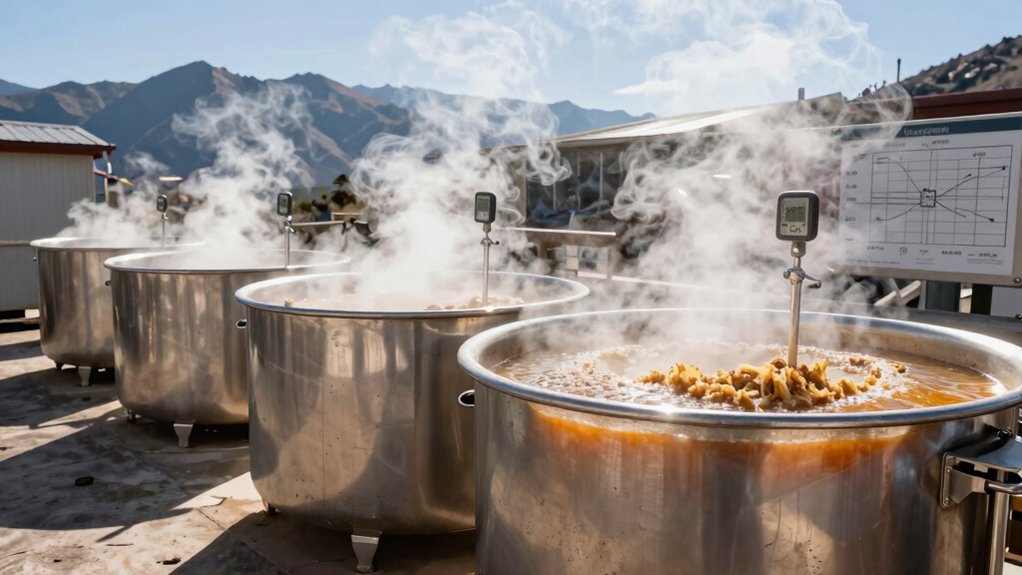
How does bright sunlight translate into faster coffee fermentation? You’ll notice that intense sunlight spikes photosynthesis in the cherries, flooding the mucilage with sugars that microbes love. Those extra sugars feed yeast and bacteria, so they multiply faster and churn out acids and aroma compounds sooner. The heat from sun‑lit cherries also lifts the temperature a few degrees, nudging kinetic reactions forward. At altitude, cool nights preserve the sugar surge, while daytime UV amplifies concentration, letting each fermentation stage finish earlier.
- Sunlit cherries glisten with sugary nectar, inviting swarms of active microbes.
- Warmed pulp creates a gentle steam that accelerates enzymatic breakdown.
- Altitude’s diurnal swing preserves the sugar boost, compressing the whole fermentation timeline.
How Bean Density Controls Oxygen Diffusion During Altitude Fermentation
Bright sunlight floods the cherries with sugars, but at altitude the denser, harder beans that result become the bottleneck for oxygen. You’ll notice that higher density thickens the bean structure, narrowing fissures and lengthening the diffusion path for oxygen.
During altitude fermentation the reduced ambient oxygen and tighter grain walls slow endosperm diffusion, creating micro‑anaerobic zones that keep microbes active longer. This uniform, slower ingress lets organic acids build gradually, shaping acidity and aroma.
Because the denser beans retain their diffusion‑limiting traits through drying, the final cup reflects the altitude‑induced density effect. Adjusting wash times or aeration can compensate, but the core control remains the bean’s density‑driven oxygen diffusion.
How Diurnal Temperature Swings Slow Enzyme Activity in Fermentation
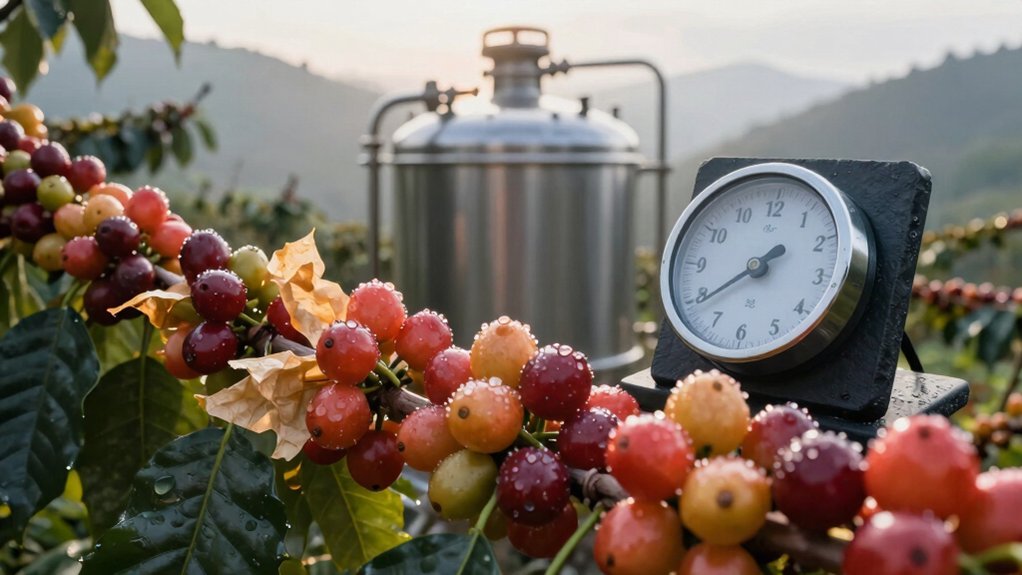
Why do the day‑night temperature swings at high altitude stretch coffee fermentation? You notice the cooler nights pulling down the metabolic rate of yeasts and bacteria, so enzyme activity slows and fermentation times lengthen. When sunrise brings warmth, activity spikes briefly, but the subsequent drop preserves intermediate metabolites, extending the curve. This dance keeps aromatic precursors intact longer, shaping the cup’s nuance.
High‑altitude day‑night swings slow microbes at night, briefly boost them at sunrise, preserving aromatic precursors.
- A moonlit ridge where night temperatures dip, freezing the microbial hustle.
- A sun‑kissed slope where daytime heat flickers, reviving enzyme action for a moment.
- A lingering mist that carries the preserved aromatic precursors into the beans, deepening flavor.
What Flavor Changes Occur After Altitude‑Adjusted Fermentation?
You’ll notice a brighter, acidity‑driven lift that cuts through the body, because the thinner air slows respiration and preserves sharp compounds.
The flavor balance shifts toward cleaner, crisper notes, with less heavy fermentative funk and a more pronounced tea‑like brightness.
Those changes let you taste the altitude‑adjusted profile without any muddiness.
Enhanced‑Driven Acidity Shift
What happens to a coffee’s flavor when you tweak fermentation for altitude? You’ll notice a sharper, brighter acidity that feels like a crisp sunrise in a cup. At higher elevation the cooler nights slow bean development, so the fermentation temperature stays low and microbes work longer, pulling out citrus‑like tang and floral nuances. The reduced oxygen at altitude prolongs respiration, sharpening the acidity further, while dense beans hold sugars that release fragrant, fruit‑forward notes as the processing method extends. The result is a clean, tea‑like brightness paired with vivid citrus and berry accents.
- A burst of lemon‑zest acidity that cuts through the body
- Floral jasmine whispers emerging from the extended sugar release
- Bright berry fruitness that lingers like a sunrise over a mountain ridge
Altitude‑Adjusted Flavor Balance
The bright, citrus‑forward acidity you felt in the previous section deepens when you adjust fermentation for altitude, because cooler nights and thinner air slow microbial metabolism and extend the extraction of aromatic precursors. At higher Elevation, the slower Fermentation lets malic, citric, and tartaric acids linger, so the cup bursts with bright Acidity and layered fruity notes. You’ll notice a cleaner, more floral Flavor profile as dense beans resist rapid gas release, avoiding over‑fermentation and off‑flavors. The thinner atmosphere also nudges microbes toward a controlled curve, highlighting citrus and jasmine tones.
Whether you wash or go natural, the Altitude‑adjusted process preserves sweetness while sharpening the Balance, delivering a nuanced, elevation‑enhanced cup.
How to Adjust Fermentation Time for Washed vs. Natural Processes
Ever wondered how altitude reshapes your fermentation schedule? At higher elevations you’ll notice cooler temperature and lower humidity, so washed processing finishes faster, while natural processing lags as beans retain moisture longer. Adjust your windows by tasting daily and shifting start times 6–12 hours for each 1000‑meter jump. Remember that denser beans at altitude slow internal moisture flow, letting pectin break down quickly in washed coffees, whereas sun‑dried beans in natural processing ferment slower, preserving fruit notes.
- A misty mountain farm where beans glisten under thin air, each wash turning crystal clear in half a day.
- A humid valley where the sun bakes the coffee, and natural beans sweat, extending their sweet fermentation.
- Your tasting spoon, snapping the timeline as you compare the bright acidity of a high‑altitude wash to the jammy depth of a low‑altitude natural.
How Altitude‑Driven Moisture Levels Influence Fermentation Speed
Can altitude’s drier air speed up or slow down your coffee fermentation? At high Altitude the air is drier, so moisture evaporates quickly from the bean mass. This rapid loss raises water activity early, prompting microbes to work faster and shortening the initial fermentation time.
Yet cooler nighttime temperatures at elevation can slow mucilage breakdown, extending the overall fermentation if moisture removal stalls. You’ll notice that reduced ambient humidity often yields a more controlled, slower fermentation for washed coffees, while denser beans retain moisture differently and may need extra aeration to avoid stuck fermentation.
Variations in water availability and climate at altitude can shift fermentation time by hours or even days, reshaping acidity and flavor precursors.
How to Avoid Over‑Fermentation in Warm Low‑Altitude Settings
In warm, low‑altitude environments, you’ll see bean temperatures rise quickly, which spikes microbial activity and can push fermentation past the desired window within a day. To keep the process on track, shorten the fermentation window to 6–12 hours and watch the pH drop closely; a modest decline signals the right balance without slipping into over‑fermentation. Keep the beans moving with gentle agitation, and introduce fresh air to break anaerobic pockets that foster unwanted notes. After the target time, plunge the batch into cool water or a chilled tank to halt enzymatic action and lock in bright acidity.
- A thermometer perched on the fermenter, reading 27 °C, reminds you to start cooling early.
- A swirling paddle creates tiny bubbles, visualizing aeration that fights prune‑like off‑flavors.
- A pH strip turning from deep amber to light pink signals the perfect moment to stop.
Frequently Asked Questions
Does Altitude Affect Coffee Brewing?
Yes, altitude changes brewing because thinner air lowers boiling point, so water extracts flavors slower; you’ll need to adjust temperature, grind size, or brew time to achieve the same strength and balance.
What Is the 15-15-15 Rule for Coffee?
You follow the 15‑15‑15 rule by fermenting beans for fifteen minutes, rinsing them for another fifteen, then handling them for a final fifteen minutes, balancing microbes and acidity.
How Does Altitude Affect Fermentation?
You’ll notice fermentation slows as altitude rises because cooler temperatures, thinner air, and denser beans reduce microbial activity and gas exchange, extending the time needed for flavor development.
What Is the 80 20 Rule for Coffee?
You’ll find that roughly 80 % of flavor develops in the first 20 % of fermentation time, so you focus on early acidity and fruitiness, then let the process slow down to avoid off‑flavors.
In Summary
By now you’ve seen how altitude reshapes every facet of coffee fermentation—from temperature swings and oxygen flow to sugar buildup and moisture content. Adjusting time, method, and monitoring for each elevation lets you harness those variables, preventing over‑fermentation and unblocking the nuanced flavors each zone promises. Use these insights to fine‑tune your process, and you’ll consistently brew coffee that truly reflects its high‑or low‑altitude origin.


