
You’ll start by cleaning fresh coffee cherries, placing them in a breathable container, and letting ambient yeasts from the fruit skins, air, and equipment drive the fermentation. Keep the batch at 20‑25 °C, monitor humidity, and maintain a pH of 3.5‑4.5, checking daily for aroma, mold, or off‑notes. Adjust temperature or add a thin pulp layer if needed, and record every change to guarantee repeatable terroir‑driven flavors. Keep going and you’ll discover how to fine‑tune aerobic versus anaerobic methods for your ideal cup.
What Exactly Is Wild Fermentation Coffee?
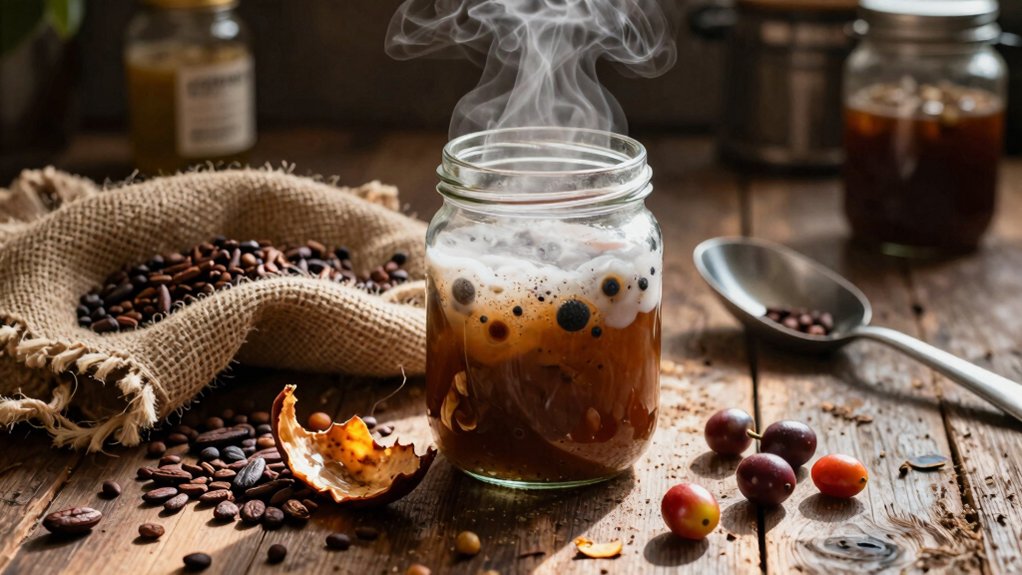
Ever wondered how coffee can taste like the place it’s grown? You’ll find that wild fermentation, also called spontaneous fermentation, lets ambient yeast from fruit skins, air, and equipment drive the coffee processing. When ripe cherries sit in a controlled environment, those native microbes produce CO₂, alcohol, and aromatic compounds that imprint the terroir onto each bean. You’re not adding commercial yeast; you’re relying on the local micro‑flora to shape flavor. This method can unlock rare, nuanced cup profiles, but it also brings risks—contamination, inconsistency, and dependence on temperature and humidity. To manage those variables, you monitor temperature, humidity, aroma, and sanitation closely, documenting every step so you can repeat the results. Extraction yield data can help you track how fermentation progression correlates with flavor development and consistency.
How Wild Fermentation Coffee Shapes Cherry Flavors
You’ll notice that wild yeast drives flavor development, letting indigenous microbes imprint unique aroma profiles on the cherries.
This natural fermentation creates layered, wine‑like and floral notes that you can taste directly in the cup. As the process unfolds, the complexity of the aroma intensifies, giving you a richer, longer aftertaste.
Ye Ye Ye Flavor Development
How does wild fermentation turn a coffee cherry’s humble sugars into a symphony of flavors? You watch spontaneous processing unleash native yeasts, each bubble of CO₂ development nudging aroma precursors into the cup. The microbial terroir of your farm writes the flavor script, and you taste the result in three distinct stages:
- Initial burst – bright citrus and floral notes surface as yeasts consume sugars.
- Mid‑point depth – wine‑like acidity and subtle spice emerge from evolving precursors.
- Final texture – a silky, layered mouthfeel lingers, reflecting the unique local microbes.
Indigenous Microbial Aroma Profiles
When wild fermentation unfolds, the native yeasts and bacteria on the cherry skins, leaves, and even your processing tools start converting sugars into a cascade of aromatic compounds that define the coffee’s terroir. You’ll notice that indigenous microbes drive spontaneous fermentation, each strain contributing distinct notes that shape the final aroma profiles. By tracking temperature, acidity, and CO₂ release, you practice fermentation monitoring that catches shifts before off‑flavors appear. The microbial terroir you preserve can yield fruit‑forward, floral, or wine‑like nuances that differ from batch to batch, rewarding meticulous documentation of yeast sources. When you stop the process at the right moment, the coffee retains those unique aromatic fingerprints, delivering a cup that truly reflects its origin. Reusable, durable filtration systems can help maintain consistent processing conditions by minimizing contamination risks and enabling cleaner environmental stewardship temperature control during fermentation trials.
Natural Fermentation Aroma Complexity
If you let the native yeasts on the cherry skins take charge, the spontaneous fermentation will weave a tapestry of aroma compounds that transforms the fruit’s basic sweetness into layered, terroir‑driven notes. You’ll notice how wild fermentation amplifies aroma complexity, letting microbial terroir imprint citrus, jasmine, and wine‑like nuances into every cup. Managing temperature, humidity, and daily aroma checks keeps the process on track, while careful sanitation prevents off‑flavors. The choice of vessel and exposure to air can influence how quickly these signatures emerge stability of magnetic bases, guiding you toward a more consistent aroma profile.
Aerobic vs. Anaerobic Spontaneous Fermentation: Key Differences
You’ll notice that aerobic spontaneous fermentation lets oxygen mingle with the cherries, producing brighter, fruit‑forward notes, while anaerobic fermentation traps the fruit in a sealed environment, encouraging deeper, wine‑like complexity.
The oxygen‑rich process tends to finish faster and yields more CO₂, whereas the oxygen‑free method slows the reaction and can develop richer aromatic layers.
Choosing between them lets you shape the coffee’s flavor profile and mouthfeel to match your desired terroir expression.
Aerobic Spontaneous Fermentation
Ever wondered why some coffees burst with bright, fruity notes while others stay muted? In aerobic spontaneous fermentation you let ripe coffee cherries or their mucilage sit in open air, inviting native microbes to feast on oxygen. The fermentation process releases CO₂, alcohol, and aromatic compounds that shape vivid flavor profiles. You’ll notice a wider, terroir‑driven aroma range compared to anaerobic methods, but you must watch temperature, humidity, and timing to avoid spoilage. Depulp and expose – remove pulp, leave mucilage on the skin. Air‑flow monitoring – keep the batch loosely covered, stir daily. Sensory checks – taste and smell each day; stop when activity drops and move to drying. Link-aware concept: Temperature control Temperature control helps manage activity and prevents spoilage during aerobic spontaneous fermentation.
Anaerobic Spontaneous Fermentation
Why does anaerobic spontaneous fermentation often produce cleaner acidity and wine‑like fruit notes? Because the airless environment forces CO₂ to stay dissolved, slowing microbial metabolism and letting flavor precursors develop without oxidative interference. In practice, you seal the beans in a low‑oxygen vessel, letting the mucilage breakdown under pressure. The retained gases push aromatic compounds into the bean matrix, yielding brighter acidity and distinct fruit tones. Compared with aerobic spontaneous fermentation, the anaerobic process reduces oxidative browning and preserves delicate esters. However, you must monitor temperature, sanitation, and batch consistency to avoid off‑flavors from unwanted microbes. Detailed records and strict control keep the fermentation on target, delivering a cleaner, more nuanced cup. Borosilicate glass compatibility and durability considerations from carafe replacements can inform careful containment choices in experimental setups, ensuring heat resistance and clean handling for precise fermentation environments.
Perform a DIY Wild Fermentation Coffee Setup – Step‑by‑Step
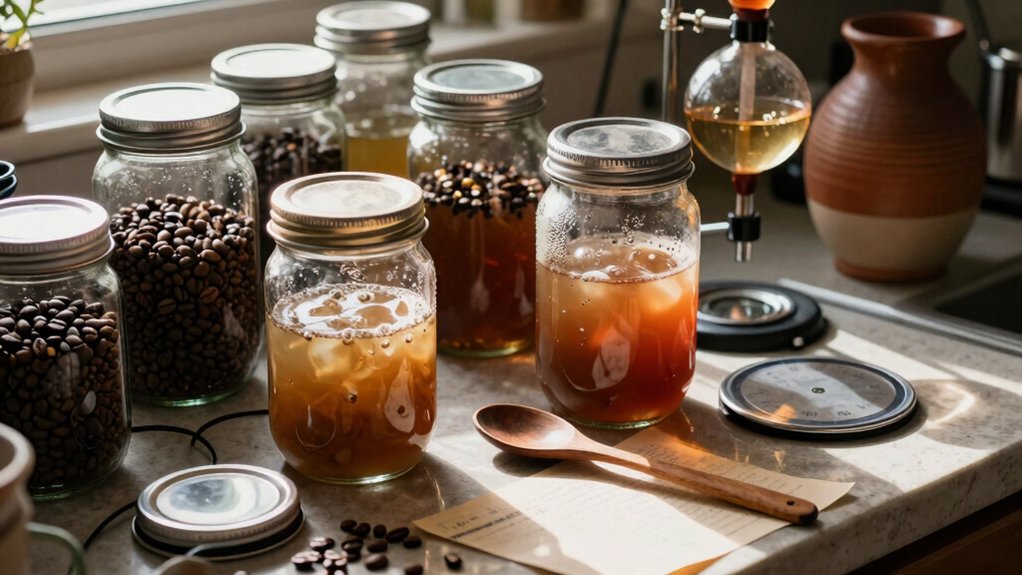
Ready to plunge into a hands‑on wild‑yeast coffee adventure? First, gather clean, food‑grade containers, a breathable cloth, and fresh water for your fermentation setup. Scrub the cherries, then place them in the vessel, covering with water just enough to submerge. Seal the cloth over the opening to let ambient yeasts in while keeping dust out—this is key for contamination control.
- Prep the cherries – remove pulp, rinse gently, and sort out any bruised fruit.
- Create the environment – fill the container, attach the cloth, and store in a dark, stable spot.
- Monitor daily – sniff for fruity, floral aromas, note any off‑notes, and log temperature and pH. Filter Type is a key consideration in how you manage taste and texture as the process progresses.
Control Temperature, Moisture, and pH in Wild Fermentation Coffee
Once your cherries are settled in the water‑filled vessel under the breathable cloth, the next step is to keep the fermentation environment stable.
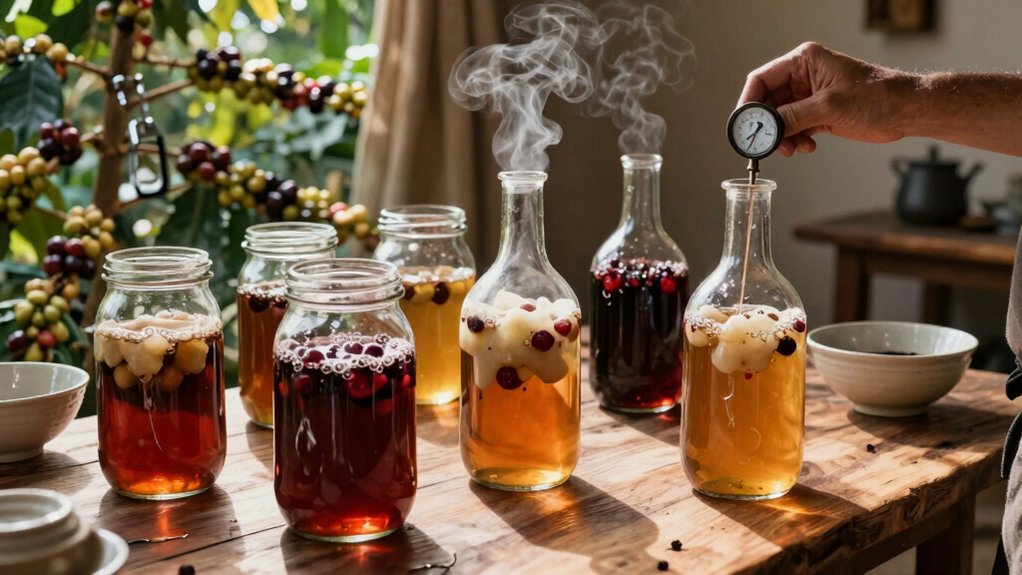
In wild fermentation you’ll monitor temperature control by placing the vessel in a shaded spot or using a simple thermostat; aim for 20‑25 °C to favor desirable yeasts and curb unwanted bacteria.
Moisture management means checking water level daily—add clean water if the cherries dry out, but avoid diluting the must too much, which can stall CO₂ production.
For pH balance, use a strip or probe and keep the brew between 3.5 and 4.5; a slight acidity encourages spontaneous processing and suppresses spoilage.
Record each adjustment, because consistent data lets you replicate flavor profiles batch after batch.
Identify Typical Flavor Notes From Wild Fermentation Coffee
You’ll notice a vivid fruity brightness that pops like fresh berries, while an earthy depth grounds the cup with soil‑rich tones. A spicy complexity weaves through, adding peppery or cinnamon hints that linger on the palate. Together, these layers showcase how wild fermentation can transform coffee into a multi‑dimensional experience. descaling reminders
Fruity Brightness
Wild‑fermented coffee often bursts with a bright, fruity sparkle, as the native yeasts on the cherry skins break down mucilage sugars into aromatic esters and acids. You’ll notice a vivid citrus‑like zing, a sweet berry perfume, and a subtle stone‑fruit tang that all stem from spontaneous fermentation’s wild yeast activity. This fruit‑forward profile reflects the terroir, because local microbes imprint their character during flavor development. Citrus zest
Earthy Depth
After the bright citrus and berry bursts, the palate often settles into a grounding, earthy depth that balances the fruitiness.
You’ll notice that wild fermentation lets the mucilage break down slowly, releasing compounds that echo damp forest floor, wet soil, and fresh moss.
The spontaneous fermentation’s microbial terroir contributes subtle notes of toasted oak, leather, and even a faint minerality that lingers after each sip.
These flavor notes arise as native yeasts and bacteria metabolize sugars, producing earthy aromatics that complement the earlier fruit.
Spicy Complexity
What makes wild‑fermented coffee feel spicy? You’ll notice a bright heat that stems from the lively aroma compounds generated during spontaneous fermentation. The native yeasts and bacteria break down sugars, producing subtle peppery, clove‑like, and cinnamon‑tinged notes that echo the terroir of the farm. As the coffee processing unfolds, these spiciness cues evolve, giving you a layered, stimulating cup.
- Pepper‑bright acidity that tingles the palate
- Warm clove and cinnamon undertones from higher alcohols
- A lingering, gentle heat that balances fruity esters
Spot and Fix Mold, Off‑Notes, and Over‑Fermentation Problems
Detect mold, off‑notes, and over‑fermentation early, then act fast to save the batch. In wild fermentation you’re relying on spontaneous processing, so vigilant mold control is essential. Sniff the fermenting cherries daily; a sour, yeasty, or musty aroma signals mold or off‑notes. If you spot fuzzy growth, discard the affected cherries and sterilize the container. For off‑notes prevention, lower temperature by 2–3 °C and add a thin layer of fresh pulp to dilute excess alcohol. Over‑fermentation shows as a flat, alcoholic smell—halt it by rinsing the beans and cooling them rapidly. Good fermentation management means tracking pH, adjusting humidity, and keeping a clean workspace. These steps keep your coffee’s flavor bright and avoid waste.
Blend Wild Fermentation With Traditional Coffee Processes
- Start with natural yeasts on cherry skins.
- Introduce a brief commercial yeast boost for uniformity.
- Finish with traditional sun‑drying to stabilize flavor.
This hybrid approach balances complexity and repeatability.
Choose the Right Fermentation Style for Your Desired Cup
Your coffee’s flavor journey starts with the fermentation style you pick, and each method steers the cup toward distinct taste horizons. When you choose spontaneous fermentation, you let local microbial communities drive flavor development, letting terroir shine through fruit‑forward, floral, or wine‑like notes. If you crave consistency, a controlled inoculated style can temper wild variability while still preserving some terroir character. Track temperature, humidity, and sanitation to avoid off‑flavors, and record yeast sources for repeatable results.
| Style | Typical Flavor Profile |
|---|---|
| Spontaneous | Bright fruit, complex acidity |
| Inoculated | Balanced, predictable sweetness |
| Mixed (spontaneous + inoculated) | Layered, nuanced aroma |
| Wet‑process | Clean, crisp, light body |
| Dry‑process | Rich, heavy, earthy depth |
Pick the style that aligns with the cup you want to serve.
Wild Fermentation Coffee FAQ: Quick Answers to Common Questions
Choosing a fermentation style sets the stage, but once you’ve settled on spontaneous fermentation, you’ll likely have a handful of practical questions. You’ll wonder how native yeasts affect flavor, how to control temperature, and why terroir matters in coffee processing. Below are quick answers to keep you moving forward.
1. What’s the flavor payoff?
Wild fermentation lets native yeasts generate CO₂, alcohol, and aromatic compounds, delivering layered, fruit‑forward notes and a textured mouthfeel that showcase terroir.
2. How do I avoid off‑flavors?
Monitor aroma daily, keep temperature and humidity stable, and document every step to catch contamination early.
3. What’s the best brew?
Use a pour‑over with high‑quality water, skip milk or sugar, and taste at 50–60 °C to reveal evolving aromas.
Frequently Asked Questions
Can I Use a Starter Culture Instead of Native Microbes?
Yes, you can replace native microbes with a starter culture; just inoculate the beans, maintain proper temperature and humidity, and monitor acidity to guarantee consistent fermentation and flavor development.
What Safety Concerns Exist for Home‑Grown Wild Fermentation?
You should watch for mold, off‑smells, and excess acidity; keep everything sterilized, temperature controlled, and pH‑monitored, and discard anything that looks or smells suspicious.
How Does Altitude Affect Spontaneous Fermentation Outcomes?
At higher altitudes, cooler temperatures slow yeast activity, so you’ll notice slower acid development, milder flavors, and longer fermentation times, while lower pressure can encourage more volatile aromatic compounds.
Do Different Coffee Varieties Respond Uniquely to Wild Fermentation?
Yes, you’ll notice each variety reacts differently—some develop bright acidity, others richer body, and flavor notes shift. Your choice of bean, its genetics, and processing conditions all shape the wild fermentation result.
Can I Reuse Fermentation Liquid for Subsequent Batches?
You can reuse the fermentation liquid, but you should filter it, monitor pH, and add fresh microbes each batch to avoid off‑flavors and maintain consistent acidity for best coffee development.
In Summary
By now you’ve seen how wild fermentation can turn ordinary coffee cherries into a flavor adventure, from bright, fruity notes to deep, earthy tones. You’ve learned the key differences between aerobic and anaerobic methods, how to set up and control your own ferment, and how to troubleshoot common issues. With this knowledge, you can experiment, blend, and choose the perfect fermentation style to craft the cup you’ve always wanted. Enjoy the process and the unique brews it creates.


