
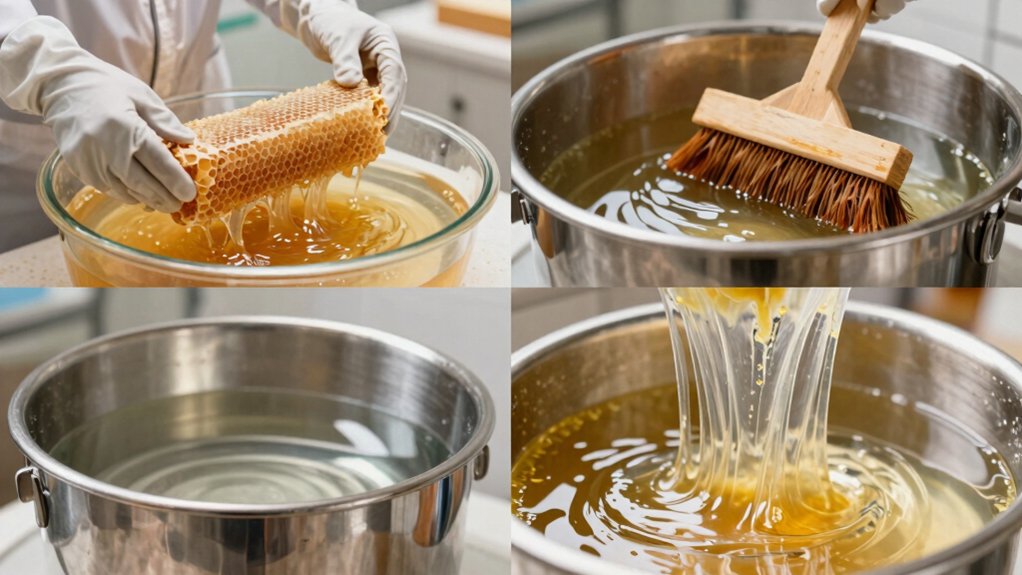
You’ll get the most consistent flavor, color, and moisture control by mastering three proven mucilage‑removal methods: first, calibrate your demucilage machine—set blade gap and drum speed, run a short trial, tweak until the mucilage reading matches your target, then lock in the settings. Second, try manual wet‑pulping, stripping skin and mucilage with a depulper and turning the pulp on a set schedule to guide fermentation depth. Third, use sealed‑tank anaerobic fermentation, holding pulped beans in an oxygen‑free environment for 24‑72 hours to develop lactic and acetic acids. Keep going and you’ll discover how to fine‑tune each technique for your specific honey style.
Calibrate Demucilage Machines for Precise Honey‑Process Mucilage Removal
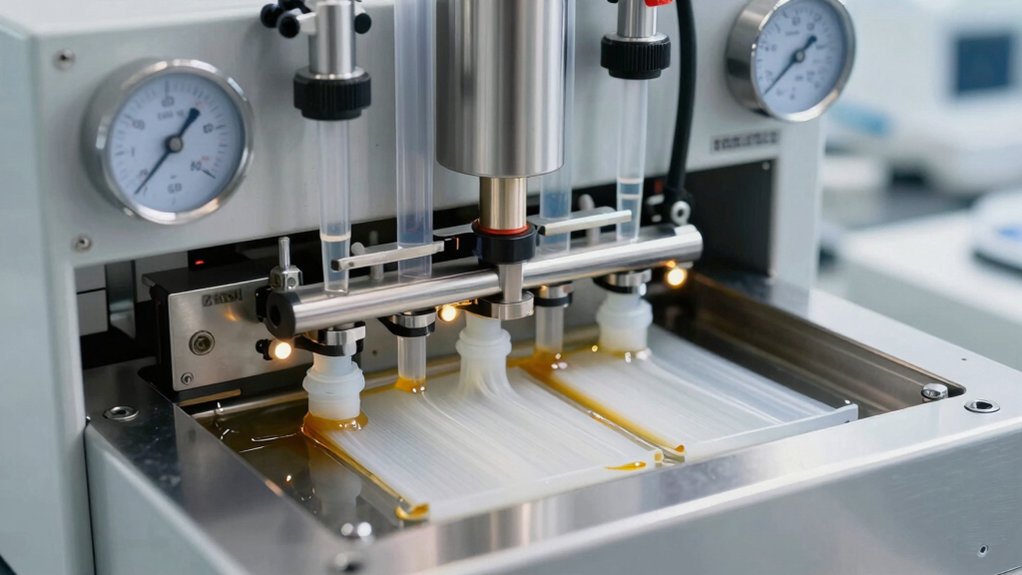
When you set up a demucilage machine, start by adjusting the blade gap and drum speed to target the desired mucilage retention—25 % for a bright, white honey or up to 100 % for a deep, black honey.
First, run a short trial to measure the actual mucilage left on the parchment; compare it against your target and tweak the gap until the reading aligns.
Next, lock in drum speed; faster rotation reduces retention, while slower speeds preserve more mucilage, directly shaping fermentation potential in the honey process.
Record each setting in a calibration log, then repeat the test after any maintenance to ensure consistency.
Precise demucilage machine calibration lets you control flavor depth, color, and downstream drying schedules without guesswork. calibration accuracy
Manual Wet‑Pulping & Controlled Turning to Achieve Target Honey Levels
How can you fine‑tune honey color and flavor without heavy machinery? With manual wet‑pulping you strip the skin and some mucilage using a depulper, then decide how much mucilage stays to guide fermentation and drying. After the pulping, apply controlled turning at set intervals—one day for lighter, two to three days for darker—to modulate drying speed and fermentation intensity. This schedule interacts with the retained mucilage, shaping sweetness, body, and acidity, letting you hit target honey levels from White to Black honey. By adjusting mucilage amount and turning frequency, you can move from Yellow to Red to Black profiles while conserving water. The approach is eco‑friendly, mirrors coffee processing techniques, and fits modern honey processing goals. Mucilage management provides a practical framework that aligns with the concept of precision control in processing.
Anaerobic Fermentation Tanks – Shaping Mucilage Flavor in the Honey Process
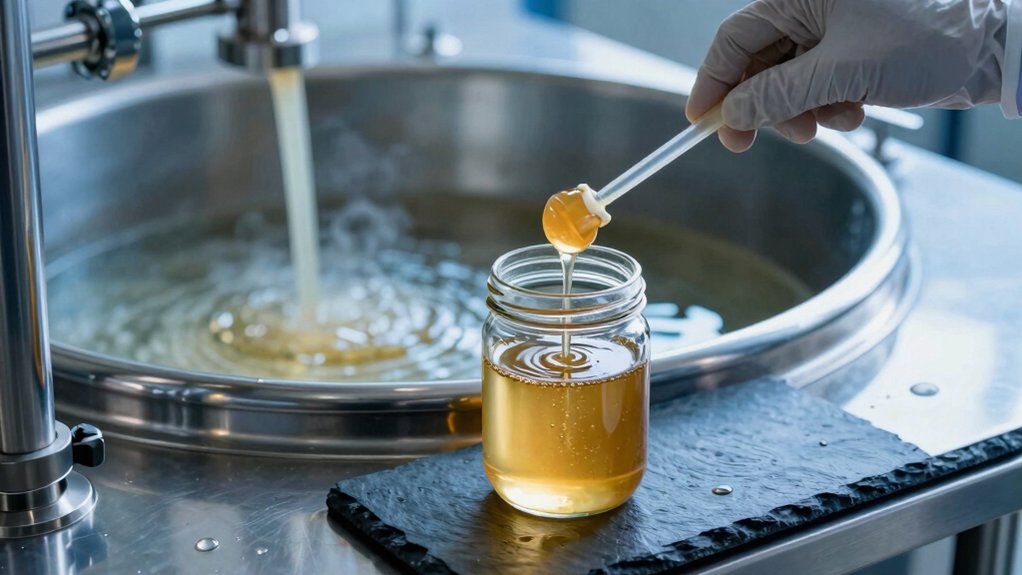
Anaerobic fermentation tanks lock the pulped beans in an oxygen‑free environment, letting the attached mucilage ferment for 24‑72 hours and develop unique flavor compounds. You’ll notice the honey process retains more mucilage, so the tank’s sealed design limits oxygen exposure, encouraging lactic acid and acetic acid formation.
Temperature control within the tanks and precise sizing further influence mucilage removal and acid balance, giving you control over the final cup’s complexity and balance. Honey process fermentation dynamics can also impact the sweetness and mouthfeel as beans are dried on raised beds after tank treatment.
Frequently Asked Questions
What Is the Honey Coffee Trick?
You’re leaving the bean’s mucilage on during drying, letting it ferment naturally. This “honey” method reduces water use, boosts sweetness, body, and fruit notes, and creates darker, richer coffee profiles.
What Are the Two Methods of Processing Honey?
You process honey either by wet pulping, which strips most mucilage before drying, or by dry pulping, which leaves more mucilage on the beans for longer fermentation and richer flavor.
Is Honey Process Coffee Better Than Washed?
You’ll find honey‑process coffee often offers richer fruit and sweetness, but washed beans give cleaner acidity and consistency; choose honey when you value distinctive flavors and sustainable water use, otherwise prefer washed for reliability.
What Does Putting Honey in Your Coffee Do for You?
You get a richer, sweeter cup with added fruit notes and a smoother body; the honey’s residual sugars and acids boost flavor complexity, while its natural antioxidants may give a mild health lift.
In Summary
You’ve now seen how calibrating demucilage machines, mastering wet‑pulping with precise turns, and using anaerobic fermentation tanks each deliver clean, flavor‑rich honey. By applying these techniques, you’ll consistently strip unwanted mucilage while preserving the honey’s natural sweetness and aroma. Implement the right method for your scale, monitor the process closely, and you’ll achieve the perfect honey profile every time.


