
Seal a clean glass jar, add 1 tsp loose leaf (or 1 tbsp fresh herbs) per 6 oz filtered water, stir, then cover tightly and let it sit at room temperature for six to eight hours. Strain or lift the infuser, and you’ll get a smooth, low‑bitterness brew that preserves bright notes and antioxidants. Adjust time for greener or stronger flavor, and experiment with citrus zest, mint, or honey for extra aroma—there’s plenty more to explore.
What Makes Room‑Temperature Steeping So Gentle?
Why does room‑temperature steeping feel so gentle? You let tea sit at room temperature, so extraction proceeds slowly, avoiding the harsh bite heat creates. This gentle extraction preserves the bright, vegetal notes of green tea and the delicate sweetness of white tea, while keeping tannins in check. Because polyphenols and caffeine release occur at a leisurely pace, the infusion stays smooth and light even after extended steeping time. To lock in aroma and maintain consistent ambient conditions, you should use a covered container; this prevents volatile loss and steadies temperature. The result is a balanced cup that highlights flavor preservation without the bitterness often seen in hot brews. Power Outlets and electrical features can be incorporated to manage warming elements if needed, ensuring a controlled, gentle steeping environment.
Choose the Best Tea or Herb for Room‑Temperature Steeping
You’ll get the brightest flavor by picking fresh herbs like mint or basil and letting them sit in cold water for a few hours.
Choose teas that naturally hold up—think hibiscus, rooibos, or bold black blends—so the room‑temperature brew stays robust.
Measuring the right amount, about a teaspoon of dried leaves or a tablespoon of fresh herbs per cup, keeps the extraction balanced without heat.
In addition, ensure thorough rinsing of any used tools to prevent oil or residue from previous brews from affecting the room-temperature steep. thorough rinsing
Fresh Herbs for Steeping
Looking for a herb that shines at room temperature? Fresh herbs deliver the brightest aroma and flavor when you use them chilled, crushed, and paired with clean water. For room‑temperature steeping, measure 1 tablespoon herbs herbs per cup (6 oz) and let the herbal infusion sit 4–12 hours. Keep the water temperature low, cover the jar, and you’ll lock in aroma retention while the gradual flavor extraction stays smooth, never bitter.
- Bright peppermint leaves, crushed, releasing minty coolness after 8 hours.
- Lemon balm blossoms, bruised, yielding citrus‑herb notes in 6 hours.
- Hibiscus petals, sliced, giving ruby‑red tang after 10 hours.
- Basil leaves, torn, offering sweet peppery hints in 5 hours.
- Mint‑lavender mix, combined, creating calming floral depth after 7 hours.
Enjoy a vibrant herbal infusion without heat. Extraction
Optimal Tea Selection
Which tea or herb delivers the brightest, smoothest flavor when steeped at room temperature? For room‑temperature steeping, start with a light green or white tea from Camellia sinensis; their delicate leaves release a clean flavor profile within 3–5 hours while preserving polyphenol retention. If you prefer a richer brew, try a medium‑bodied oolong, which balances caffeine content and ambient extraction over 8–12 hours. Herbal infusions such as rooibos, mint, or hibiscus excel in cold steeping, offering robust aroma without bitterness. Use one teaspoon of dried leaves per 6–8 ounces of water, or a tablespoon of fresh herbs per cup, and adjust steeping time to suit your taste. This tea selection maximizes flavor and health benefits without heat. Linkable concept
How Much Tea to Use for a Room‑Temperature Brew
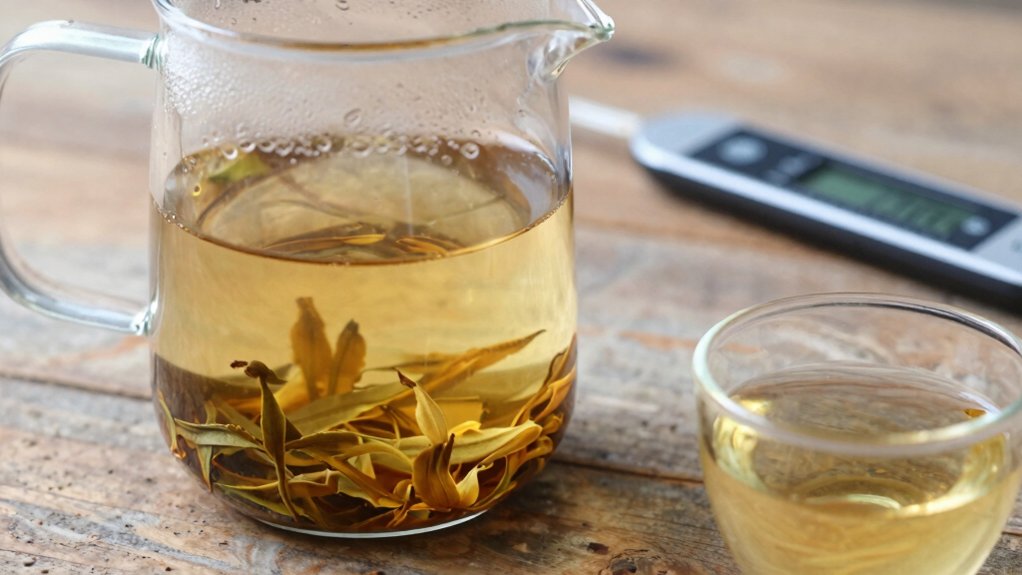
How much tea should you use for a room‑temperature brew? You’ll get a balanced cup by measuring precisely, because cold steeping extracts flavor gently over a longer steep time. Aim for 1 teaspoon per 6–8 ounces of water when using dried tea leaves, and double that if you’re working with herbal blends that need more plant material. A mason jar holds the batch comfortably, letting the leaves swirl as the antioxidant content builds.
Aim for 1 tsp dried tea per 6‑8 oz water; use a mason jar, steep 8‑12 hours at room temperature.
- 1 teaspoon dried tea leaves per 6 oz water
- 1 tablespoon fresh herbs per 6 oz water
- Fill a mason jar halfway, then add water
- Seal and let sit 8–12 hours at room temperature
- Strain into a glass, enjoy the smooth, low‑bitterness brew
Which Jar or Pitcher Is Best for Room‑Temperature Steeping?
You’ll find that a glass jar preserves the tea’s delicate flavors while letting you see the infusion progress. A stainless‑steel pitcher offers durability and keeps the brew cool without leaching. A stackable bin system with lids can help organize freezer storage for ice cubes that you can use to chill beverages evenly bin with lid and maintain odor control during long room-temperature steeps.
Glass Jar Benefits
Usually you’ll find that a clear glass jar or pitcher works best for room‑temperature steeping because its transparency lets you watch the color change and spot sediment, while a tight‑fitting lid keeps aroma from escaping. The glass jar’s visibility gives you real‑time flavor monitoring, letting you gauge the infusion of loose‑leaf tea or cold brew herbs. Its airtight seal preserves aroma retention, and the non‑reactive surface maintains a pure taste. You can easily remove the brew after the 6‑12‑hour period to avoid over‑extraction, then store the finished liquid in the same jar for consistent flavor.
- Crystal‑clear walls reveal color shifts
- Tight‑fit lid locks in scent
- Non‑porous surface prevents off‑flavors
- Easy to pour and strain without mess
- Simple to clean, keeping future infusions pristine
Stainless Steel Pitcher
A stainless‑steel pitcher offers durability and temperature stability that make it a strong contender for room‑temperature steeping. You’ll notice the stainless steel pitcher keeps the liquid near the 65–75°F range, preventing unwanted heat loss during cold infusion. Start by pre‑warming the vessel with a splash of cold water; this reduces temperature drop and preserves headspace aroma. The wide mouth lets you add loose‑leaf tea easily, and the lid locks in scent while the metal walls support even flavor extraction over the long infusion time. This steady performance is complemented by its double‑wall design that helps maintain consistent temperatures over extended steeping sessions. Because the durable pitcher resists dents and stains, you can reuse it for daily cold infusions without sacrificing aroma preservation or consistency. This practical design streamlines your room‑temperature steeping routine.
Ceramic Vessel Choice
Choosing the right ceramic jar or pitcher can make all the difference for room‑temperature steeping. A ceramic vessel offers inert surfaces that keep flavors pure, while a tight‑fitting lid locks in aroma and prevents oxidation. The wide‑mouthed jar lets you dump in herbs without fuss, and a high‑quality glaze ensures a non‑reactive container that won’t leach minerals. You’ll notice smoother diffusion and richer taste when the ceramic pitcher maintains a steady, cool environment. Automatic shutdown features can help protect the beverage from overheating during longer steeping sessions.
Perform a 6‑Hour Room‑Temperature Brew (Prep, Mix, Cover, Strain)
Ever wonder how a simple room-temperature brew can release tea’s subtle flavors? You’ll start by measuring one teaspoon of dried leaves (or a tablespoon of fresh herbs) per six‑to‑eight ounces of water, then pour the water—about 68–75 °F—over the leaves. Stir gently to begin the infusion, ensuring every leaf contacts the liquid. Cover the container tightly to trap the tea aroma and prevent volatile loss. Let the mixture sit for six hours, allowing the room‑temperature steeping to draw out nuanced flavors without harsh bitterness. After the clock ticks down, strain the brew or lift the infuser, and taste the smooth, mildly bitter cup. This infusion technique maximizes flavor extraction while keeping the process simple and low‑effort. Reheating capability without flavor loss
Adjust Steeping Time for Desired Flavor & Antioxidants
After the six‑hour room‑temperature brew, you can fine‑tune the flavor and antioxidant punch by tweaking the steep time. Longer room temperature steeping softens bitterness, while shorter periods keep caffeine extraction low and preserve bright notes. Start with the recommended times for each tea, then adjust in small increments until you hit the perfect balance of flavor adjustment and antioxidants.
- Green tea: 4‑6 hours for gentle flavor, low caffeine.
- Black tea: 8‑12 hours for robust taste, higher antioxidant yield.
- Herbal tea: 10‑12 hours for deep aroma, minimal bitterness.
- Caffeine extraction rises after 8 hours, especially in black tea.
- Bitterness peaks beyond 12 hours, so stop before it dominates.
Add‑Ins That Boost Aroma & Sweetness in Room‑Temperature Tea
Aroma‑enhancing add‑ins like citrus zest, fresh mint, or a splash of vanilla extract instantly lift the scent profile of a room‑temperature brew while keeping the flavor smooth. You can toss in honey, maple syrup, or a pinch of cinnamon to boost sweetness without masking the delicate notes of Camellia sinensis or herbal tea. Because room‑temperature steeping preserves antioxidants, these add‑ins complement the gentle cold‑steep extraction and extend the aroma’s longevity. Stir or shake the container every hour to distribute the flavors evenly, and cover it to trap volatile compounds. Adjust the infusion duration to match your taste—shorter for a light sip, longer for a richer, sweeter experience.
| Add‑in | Primary Benefit |
|---|---|
| Citrus zest | Bright aroma |
| Fresh mint | Cool, refreshing scent |
| Vanilla extract | Sweet, lingering finish |
Fix Cloudy, Weak, or Over‑Extracted Room‑Temperature Tea
Why does your room‑temperature tea turn cloudy, taste weak, or feel over‑extracted? First, check your ingredients and tools. Cloudy tea often stems from emulsified tannins or mineral particles. Weak tea signals an insufficient tea-to-water ratio or a short steep. Over‑extracted brew means you left it too long or used too much leaf material. Fix these issues with a quick audit and a few adjustments.
- Use high‑quality loose leaves instead of broken or old tea.
- Fill clean vessels with filtered water to prevent haze.
- Adjust the tea-to-water ratio to about 1 tsp per 6–8 oz.
- Limit room‑temperature steeping to 35–60 minutes if you notice bitterness.
- Finish with filtration through a fine mesh or paper filter before serving.
These steps restore clarity, balance, and flavor to your cold steeping brew.
Store and Reuse Your Room‑Temperature Brew for Freshness
Ever wondered how to keep your room‑temperature brew fresh for days while preserving its flavor? Store it in an airtight container right after steeping, and you’ll lock in tea aromas and prevent oxidation. Because room‑temperature steeping relies on a long infusion time, the brew will keep evolving; a short storage time—no more than 48 hours—ensures flavor preservation without turning bitter. When you reuse the liquid for a cold brew, simply pour a fresh batch over the same leaves and let the infusion continue; the existing extract adds depth while the new water restores brightness. Keep the container chilled, but not frozen, and avoid exposing it to light or strong odors. This routine lets you enjoy consistent, fresh‑tasting tea day after day.
Frequently Asked Questions
What Are Common Steeping Mistakes to Avoid?
You often over‑steep, use lukewarm water, neglect fresh ingredients, and forget to seal the container; these mistakes cause bitterness, weak flavor, and oxidation, ruining your room‑temperature brew.
How Long to Steep Tea at Room Temperature?
You should steep tea at room temperature for three to six hours, depending on the leaf type and desired strength; lighter teas need less time, while robust blends benefit from the full six‑hour window.
What Is the Unhealthiest Tea to Drink?
You should avoid heavily sweetened bottled teas with added sugar and artificial flavors; they’re the unhealthiest, loading you with excess calories, sugars, and chemicals that can spike blood glucose and harm gut health.
Should I Cover Tea While Steeping?
Yes, you should cover tea while steeping; it keeps the brew from absorbing odors, maintains temperature, and preserves volatile aromas, giving you a cleaner, more consistent flavor.
In Summary
Now you’ve got the basics, you can brew a smooth, flavorful cup without ever heating water. Pick a delicate tea or herb, use the right ratio, and let it sit in a clean jar for six hours. Adjust time to suit your taste, add a splash of citrus or honey for extra aroma, and store the brew chilled for next‑day sipping. Enjoy the gentle, antioxidant‑rich tea whenever you like.


